

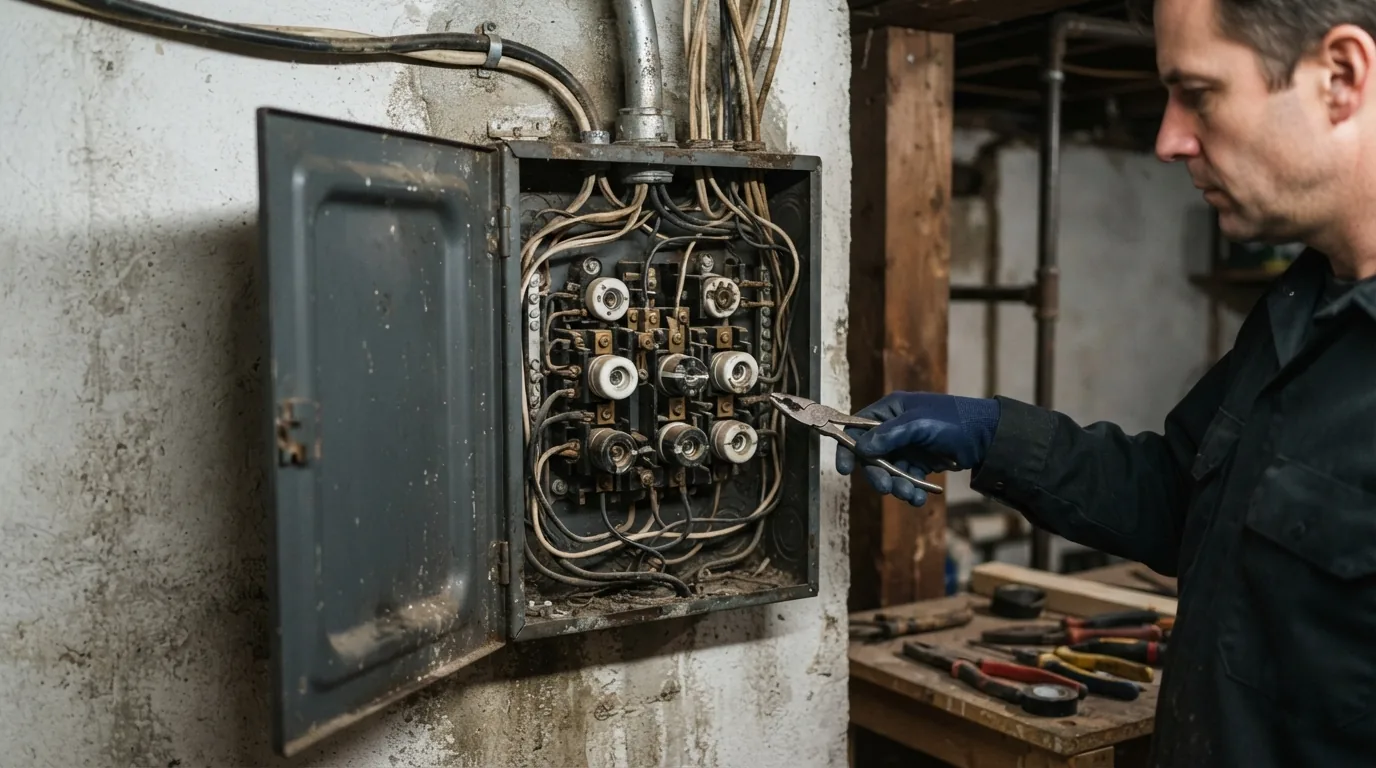
One thing to be clear about before anything else: going from a fuse box to breaker panel is permitted, inspected work carried out by licensed electricians. It is emphatically not a weekend project, and anyone offering to do it without a permit is offering you a problem.
It is, however, work we arrange and manage as part of a project — so this is about knowing whether you need one, and what to expect when you do.
What you actually have
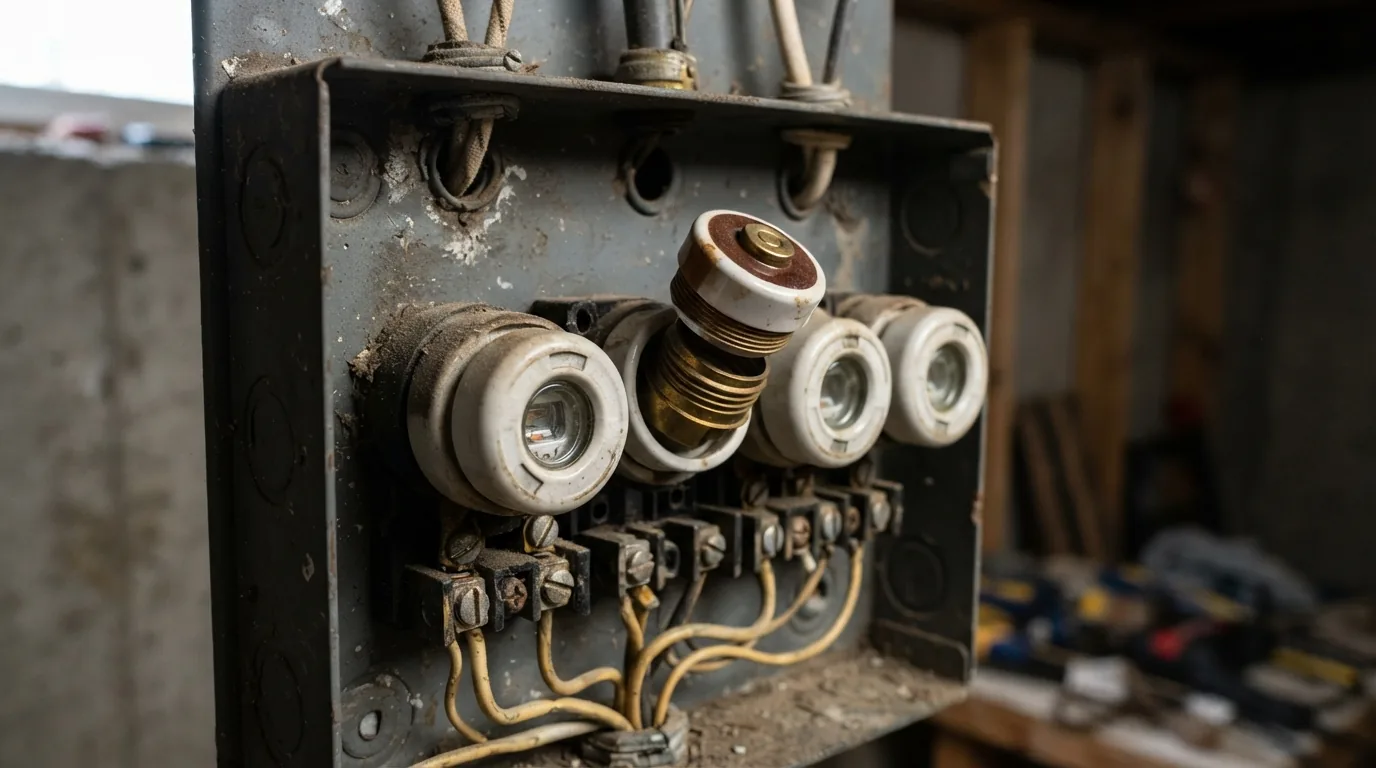
Plenty of older homes around here still have a fuse box: a panel with screw-in fuses rather than switches. Fuses aren’t inherently dangerous. A fuse is a perfectly good protective device, and when it blows it has done its job.
The problems are practical. Fuses have to be replaced rather than reset, which means people keep spares — and that’s where it goes wrong, because someone eventually puts a 30-amp fuse into a circuit rated for 15 to stop it blowing. That defeats the protection entirely and leaves wiring carrying more than it was designed for, with nothing to stop it.
The other issue is capacity. A panel sized for a 1950s household is working against a modern one, and the fuse box is often the smallest constraint in the house.
Signs the panel is the limiting factor
- Fuses blowing or breakers tripping regularly. Occasional is normal. Repeated on the same circuit means it’s overloaded or there’s a fault.
- Lights dimming when a large appliance starts.
- No capacity left — every slot used, and nowhere to add a circuit for a kitchen remodel or a car charger.
- Reliance on extension leads and power strips because there aren’t enough outlets, which is a capacity problem in disguise.
- Two-prong outlets throughout, indicating ungrounded wiring.
- Any burning smell, scorch marks, buzzing or warmth at the panel. That is not a planning matter — call an electrician now.
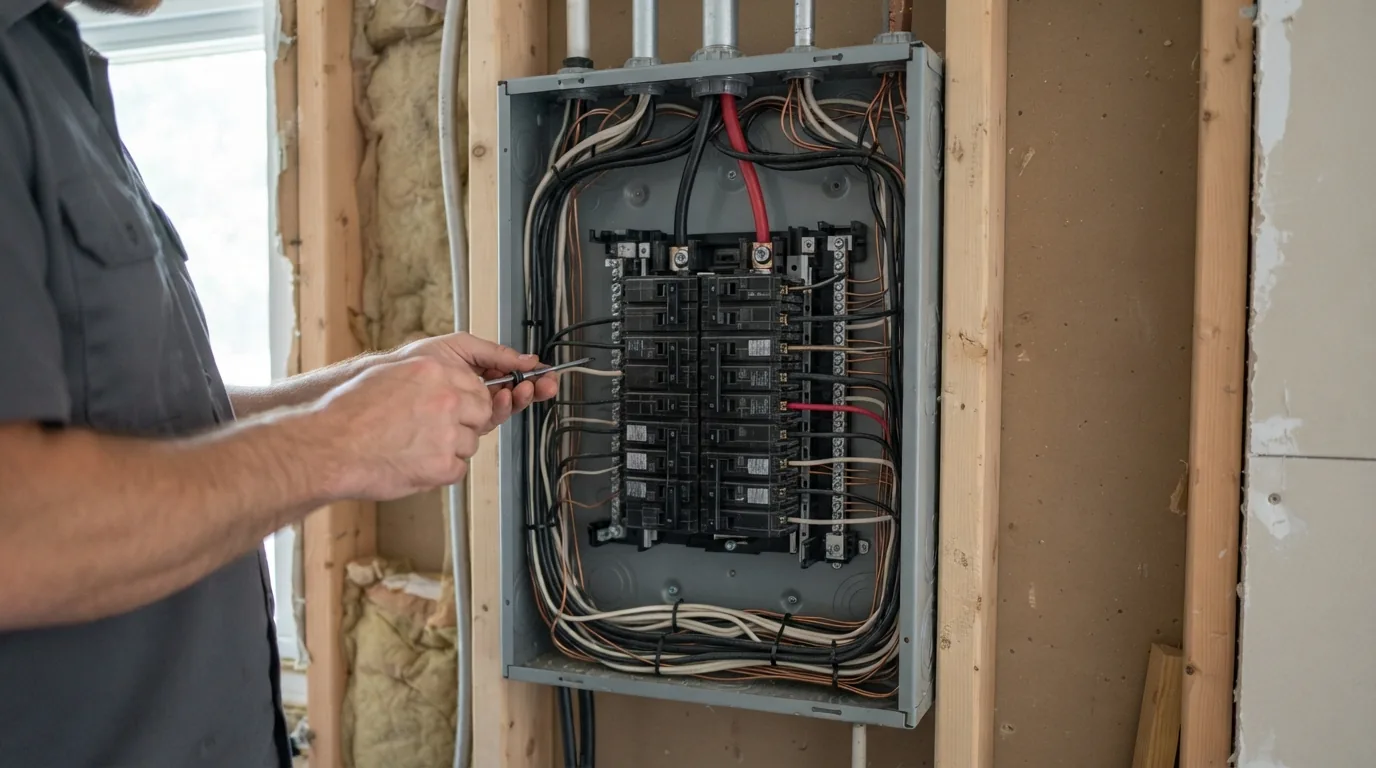
The brands worth knowing about
Certain older panels have well-documented safety concerns and are worth identifying. Federal Pacific Electric Stab-Lok panels and Zinsco panels are the two most commonly raised, on the basis that breakers may fail to trip when they should.
If you have either, it’s worth having an electrician look, and worth knowing that home inspectors routinely flag them at sale. That makes it a resale issue as well as a safety one.
What the work involves
Replacing a panel means coordinating with the utility to disconnect and reconnect service, a permit and inspection, and typically most of a day without power. The electrician replaces the panel, and depending on condition, the service entrance cable, meter base and grounding may also need updating.
In unincorporated Silver Spring and Bethesda the permit goes through Montgomery County Department of Permitting Services; incorporated cities run their own process.
What a panel upgrade does not fix
This is the part that gets missed, and it matters if you’re being sold one.
A new panel does not rewire the house. If the branch circuits behind it are old, ungrounded, or too few, a modern panel is protecting the same old wiring. You get better protection and room to expand — you do not get new circuits unless those are run as separate work.
So “we upgraded the panel, why are the outlets still two-prong” is a common and reasonable question. The answer is that they’re different jobs.
Similarly, knob-and-tube wiring, which turns up occasionally in the oldest homes inside the Beltway, is a wiring question rather than a panel question, and insurers have their own views on it.
How this fits into a wider project
A panel upgrade rarely happens on its own. It usually turns up because a kitchen is being remodeled, a basement finished, or a car charger added — and in that context it’s one line in a bigger schedule that has to be sequenced around everything else.
That’s how we handle it: the licensed electrical work carried out by licensed electricians, with the permit, inspection and the rest of the project coordinated around it, and the making good afterward done properly rather than left as somebody else’s problem.
Ask any contractor how they’re covering the licensed portions of a job. A clear answer is a good sign; a vague one is worth noticing.
The short version on going from a fuse box to breaker panel
Moving from a fuse box to breaker panel is licensed electrical work requiring a permit, a utility coordination and an inspection. The signs you need it are repeated fuse or breaker failures, dimming under load, a full panel with no room to expand, and any burning smell or warmth at the panel — that last one is urgent rather than a plan. Certain older panel brands are worth identifying for safety and resale. And be clear that a new panel does not rewire the house; old branch circuits stay old until they’re separately replaced.
If your home needs electrical work, whether it’s a panel that’s out of capacity or the circuits behind it, that’s a conversation worth having early. See our electrical work across Bethesda and the surrounding area — free estimates, no obligation.
Frequently asked questions
Q: Is a fuse box dangerous?
A: Not inherently — a fuse protects a circuit properly. The risks come from over-fusing, where a higher-rated fuse gets fitted to stop nuisance blowing, and from capacity that no longer matches how the house is used.
Q: How long does a panel replacement take?
A: Typically most of a day without power, plus permit and inspection scheduling around it, and coordination with the utility for disconnection and reconnection.
Q: Will a new panel add outlets?
A: No. It gives capacity and space for new circuits, but running those circuits and adding outlets is separate work. A panel upgrade alone changes nothing about the wiring in your walls.
Q: My panel makes a buzzing noise. Is that urgent?
A: Treat it as urgent. Buzzing, warmth, scorch marks or a burning smell at a panel should be looked at by an electrician promptly rather than added to a list.
