
Rockville has a housing pattern you can almost date from the driveway. Long stretches of it went up in the post-war decades, and a great many of those homes are split-levels — half a flight up to the bedrooms, half a flight down to a family room, and a stairwell running through the middle of everything.
That layout produces its own set of problems. Drywall repair in Rockville ends up being the same three conversations more often than anywhere else I work.
1. The stairwell wall nobody can reach
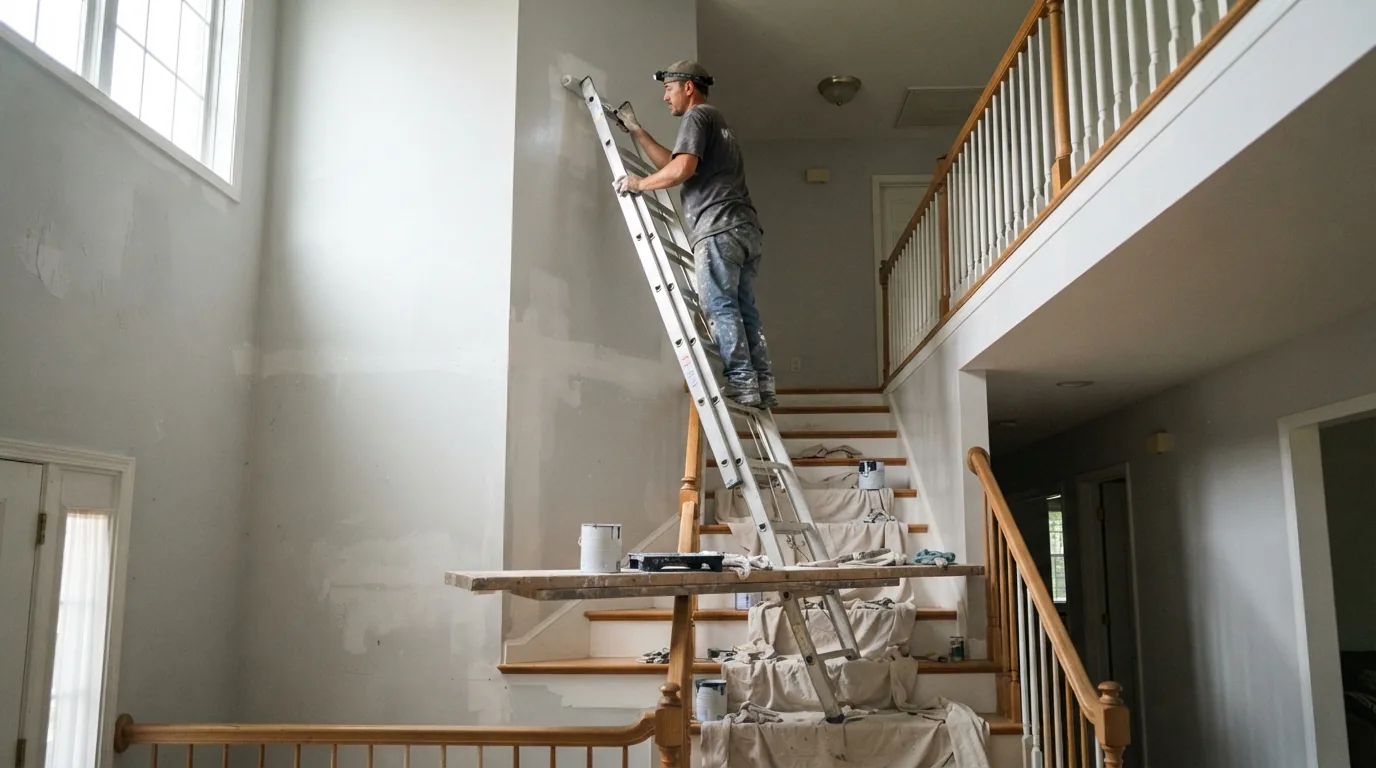
Every split-level has one: the tall wall running alongside the stairs, sometimes two stories of uninterrupted surface, with a staircase underneath it and nowhere flat to stand.
It’s also the wall that takes the most abuse. Furniture goes up and down it. Suitcases catch it. Kids use the handrail as a launch point. So it gets damaged more than most walls and is harder to repair than any of them.
The difficulty isn’t the patching — it’s access. Working over a staircase means staging: either a proper stair ladder with adjustable legs, or a plank between a step ladder and a stair tread. Setting that up safely takes longer than the repair does.
This is the one I’d genuinely discourage as a DIY job, and not for skill reasons. A short fall onto stair treads is a bad fall. If the damage is above the stairs, get someone with the right staging.
2. Textured ceilings, and the era they came from
Textured and popcorn ceilings are everywhere in homes of this vintage. Two things follow from that.
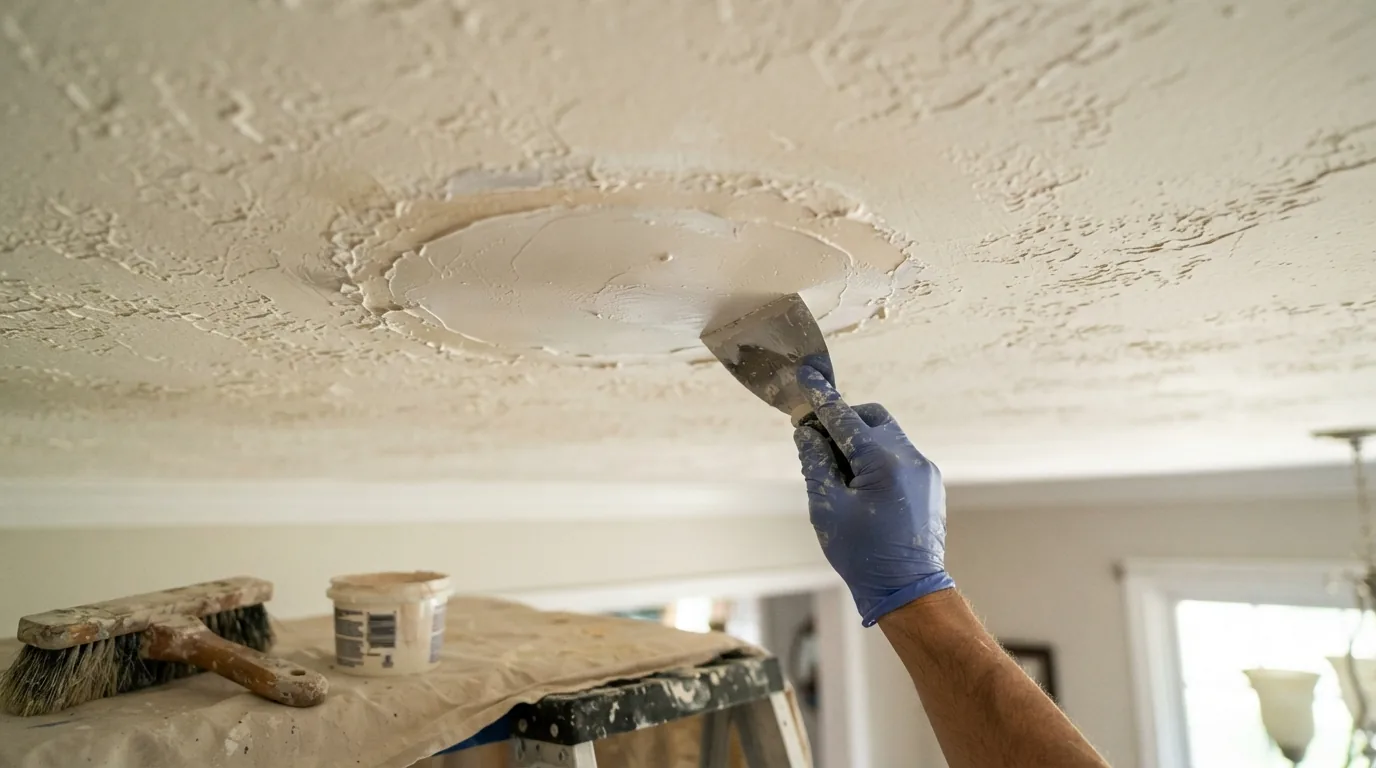
First, matching. A sprayed texture applied by hand decades ago has a specific pattern, coarseness and density. Getting a patch to disappear into it is the part of the job that takes actual skill — too fine and the repair reads as a smooth patch, too coarse and it reads as a blob. It’s done by test-spraying onto scrap and comparing before touching the ceiling.
Second, and more important: texture applied before the early 1980s can contain asbestos. Intact and painted it is not a hazard. Scraped, sanded or drilled, it becomes one. The EPA’s guidance on asbestos in the home covers this properly, and testing is a lab job costing far less than people assume. If the ceiling is original to a house of that age, test before anyone disturbs it.
3. Early drywall is not modern drywall
Homes from the 1950s and 1960s often have board thinner than today’s standard half-inch — three-eighths was common, and in some places you’ll find plaster over gypsum lath instead.
That matters for one practical reason: if you piece in modern half-inch board next to old three-eighths, you get a step. Not a huge one, but enough that light catches it and the repair announces itself. The fix is either shimming the thinner board out or floating compound across a wider area to hide the transition — both add time, and both are the difference between a repair you notice and one you don’t.
It’s also why an estimate given over the phone from a photo can be wrong. Nobody can see board thickness in a picture.
What Rockville homes don’t usually have
Worth saying, because it cuts the other way: Rockville’s stock is mostly new enough that traditional lath and plaster is less common than it is inside the Beltway. Silver Spring’s older streets are full of it. Rockville skews later, so you’re more often dealing with genuine drywall — which is generally simpler, more predictable and cheaper to repair.
If you want to know which you’ve got, push a pin into an inconspicuous spot. It slides into drywall and stops dead against plaster.
The recurring one: basement family rooms
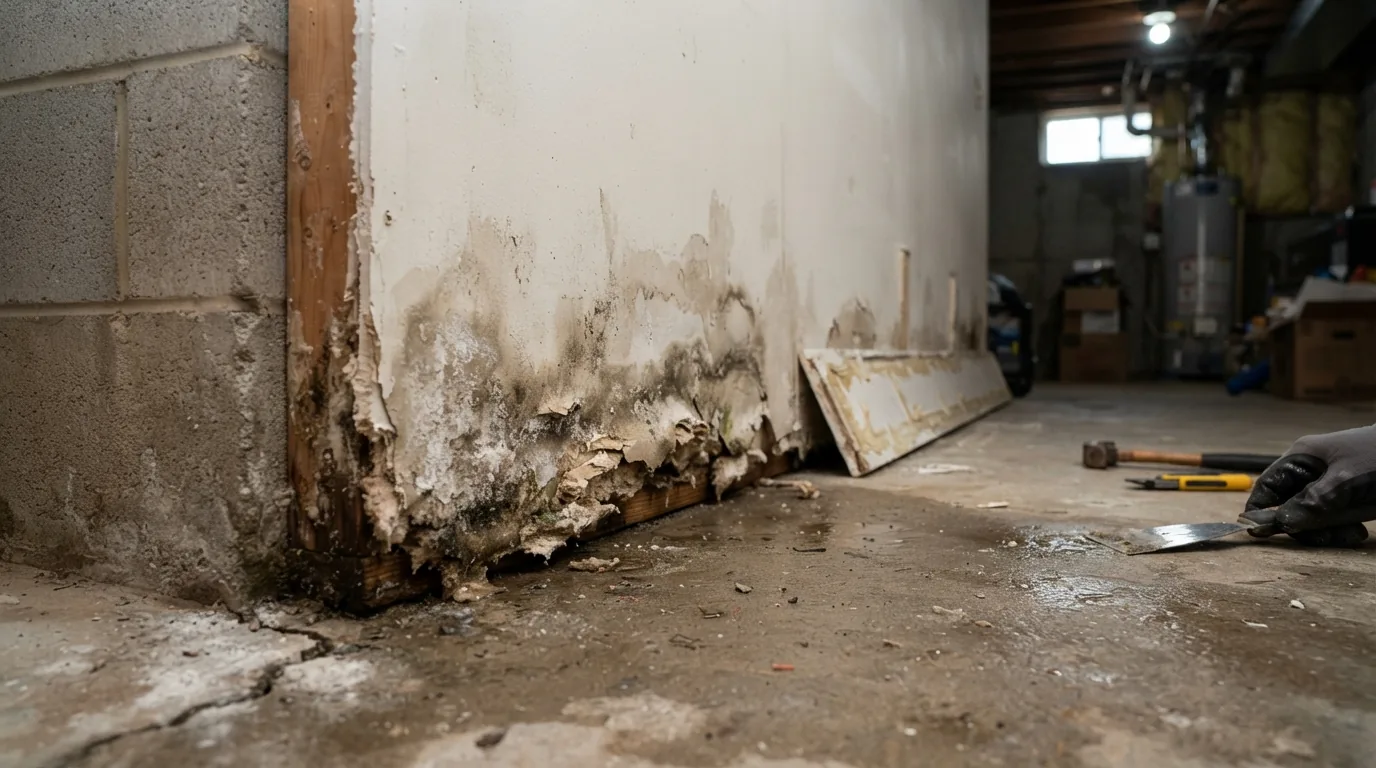
The lower level of a split-level is partly below grade, and that produces the damage I’m called about most in these houses — the bottom few inches of drywall gone soft, sometimes with a tide line, usually along an exterior wall.
That is a moisture problem wearing a drywall costume. Replacing the damaged board without dealing with the water gets you the same call next year. Common causes are grading that slopes toward the house, a downspout discharging too close to the foundation, or a gutter that overflows in heavy rain — and we get the kind of summer downpours that find every one of those.
Fix the outside first. Then cut the damaged board back to sound material, replace it, and consider leaving a small gap at the floor behind the baseboard so the board isn’t wicking from the slab.
The short version on drywall repair in Rockville
Drywall repair in Rockville usually means one of three things: a stairwell wall that’s hard to reach safely, a textured ceiling that needs matching and may need asbestos testing first, or early thin board that doesn’t sit flush with modern replacements. Basement-level damage along exterior walls is nearly always moisture and should be traced outside before any board is replaced.
If you’ve got any of those and want an opinion before committing, we cover Rockville and the surrounding area and drywall is core work for us. Free estimates, no obligation, and we’ll tell you honestly if it’s something you could handle yourself.
Frequently asked questions
Q: Can you repair a wall above a staircase?
A: Yes — it’s a staging job more than a drywall job. Proper stair ladders or a planked setup make it straightforward and safe. It’s the one repair I’d actively steer a homeowner away from doing alone.
Q: Do I have to remove my popcorn ceiling to repair it?
A: No. Damaged areas can be patched and the texture matched, which avoids disturbing the rest of it entirely. If the ceiling predates the early 1980s, that’s usually the better route anyway.
Q: Why does my repair sit slightly proud of the wall?
A: Almost certainly modern half-inch board pieced into older, thinner board. It needs shimming or a wider float of compound to blend the transition rather than more sanding.
Q: The bottom of my basement wall keeps going soft. Why does it come back?
A: Because the water source hasn’t changed. Grading, downspouts and gutters are the usual culprits. Replacing the board alone treats the symptom and buys you a repeat.
