

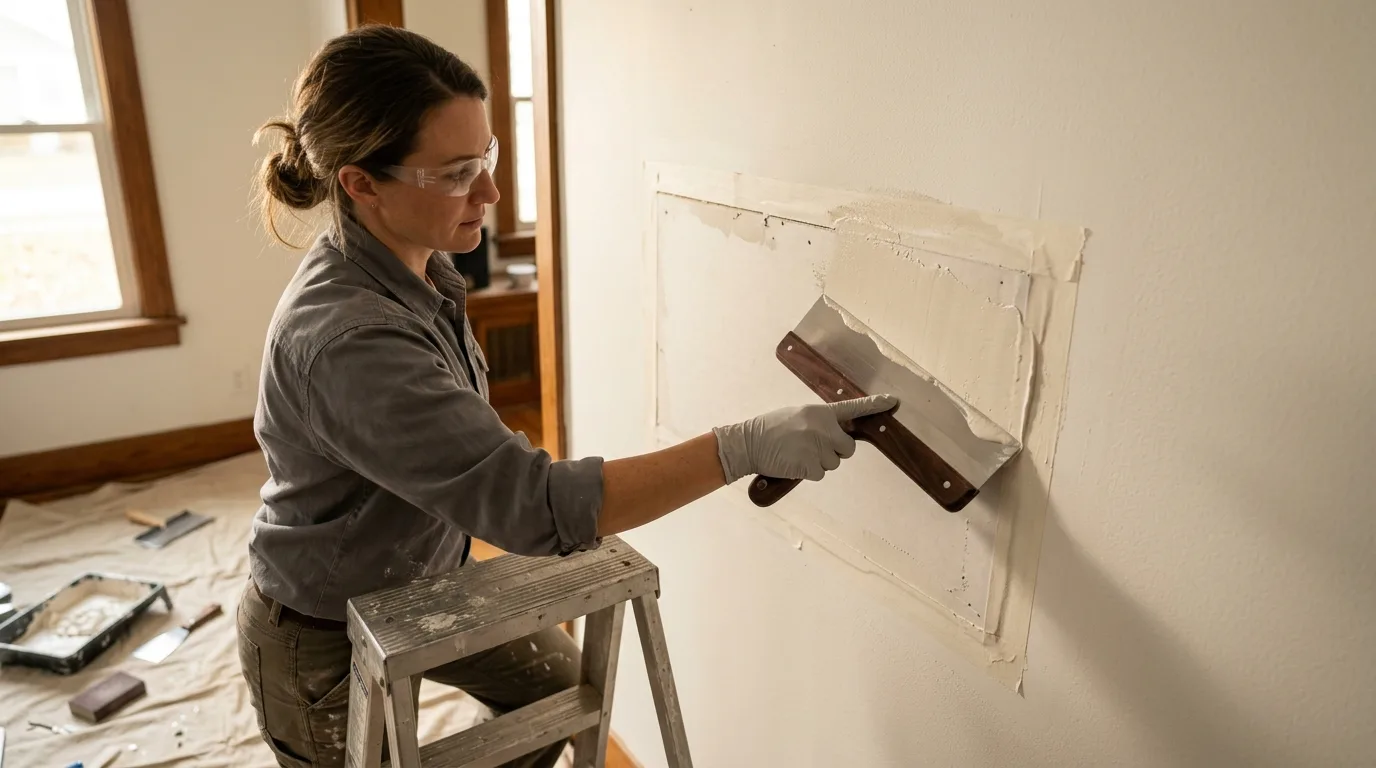
Drywall repair is the job people most often assume is quick, and it’s the one where I most often have to explain the calendar.
The work itself isn’t hard. Patching a hole is genuinely straightforward. What people underestimate is that a proper repair involves three or four separate coats of compound, and each one has to dry before the next goes on. You cannot rush a drying time. That’s not craftsmanship talking, that’s chemistry.
So: what drywall repair in Bethesda, MD actually involves, by type of damage.
The four kinds of damage, and what each one really needs
Small holes — doorknobs, screws, anchors
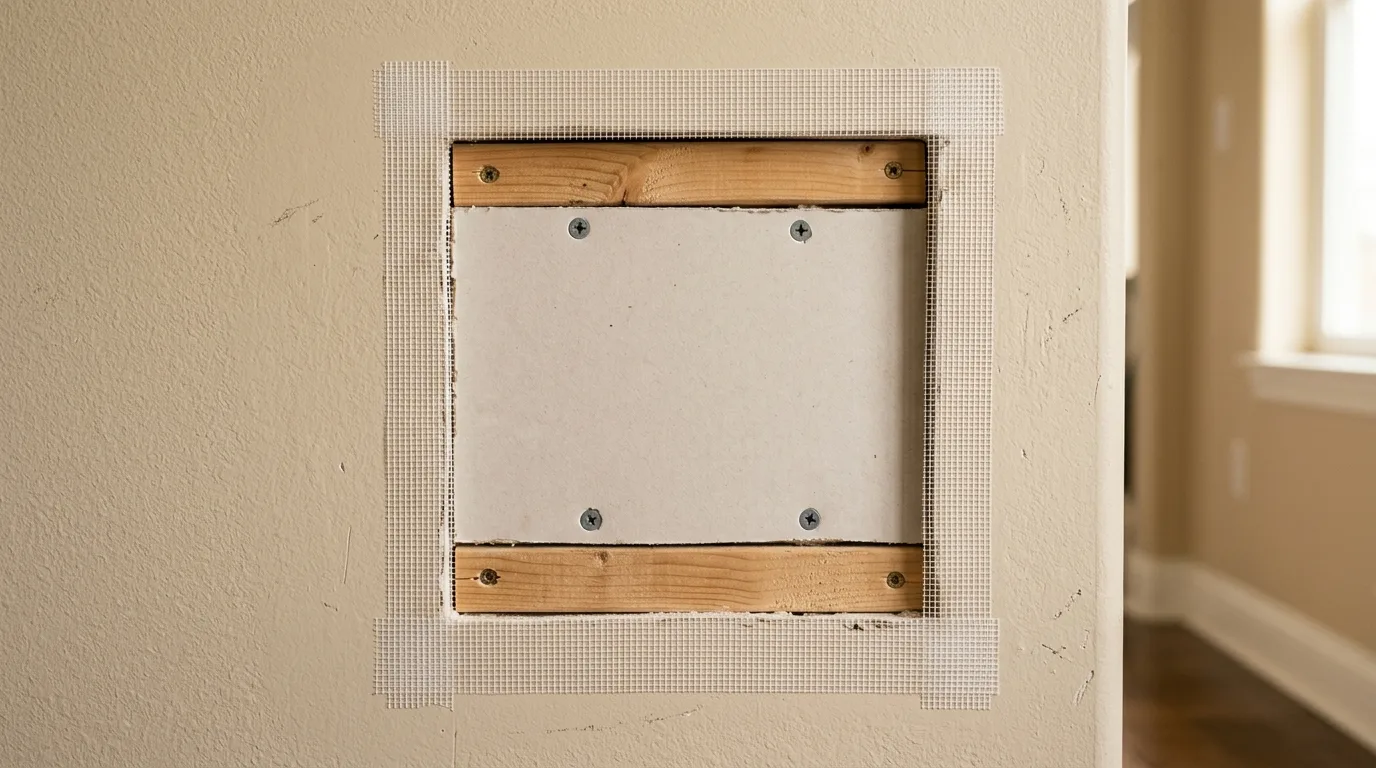
Anything up to roughly the size of a fist. Genuinely a small job: backing if needed, patch, compound, sand, prime, paint. Two visits usually, because of drying between coats.
This is the one where DIY makes real sense. If you’re comfortable with a putty knife and patient about sanding, go ahead. The mistake almost everyone makes is applying compound too thick in one go, which cracks as it dries and takes longer than doing it in thin coats properly.
Large holes — furniture, a foot through the wall, a plumber’s access hole
Once the hole is bigger than a patch can bridge, it needs backing and a cut-in piece of drywall, taped at the seams. Then coats. This is where amateur repairs start to show, because the taped seam has to be feathered wide enough that the eye can’t find the edge. A visible ridge under a wall light is the signature of a rushed job.
Cracks — and these are the interesting ones
Cracks are usually a symptom, not the problem. Where the crack is tells you what’s actually happening:
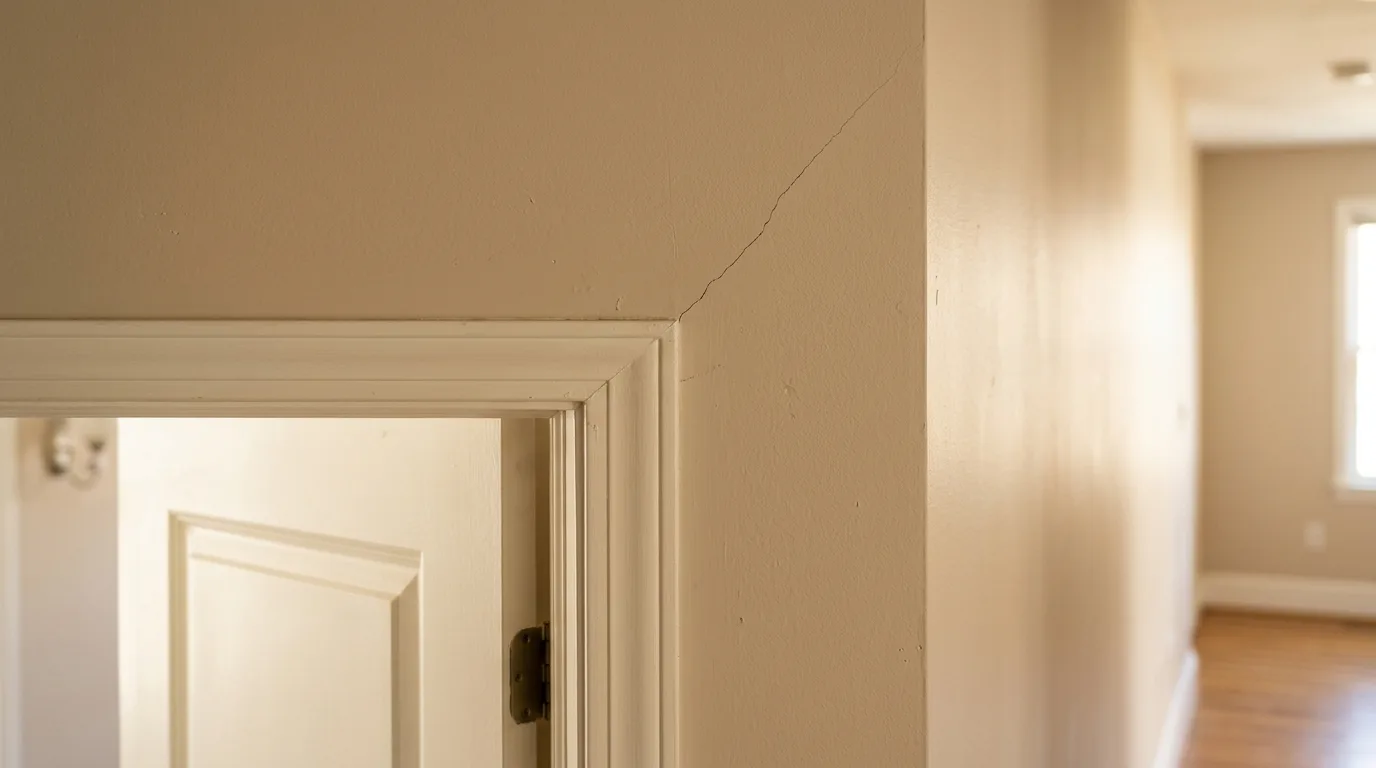
- Above door and window corners — normal seasonal movement, and very common in this area because our humidity swings so hard between February and August. Fix it and it’ll likely come back unless it’s addressed properly with tape rather than just filled.
- Along a ceiling-wall joint — usually truss uplift or seasonal movement. Also usually cosmetic.
- Long diagonal cracks running from a corner — worth looking at more carefully. Could be settling.
- Stair-stepped cracks, or a crack that’s visibly wider at one end — that’s a structural conversation, not a drywall one. Filling it hides a symptom you’d rather be able to see.
Any honest drywall person should look at where a crack is before quoting to fill it.
Water damage
Here’s the rule that matters: never repair water-damaged drywall until you have found and fixed the source. I’ve been asked to patch the same ceiling twice, and the second visit is always more expensive than finding the leak would have been.
Water-damaged board doesn’t get patched, it gets cut out — well past the visible staining, because the moisture travels further than the mark. Everything behind it needs to be dry before it’s closed up. Sealing damp cavity behind new board in a Maryland summer is how you grow mould inside a wall.
What Bethesda houses specifically throw at you
A lot of Bethesda’s housing stock is post-war through the 1970s, which means one thing worth knowing before you start: you may not have drywall at all.
Plenty of houses of that era have plaster over lath, or plaster over rock lath board. It looks similar once painted. It behaves completely differently. Plaster is thicker, harder, more brittle, and repairing it with standard drywall technique gives you a patch that sits proud of the wall or cracks at the perimeter within a year.
An easy test: press a thumbtack into the wall in an inconspicuous spot. Into drywall it goes in with light pressure. Plaster will resist it entirely.
Repairing plaster properly is a different skill and takes longer. It’s worth knowing which you have before someone quotes you, because a quote for drywall repair on a plaster wall is a quote for the wrong job.
The humidity factor, which is not a small thing here
Maryland summers are hard on drywall work in a way that surprises people who’ve moved from a drier climate.
High ambient humidity means joint compound dries more slowly — sometimes considerably more slowly. A coat that would be ready in four hours in March might want overnight in August. If someone sands and recoats before the previous coat has fully dried, the finish shrinks and telegraphs later.
Practically: summer drywall repairs take longer, and running the air conditioning during the work genuinely helps. If someone tells you they can do a multi-coat repair in a single August afternoon, they’re planning to sand something that isn’t dry.
Why “it’s just a small hole” turns into two visits
This is the part worth setting expectations on, because it’s the most common source of frustration:
- Cut out, back and patch — day one
- First coat of compound — day one
- Dry (hours, longer in humidity)
- Second coat, feathered wider
- Dry
- Third coat, wider again
- Dry, then sand
- Prime, then paint
A skilled repair on a single hole is often two visits across two or three days, with most of that time being the wall drying while nobody’s there. The alternative — one thick coat, sanded fast — is why so many patches are still visible in raking light two years later.
And the paint step matters more than people expect. A patch primed and painted with a roller of the original colour will often still show, because the sheen differs. Painting corner to corner on the affected wall is what makes a repair genuinely disappear.
When to call rather than patch it yourself
Do it yourself: small holes, anchor holes, dings, anything you can cover with a patch and are willing to sand patiently.
Call someone: anything above eye level on a ceiling, any repair on plaster, water damage, cracks you don’t understand, textured surfaces that need matching, or a wall in a room where the finish quality will bother you daily. Matching an existing texture is genuinely difficult and is the thing DIY repairs most reliably get wrong.
Also: if you’re about to sell. A slightly visible patch reads as deferred maintenance to a buyer, and it’s cheap to get right.
Getting it looked at
Drywall repair is often the tail end of something else — after a plumbing fix, after a leak, after removing a cabinet. We handle it both as its own job and as part of larger work, throughout Bethesda and the rest of Montgomery County.
Details are on our drywall repair page, and the Bethesda page covers everything else we do locally. Estimates are free, and if it’s a fifteen-minute patch you’d enjoy doing yourself, I’ll tell you that and how to do it properly.
Drywall Repair in Bethesda: The Short Version
Drywall repair in Bethesda takes longer than people expect, and it is drying time rather than difficulty. Expect two visits across two or three days for a single hole. Check whether you actually have plaster rather than drywall before comparing quotes, because it is a different job.
Frequently Asked Questions
Q: How long does drywall repair take?
A: Usually two visits across two or three days for a single hole. The work is quick but each coat of compound has to dry before the next, and Maryland humidity slows that further in summer.
Q: Can I repair drywall myself?
A: Small holes, anchor holes and dings, yes — apply thin coats rather than one thick one and sand patiently. Call someone for ceilings, water damage, textured surfaces that need matching, and any repair on plaster.
Q: How do I know if I have plaster instead of drywall?
A: Press a thumbtack into an inconspicuous spot. It pushes into drywall with light pressure and won’t enter plaster at all. Many Bethesda homes from the 1950s and earlier have plaster over lath, which needs different technique.
Q: Should I worry about cracks in my walls?
A: Cracks above door and window corners are usually seasonal movement and cosmetic. Diagonal cracks running from a corner, stair-stepped cracks, or cracks that keep widening rather than cycling with the seasons are worth investigating properly.
Planning drywall repair in bethesda? A free estimate costs nothing and carries no obligation.
