

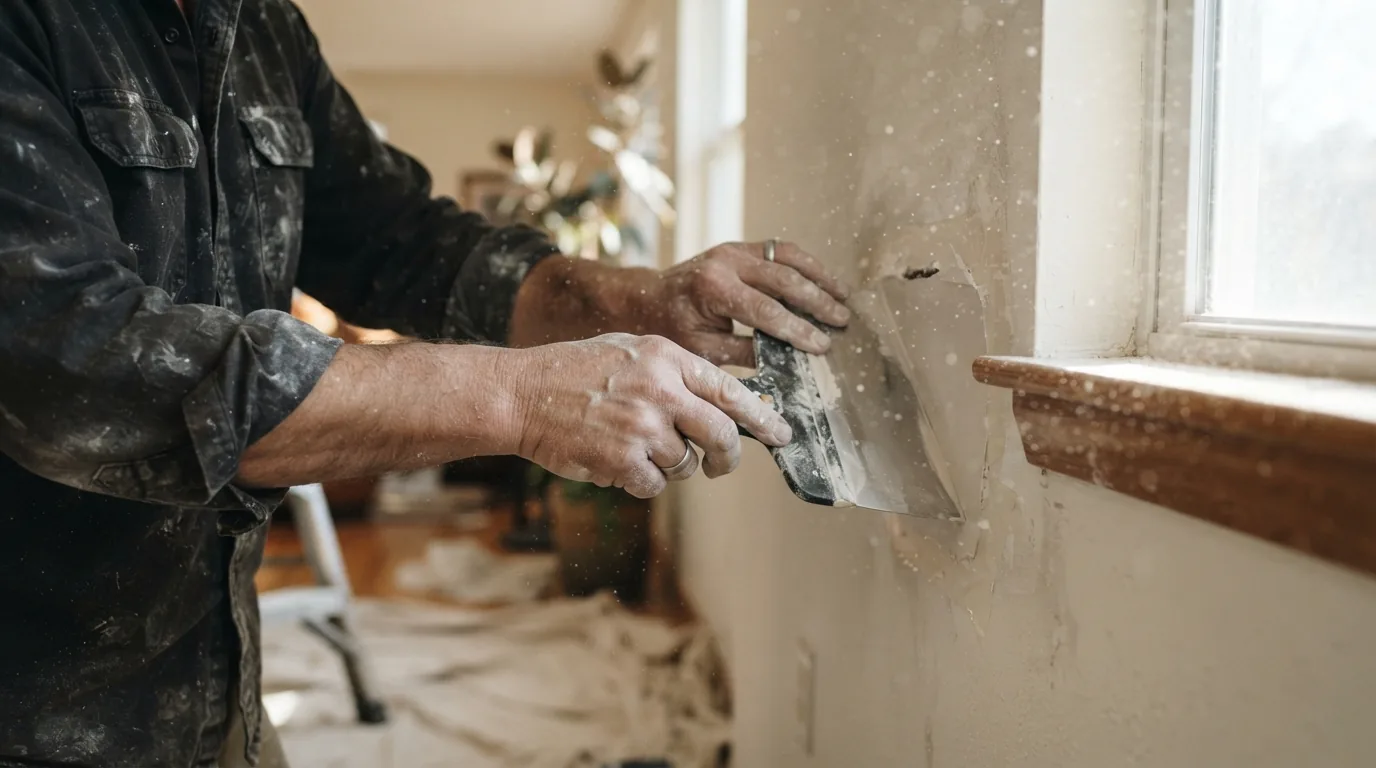
Nobody calls about drywall until the day before company arrives. I’ve taken that call more times than I can count — a hole behind a door, a stain on a ceiling, six months of ignoring it, and now it’s Thursday and the in-laws land Saturday.
The good news is that most of it is fixable fast. The part that surprises people is the price spread. Two holes that look identical to you can be a ninety-dollar difference to me, and it’s almost never about the hole.
Here’s what actually drives the cost of drywall repair in Silver Spring, and where the money goes.
What drives the cost of drywall repair in Silver Spring
1. What’s behind the wall
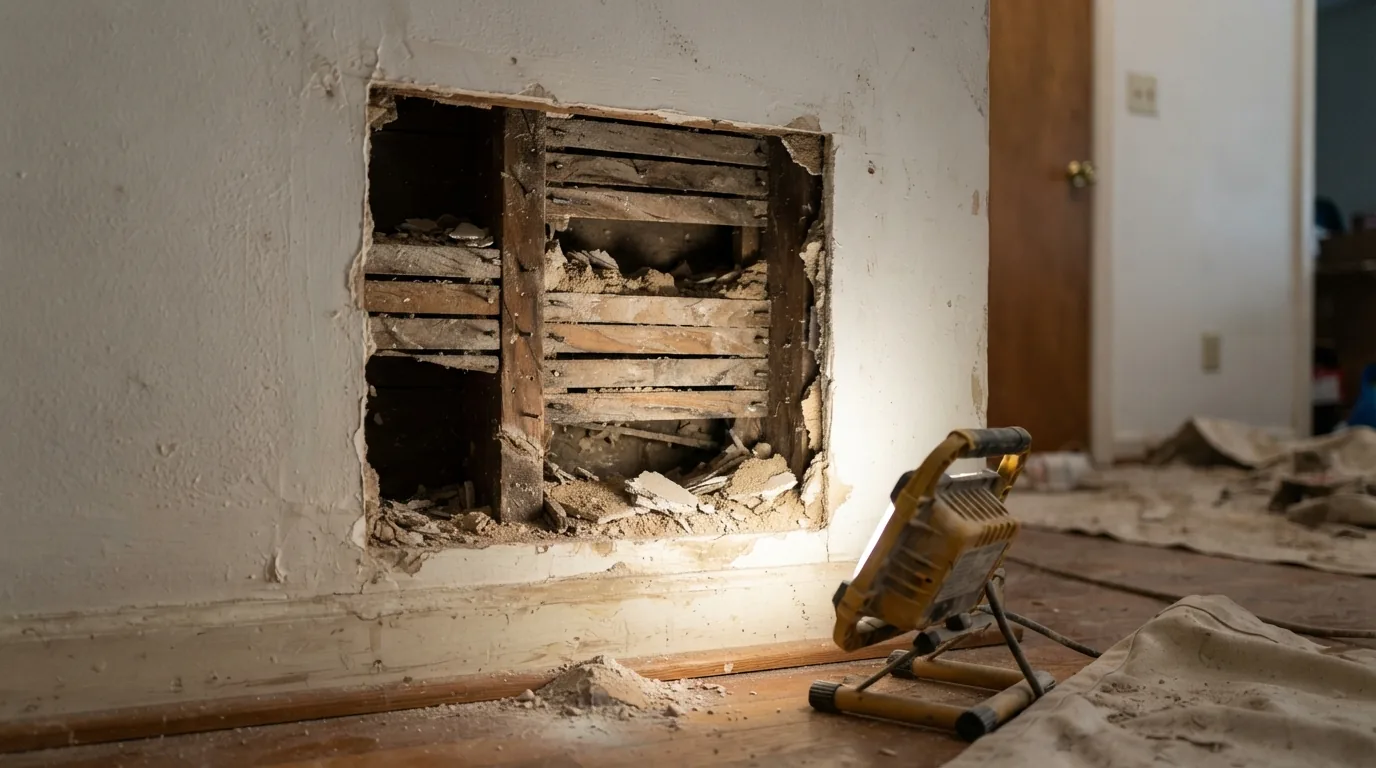
This is the big one, and it’s specific to where you live. A lot of Silver Spring inside the Beltway went up between the 1920s and the 1950s — Woodside, Seven Oaks, chunks of Takoma-adjacent streets. Those houses frequently don’t have drywall at all. They have lath and plaster.
Plaster patches differently, sands differently, and matches differently. A plaster repair on an original 1940s wall is genuinely more work than the same-sized hole in a 1990s townhouse in Fairland, and anyone quoting you the same number for both hasn’t looked closely.
The other thing behind the wall that changes the price is anything you’d rather I didn’t put a saw through. Wiring, a supply line, ductwork. Around bathrooms and kitchens I cut small and look first, which takes longer and is much cheaper than the alternative.
2. Whether the damage is the problem, or a symptom of the problem
A doorknob hole is a doorknob hole. A brown ring on a ceiling is a story with a beginning I haven’t read yet.
If there’s moisture involved, patching it is the last step, not the first. I’ve been called back to “the same spot again” by people who paid someone to skim over a stain twice while a slow shower-pan leak kept going upstairs. The drywall wasn’t the problem — the drywall was the symptom telling you something, and it got told to be quiet.
Same with a crack that keeps reopening in the same place after two repairs. That’s movement, and filling it again is buying the same repair a third time.
3. Texture matching
Flat wall, flat paint, straightforward. A textured ceiling from the 1970s is a different job, because the patch has to disappear into a pattern that was sprayed by hand fifty years ago by someone who is not available for consultation.
Worth knowing if your house predates the early 1980s: textured ceilings from that era can contain asbestos, and popcorn ceilings especially. It’s inert while it’s intact and left alone. It is not inert when someone scrapes it. If yours is original and you’re planning work, get it tested before anybody disturbs it — that’s a lab test, not a judgement call from a ladder.
4. Paint, which is where the “small job” stops being small
The repair is not done when the wall is flat. It’s done when you can’t tell — which is the whole of what our drywall repair work is actually being paid for. That means primer, then paint, and paint almost never matches — even with the original can in the basement, because the wall around it has had years of light on it.
Which is why a lot of “just a small patch” jobs end up painting the full wall corner to corner. Not upselling. It’s that a perfect patch under a slightly-off paint is a patch you’ll see every day forever.
One more thing on paint, and this one is a rule rather than an opinion. If your home was built before 1978, the paint underneath may be lead-based, and contractors disturbing it are required to be certified under the EPA’s Renovation, Repair and Painting Rule. Plenty of Silver Spring housing stock falls squarely in that window. It’s a fair question to ask anyone you hire.
Ballpark numbers, honestly labeled
I’m not going to quote you a price on a blog post without seeing the wall — anyone who does is guessing. But national cost guides generally put small drywall patch work in the low hundreds, with larger repairs involving sheet replacement, texture matching or ceiling work running higher. Treat those as market ranges, not as our quote.
What I’d actually say is this: the price gap between a cheap repair and a good one is usually smaller than people fear, and it lands almost entirely in prep and finish — the parts you can’t see in a photo and absolutely can see in person.
When a patch is the wrong answer
Three situations where I’ll tell you not to patch:
- The wall is more repair than wall. Past a certain density of patches, replacing the sheet is faster, flatter and cheaper than joining up old work.
- The plaster is letting go. If you press an old plaster wall and it moves against the lath, the key has failed behind it. Skimming over that is cosmetic, and gravity is undefeated.
- It’s wet and you don’t know why yet. Find the water first. Always.
What you can genuinely do yourself
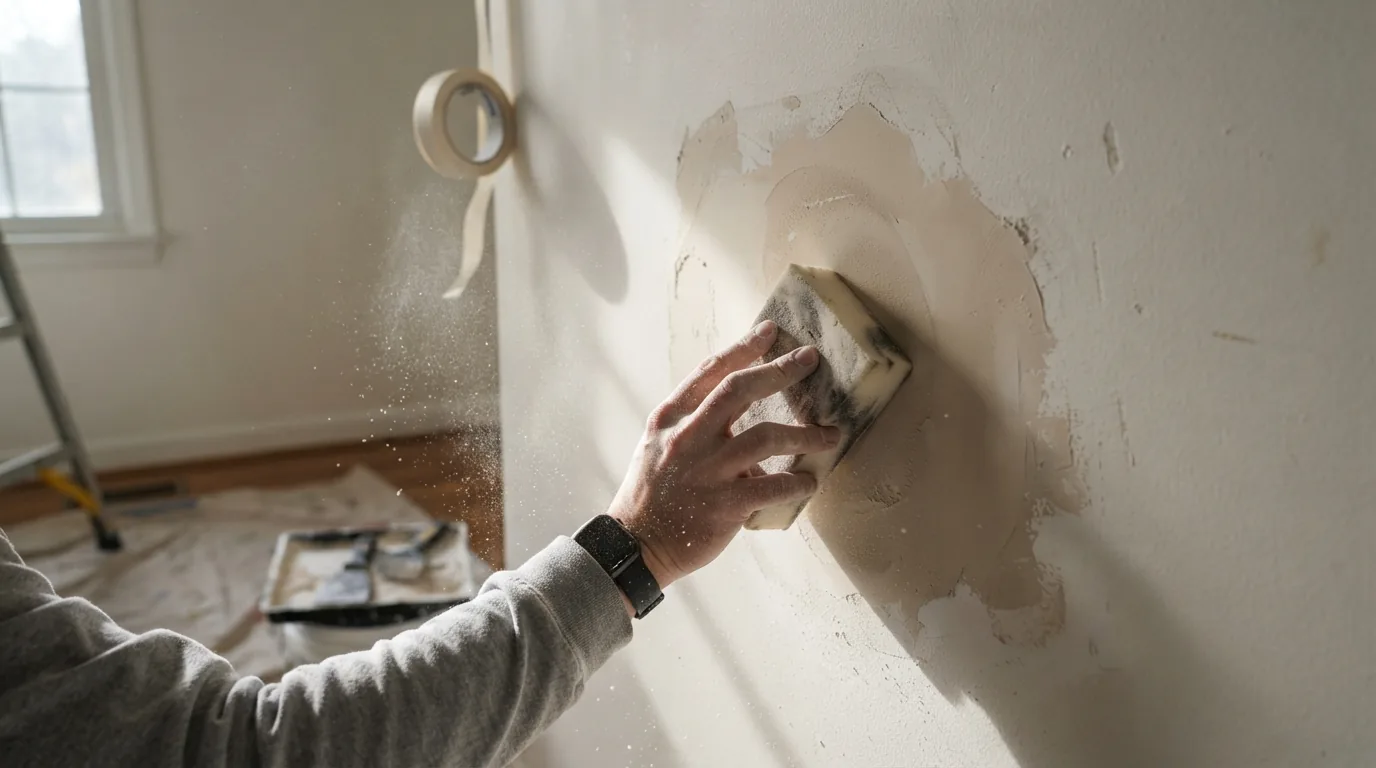
Plenty. Small holes, anchor holes, dings — a putty knife, mesh patch, lightweight compound, patience. The single most common mistake is loading compound on thick to finish in one go. It cracks, it shrinks, and it takes longer than three thin coats would have.
The other one is sanding aggressively at the edge, which digs a trench around your repair, so you fill the trench, so you sand the trench. We’ve all been there at 10pm the night before people arrive, discovering that a wall can be sanded into a worse wall.
The short version on drywall repair in Silver Spring
Drywall repair in Silver Spring is priced by what’s behind the wall, whether the damage is a symptom, how hard the texture is to match, and how far the paint has to go. Older homes inside the Beltway often have plaster rather than drywall, which is a different job — and pre-1978 paint brings EPA lead rules into it. Small holes are a fair DIY job; water stains and recurring cracks are not.
If you’re not sure which one you’ve got, we’ll come and look and tell you honestly — we work across Silver Spring and estimates are free, no obligation, no sales pitch. If it’s a job you can do yourself in an afternoon, I’ll say that too.
Frequently asked questions
Q: How long does drywall repair take?
A: Usually two visits rather than one, and it’s drying time not difficulty. Compound needs to dry between coats, and rushing that is what makes a repair visible later.
Q: My house is from the 1940s — is it drywall or plaster?
A: Very likely plaster on wood lath. Push gently on the wall; plaster feels harder and more brittle than drywall, and a pushpin will struggle to go in. It changes how the repair is done and what it costs.
Q: Can you match a textured ceiling?
A: Usually yes, though it’s the part of the job that takes skill rather than time. If the ceiling is original and predates the early 1980s, have it tested for asbestos before anything gets disturbed.
Q: The same crack keeps coming back. Why?
A: Because it’s movement, not damage. Filling it treats the symptom. It needs taping properly, and sometimes it needs the underlying cause looked at first.
