

What this job actually involves
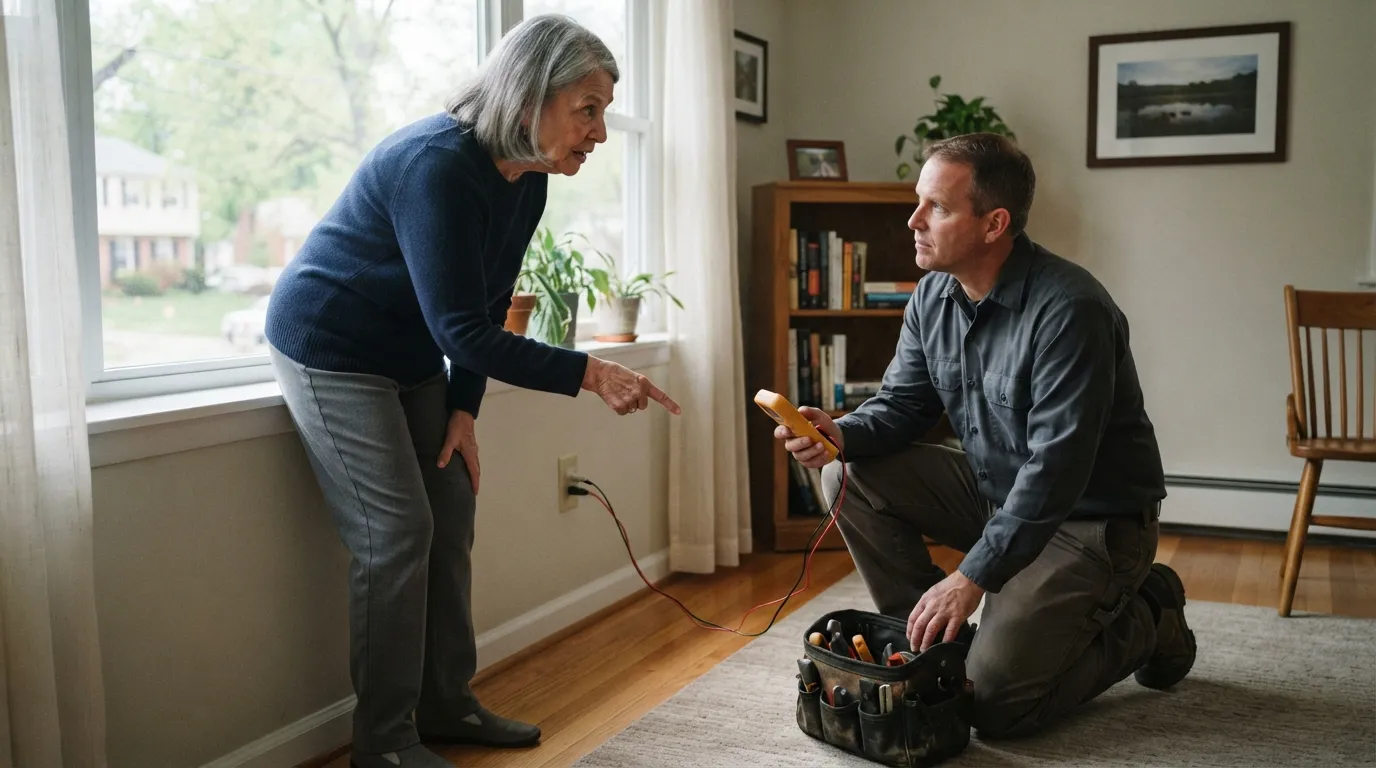
When you call about an electrical fault, you ask someone to find where electricity is behaving outside its normal limits. You ask them to make it behave again. That can mean tracing a single outlet back to its circuit. It can mean testing a switch or fixture. It can mean checking a breaker and panel for overload signs or following a problem through several rooms to its source. The work is diagnostic as much as it is repair: a technician spends time finding the root cause before replacing parts.
Early on you will need to describe symptoms, where they happen in the home, and whether they are steady or intermittent. Use plain detail: which lights or outlets, what time of day the problem shows up, and whether anything heavy was running when it started. Tell the technician statements like “an outlet is dead” or “a breaker trips when the microwave runs.” Also say “the living room lights flicker.” These clues help the tech choose tools and tests for the first visit.
We will explain what decides price and how long the visit takes in the next sections, but the single most useful thing you do before you call is gather clear, specific observations about the fault and who else in the property shares the electrical system.
Before you call: quick safety checks
A few short checks you can do safely from the hallway or doorway help reduce risk and speed a diagnosis. If a breaker is warm to the touch, stop using the circuit and do not touch the device. Do the same if outlets or switches feel warm. If you smell burning, stop using the circuit and do not touch anything. Note whether multiple circuits are affected, and whether the issue started after any recent work or appliance changes.
Have these details to hand when you call:
- Which outlets, lights, or appliances show the problem
- Whether the problem is constant or happens only when other devices run
- Any visible signs, such as scorch marks, burning smell, or warm covers
- Whether the property is a single house or a multi-unit building.
Those four items let a technician decide what to bring. They also let the technician decide whether the visit can be a quick repair or will need deeper investigation and time on site.
The faults homeowners actually call about
Homeowners call for a small set of recurring symptoms. Each symptom points at a short list of likely causes; telling the technician which symptom you see narrows the path on arrival.
Dead outlet or switch, single location: often the outlet or switch itself has failed, or the receptacle’s wiring or backstab connection has come loose. An outlet can be disconnected upstream on the same circuit by a loose neutral or a tripped device. It can also be a switched outlet that someone else controls. If only one device is dead while others on the same circuit work, the problem is likely local to that box. It may be the device it feeds.
When a single fixture flickers, the usual causes are a loose lamp connection or a failing bulb. It can also be a loose connection at the switch or ceiling box. If several lights on the same circuit or across different circuits flicker, the cause can be a loose neutral or a panel-side issue. That needs a circuit-level inspection.
A breaker that trips under load usually points to an overloaded circuit or a short circuit. It can also mean a failing appliance drawing excess current. A breaker that trips immediately when turned on often indicates a short. A breaker that trips only when a particular device runs suggests that device or the wiring feeding it is at fault.
Warm outlets or switches: heat at a device is a warning sign. It can come from a poor connection that creates resistance and heat. It can also come from an overloaded circuit or an outlet that is worn and needs replacing. Any warmth paired with scorch marks or smell is urgent.
If lights dim while large appliances run, the panel or service capacity may be close to its limit. The circuit supplying those lights may be overloaded. This is more common in properties with concentrated demand, such as condominiums, townhomes, and mixed-use buildings, where panels and shared infrastructure see concentrated strain.
Intermittent faults that come and go, such as an outlet that works sometimes, are often loose connections. They can also be thermal issues that change with load or devices on the same shared neutral. These faults take longer to diagnose because they must be reproduced or measured under load.
A dedicated appliance circuit that keeps tripping can mean the appliance itself has a fault. It can also mean the dedicated circuit was poorly sized or wired. Appliance repair and general electrical repairs are not interchangeable tasks. Be ready to say whether the problem follows an appliance technician’s visit or the appliance itself.
Knowing these symptom, cause pairings lets you choose how soon to call and whether to unplug affected devices until a pro arrives.
What a professional visit looks like
A first visit is a structured sequence: safety check, targeted tests, scope definition, and an explanation of options. The technician starts by confirming the symptom. They do a visual safety sweep for obvious hazards like damaged wiring, warm devices, or signs of burning. Expect the technician to isolate the circuit in question. They will run diagnostic tests with a meter and simple load checks. Those tests determine whether the problem is in the device, the box, the cable run, or the panel.
Expect the technician to pull the cover on a receptacle or switch to check for loose wires or poor connections. Expect testing for correct voltage and neutral continuity. Expect the technician to exercise the breaker while monitoring for trips. Where a fixture or appliance is involved, the pro may swap in a known-good lamp or cord to test whether the device is at fault.
After tests, the technician defines a scope. That scope lists what can be done immediately. It lists what will need parts. It also lists what is outside the scope of a single visit such as a panel upgrade or work that must be permitted. Expect to be told whether the fix will be a simple replacement at the device or a repair of a loose connection. Or expect to be told it will require further tracing that will take longer.
You will then get an explanation of options and a recommendation. A recommendation might be to replace a worn receptacle or to tighten and re-secure connections. It might be to run a new circuit or to refer the work for a panel or distribution upgrade. The technician will describe the risks and what failure looks like if left unattended.
If parts are needed, the pro may offer to return with them or to order them and schedule a follow-up. Where a permit or inspection is likely, the technician will explain that the work cannot be completed until the right approvals are in place. They will explain who usually arranges those approvals.
Before the visit ends, you should be given clear next steps. You should be told whether the job will be completed that day. You should also be told any additional visits required and which temporary measures keep you safe.
When a handyman can help, and when to call a licensed electrician
Some fixes are straightforward and commonly handled by a general tradesperson. They include replacing a worn outlet or switch and changing light fixtures. They also include tightening loose device connections and swapping a damaged cover plate. These tasks are usually contained to the device or the wiring immediately around it and do not expand the system’s capacity.
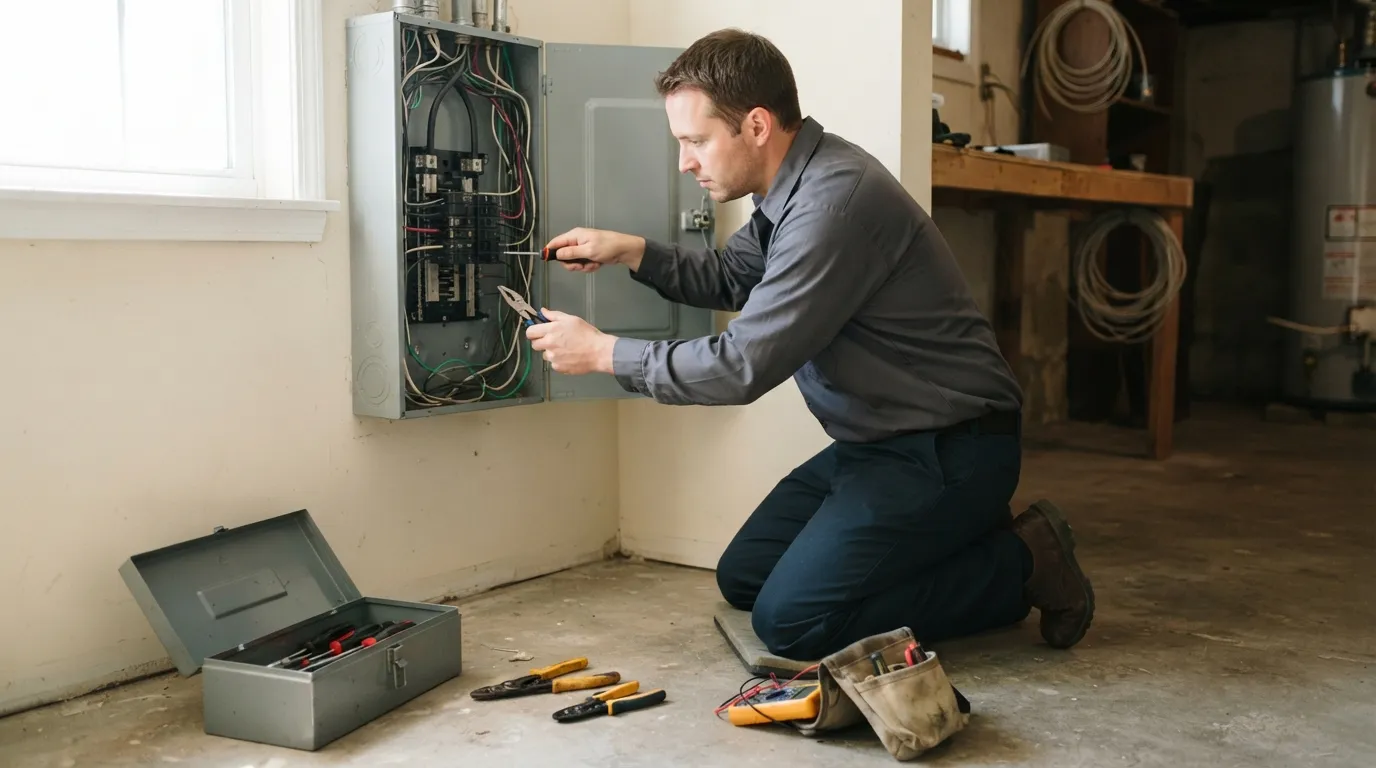
Call a licensed electrician rather than a handyman when the job affects service capacity or involves the panel. Also call one when work requires what local rules treat as major electrical work. Examples include adding a new circuit, upgrading or replacing the main panel, altering service wiring, or any work that involves the building’s shared infrastructure. Work that creates a new permanent load or that requires a permit and inspection falls into that category.
If the fault’s cause is not visible at the device and diagnostics point back to the panel, or if a loose neutral or shared neutral issue is suspected, a licensed electrician who can evaluate the panel and the service should be engaged. Multi-unit buildings and shared systems often need that level of review. Circuits and neutrals may be shared or concentrated so a simple device-level fix will not resolve the problem.
When in doubt, start with a diagnostic visit. Choose someone who can stop, describe what they found, and refer you to a licensed electrician when the work is larger than a device swap. That keeps the repair process efficient and keeps you from paying twice for the same investigation.
Permits and inspections in Montgomery County
Certain electrical jobs commonly require permits and an inspection in Montgomery County. Work that changes the service, adds new circuits, replaces or upgrades the main panel, or modifies permanent wiring is often subject to permit rules. It must be inspected before final approval. Local rules are specific about service and panel work because those changes affect the safety and distribution of power for the entire property.
Permits may be pulled by different parties depending on the job and who you hire. A homeowner can sometimes apply for a permit for small work, but when the work is larger it is common for the contractor or licensed electrician to obtain permits on your behalf so the paperwork and the scheduling of inspections are managed by the party doing the work.
Inspections ensure that wiring is installed correctly, that panels and breakers are properly sized, and that grounding and bonding meet local requirements. If an inspection is required and the work changes the panel, the job will usually wait for the inspection before it is closed out.
If you live in a multi-unit building, bear in mind that shared infrastructure or building-level rules can add steps. Condominium boards, property managers, or building superintendents may have additional requirements before any electrical work starts. Let the person you hire know the building type and any management contacts so permitting and access can be handled smoothly.
When you book a diagnostic visit, ask whether the likely fixes will need permits and who will be expected to arrange them. That prevents surprises later in the job.
How costs add up and how to get a clear quote
Price is made of a few simple components. Those include the time it takes to diagnose and the labor to complete the fix. Price also includes the cost of parts and any fees for permits or inspections. Harder-to-reach wiring, intermittent faults that take time to reproduce, and work that uncovers additional defects all increase time on site and therefore cost.
Start any call by asking how the technician prefers to quote. A clear quote explains the initial diagnostic charge if there is one and what work the visit includes. It also notes what is a change order and whether parts and permits are included or extra. Ask for the quote in writing so you can compare it with other estimates on the same scope.
Practical tips to keep the quote comparable:
- Describe the symptom precisely and list the affected rooms and devices
- Ask which repairs the initial visit will include and which would be treated as a follow-up
- Ask whether permits or inspections are included or billed separately
- Request written scope and a material list for any larger work
Diagnostics can look inexpensive when a fault is obvious, and much more costly when tracing is needed. Panel work and adding circuits add both material and permit costs because they change the system’s capacity and layout. If your property is a condo or townhouse, tell the estimator. Shared infrastructure can complicate access and the sequence of work. That usually changes how long the job takes.
A transparent estimate makes clear what is included and what is left for a later visit. Use the four questions above to make quotes from different providers comparable.
Choosing and verifying a local electrical pro
When you choose who to book, check a few practical signals before inviting someone into your home. Confirm they are licensed for electrical work in the jurisdiction where the house sits. Ask how they handle permits and inspections. Check recent local reviews or references. If you live in a managed building, ask whether the pro has worked there before and knows the building procedures.
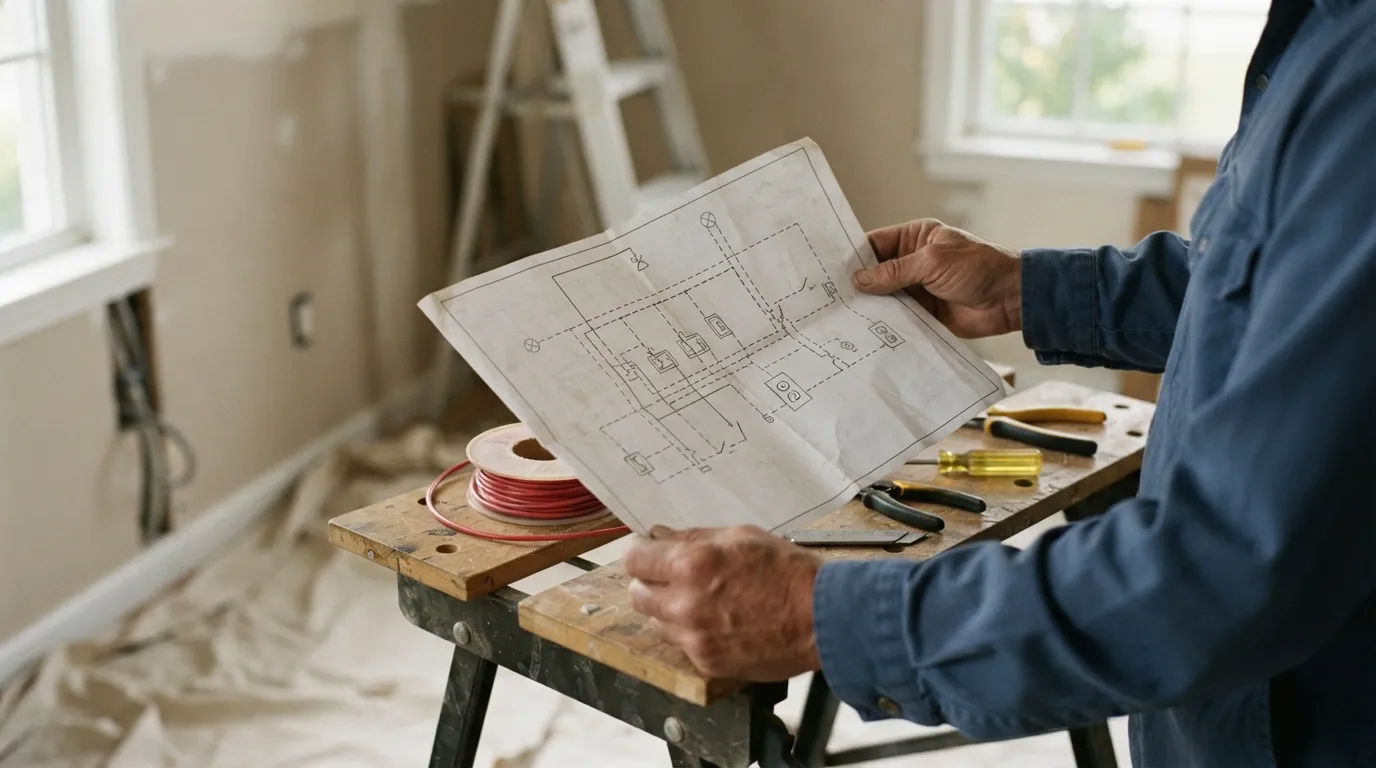
On the call, describe the symptom and ask what the first visit will include. Ask whether the technician can carry common replacement parts and who pulls permits if work requires them. If the job might require a panel or service change, ask whether the pro will bring sketches or a materials list to the first visit. That lets you see the scope clearly.
Keep a short checklist for the phone call:
- Describe the problem with the four key items (affected devices, timing, visible signs, building type)
- Ask whether the first visit is diagnostic only or includes on-the-spot fixes
- Ask how they handle permits and inspections
- Ask for a written scope and follow-up plan if work will extend beyond one visit
Choose a pro who explains the steps plainly. Ask them to list what they will do on the first visit and whether permits will be needed. That keeps the process predictable and helps you compare quotes.
If you want to read more about what a local handyman covers, look at the local pages. Read the pages on what handyman repair services include. Also read pages on electrical upgrades and what to ask before you hire a handyman.
Frequently asked questions
How can I tell if an outlet or switch problem is urgent and needs a pro immediately?
If an outlet or switch is warm, smells of burning, or shows scorch marks, stop using the circuit and get a professional to inspect it. Warmth and visible damage suggest a connection or overload issue that can escalate, and a pro can test the device and circuit safely.
Can a handyman replace an outlet or do I need a licensed electrician?
A handyman commonly replaces worn outlets, switches, and fixtures when the work is contained to the device and does not change the building’s service. If the issue points back to the panel, involves adding circuits, or requires permits, a licensed electrician should do the work.
Do I need a permit to replace an electrical panel or add a new circuit in Montgomery County?
Work that replaces or upgrades the main panel, adds new circuits, or alters permanent wiring commonly requires a permit and inspection in Montgomery County. For larger jobs it is normal for the contractor or licensed electrician to arrange permits and inspections on your behalf.
How do condo or townhouse electrical systems differ from detached houses for repairs?
Condominiums, townhomes, and mixed-use buildings place concentrated strain on panels and shared infrastructure, and shared or nearby circuits can complicate diagnosis and access. Tell the person you hire the building type and any management rules so permitting and access can be handled correctly.
