

Every August I get the same calls. The back door won’t close. There’s a gap opening at the hardwood. A crack came back above the doorway after it was fixed in April.
Almost none of these are defects. They’re your house responding to the fact that Maryland in August holds a genuinely enormous amount of moisture in the air, and everything wooden in your house is quietly absorbing it.
Knowing which of these is normal and which is a problem saves both unnecessary worry and unnecessary repairs. Here’s the difference.
Maryland humidity is behind nearly all of it, and knowing which symptoms are seasonal saves you paying to fix something that will fix itself.
Why this happens
Wood is hygroscopic — it takes on moisture from the air and gives it back when the air dries. As it does, it swells and shrinks, and it does so more across the grain than along it.
Our climate swings hard. Winter interiors with the heating running can drop to very dry conditions; August can push interior humidity far higher. Every wooden component in your house — floors, doors, trim, framing, cabinets — expands and contracts through that cycle, every single year.
This is normal. Houses are supposed to move. The question is only ever whether the movement is seasonal or progressive.
The seasonal complaints, and what to actually do
Doors that stick
The classic August call. A door that swung freely in February now catches at the top of the latch side.
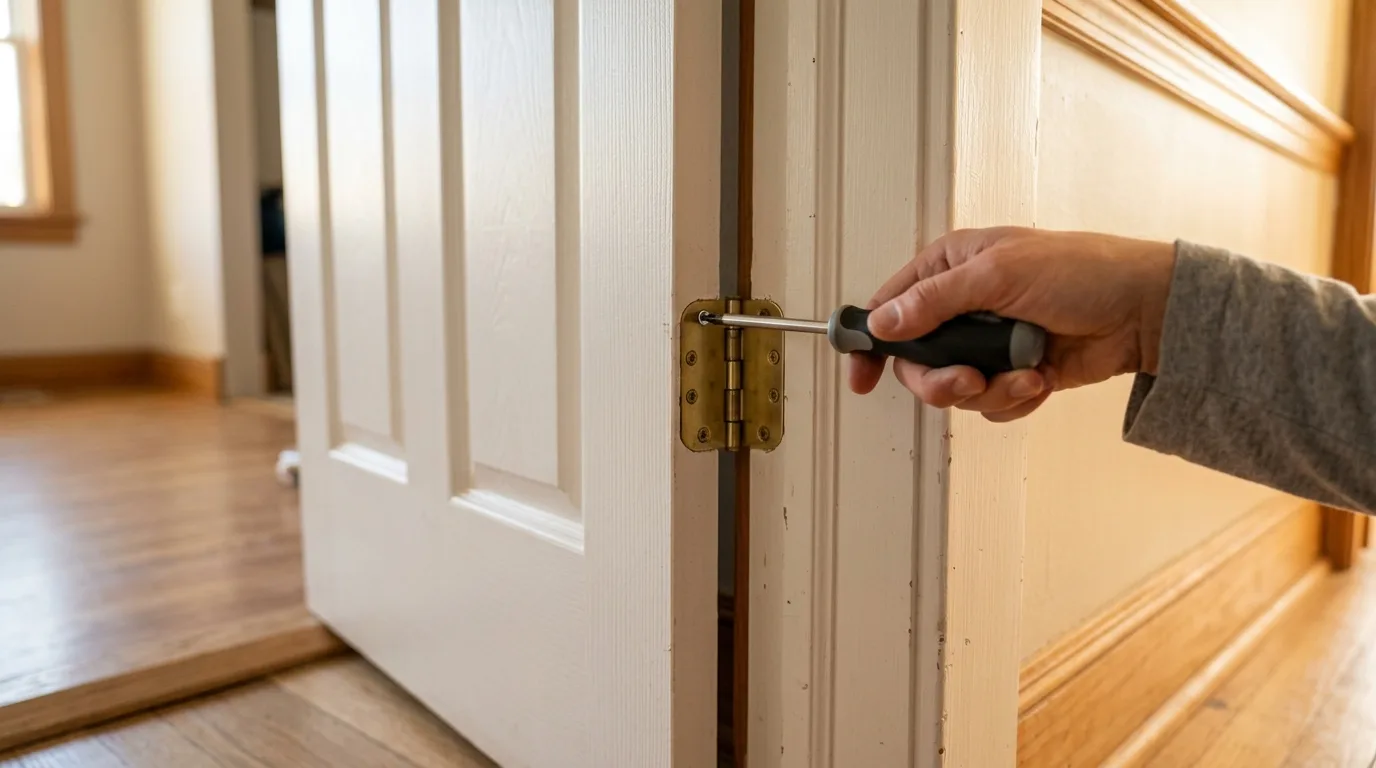
Do nothing yet. Or rather: do the small things. Check the hinge screws first — a loose top hinge lets the door sag, and that presents exactly like swelling. Tightening it, or replacing one screw with a longer one that reaches the framing, fixes a surprising proportion of sticking doors permanently.
Don’t plane the door in August. This is the mistake. Plane it now, and in February you’ll have a door with a visible gap that no longer latches properly. If a door sticks year-round, plane it. If it sticks only in summer, wait.
Hardwood floors that cup or gap
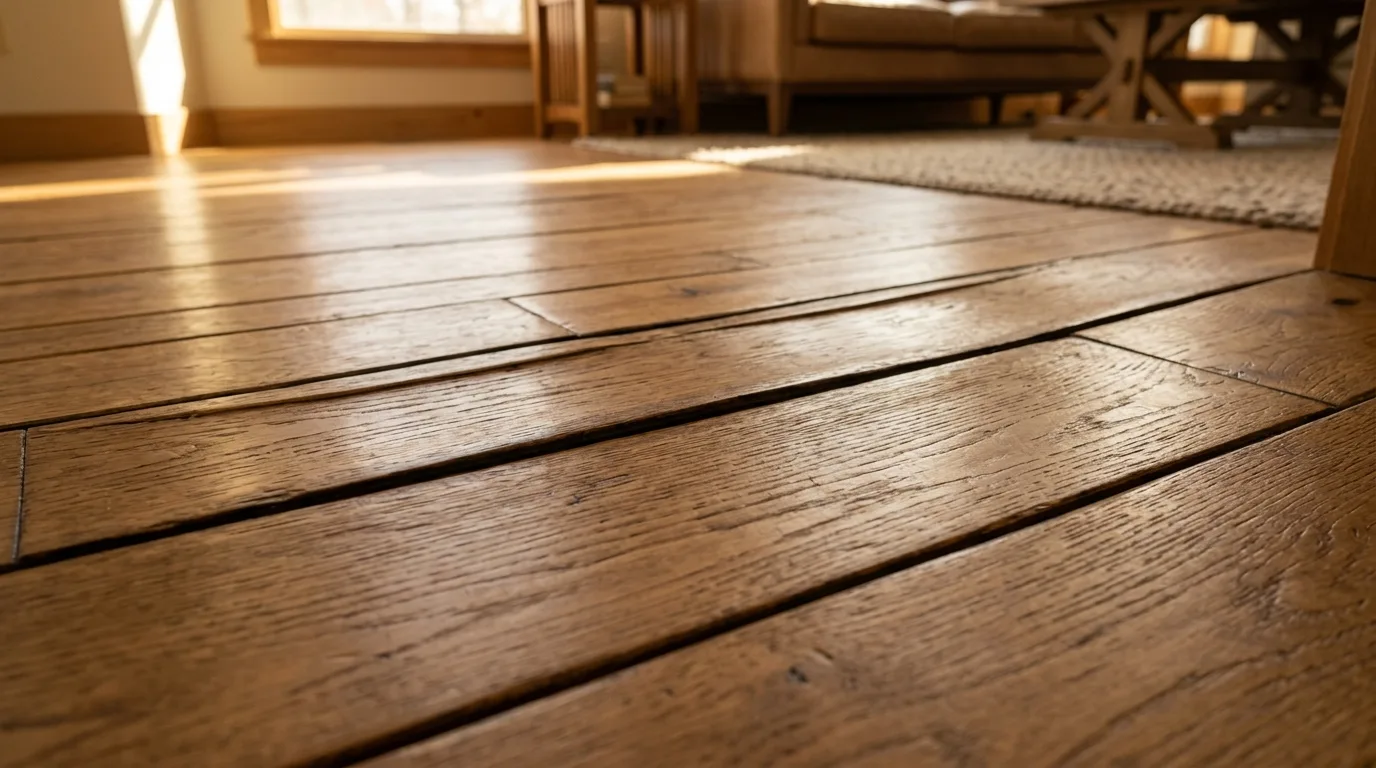
Cupping — board edges rising slightly higher than centres — is the summer version. Gapping between boards is the winter version. Both are normal seasonal behaviour in solid hardwood, and both usually reverse.
When to worry: cupping that’s localised to one area rather than across the room usually means water from below or a leak, not humidity. Cupping in a basement or over a crawl space points at moisture underneath. And cupping that doesn’t reverse by winter is telling you something.
Never sand a cupped floor in summer. Sand it flat while it’s swollen and it will be dished when it dries out. Wait for a stable season.
Drywall cracks that reappear
Cracks above door and window corners, and along ceiling-wall joints, opening and closing with the seasons. Very common here.
The reason a filled crack comes back is usually that it was filled rather than repaired — compound alone in a moving joint will crack again. Taping it properly gives it a chance. Some seasonal joints, particularly ceiling-to-wall in certain framing situations, will always move a little; a flexible caulk at that junction is more honest than pretending otherwise.
When to worry: diagonal cracks running from a corner, stair-stepped cracks, cracks noticeably wider at one end, or any crack that keeps growing rather than cycling. That’s structural, not seasonal.
Sticking windows, and cabinet doors going out of alignment
Same mechanism. Wooden sashes swell; cabinet doors shift enough that the gaps between them stop looking even. Adjustable hinges can be tweaked, but again — if it only happens in August, leave it.
What’s actually damaging, as opposed to just annoying
The seasonal stuff above is cosmetic. These are the ones that do real harm.
Bathroom exhaust venting into the attic
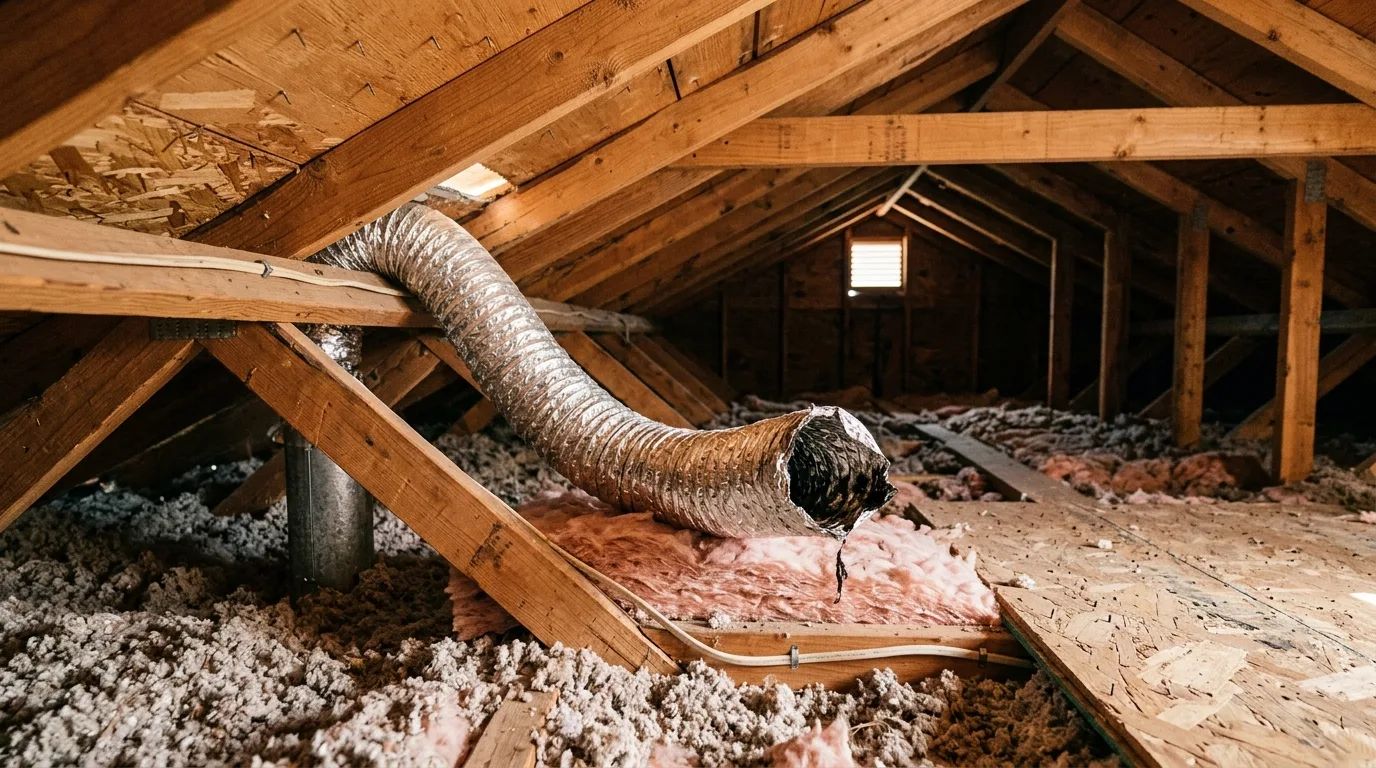
The single most common genuine defect I find in this area. The fan works, so nobody questions it — but it’s discharging warm, wet air into the roof structure. In August, that condenses on the underside of the sheathing. Repeat that for a few years and you get damp sheathing, then mould, then a large bill.
Go and look, if you can access your attic. The duct should terminate at a roof or gable vent, not simply end. This is inexpensive to correct and one of the highest-value fixes in the house.
Missing or failed bathroom and kitchen ventilation generally
An underpowered fan in a Maryland summer isn’t clearing anything. If your mirror stays fogged long after a shower, or paint is peeling near the ceiling, the ventilation isn’t doing its job.
Damp basements
Warm humid air meeting cool basement surfaces condenses. That’s why basements smell in August. A dehumidifier genuinely helps. What helps more is checking that gutters and downspouts are actually carrying water away from the foundation rather than depositing it beside it.
Wood that stays wet
Any exterior wood that isn’t drying between rains — deck boards in permanent shade, trim behind an overgrown shrub, a sill under a leaking gutter. Humidity alone doesn’t rot wood. Humidity plus water plus no drying does.
The August checklist worth ten minutes
- Check where your bathroom fans vent. If you take one thing from this, take this.
- Look at the gutters and downspouts. Water landing at the foundation is behind a large share of basement and framing problems.
- Tighten hinge screws on any door that’s suddenly difficult, before assuming it’s swollen.
- Look for localised floor cupping — near dishwashers, under sinks, by exterior doors. Localised means leak.
- Run a dehumidifier in the basement and see whether the smell goes.
- Check under every sink. A slow leak in August is doing much more damage than the same leak in January.
- Note what’s sticking or cracking, and check again in February. The comparison is the diagnosis — seasonal problems reverse, real ones don’t.
The rule that covers most of it
If it changes with the seasons, it’s moisture in the air, and permanent fixes applied in August will be wrong by February. If it gets steadily worse regardless of season, it’s a real problem and worth investigating now.
That single distinction resolves most of what people call me about at this time of year, and it saves a lot of money that would otherwise go on fixing something that was going to fix itself in October.
If something you’re seeing falls into the second category — or you’re not sure which it is — we cover drywall repair, flooring and general repairs across Silver Spring, Bethesda, Rockville, Kensington and the rest of Montgomery County. Estimates are free, and a fair number of them end with me telling someone to wait until winter and see.
What Maryland Humidity Does to Your House: The Short Version
Most of what people report in August is normal seasonal movement, not damage. If it changes with the seasons and reverses, it is moisture in the air and permanent fixes applied now will be wrong by February. If it worsens regardless of season, investigate it. The one genuine defect to hunt for is a bathroom fan venting into the attic.
Frequently Asked Questions
Q: Why do my doors stick every August?
A: Maryland humidity is absorbed by wood, which swells. Check the hinge screws first, because a loose top hinge presents exactly like swelling. Don’t plane a door that only sticks in summer — it’ll have a gap by February.
Q: Is cupped hardwood flooring a problem?
A: Seasonal cupping from Maryland humidity that reverses in winter is normal. Cupping localised to one area, or over a basement or crawl space, usually means water from below rather than humidity, and that’s worth investigating.
Q: Why does my filled wall crack keep coming back?
A: Because it was filled rather than repaired, and Maryland humidity keeps the joint moving. Compound alone in a joint that moves will crack again — it needs taping, and some seasonal joints are more honestly handled with a flexible caulk.
Q: What’s the difference between normal movement and a real problem?
A: If it changes with the seasons and reverses, it’s moisture in the air and permanent fixes applied in August will be wrong by February. If it gets steadily worse regardless of season, investigate it now.
