

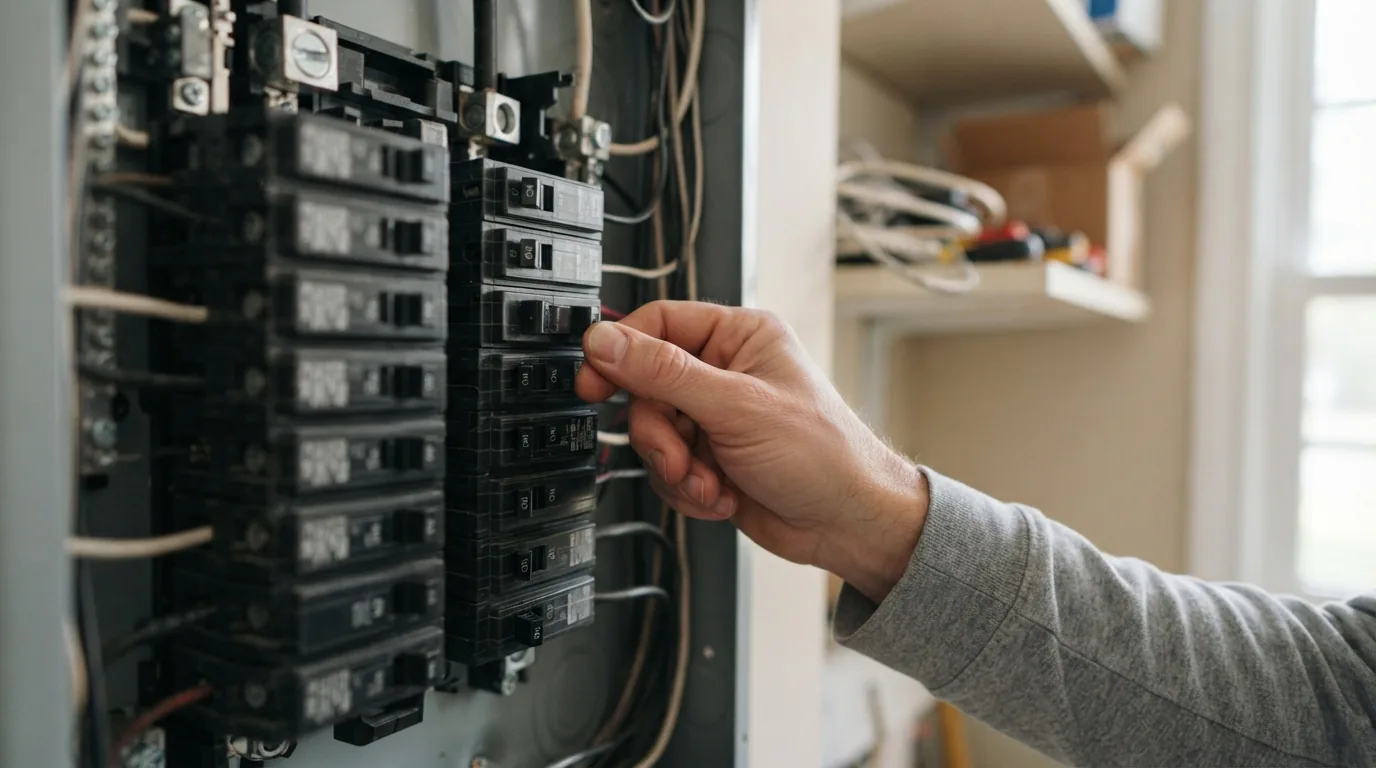
Half the dead outlets I get called about aren’t broken. They’re switched off by something the homeowner didn’t know existed.
So before anyone opens anything: there are two safe checks worth doing on dead outlets and tripping breakers, and they resolve this more often than you’d think.
The two checks to do first
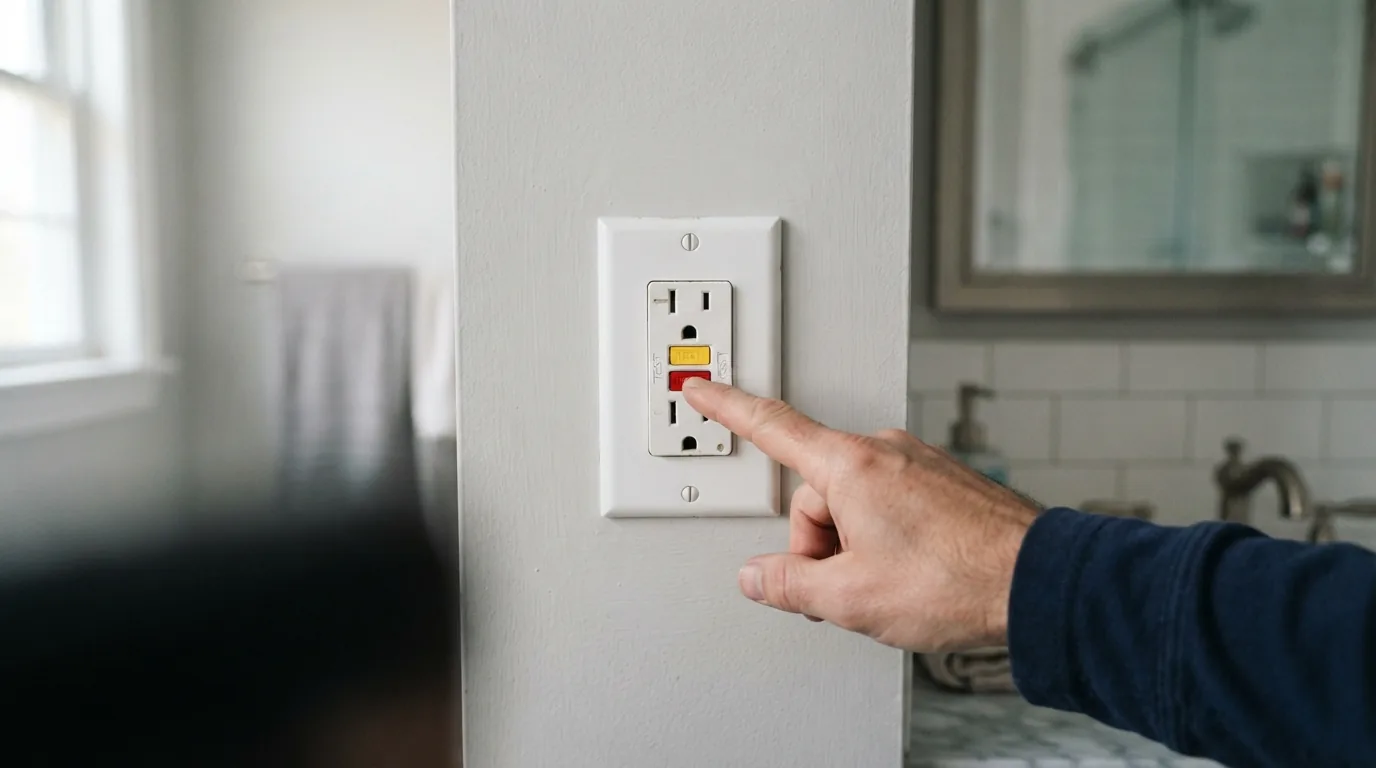
1. Find the GFCI
GFCI outlets — the ones with TEST and RESET buttons — protect not just themselves but often every outlet downstream on the same circuit. Trip one, and outlets in other rooms go dead with no obvious connection.
The classic version: the bathroom GFCI trips, and the outlet in the garage or on the patio stops working. People replace the dead outlet and it still doesn’t work, because the dead outlet was never the problem.
So walk the house and press RESET on every GFCI you can find — bathrooms, kitchen counters, garage, basement, outdoors. They hide behind things.
2. Check whether it’s a switched outlet
In many older homes one half of a receptacle is controlled by a wall switch, intended for a lamp. Flick the switches in the room before concluding anything is wrong.
Neither of these requires tools or opening anything, and between them they explain a lot of dead outlets.
Why breakers trip, and what tripping breakers mean
A breaker tripping is the system working. The question is what caused it.
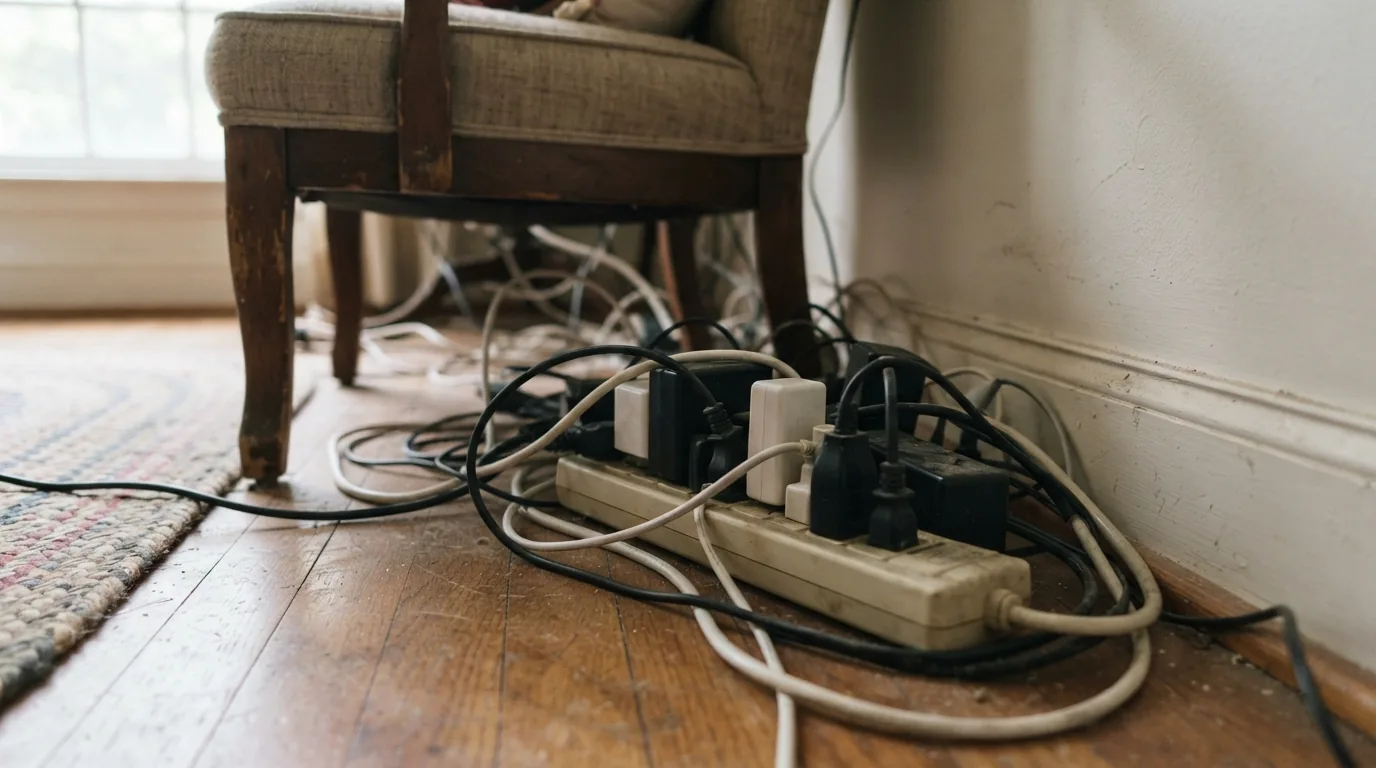
Overload. Too much drawn on one circuit. Typical culprits are a space heater, a hair dryer or a window AC unit on a circuit already doing other work. It’ll usually trip a few seconds to a few minutes after the load starts.
Short circuit. Trips immediately and often forcefully. That’s a fault rather than a capacity problem, and it needs looking at rather than resetting repeatedly.
Ground fault. Current escaping where it shouldn’t. GFCI devices are designed to catch this, which is why they exist near water.
Arc fault. AFCI breakers detect arcing, which is a fire risk. They can be sensitive to certain appliances, but a repeatedly tripping AFCI should be investigated rather than assumed to be a nuisance.
Resetting a breaker once is reasonable. Resetting the same breaker repeatedly is overriding a safety device that is telling you something, and that’s how a fault becomes a fire. The CPSC’s home electrical safety guidance is worth a read on where the real risks sit.
The diagnostic that narrows tripping breakers down fast
Repeatedly tripping breakers narrow down quickly with one test: unplug everything on that circuit and reset it.
Holds with nothing plugged in? Add items back one at a time until it trips. You’ve found your appliance, and it’s often a failing one rather than a wiring problem.
Trips again with nothing connected? That’s a fault in the wiring or a device itself. Stop there and get it looked at rather than continuing to reset it.
That single test separates the two categories cleanly and safely.
What’s reasonable to do yourself
Resetting GFCIs and breakers, checking switched outlets, testing GFCI devices with their own TEST and RESET buttons monthly, and the unplug-everything diagnostic above. All safe, all useful.
What I’d leave to us: opening outlets or switches, replacing devices, and anything involving the panel. Not because it’s complicated — because the failure mode is severe, and the wiring in older homes here is frequently ungrounded, back-stabbed, or modified by a previous owner in ways that aren’t obvious until it’s open.
What older homes around here tend to have
Three recurring findings, all normal for the age of the housing stock:
Two-prong outlets. Ungrounded wiring. There are compliant ways to handle this, including GFCI protection with correct labeling, but simply fitting a three-prong outlet onto ungrounded wiring is not one of them — it creates the appearance of a ground that isn’t there.
Too few circuits. A house wired for mid-century loads running modern ones, which shows up as breakers tripping when two ordinary appliances run together.
Missing GFCI protection where it’s now expected — kitchen counters, bathrooms, garage, exterior. Adding it is comparatively inexpensive and one of the more worthwhile electrical improvements in an older home.
The short version on tripping breakers and dead outlets
Before assuming anything is broken, reset every GFCI in the house and check whether the outlet is switched — between them they explain a large share of dead outlets. Tripping breakers are the system working, and the cause matters: overload trips after a delay, a short trips instantly. Unplug everything on the circuit and reset; if it holds, add items back one at a time to find the culprit, and if it trips with nothing connected, stop and call an electrician. Never reset the same breaker repeatedly.
If it turns out to be capacity or old wiring rather than a single failing appliance, that’s exactly the sort of thing to get looked at properly. See our electrical work across Silver Spring and the surrounding neighborhoods — free estimates, no obligation.
Frequently asked questions
Q: Why did outlets in another room stop working?
A: Almost certainly a tripped GFCI upstream on the same circuit. Walk the house and press RESET on every GFCI, including ones in the garage, basement and outdoors.
Q: Is it safe to keep resetting a breaker?
A: Once, to see whether it was a one-off overload, yes. Repeatedly, no. The breaker is protecting the circuit, and forcing it back on repeatedly while a fault persists is genuinely how electrical fires start.
Q: Can I replace a two-prong outlet with a three-prong one?
A: Not simply, no. Without a ground, a three-prong outlet gives the appearance of protection that isn’t there. There are compliant approaches involving GFCI protection and correct labeling — worth doing properly.
Q: My GFCI won’t reset. What now?
A: Usually it means the fault it’s detecting is still present. Unplug everything on the circuit and try again. If it still won’t hold with nothing connected, that’s an electrician’s job rather than a persistence problem.
