
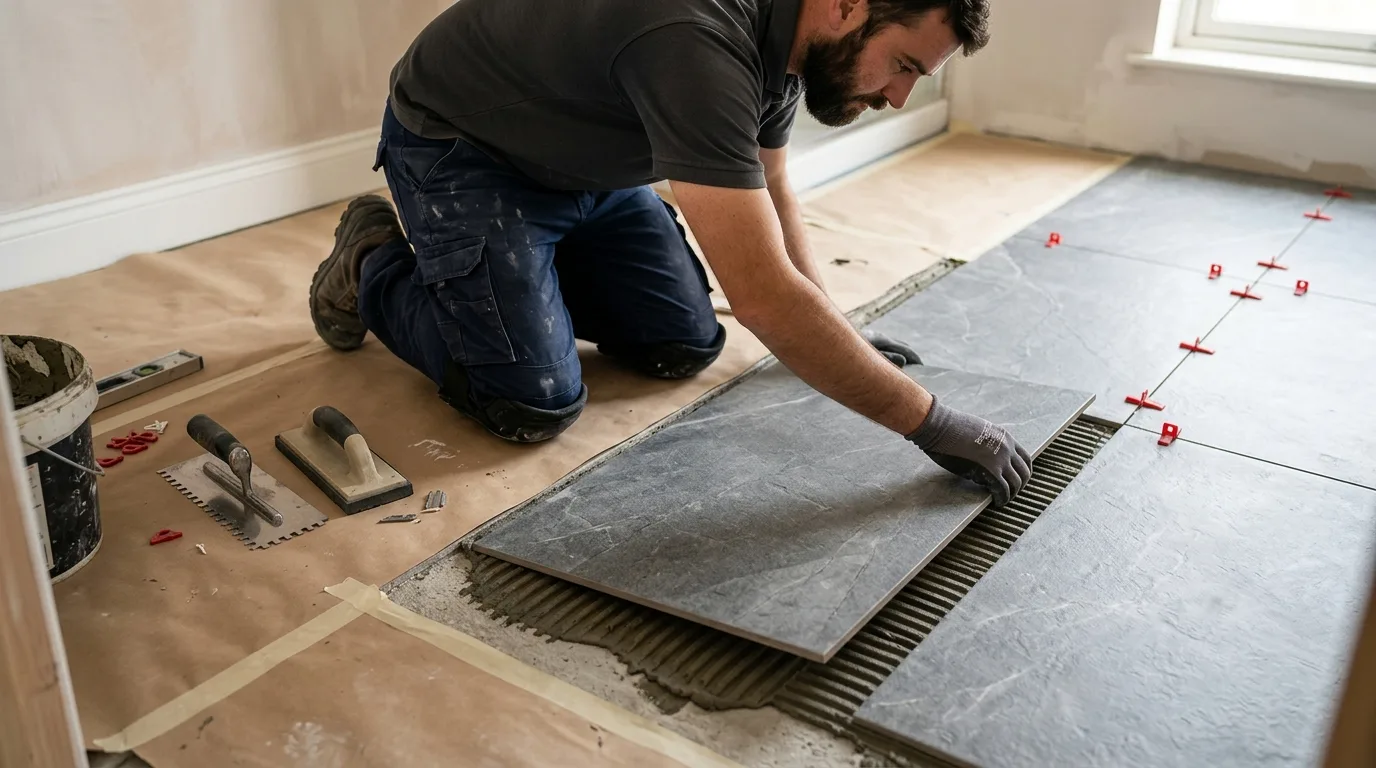
Tile is the most deceptive trade in a house. The finished work looks like the job was setting tiles in straight lines. It wasn’t. Nearly all of the skill, and nearly all of the reason a tile job fails, lives in what happened before the first tile was placed.
Here’s what actually matters in tile installation in Rockville, MD, whether you’re hiring it out or deciding whether to attempt it.
The substrate decides everything
Tile is rigid. Grout is more rigid still. Neither tolerates movement. So the surface underneath has to be flat, solid and stable — and in most houses around here, it isn’t yet.
Flat is not the same as level. A floor can slope gently and take tile beautifully. A floor that’s level overall but dips in the middle will crack tiles, because the tile bridges the dip and something has to give. Flatness is what matters, and large-format tile is far less forgiving about it than small tile.
Deflection matters on wood floors. If the floor bounces when you walk across it, tile will crack — perhaps not immediately, but it will. In older Rockville houses with long joist spans, this sometimes means adding support or a second layer of subfloor before any tile is discussed. It’s not padding the estimate; it’s the difference between a floor that lasts and one that fails in year two.
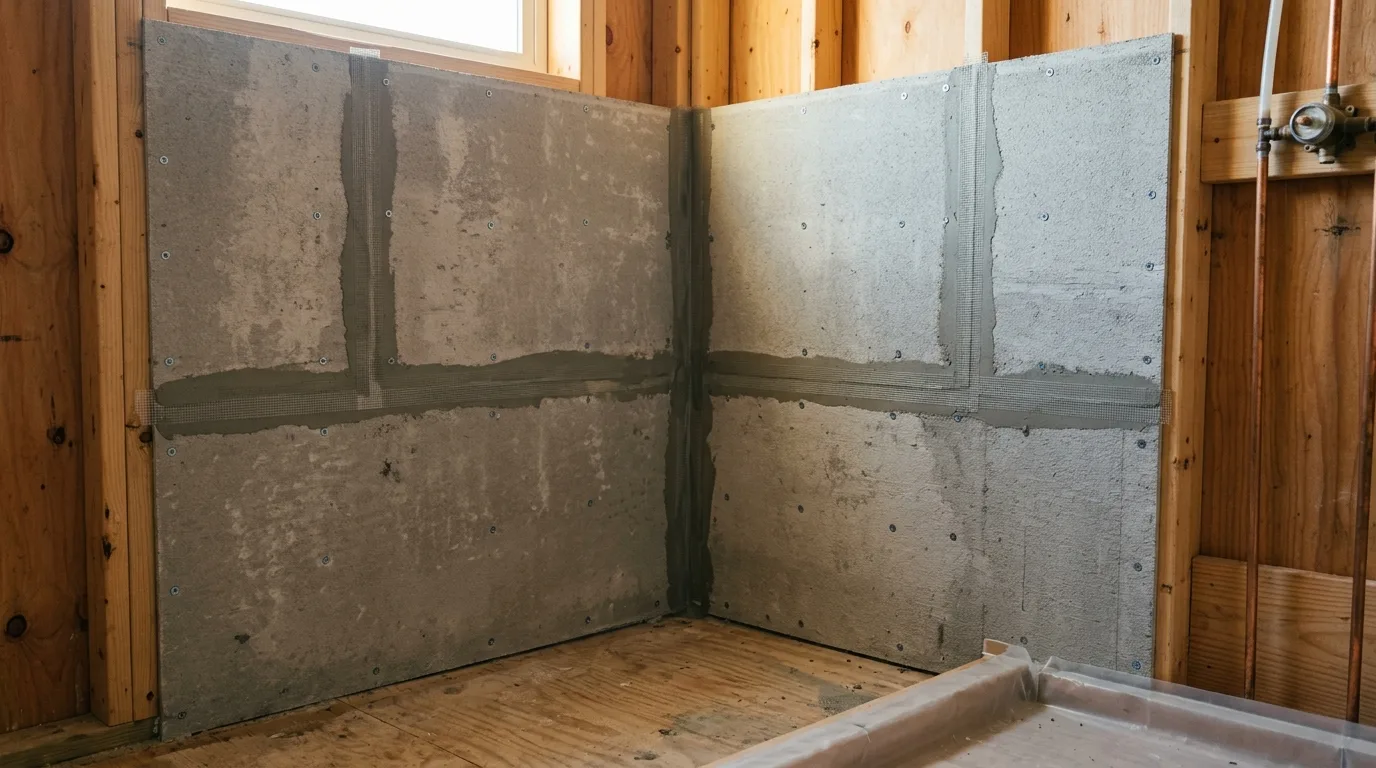
Never tile straight onto drywall in a wet area. Drywall in a shower, even so-called green board, is not a tile substrate. It needs cement backer board or a proper waterproof board system. This is one of the most common failures I’m called to fix, and by the time it shows on the surface the damage behind has been developing for a long while.
Waterproofing: the part you pay for and never see
The most persistent misunderstanding about tile: tile and grout are not waterproof. Grout is porous. Water gets through it. That’s expected and fine — provided there’s a waterproof membrane behind the tile doing the actual work.
In a shower, that membrane is the entire defence between your bathroom and the structure of your house. Done properly it lasts decades. Skipped or done badly, water reaches the framing and you find out eighteen months to five years later, usually via a stain on a ceiling below.
If you’re comparing quotes and one is noticeably cheaper, ask specifically what waterproofing system is being used and how the corners and the drain are treated. Corners and penetrations are where failures start. A vague answer is an answer.
Layout: decided before, not during
A tiler who starts in a corner and works across is going to finish with a sliver of tile somewhere it’s very visible. Proper layout means dry-laying, finding the centre lines, and deciding in advance where the cuts land — so they land in the least conspicuous place, and so you don’t end up with a two-centimetre strip at the most-seen wall.
Specific things worth agreeing before work starts:
- Where the full tiles start and where the cuts fall
- How the pattern meets doorways and transitions between rooms
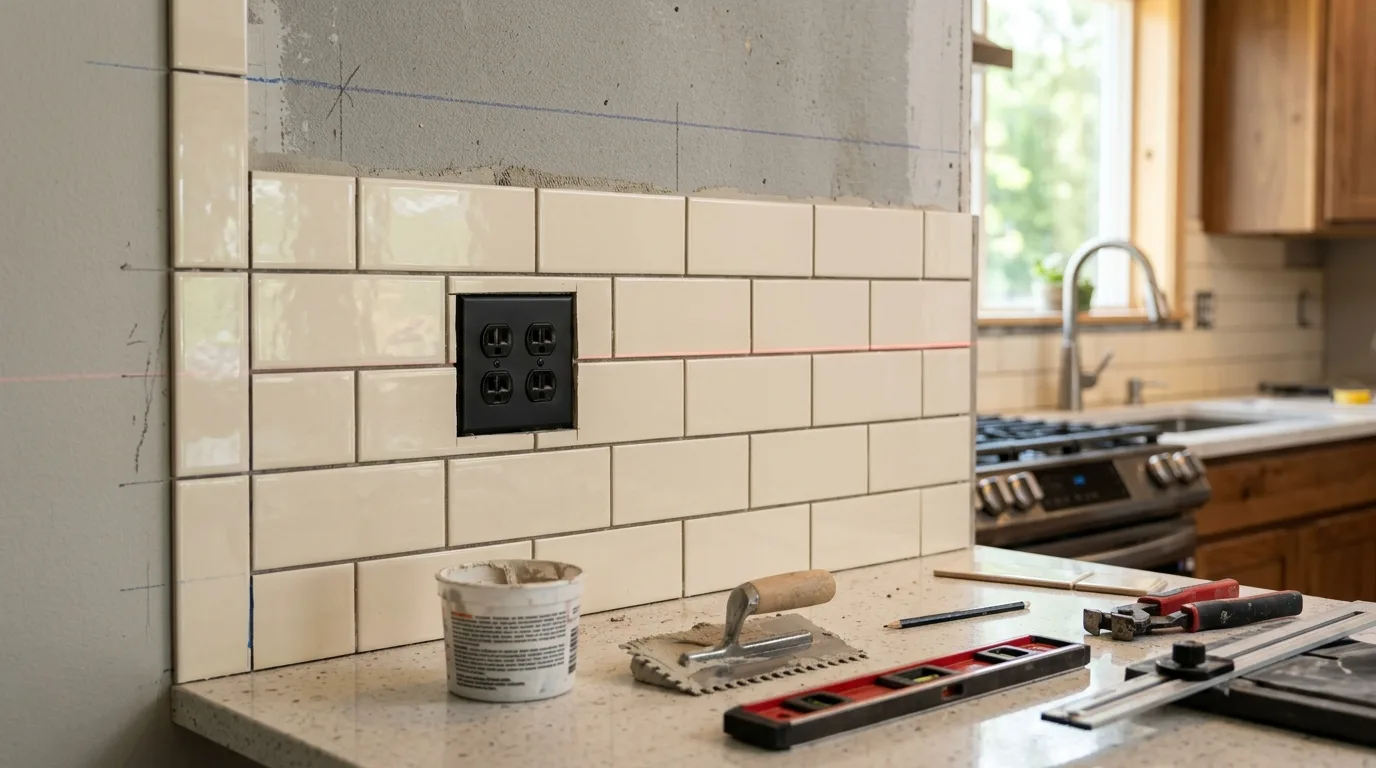
- On a backsplash: how tiles meet outlets, the window, and the end of the run
- Grout colour — matching disappears the grid, contrasting emphasises it. Neither is wrong; they’re very different rooms
- Grout line width. Rectified tile can take a narrow line; standard tile can’t, and forcing it looks worse
The three jobs, and how they differ
Floors
Substrate flatness and deflection are the whole game. In kitchens and bathrooms, plan the transitions to adjoining rooms in advance — the height difference between new tile and existing hardwood needs a deliberate solution rather than an improvised threshold.
Showers
The most demanding tile work in a house: waterproofing, slope to the drain, corner detailing, niches, and a curb that has to be built and sealed correctly. This is the one I’d most strongly advise against as a first DIY project. The failure mode isn’t cosmetic.
Backsplashes
The most DIY-friendly of the three. Small area, no waterproofing burden, vertical so gravity helps you. The difficulty is in the details — cutting neatly around outlets, ending the run cleanly, and keeping lines true across a wall that isn’t straight. In an older house, the wall is not straight.
What Rockville houses throw at you
Rockville’s housing stock runs from post-war ramblers and split-levels through extensive later development, and the era predicts the problem.
Older houses: original mortar-bed tile that’s brutal to remove, subfloors with dips and long joist spans, and walls that are out of plumb enough to matter over a run of tile.
1970s–80s: fibreglass surrounds being removed for tile, which means building a proper waterproofed substrate where there wasn’t one. And occasionally discovering why the surround was leaking.
Newer construction: generally sound framing, but builder-grade tile installed fast — sometimes over inadequate waterproofing. It looks fine for a decade and then the grout starts telling on it.
Everywhere: our humidity swing between February and August moves everything, which is why movement joints and a flexible substrate assembly matter more here than in a stable climate.
Where DIY tile goes wrong
In order of how often I see it:
- Inadequate substrate prep — tiling onto a floor that wasn’t flat or stiff enough. Everything downstream fails from here.
- Not enough mortar coverage — hollow spots under tiles, which crack under load. Notched trowel size and technique both matter.
- Grouting too early — before the mortar has cured. The cure time on the bag is real.
- Bad layout — slivers in visible places, patterns that don’t resolve at doorways.
- Sealing the wrong things — silicone belongs at changes of plane (corners, tub-to-tile). Grout there will crack, every time, because those joints move.
How long it takes
The step nobody plans for is curing. Mortar cures, then grout goes in, then grout cures before sealing or exposure to water. A shower is realistically several days from start to usable, and pushing that timeline is how good materials get wasted.
A backsplash might be a day of work plus a return to grout. A bathroom floor similar. Nobody can compress a cure time, in the same way nobody can compress a countertop fabrication queue.
Getting it done
We handle tile as part of flooring and tile work throughout Rockville and the rest of Montgomery County — floors, showers, backsplashes, and the substrate work underneath that determines whether any of it lasts.
Estimates are free and carry no obligation. The Rockville page lists the rest of what we do locally.
And if you’re planning to tile your own backsplash, that’s a genuinely good first tile project. Dry-lay it first, work out where the cuts land before you mix anything, and use silicone in the corners rather than grout.
Tile Installation in Rockville: The Short Version
Tile installation in Rockville lives or dies on what is underneath. A substrate that is not flat, or a floor that flexes underfoot, will crack tiles regardless of how well they were set. Tile and grout are not waterproof; the membrane behind them is what protects your house.
Frequently Asked Questions
Q: Why do tile jobs fail?
A: Almost always because of what’s underneath. A substrate that isn’t flat, or a wood floor that flexes when you walk on it, will crack tiles regardless of how well they were set.
Q: Is tile waterproof?
A: No, and neither is grout. Grout is porous by design. The waterproof membrane behind the tile is what actually keeps water out of your structure, which is why it’s the first thing to ask about when comparing quotes.
Q: Can I tile my own backsplash?
A: It’s a genuinely good first tile project — small area, no waterproofing burden, and gravity helps. Dry-lay it first so you know where the cuts land, and use silicone rather than grout in the corners.
Q: How long does a tile job take?
A: Longer than the tiling itself, because mortar cures before grouting and grout cures before exposure to water. A shower is realistically several days from start to usable.
Planning tile installation in rockville? A free estimate costs nothing and carries no obligation.
