

Nobody asks about this part until it’s happening. The questions before a remodel are all about cabinets and counters. The question during a remodel, usually around day nine, is “how much longer?” — asked in a tone I’ve come to know well.
So here’s the conversation we should have had beforehand. I’m the person who takes your kitchen away, which makes me reasonably qualified to explain how to live without one.
So here’s the practical side of living without a kitchen during a remodel, from someone who causes the problem for a living.
First: how long is it actually?
For a straightforward same-layout kitchen, expect four to six weeks from demolition to punch list. Moving walls or plumbing pushes it longer.
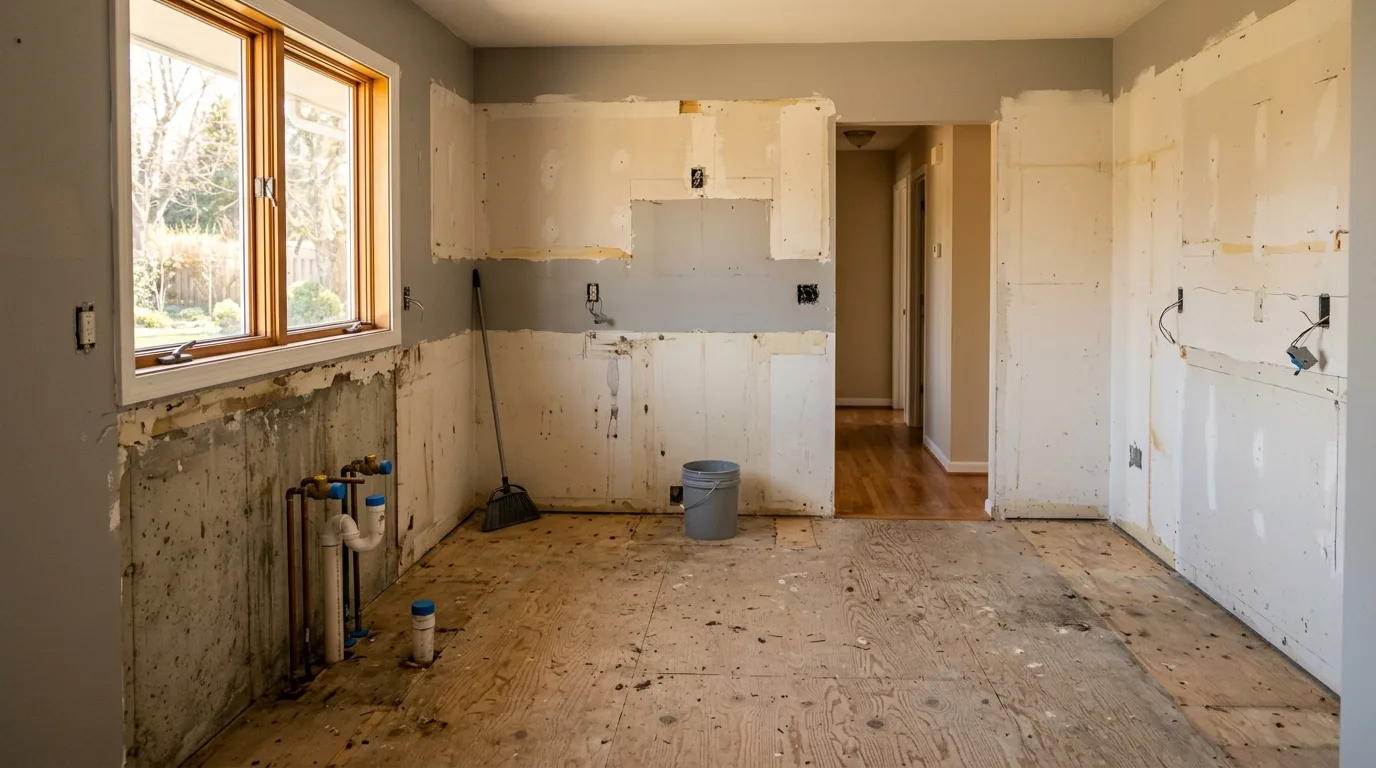
But the more useful number is different: you don’t lose the kitchen for the whole project. The genuinely unusable stretch — no sink, no counter, no appliances — is typically two to three weeks in the middle. Before that you’re often still functional during prep. After the counters go in, you’re mostly back.
The countertop gap is the hard part, and it’s worth understanding because it catches everyone. Counters can’t be templated until the cabinets are installed and level. Fabrication then takes one to two weeks. There is no way to compress this — the fabricator has a queue, and anyone promising otherwise is either not using stone or hasn’t checked.
So the sequence of your discomfort is: demolition (kitchen gone), rough-in and inspection (kitchen still gone), cabinets (kitchen gone but you can see the end), the countertop wait (cabinets in, no work surface, no sink — psychologically the worst stretch, because it looks nearly finished), then counters, sink, appliances, done.
Set up the temporary kitchen before demolition, not after
The mistake almost everyone makes is improvising on day two, when the kitchen is already gone and everything is in boxes. Do it the weekend before.
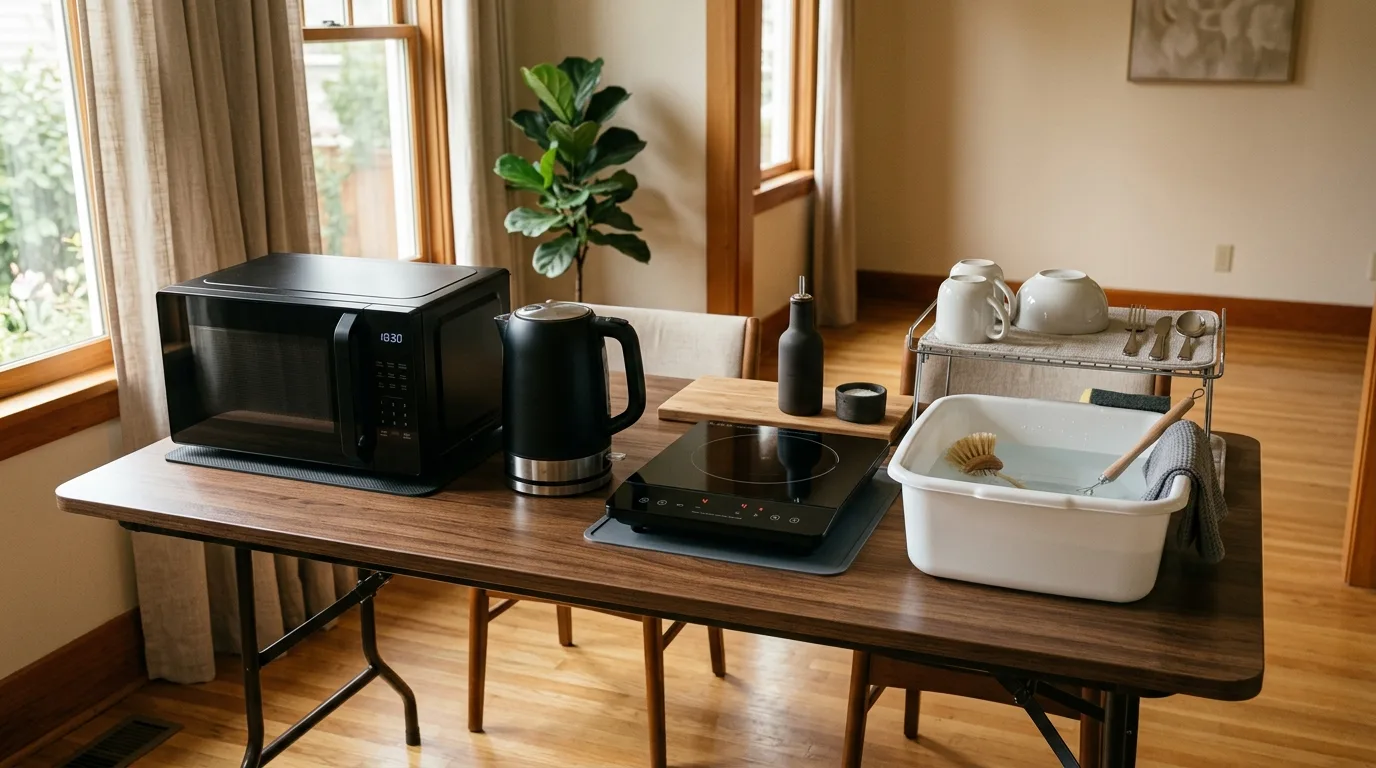
Pick the room deliberately. Dining room, basement, garage, laundry room. What matters is proximity to a water source and enough electrical capacity. The basement near the laundry sink is usually the best answer in a Montgomery County house, and the laundry sink is the unsung hero of this whole exercise.
Watch the circuits. This is the one that causes actual problems. A microwave, a kettle and a toaster oven on one bedroom circuit will trip the breaker, generally while you’re mid-meal. Spread them across different circuits, and if you’re not sure which outlets share one, test it before you need to know.
The equipment that earns its space
- Microwave — obviously.
- Electric kettle — more important than you’d think. Coffee, tea, instant things, and hot water for washing up.
- Toaster oven or air fryer — the difference between eating meals and eating snacks. This is what makes the temporary kitchen feel like cooking rather than coping.
- A single induction hob — genuinely transformative. Cheap, safe, and it means pasta, eggs, stir-fry, soup. If you buy one thing on this list, buy this.
- Slow cooker — set it in the morning, eat in the evening, no attention required.
- A folding table — you need a surface, and you don’t have one.
- Dish tub and a drying rack — for the bathroom or laundry sink.
Don’t set up in a bathroom if you can avoid it. It works, but the psychological toll of washing dinner plates in the bathroom sink for three weeks is real and cumulative.
Pack in three piles, not one
When you empty the cabinets, sort as you go:
Daily — a few plates, bowls, mugs, cutlery, one good pan, a knife, a chopping board. This goes to the temporary kitchen.
Storage — everything else. Boxed, labelled, out of the work area entirely. Not stacked in the dining room next to where you’re eating.
Gone — and this is the quiet benefit of a remodel. You are about to handle every single item in your kitchen. The bread maker used twice in 2019, the mismatched mugs, the seven spatulas. Nothing reveals what you don’t use like being forced to physically move it. Get it out now rather than putting it back into brand new cabinets.
Food, realistically
Two weeks before demolition, start running the freezer down and then filling it with things you’ve cooked deliberately. Chili, stews, curries, pasta sauce, soup — anything that reheats without needing a stove. A slow cooker or a microwave brings them back fine. This one habit is worth more than every gadget on the list above.
Then be honest about takeaway. You will order more of it than usual. Budget for it as a real line in the project — several hundred dollars over three weeks is normal, and being surprised by it on top of a remodel invoice is a bad month. Planning for it makes it fine.
Paper plates for the worst stretch. I know. But washing up in a laundry sink loses its charm around day four, and there is no prize for suffering.
The things that actually make it bearable
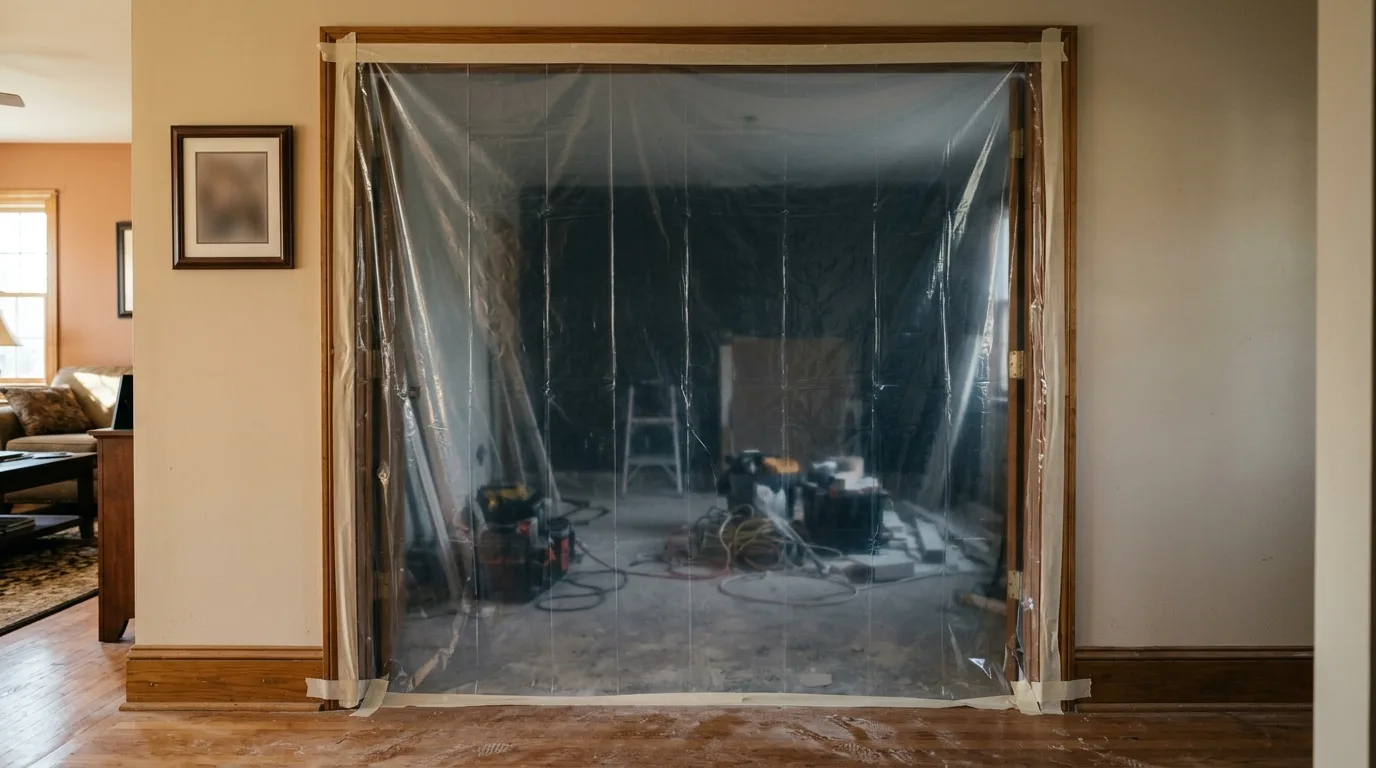
Dust control. Plastic sheeting at the doorways, and taped properly rather than draped. Kitchen demolition dust travels through an entire house and settles on everything you own. Any decent contractor does this; ask about it if nobody mentions it.
Keep the fridge accessible. Usually it can be moved to the temporary kitchen or a nearby room. Losing the fridge as well as the kitchen is a different and much worse experience.
Ask for the schedule. Not to nag anyone — knowing that Tuesday is inspection day and nothing visible will happen is completely different from Tuesday appearing to be a day when nobody came. Most of the frustration I see is about not knowing, not about the delay itself.
Plan one night out at the midpoint. Somewhere around the countertop wait, when it looks nearly finished and isn’t, morale dips. Get out of the house that week.
Warn the neighbours if you’re attached or close. Demolition is loud. A heads-up costs nothing and buys goodwill.
What not to do
Don’t push for the counters to go in early. They template off the installed cabinets. Early means wrong.
Don’t schedule a remodel over a major holiday unless you enjoy explaining to guests why dinner is coming out of a slow cooker in the basement.
Don’t change the scope mid-project for time reasons. “While the wall is open, could we also…” is legitimate and sometimes smart — but it extends the very thing you’re finding difficult, so decide with that clearly in mind.
It’s worth it, and it’s finite
Everyone hits a low point, usually in week two. Then the cabinets go in and it starts looking like a room again, and by the time the counters land people have generally forgotten they were ever cooking in the basement.
The best predictor of a smooth remodel isn’t the budget — it’s whether the temporary kitchen got set up properly before demolition. Twenty minutes of planning saves three weeks of irritation.
If you’re weighing up a kitchen and want a realistic picture of the timeline for your specific house, that’s part of what an estimate covers. Our kitchen remodeling work runs across Silver Spring, Bethesda, Rockville and the rest of Montgomery County, and estimates are free with no obligation — including a straight answer on how long you’ll be without a sink.
Living Without a Kitchen During a Remodel: The Short Version
Living without a kitchen during a remodel is two to three genuinely difficult weeks inside a four-to-six week project, not the whole thing. Set the temporary kitchen up before demolition rather than improvising on day two, watch which circuits your appliances share, and fill the freezer in advance.
Frequently Asked Questions
Q: How long will I actually be without a kitchen?
A: The genuinely unusable stretch is typically two to three weeks in the middle of a four-to-six week project, not the whole thing. The hardest part is the countertop wait, when the cabinets are in but there’s no work surface or sink.
Q: What should I set up in a temporary kitchen?
A: A microwave, electric kettle, toaster oven or air fryer, a single induction hob, a slow cooker, a folding table and a dish tub. The induction hob is the one that turns coping into cooking.
Q: Where is the best place to set it up?
A: Near a water source with enough electrical capacity — a basement near the laundry sink is usually the best answer. Spread appliances across different circuits or you’ll trip a breaker mid-meal.
Q: How do I prepare food in advance?
A: Start two weeks out by running the freezer down and refilling it with meals that reheat without a stove — chili, stews, curries, soup. That single habit is worth more than any gadget.
