
Takoma Park is my favourite place to work and the one I quote most carefully. Those two facts are related.
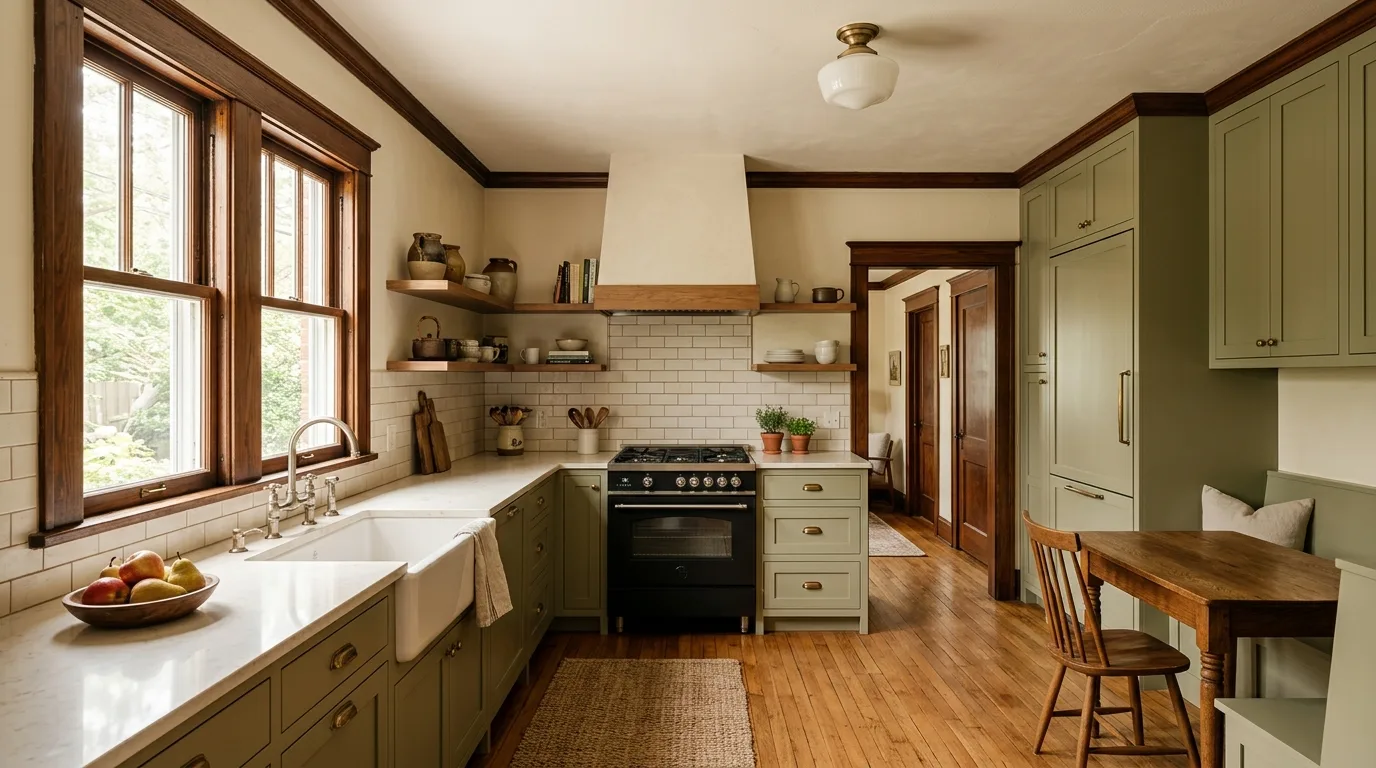
The housing stock here is genuinely old — bungalows, foursquares and Victorians from the 1900s through the 1930s, with additions layered on across a century. The houses have real character, real craftsmanship, and absolutely no interest in cooperating with a modern kitchen layout.
If you’re planning kitchen remodeling in Takoma Park, MD, here’s what a hundred-year-old house means in practice, and the permitting step that trips up almost everyone.
Start with the permits, because Takoma Park is unusual
Your building permit does not come from the City of Takoma Park. It comes from Montgomery County DPS.
But before the county will process it, you need a Municipality Letter from the City of Takoma Park. Any project requiring a county permit requires that letter first. The city also separately permits tree protection and removal, stormwater management, and any work in the city right-of-way. And if your house is in the historic district, a Historic Area Work Permit comes into it as well.
So: city letter, then county permit. In that order. It isn’t difficult, it’s just a sequence, and the people who get stuck are the ones who filed with the county first and waited.
The tree piece deserves a mention of its own. Takoma Park takes its tree canopy seriously — it’s part of why the place looks the way it does. If your project involves anything near a protected tree, including access for equipment, factor that in early rather than discovering it on the day.
What’s actually behind a Takoma Park kitchen wall
This is where estimates live or die. In a 1920s house, four things show up often enough that I price for the possibility of each.
Plaster and lath, not drywall
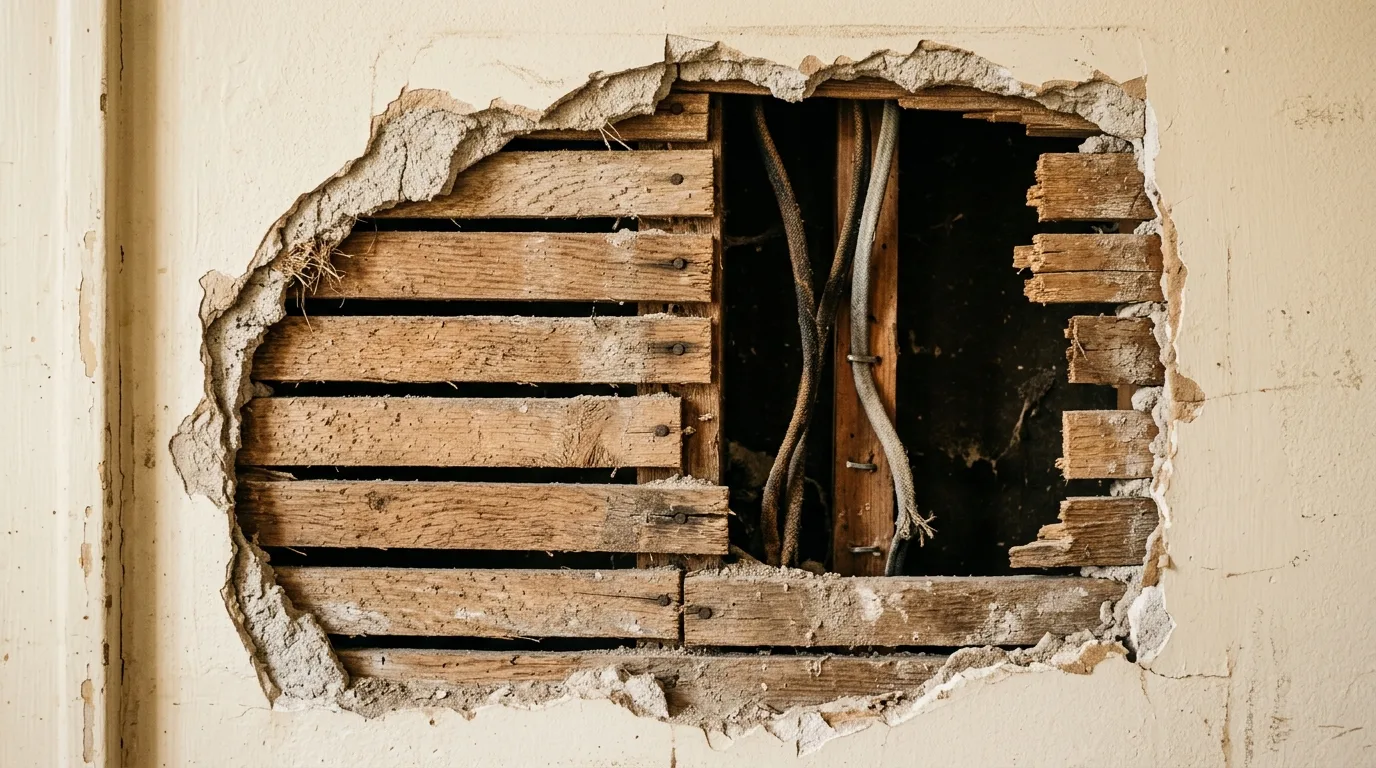
Original walls here are usually plaster over wood lath. It’s better than drywall in some ways — thicker, more solid, quieter. It’s also brittle, heavy, and unforgiving when you open it up. Removing a section cleanly takes longer than drywall, makes considerably more mess, and often reveals that the wall behind isn’t plumb.
You don’t always have to remove it. But if we’re running new electrical or plumbing through, some of it is coming off, and the patch back has to be done properly or it’ll telegraph through the paint.
Knob-and-tube, or its descendants
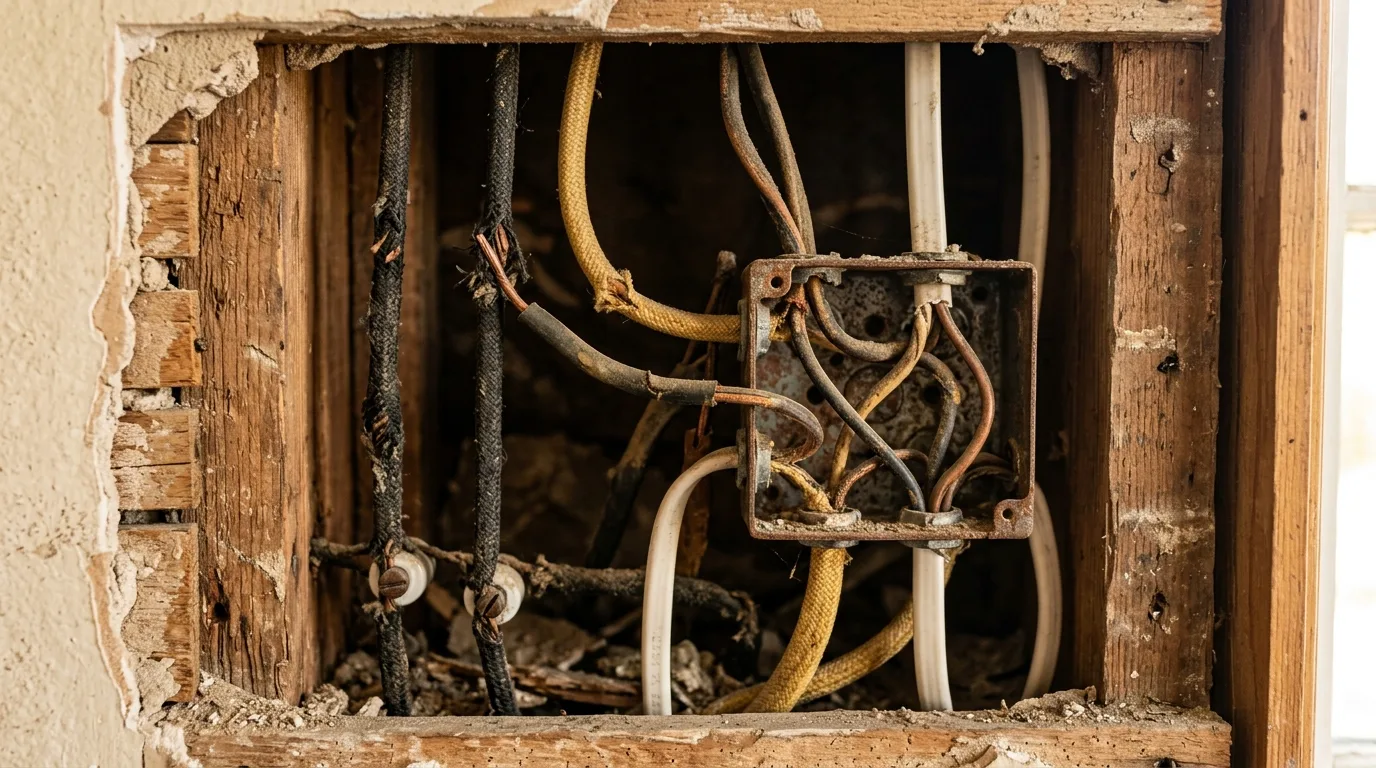
Some Takoma Park houses still have original knob-and-tube wiring in places, usually in areas nobody has renovated. More common is a house that’s been partly rewired over decades, so you find three eras of wiring meeting in one junction box.
A modern kitchen needs dedicated circuits for major appliances, GFCI protection at the counters, and enough capacity to run all of it at once. In a house with a small original panel, that can mean panel work. It’s not the fun part of the budget, but it’s the part that stops your kitchen from being a hazard.
Galvanized supply and cast iron waste
Galvanized steel supply lines corrode inward over decades until the actual opening is the width of a pencil. That’s why the pressure drops when someone flushes. Cast iron waste lines can be perfectly serviceable at ninety years old or can be scaled shut — you don’t know until you look.
If we’re opening the floor anyway, replacing a run of failing supply line while it’s accessible is dramatically cheaper than doing it as its own job later.
Floors that aren’t level, and joists that explain why
Nothing in a 1920s house is level. Sometimes that’s a century of settling and it’s fine. Sometimes it’s a joist that was notched by a plumber in 1962 and has been sagging ever since. Cabinets and appliances need level; the fix ranges from shimming to sistering a joist.
Layout: the closed-off kitchen problem
Kitchens in houses of this era were built as separate work rooms — small, closed off, with a door to the dining room. That made sense when kitchens were where staff or one family member worked alone. It makes very little sense now.
The instinct is to open it up. Sometimes that’s exactly right. But before falling in love with the idea, three things need checking:
Is the wall load-bearing? In these houses, frequently yes. That doesn’t kill the idea, it just means a beam, proper support, engineering, and a meaningfully bigger number.
What’s in the wall? Old houses route things through convenient walls. Removing one can mean rerouting a stack, a vent, or a run of wiring.
Do you actually want it open? A genuinely unpopular opinion: open-plan is not always the upgrade. In a house with beautiful original trim and defined rooms, removing walls can strip out exactly the character you paid for. Sometimes widening an existing opening gives you eighty percent of the benefit for twenty percent of the cost, and keeps the house looking like itself.
What it costs
Published market ranges for Montgomery County put a same-layout refresh — refaced or repainted cabinets, new counters, backsplash, fixtures — at roughly $15,000 to $35,000. A full mid-range remodel spans anywhere from $40,000 to $95,000 depending on scope and who’s quoting, and high-end custom work starts around $75,000.
Those are market ranges from published guides, not our prices. For an older Takoma Park house specifically, I’d add one honest caveat: the unknowns behind the walls are real, and the ranges above assume nothing unpleasant turns up. A good estimate on a 1920s house names the things that might be found and what each would add, instead of pretending they can’t happen.
The case for doing it properly
There’s a version of a kitchen remodel in an old house that’s quick and cheap: new cabinets over the existing everything, don’t look too hard, don’t pull a permit. It works, right up until the point that it very much doesn’t.
In a hundred-year-old house, the remodel is the one chance you get to see what’s actually in there. Wiring, pipes, joists, insulation — all visible, all accessible, all cheaper to address now than in five years when the wall is closed and finished. Spending a bit of the budget on what nobody will ever see is the least glamorous and most valuable decision in the whole project.
Getting a real number
For a Takoma Park house I want to see the panel, the visible plumbing runs in the basement, whether the walls are plaster or have been drywalled at some point, and how level the floor actually is. Twenty minutes in the house tells me more than any number of photographs.
We handle kitchen remodeling throughout Takoma Park and the surrounding area — estimates are free, and there’s no obligation attached to getting one. The Takoma Park page covers the rest of what we do locally.
And if the honest answer is that your original cabinets are solid old-growth wood worth keeping and what you actually need is refacing, better lighting and a counter, I’ll tell you. Those cabinets are better than most of what you can buy today.
Kitchen Remodeling in Takoma Park: The Short Version
Kitchen remodeling in Takoma Park means a city Municipality Letter before the county permit, and a hundred-year-old house behind the plaster. Plan for plaster and lath, mixed-era wiring and galvanized supply lines, and treat the remodel as the one chance to fix what you can see while the wall is open.
Frequently Asked Questions
Q: Who issues building permits in Takoma Park?
A: Montgomery County DPS issues the building permit, but the City of Takoma Park must provide a Municipality Letter first. The city separately permits tree protection, stormwater and right-of-way work, and the historic district adds a Historic Area Work Permit.
Q: What should I expect inside the walls of a 1920s Takoma Park house?
A: Plaster over wood lath rather than drywall, wiring from several different eras meeting in one box, galvanized supply lines that have corroded inward, and floors that are not level. None of it is unusual and all of it is manageable when priced in advance.
Q: Should I open up the kitchen in an older Takoma Park home?
A: Sometimes, but not automatically. The wall is often load-bearing, which means a beam and engineering. In a house with good original trim and defined rooms, widening an existing opening often gives most of the benefit while keeping the character you paid for.
Q: Is it worth keeping original kitchen cabinets?
A: Frequently, yes. Cabinet boxes in these houses are often solid wood or plywood and better made than much of what’s sold new. If the boxes are sound, refacing gives you a new-looking kitchen for a fraction of replacement.
