

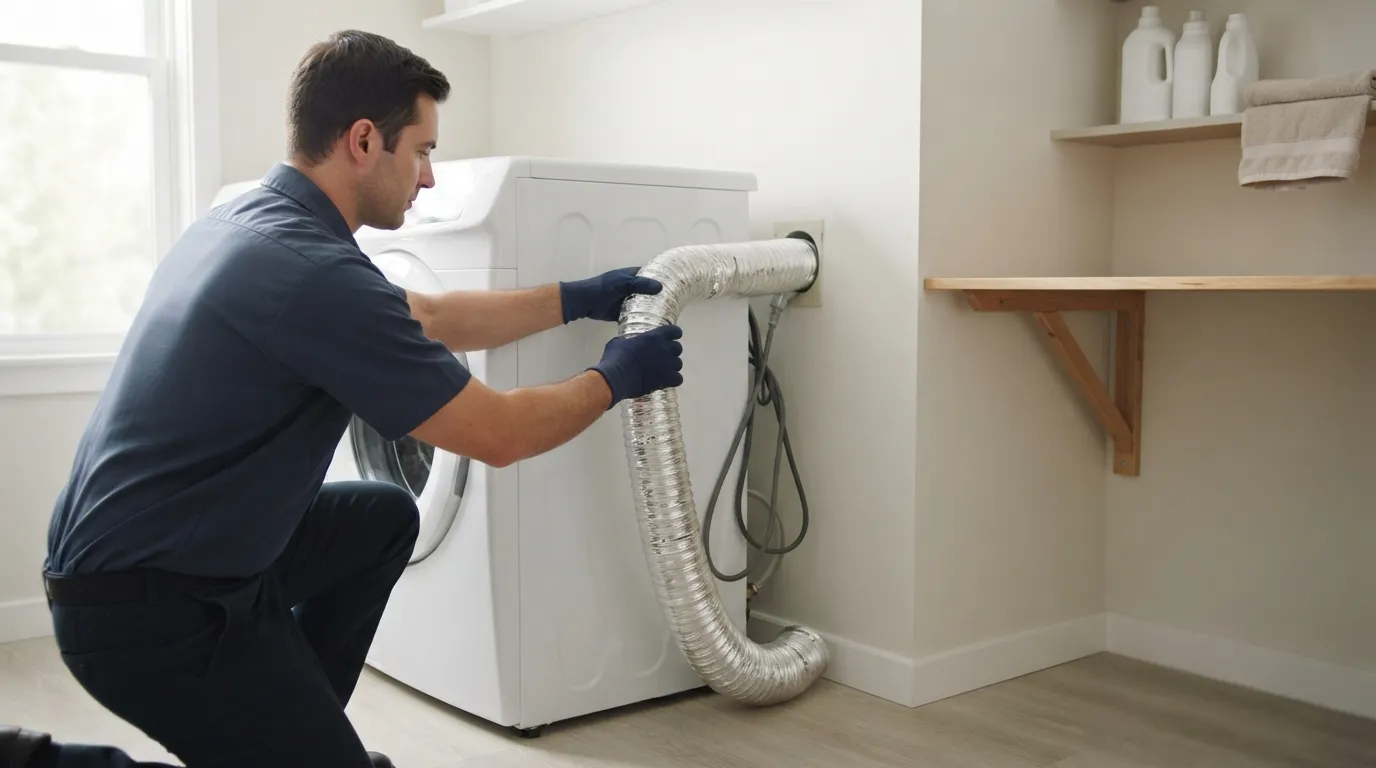
What the job actually involves and when to call
A dryer vent service inspects the run from your dryer to the outside, clears or repairs blockages, and fixes damaged sections so the dryer can move air safely. What decides the work and the timeline is what the inspection finds: whether the run is simply clogged with lint, has crushed or kinked ducting, has gaps or holes, or needs a different termination at the exterior. The faster you act on obvious signs, the less invasive the fix is likely to be. If you want someone to look and tell you which of those things is true, contact us to arrange an inspection.
How to tell if your dryer vent needs attention
A few simple checks will tell you when the vent needs professional attention. If drying cycles take noticeably longer, that is a clear signal the vent is not moving air as it should. If you can smell a strong lint or musty odor near the dryer, lint buildup is likely and it can harm clothing and air quality. A dryer vent that leaks air into the room, that has visible holes or crushed ducting, or that emits warm air at the exterior only weakly are all reasons to have an inspection. Finally, recurring lint around the dryer or at the exterior vent flap suggests the line is not clearing lint properly and should be serviced.
Why a blocked or damaged vent is a safety and efficiency problem
A clogged or damaged dryer vent can slow drying and increase fire risks. Lint buildup raises energy costs and affects performance, and a faulty dryer vent can lead to extended drying times and strain on the dryer itself. That same lint and restricted airflow can damage clothing, and when warm, lint-filled air cannot exit properly it can create conditions that contribute to a dryer fire. Repair solutions reduce fire risk, save clothing from excessive damage, and help the system operate at peak performance. Those are the practical outcomes a technician will aim for when they clear, repair, or replace parts of the run.
How a professional inspects and diagnoses vent systems
A pro inspection looks at the whole system, not just the flap on the outside. A typical on-site diagnosis begins with the visible checks you can do: the dryer connection, the lint trap, and the exterior termination. The technician will then examine the ducting for kinks, crushed sections, or obvious gaps where lint can escape into the wall or ceiling. To judge how well air is moving, they will check airflow at the machine and at the exterior; poor flow at the exterior with normal flow at the dryer connection suggests a mid-run blockage or a long, tortuous route. In many cases the inspector will remove the dryer and check the transition hose and the first few feet of duct, where most lint collects.
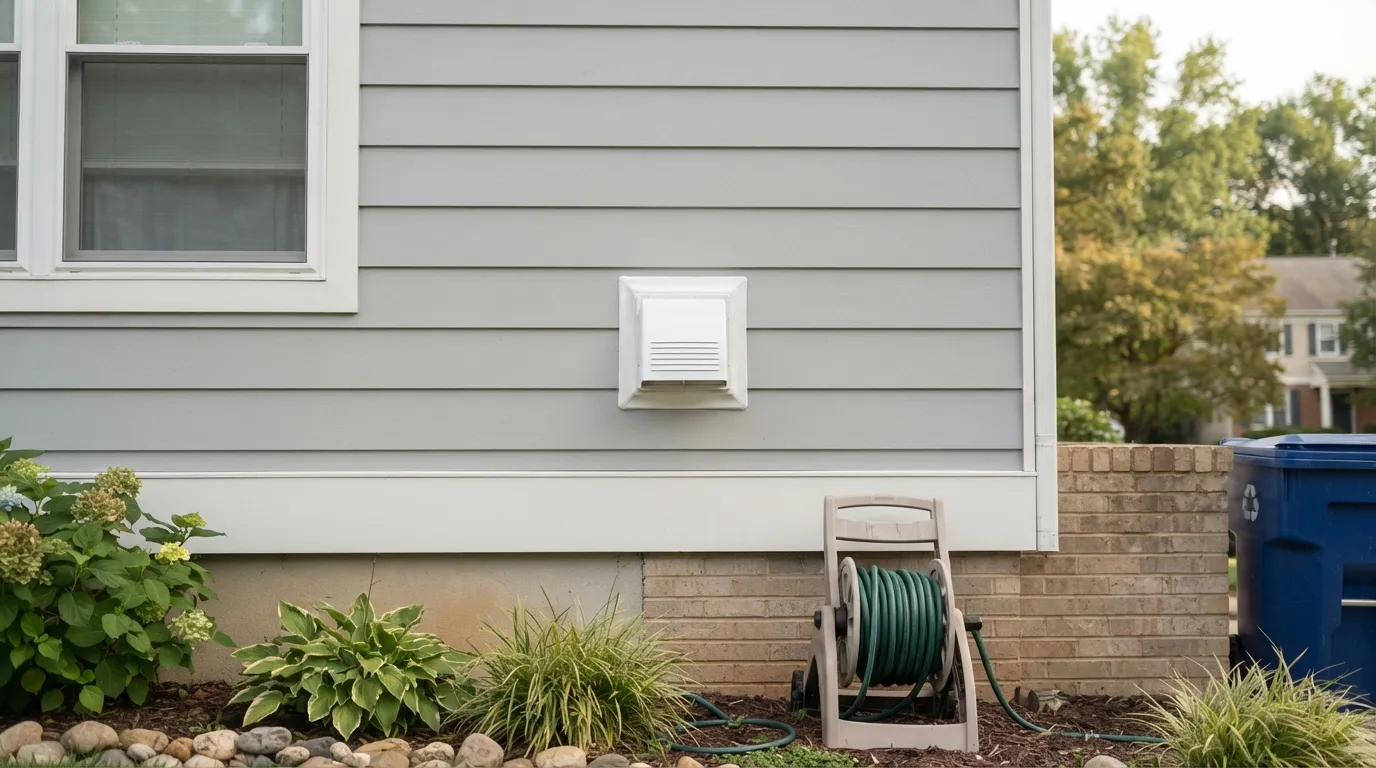
Where a camera is not used, airflow tests and tactile checks still tell the technician whether the run is blocked, loose, or damaged. The inspector will also evaluate the termination at the exterior: whether the flap opens freely, whether the termination allows backdraft, and whether lint is visible around the opening. If the exterior vent is a short flap with a long flexible coil behind it, the pro will note that the design traps lint; if the termination is rigid and has an adequate opening, they will mark that as preferable.
Common problems found on inspection are simple lint blockages, crushed or kinked flexible duct, slips in connections that leak lint into cavities, and poor or inappropriate exterior terminations. Less common but important findings include runs that pass through conditioned spaces and leak warm, moist air into walls, and runs where inadequate support has created sagging pockets that collect lint. After the inspection the technician will explain what they found, show you any visible problems, and describe the realistic options: a targeted cleaning, a local repair to a damaged section, rerouting to shorten or straighten the run, or a full replacement to a continuous rigid or semi-rigid duct.
Choices for materials, routing, and exterior termination
The material and routing you choose affect how well the dryer moves air and how often it will need attention. Flexible accordion-style foil or plastic duct is easy to install but traps lint in its folds and crushes easily. Semi-rigid or rigid metal duct keeps a smooth interior for airflow and is less likely to compress, so it tends to perform better over time. The termination at the outside should let air exit freely and prevent pests and backdraft; the exact style will depend on where the vent meets the exterior and how exposed the opening is.
Routing choices matter for both safety and performance. Short, straight runs move air most efficiently. Long runs, multiple bends, and runs that pass through attics, crawlspaces, or unconditioned wall cavities all increase the chance lint will collect and reduce airflow. A run that sags or is unsupported will gather lint at the low points. Changing the route to remove unnecessary bends and to keep the duct supported can be the most effective single improvement.
Where the vent leaves the house, the termination type affects weather resistance and backdraft. A simple flap-style vent is common, but if the flap sticks, it traps lint and blocks airflow. A hood with a spring-loaded flap that opens freely is preferable where the exterior is exposed to wind and debris. In some locations a vent with a screen to keep out pests is used, but screens must be accessible for cleaning or they will themselves collect lint. The pro will weigh the exterior details and recommend a termination that balances airflow, weather resistance, and ease of access for cleaning.
If the inspection shows repeated failures because of the route or the materials, a replacement with continuous smooth metal duct and a simpler exterior termination will usually reduce future service needs. The technician will explain the trade-offs so you can decide whether to repair the existing run or to invest in a replacement designed to last longer and require less frequent cleaning.
When a vent needs repair, rerouting, or full replacement
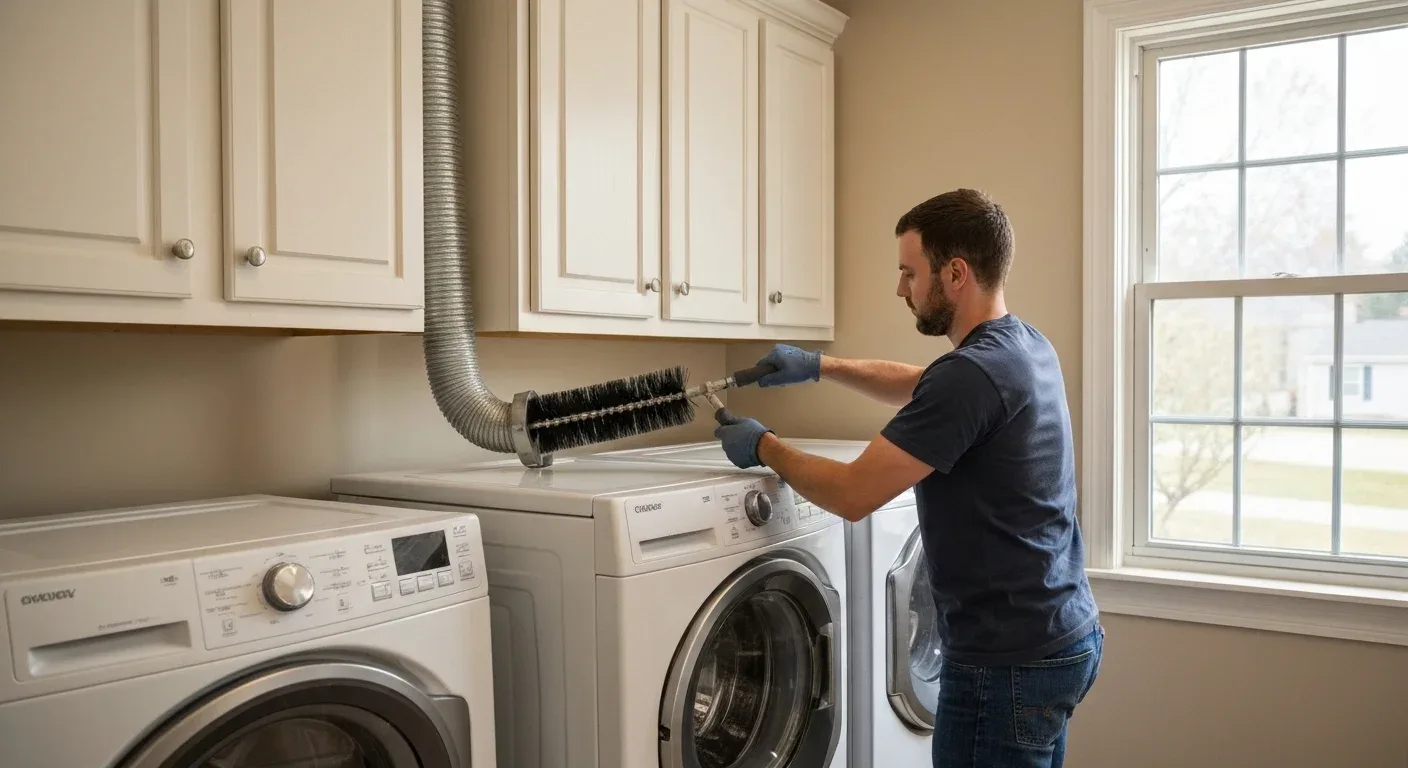
Deciding which remedy you need depends on the symptoms and on what the inspection reveals. If the problem is lint close to the machine or a partially clogged trap, a cleaning or a short repair will often restore normal performance (see our dryer vent cleaning). If the duct is crushed, has large holes, or the connection at the dryer is loose and leaking lint into the wall, repairing the damaged sections and sealing the connections is the right answer. When a run has many bends, long lengths, or passes through spaces where access is limited, rerouting the duct to a shorter, straighter path will improve performance and reduce the risk of future lint buildup.
A full replacement is appropriate when the run is built from materials that are inherently problematic for durability or airflow, such as thin flexible plastic or accordion duct, or when the run contains multiple patched sections and the overall condition suggests recurring failure. Replacement also makes sense when the termination type is poor and the only practical way to fix it is to change the run and the exterior detail together. The inspector will look for signs that small repairs will be temporary, recurring clogs after cleaning, persistent lint in cavities, or sections in poor condition, and recommend replacement when that is the case.
For landlords and property managers, the practical outcome matters: a repair may be quicker and less disruptive, but rerouting or replacement can lower long-term service needs and reduce tenant complaints. In multi-unit buildings, runs that serve stacked units or that join in a common chase often require a different approach than a single-run house installation, because shared chases can transfer lint and moisture between units. The inspector will note whether the job is straightforward or whether it touches shared spaces that will need coordination with building management.
What a local service visit looks like and how to prepare
Expect the visit to include a visible inspection, tests of airflow, and a clear explanation of findings and options. The technician will usually start at the dryer itself, remove the transition hose, check the lint trap, and test airflow at the dryer connection and again at the exterior. They will point out any obvious damage, demonstrate where lint is collecting if it is visible, and describe what repairs or routing changes are practical. If a camera or longer tools are needed to inspect concealed runs, the pro will explain why and when that additional inspection is recommended.
Before the visit have a clear path to the dryer and a space for the technician to set their tools. Empty the dryer of clothes and remove items from the top and around the machine so the technician can move the dryer if needed. If pets are present, secure them so the technician can work without distraction. Be ready to show the exterior termination location, or to unlock any gated area where the exterior vent is located.
On-site deliverables commonly include a stated scope of work and a recommendation: a targeted cleaning, a repair to a specific section, a reroute, or a full replacement. The technician will describe what the work will involve and what you can expect afterward in terms of drying times and lint control. Check the credentials the technician offers and ask what they will do about sealing connections and supporting the duct; those are the details that affect how long the repair will last. If the job requires work in a shared or difficult-to-access space, ask how the pro will protect flooring and finishes.
If you need a written estimate or a follow-up visit with specialized tools, ask for it during the inspection so you know the next steps and any timeline for scheduling. A clear explanation of what will be fixed and why will help you compare options and decide what level of work you want done.
Simple homeowner maintenance and red flags that mean call a pro
Regular upkeep reduces the chance of problems and makes inspections easier. Clean the dryer lint trap after every cycle and check the exterior vent flap occasionally for visible lint. If you notice reduced airflow, longer dry times, lint around the base of the dryer, warm air leaking into the room, or a musty smell, arrange a professional inspection. Do not rely on a screen-covered exterior vent alone to keep lint from building up; screens collect lint themselves and must be checked.
A few maintenance steps you can do yourself will keep the system working between professional visits:
- Clean the lint trap after each load and remove trapped lint from the housing where the trap sits.
- Inspect the transition hose that connects the dryer to the duct for kinks or visible damage and replace it if it is crushed.
- Check the exterior flap for free movement and for lint around the opening.
- Keep the dryer area clear so lint that escapes is easy to spot and remove.
Call a pro if you see repeated lint escape after a cleaning, if the exterior airflow is weak, or if the run is concealed and you suspect a blockage. Professional cleaning, repair, or replacement reduces the risks and restores proper drying performance.
If you want help deciding what to do next, read more about our dryer vent work and about dryer vent cleaning in Silver Spring to see what a visit actually looks like and what options are commonly recommended.
Frequently asked questions
How much does it cost to install a vent for a dryer?
Costs depend on the job’s specifics rather than a single number. What drives the price is the length and routing of the run, the materials chosen, how easy the duct is to reach, and whether sections must be opened and rebuilt; get a written estimate after an inspection.
Can I clean my dryer vent myself safely?
You can clean the lint trap after every load and inspect the transition hose for obvious kinks or damage. For concealed runs, long runs, or if you notice weak exterior airflow or recurring lint, call a professional for a proper inspection and cleaning.
How long does a typical inspection and repair take?
The time depends on what the inspection finds: a visual check and basic airflow tests take far less time than a camera inspection or a reroute. The technician will describe the work needed and the expected time on site after the initial inspection.
Do I need to replace flexible ducting?
Flexible accordion or thin plastic duct traps lint and crushes easily, so replacement with smoother, more durable duct is often recommended when recurring problems occur. The pro will point out whether a repair will last or whether a replacement is a better long-term solution.
What should landlords know about dryer vents in multi-unit buildings?
Shared chases and stacked runs behave differently from single-run houses and can transfer lint and moisture between units. A professional inspection will note whether the run touches common spaces and recommend solutions that reduce tenant complaints and long-term service needs.
