
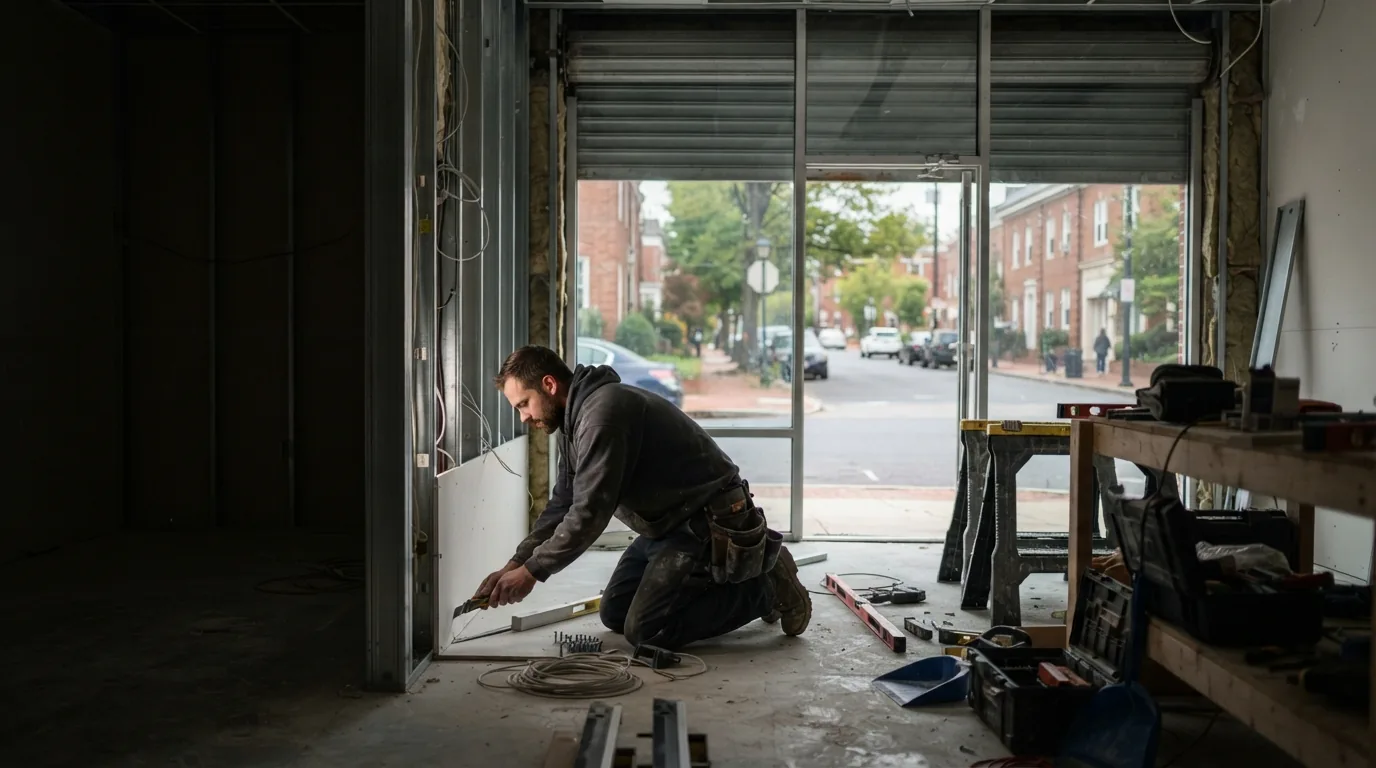
Downtown Bethesda has a particular problem for anyone doing repair work: there is nowhere to put a van.
That sounds trivial. It isn’t. Working as a commercial handyman in Bethesda means the logistics around a job frequently take more planning than the job itself, and getting them wrong turns a two-hour repair into a lost morning.
The practical constraints downtown
Loading and access
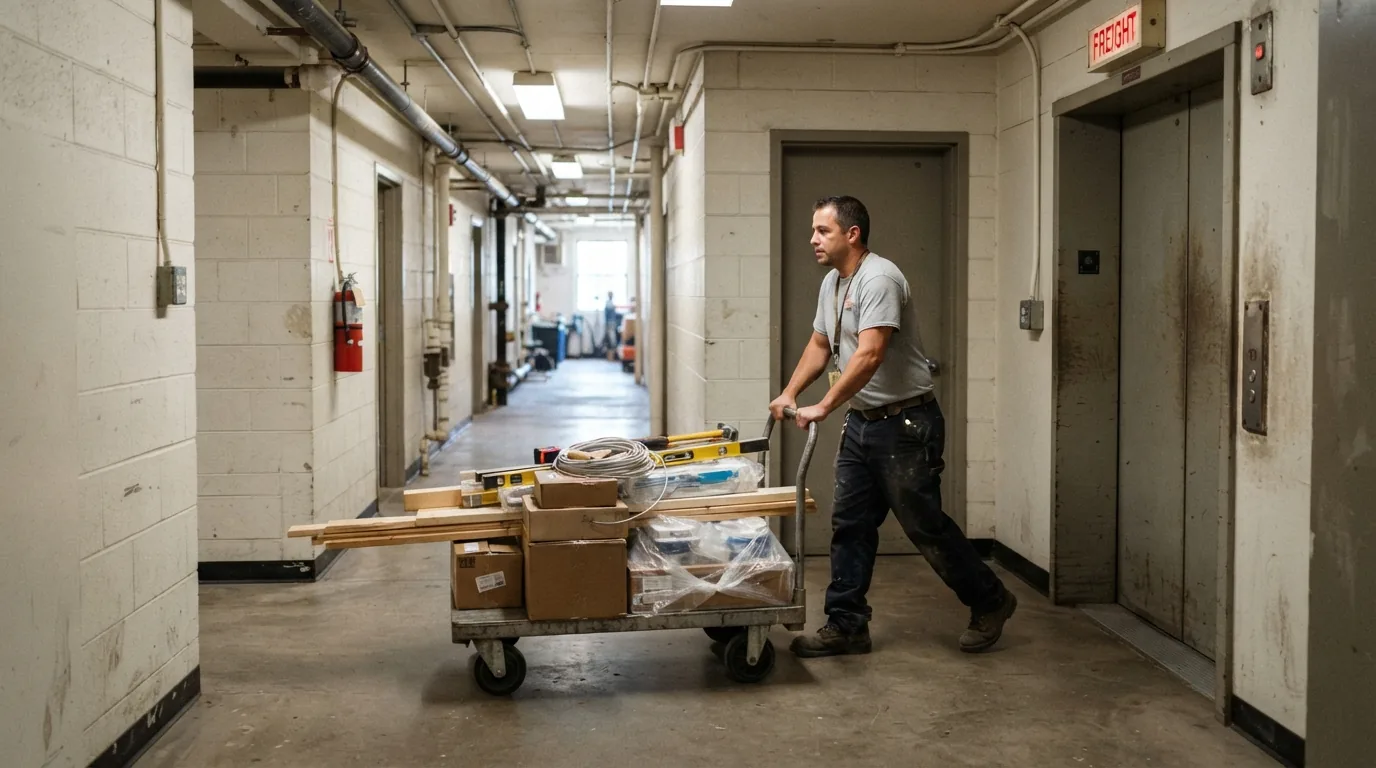
Many of the office and retail buildings along Wisconsin and Old Georgetown have loading docks with fixed hours, service elevators that need booking, and a building engineer who has to know you’re coming. None of that is difficult. All of it has to happen before the day, not on it.
For street-level retail, the constraint is usually parking and how far materials have to be carried. Sheets of drywall do not travel well down a busy sidewalk at lunchtime.
Noise windows
Offices generally want anything loud done before the working day or after it. Retail is the opposite — mornings before opening are best, and evenings are worse because of foot traffic.
Restaurants are their own case, and the window is genuinely narrow: after close and before prep. It’s short, and anyone who hasn’t worked around a kitchen underestimates how strictly that clock runs.
Tenant vs landlord
The question worth settling before anyone quotes: who is responsible for this item under the lease?
It sounds like an administrative detail and it decides who I’m working for. Interior finishes are typically the tenant’s, building systems typically the landlord’s, and the boundary is exactly where disputes live. Establishing it before work starts avoids an invoice nobody wants to pay.
What Bethesda buildings tend to need
The mix skews differently from residential work:
- Make-good between tenancies. Patching where fixings came out, painting back to a neutral, replacing damaged ceiling tiles, adjusting doors that have dropped.
- Door hardware. Commercial doors get hundreds of cycles a day. Closers, hinges and latches wear out on a schedule residential doors never reach.
- Ceiling grid and tiles. Stained, sagging or missing tiles after a leak above.
- Public-facing safety items. Anything a customer might trip over, catch a hand on, or walk into. These get priority because they carry liability.
- Fit-out snagging. The list that accumulates after a tenant moves in and starts actually using the space.
The older buildings question
Bethesda isn’t uniformly modern. Away from the core there’s plenty of older stock converted to commercial use, and converted buildings carry residential-era construction behind commercial finishes — plaster walls, original wiring in places, and layouts that were never designed for the loads now placed on them.
Worth flagging because it affects what’s possible. Hanging a heavy display on a plaster wall in a converted rowhouse is a different proposition from hanging it on a steel-stud partition in a modern office suite, and it needs to be established before someone promises a tenant it can be done.
Response time, which is what actually gets judged
For commercial clients, speed of response frequently matters more than price. A broken door lock on a retail unit is not a scheduling item — it’s a security problem that has to be solved today.
So the sensible arrangement separates urgent from routine. Security and safety items need a fast response; routine items are cheaper batched into a scheduled visit. Treating everything as urgent costs more and helps nobody.
Agreeing that split in advance is more useful than negotiating it every time something breaks.
Safety around the public
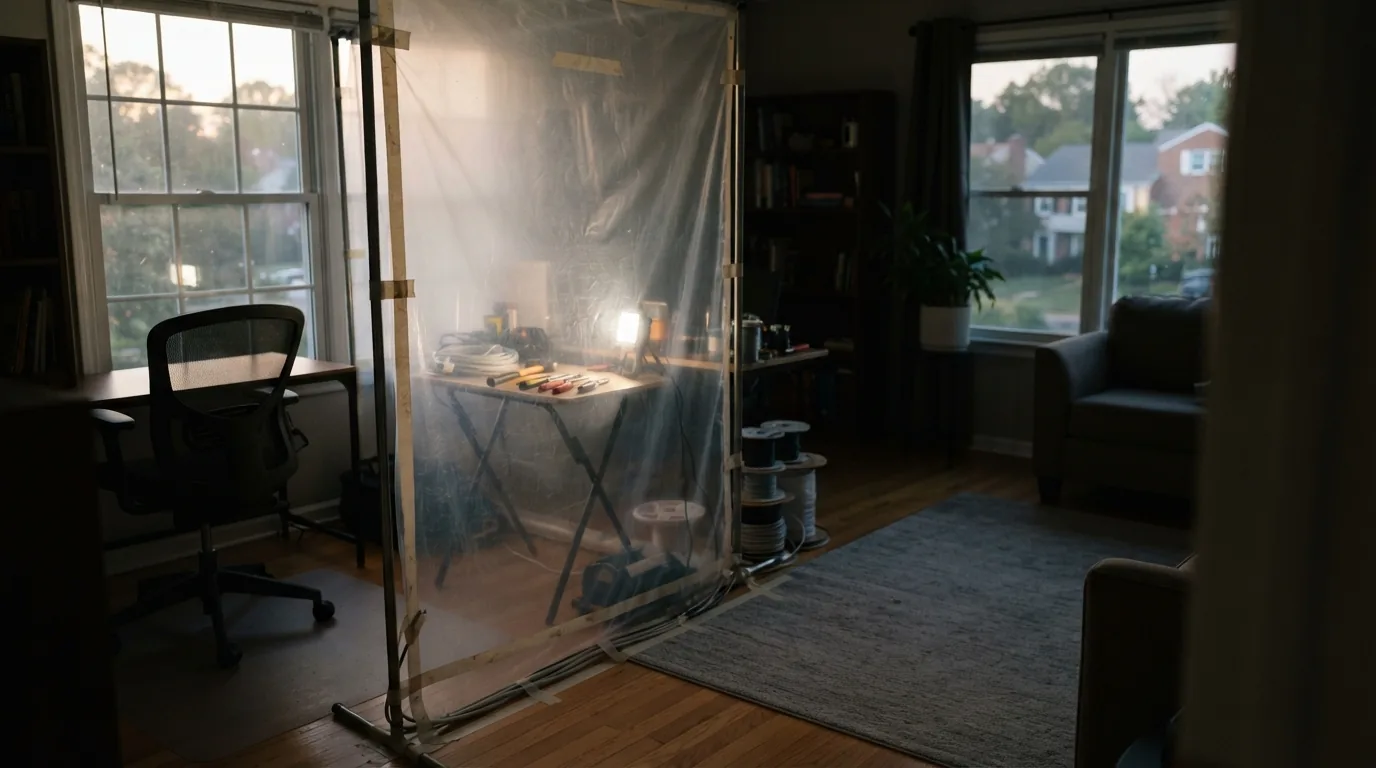
Work in an occupied commercial space happens with customers and staff moving past it. That means barriers, signage, no trailing cables, and tidying as the work progresses rather than at the end.
OSHA’s guidance for workers sets the baseline, and a contractor working in your building should be operating to it as a matter of course rather than because a manager asked.
The short version on hiring a commercial handyman in Bethesda
A commercial handyman in Bethesda spends as much effort on access as on the work: loading dock hours, service elevator booking, building engineer notification, and parking that mostly doesn’t exist. Noise windows differ by tenant type — offices want early or late, retail wants before opening, restaurants have the narrowest window of all. Establish who is responsible under the lease before quoting, and agree in advance what counts as urgent versus routine.
If you manage or lease commercial space locally, here’s the range of work we cover, and Bethesda is well within our service area. Free estimates, no obligation.
Frequently asked questions
Q: When is the best time to schedule work in an occupied building?
A: Outside trading hours for retail, and before the working day for offices. It should be agreed and priced at quoting stage rather than added afterward.
Q: Who pays, the tenant or the landlord?
A: It depends on the lease, and it’s worth establishing before work begins. Interior finishes are usually the tenant’s responsibility and building systems the landlord’s, but the boundary varies and is where most disputes happen.
Q: How should urgent and routine work be handled differently?
A: Split them explicitly. Security and safety items need a fast response; everything else is cheaper batched into a scheduled visit. Agreeing that split in advance beats renegotiating it every time something breaks.
Q: What do high-rise buildings require before work can start?
A: Typically a certificate of insurance, contractor registration and a booked service elevator slot. All of it takes lead time, so starting the paperwork early matters more than it sounds.
