


Late summer is the right time to do this, which is why I’m writing it in August rather than October. By the time the leaves are actually down, everyone who does this work for a living is booked, and the first hard freeze arrives before the calendar suggests it will.
Here’s what actually matters for fall home maintenance in Montgomery County — ordered by consequence, not by tradition. Plenty of seasonal checklists are padded to look thorough. Most items on them don’t matter much. These do.
The three that genuinely prevent expensive damage
1. Gutters and downspouts
The highest-value maintenance item on any house in this area, and it isn’t close.
Our tree canopy is heavy — mature oaks and maples across most of the older neighbourhoods — which means gutters fill properly, not decoratively. A blocked gutter overflows down the wall and into the foundation. In winter it contributes to ice damming, which pushes water back under the shingles and into the house.
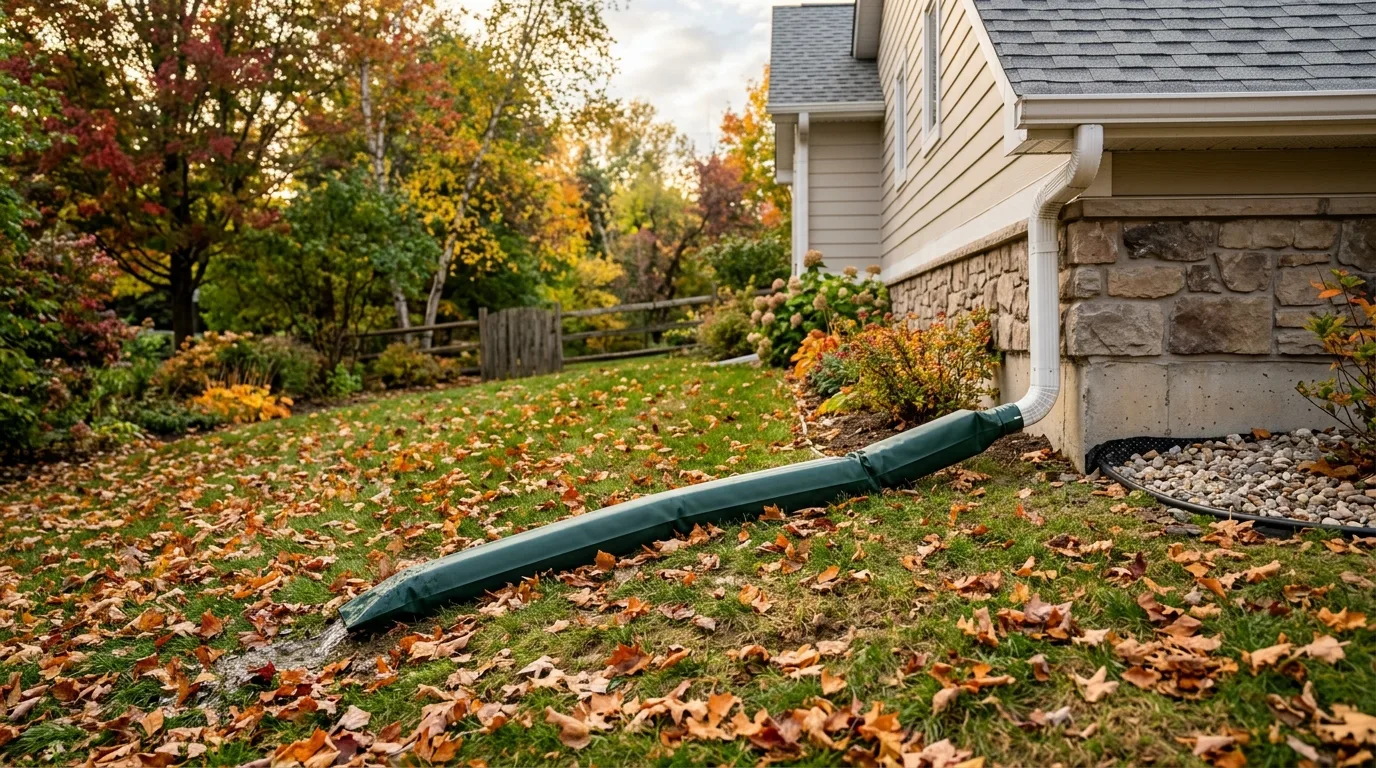
What matters as much as clearing them: where the downspouts discharge. A downspout emptying beside the foundation is behind an enormous share of wet basements and settlement problems. Extensions carrying water several feet away, onto ground that slopes away from the house, do more good than almost anything else on this list.
Timing: do it once the bulk of the leaves are down. In this area that’s usually late in the season, and doing it too early means doing it twice.
2. Outdoor faucets and any exposed pipe
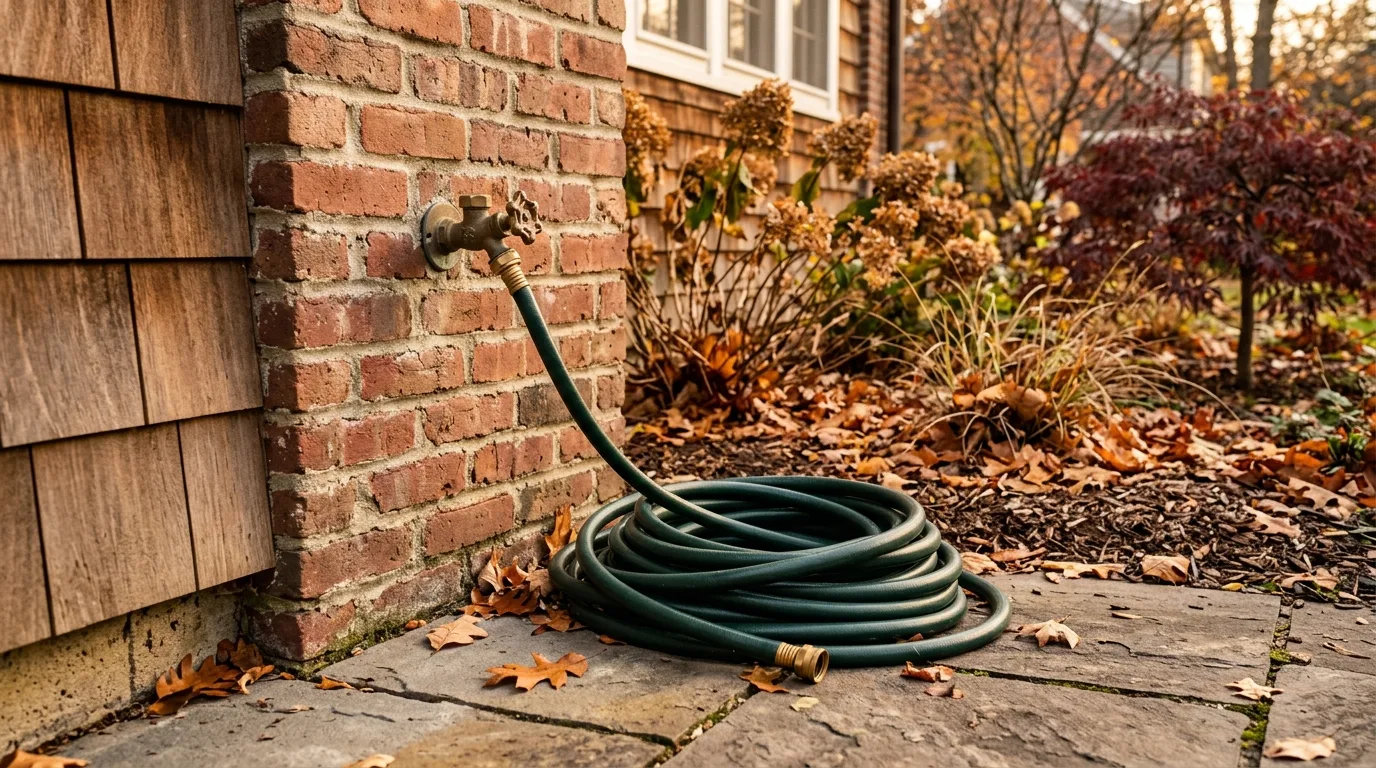
Disconnect hoses. A hose left attached traps water in the spigot, which freezes, expands, and splits the pipe — often inside the wall, where you discover it in spring when the water is turned on and comes out of the ceiling.
If you have frost-free spigots, they still need the hose off to drain properly. If you have older-style ones, shut off the interior valve and drain them.
This takes five minutes and prevents one of the more expensive and infuriating failures a house can produce.
3. Sealing gaps where water and air get in
Walk the exterior and look at where things meet: window and door trim, where pipes and vents penetrate walls, where the siding meets the foundation. Failed caulk lets water into wall assemblies, and freeze-thaw cycles work at any gap water gets into.
The same walk finds the air leaks costing you money all winter. A tube of caulk and an hour is one of the best returns available in home maintenance.
The ones that matter, slightly less urgently
Reverse the seasonal humidity thinking. Everything that swelled through August will shrink through the winter. Doors that stuck in summer may need nothing at all now. This is the season to plane a door if it sticks year-round — you’re working at the dry end of the cycle, so you won’t overdo it.
Check the attic — including where bathroom fans vent. I mention this constantly because I keep finding it. A fan venting into the attic rather than outside deposits moisture into your roof structure. Autumn, before the heating goes on, is a good time to look. While you’re up there, note whether insulation is thin or displaced.
Test smoke and carbon monoxide alarms. The heating season is when CO risk exists at all. Replace batteries, and check the manufacture date on the units — detectors expire, typically after seven to ten years, and an expired one gives no warning that it has stopped protecting you.
Have the heating serviced. Before you need it, not on the first genuinely cold night when every technician in the county is already out.
Look at the roof from the ground. Binoculars are fine. Missing or lifted shingles, damaged flashing around chimneys and vents. Small roof problems found in October are cheap; the same problems found in February are not, and cannot be properly fixed in the cold anyway.
Trim branches over the roof. Ice and snow bring down limbs. A branch overhanging the roof is a decision you get to make now or have made for you in January.
Inside, before the house closes up for winter
Check under every sink. Kitchen, bathrooms, laundry. A slow leak that’s been running since spring has had months to work on the cabinet base and subfloor. This is a two-minute check that regularly finds four-figure problems while they’re still two-figure ones.
Look at the water heater. Corrosion or damp at the base is a warning. They tend to fail in cold weather, and always at an inconvenient hour.
Reverse ceiling fans. Clockwise on low pushes warm air back down off the ceiling. It’s a small thing and it genuinely works.
Deal with the basement humidity properly. If it smelled through August, autumn is when you address the cause — usually gutters, grading, or the downspouts from item one — rather than running a dehumidifier against it indefinitely.
What you can skip
Some standard checklist items don’t earn their place here:
Elaborate window plastic, unless you have genuinely draughty single-pane windows. Caulk and weatherstripping usually address the same problem better.
Draining the entire irrigation system yourself — if you have one, it’s worth having done properly once rather than half-done annually.
Painting exterior trim in late fall. Temperature minimums for paint are real, and a coat applied too cold fails within a year. Do it in spring.
What’s worth doing yourself, and what isn’t
Do yourself: hoses off, under-sink checks, alarm testing, fan direction, caulking anything you can comfortably reach, ground-level exterior inspection.
Consider getting help with: anything on a ladder above single-storey height — falls from ladders during gutter work are one of the most common serious home-maintenance injuries, every year, and gravity does not care how careful you’re being. Also roof work, anything electrical, and repairs you’ve spotted but can’t diagnose.
The version of this that fits on a card
If you do only three things this autumn: clear the gutters and get the downspouts discharging away from the house, disconnect the hoses, and check under every sink. Those three prevent more expensive damage than everything else on the list combined.
If the walk-round turns up things you’d rather not be up a ladder for, we handle general repairs, drywall, plumbing, electrical and the rest across Silver Spring, Bethesda, Rockville, Gaithersburg, Takoma Park, Kensington, Chevy Chase and College Park. Our full service list is on the site, and estimates are free with no obligation.
Autumn is also, quietly, the best time to plan a kitchen or bathroom for the new year — it’s the season when scheduling is easiest and you’re not trying to do it around the holidays.
Fall Home Maintenance in Montgomery County: The Short Version
Fall home maintenance in Montgomery County comes down to three things that genuinely prevent expensive damage: clear the gutters and get the downspouts discharging away from the foundation, disconnect the hoses before the first freeze, and check under every sink. The rest is worth doing but will not flood your basement.
Frequently Asked Questions
Q: What are the most important fall maintenance jobs?
A: Clearing gutters and getting downspouts discharging well away from the foundation, disconnecting hoses from outdoor faucets before the first freeze, and checking under every sink. Those three prevent more expensive damage than everything else combined.
Q: When should I clean the gutters?
A: Once the bulk of the leaves are down, which in Montgomery County’s mature tree canopy is usually late in the season. Doing it too early just means doing it twice.
Q: Why does disconnecting the hose matter?
A: A hose left attached traps water in the spigot, which freezes and splits the pipe — often inside the wall, so you discover it in spring when the water is turned back on.
Q: What fall jobs can I skip?
A: Elaborate window plastic unless you have genuinely draughty single-pane windows, and exterior trim painting — paint applied below its temperature minimum fails within a year, so leave it for spring.
