

A ceiling tells you more than a wall does. Walls get damaged by people — a doorknob, a piece of furniture, a kid with a scooter indoors. Ceilings almost never get hit by anything. So when a ceiling goes wrong, something above it is going wrong, and the ceiling is just where you find out.
That’s why ceiling repair is the one job I’m most reluctant to quote over the phone. The fix is usually straightforward. Working out what you’re fixing is the part that matters.
Reading the damage before starting the ceiling repair
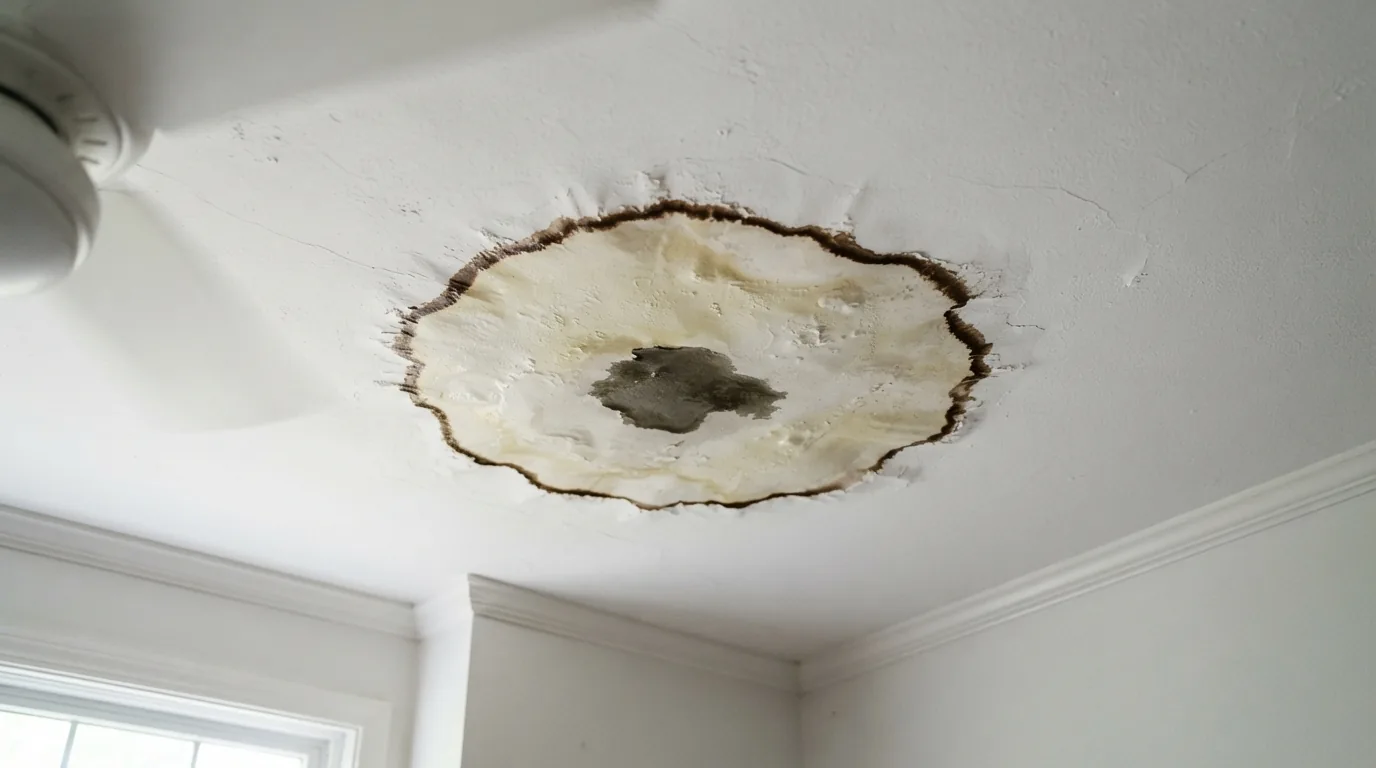
A brown or yellow ring
Water, current or historic. The ring is a tide mark — it shows where the wet area stopped spreading and dried. A sharp, well-defined edge with a darker outline usually means an old event that has dried out. A soft, spreading edge often means it’s still happening.
The honest test is boring and effective: photograph it with something for scale, wait a week or two, photograph it again from the same spot. If the edge has moved, you have an active leak. Painting over an active leak is the single most common thing I get called back to, because stains bleed straight through emulsion and reappear within weeks — sometimes days.
Where the water came from is usually one of four things: a roof, a bathroom directly above, a supply or waste pipe running through the joists, or condensation. Worth knowing that a stain does not sit directly under its source — water runs along a joist and drops at the first low point, which can be several feet away.
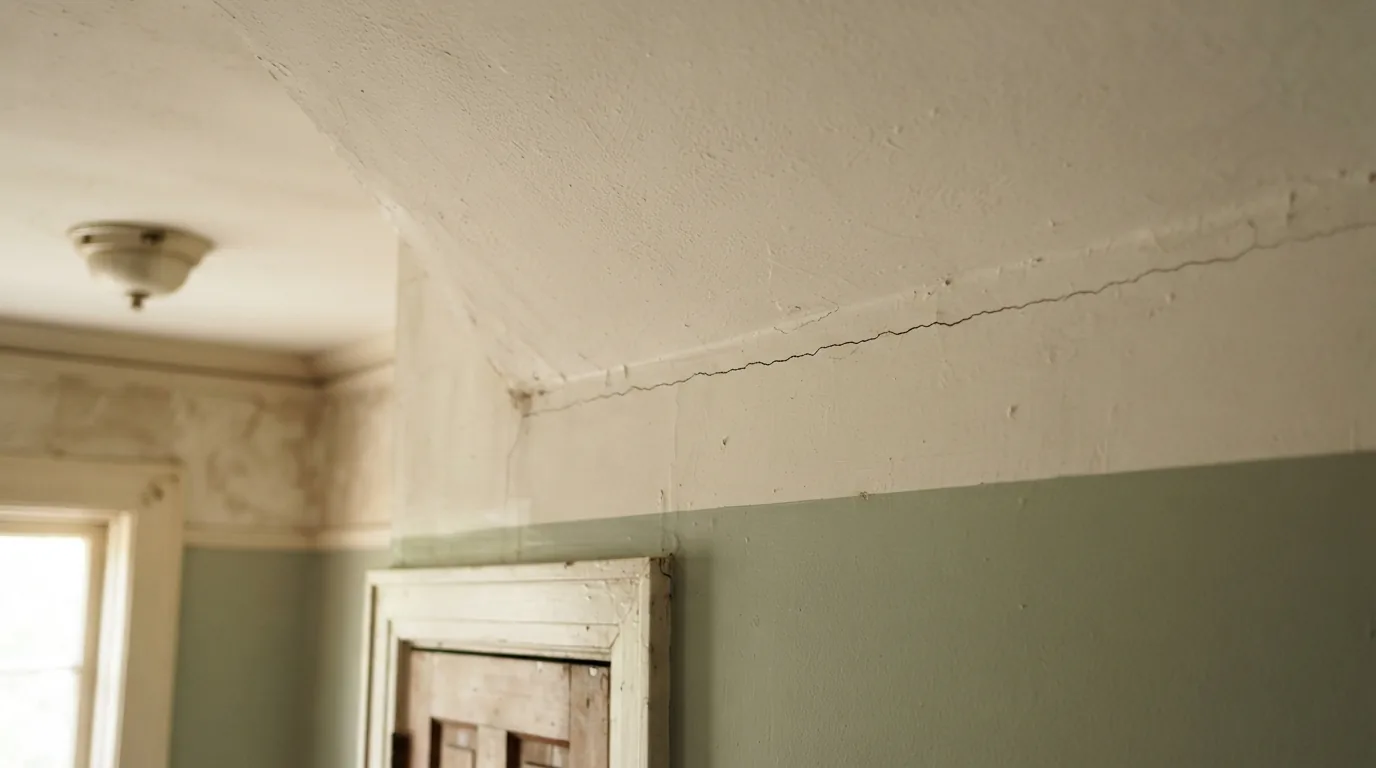
Fine cracks in a straight line
Usually a seam that has moved. Ceilings flex more than walls do, and a taped joint that wasn’t feathered properly, or that has taken a season of humidity swings, opens along its length. Cosmetic, and a genuinely satisfying repair.
A crack where the ceiling meets the wall
Very common in this area and mostly not a structural problem. Roof trusses move seasonally as timber takes on and gives up moisture — it’s known as truss uplift, and our humidity range here is wide enough to drive it. The tell is that it opens in winter and closes again in summer. If a crack has a season, it’s movement, not damage.
Sagging
This is the one that isn’t cosmetic. A ceiling that bows, feels spongy, or has a visible dip has lost its fixing — nails or screws pulling through, adhesive failing, or in older plaster ceilings the keys breaking away from the lath above.
If it’s sagging and also wet, treat it as urgent. A saturated ceiling holds a surprising amount of weight and comes down all at once rather than gradually. Move what’s underneath it, keep people out of the room, and get it looked at rather than poked.
Plaster ceilings are their own thing
In older Silver Spring homes the ceilings are frequently lath and plaster, and they fail differently from drywall. Plaster grips the lath through little hooks that squeezed through the gaps when it was applied. Age, vibration and water break those hooks, and once enough have gone, the plaster is held up mostly by habit.
You can find these areas by pressing gently across the ceiling with a flat palm. Sound plaster feels rigid. A section with failed keys gives slightly and may crunch faintly. That section needs securing back to the lath before any cosmetic ceiling repair happens on top of it.
Before you scrape a textured ceiling — stop
Textured and popcorn ceilings applied before the early 1980s can contain asbestos, and scraping is precisely the activity that makes it dangerous. Intact and painted, it is not a hazard. Dry-scraped into the air, it is a different situation entirely.
The EPA’s guidance on asbestos in the home is the right starting point, and testing is a lab job, not a look-at-it-and-decide job. If your house is from that era and the ceiling is original, get it tested before anyone touches it. It’s an inexpensive test and it removes a genuinely serious question.
What a ceiling repair actually involves
Assuming the cause is dealt with, a typical ceiling repair runs: cut back to sound material, secure or replace the backing, patch, tape any seams, then two or three coats of compound with drying time between each. Then texture matching if there is texture. Then stain-blocking primer — a proper shellac or oil-based one, because water stains laugh at standard primer. Then paint.
The bit people underestimate is that ceilings are unforgiving about light. A patch that would vanish on a wall shows on a ceiling, because light rakes across it at a low angle and finds every ridge. Ceilings usually want painting corner to corner rather than spot-painting, for the same reason.

What’s fair to do yourself
Plenty of ceiling repair is fair game for a confident homeowner. Small stain, confirmed dry, flat ceiling: absolutely. Stain-block it properly and paint the whole ceiling rather than a patch. Hairline seam cracks: yes, with patience.
Anything sagging, anything wet, anything textured and pre-1980s, and anything you’d need to do overhead from a ladder for several hours — that’s where I’d stop. Overhead work is more tiring than it looks, and compound in the eyes is a rite of passage nobody needs.
The short version on ceiling repair
Ceiling repair starts with reading what the damage is telling you. A defined stain is usually historic; a soft-edged one is usually active. Straight fine cracks are seams, and cracks at the wall junction that come and go with the seasons are truss movement rather than damage. Sagging is the one that needs attention now. And pre-1980s textured ceilings should be tested for asbestos before anything gets scraped.
If you’ve got a ceiling doing something you can’t explain, we’ll come and look — ceiling and drywall work is a good part of what we do across Silver Spring, and finding the cause is included in looking. Free estimates, no obligation.
Frequently asked questions
Q: Can I just paint over a water stain?
A: Only after the leak is fixed and the area is fully dry, and then only with a proper stain-blocking primer. Standard paint over a stain will let it bleed back through, usually within weeks.
Q: How do I know if the leak is still active?
A: Photograph the stain with something for scale and compare a week or two later. A growing edge means active. It’s slow but it’s the most reliable test you can do without opening anything up.
Q: My ceiling crack appears every winter and closes in summer. Is that serious?
A: Almost always no. Seasonal opening and closing at the wall-ceiling junction is truss uplift, driven by timber moisture as humidity swings. It’s a finishing issue rather than a structural one, and there are ways to detail it so it stops being visible.
Q: The ceiling feels soft in one spot. How urgent is that?
A: Urgent enough to move things out from underneath it today, especially if there’s any moisture involved. Sagging means the fixing has failed, and wet ceilings tend to come down in one piece rather than warning you first.
