
The most expensive misunderstanding in home improvement around here isn’t about money. It’s about geography.
People assume that living in Montgomery County means their remodel permit comes from Montgomery County. Sometimes it does. Often it doesn’t. And the homeowners who find that out late are the ones who spend three weeks in the wrong queue, or get a stop-work notice on a job that was already half finished.
So here’s the map, in plain terms.
Everything below applies to getting a remodel permit in Montgomery County, including the towns that don’t use the county at all.
The one question that decides everything: are you incorporated?
Montgomery County contains a number of incorporated municipalities — cities and towns with their own governments. Everything else is unincorporated county land.
If you’re in an unincorporated area — Bethesda, most of Silver Spring, Potomac, Kensington’s surrounding area — your building permit comes from the Montgomery County Department of Permitting Services (DPS), and that’s the whole story. One office, one process.
If you’re in an incorporated municipality, it varies, and it varies more than most people expect. Some run their own permit office entirely. Some let the county issue the permit but add a local step before or after. Two towns four miles apart can work completely differently.
Who issues what, town by town
Bethesda — county only
Unincorporated. There is no City of Bethesda. Montgomery County DPS handles the permit, the plan review and the inspections. Simplest jurisdiction in the area to work in, and worth knowing if you’ve been told horror stories by a friend two towns over.
Rockville — its own city permit office
Rockville runs its own building, trade, fire protection and occupancy permit process inside city limits. Not the county. Applications go through the city’s MGO Connect portal, and Inspection Services can be reached at 240-314-8240. If you’re inside Rockville and you filed with the county, you filed in the wrong place.
Gaithersburg — its own city permit office
Same principle, different office. Gaithersburg operates its own permit and inspection program covering building, electrical, mechanical, grading, stormwater and more. Kitchen and bathroom remodels fall under a Residential Improvement Permit. Fees start at a $50 minimum and rise to a $375 minimum once project cost passes $20,000, and routine residential review typically runs two to four weeks.
Takoma Park — county permit, but a city letter first
This one catches people. Takoma Park does not issue your building permit — Montgomery County DPS does. But any project requiring a county permit first requires a Municipality Letter from the City of Takoma Park. The city separately permits tree protection and removal, stormwater management, and anything in the city right-of-way. And if you’re in the historic district, there’s a Historic Area Work Permit on top.
Two authorities, sequenced. Skip the letter and the county application stalls.
Town of Chevy Chase — county first, town approval after
The reverse order. The Town will not approve a building permit application until the county permit has already been issued. If your project involves new construction, demolition, or adds 500 or more square feet to any floor, the Town holds a site-management meeting before issuance. Add 700 or more square feet of impervious surface and you’re filing a Water Drainage Application too.
Important: “Chevy Chase” is not one place. The Town of Chevy Chase, Chevy Chase Village, Chevy Chase View and Section 3 are separate municipalities with separate rules. Confirm which one your address is actually in before you assume anything.
College Park — a different county entirely
College Park isn’t in Montgomery County at all. It’s Prince George’s County, and permits come from the Department of Permitting, Inspections and Enforcement (DPIE). On top of that, the City of College Park requires its own city permit for every county permit issued.
If you’ve been reading Montgomery County guidance for a College Park project, none of it applies to you.
What actually needs a permit
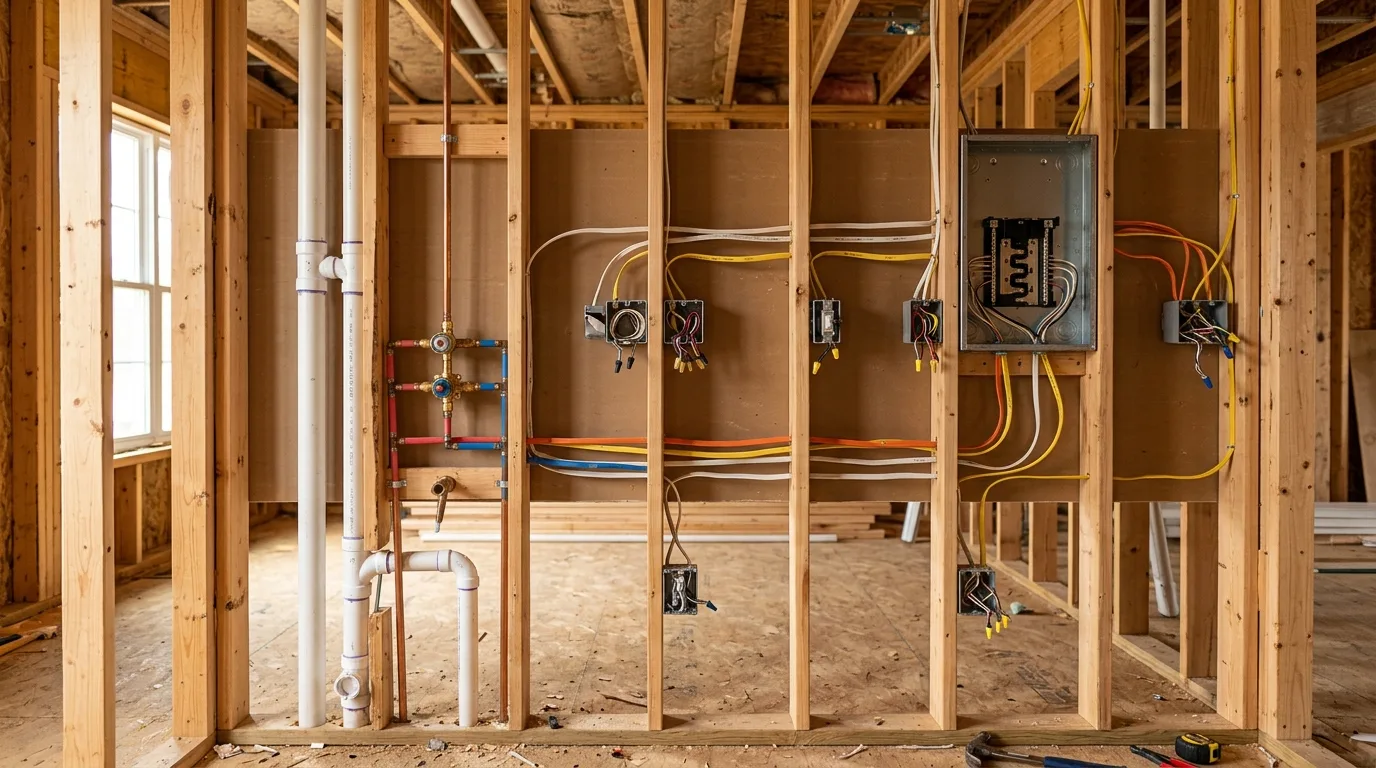
Jurisdiction aside, the line between “permit” and “no permit” is fairly consistent, and it follows a simple logic: are you changing the systems or the structure of the house, or just how it looks?
Usually no permit:
- Painting, wallpaper, trim
- Flooring over an existing subfloor
- Swapping a faucet, a light fixture, or a toilet in place
- Replacing cabinets in the same footprint with no plumbing or electrical change
- Countertops, backsplash
Usually yes, permit:
- Moving or adding plumbing fixtures
- New circuits, panel work, moving outlets, adding recessed lighting
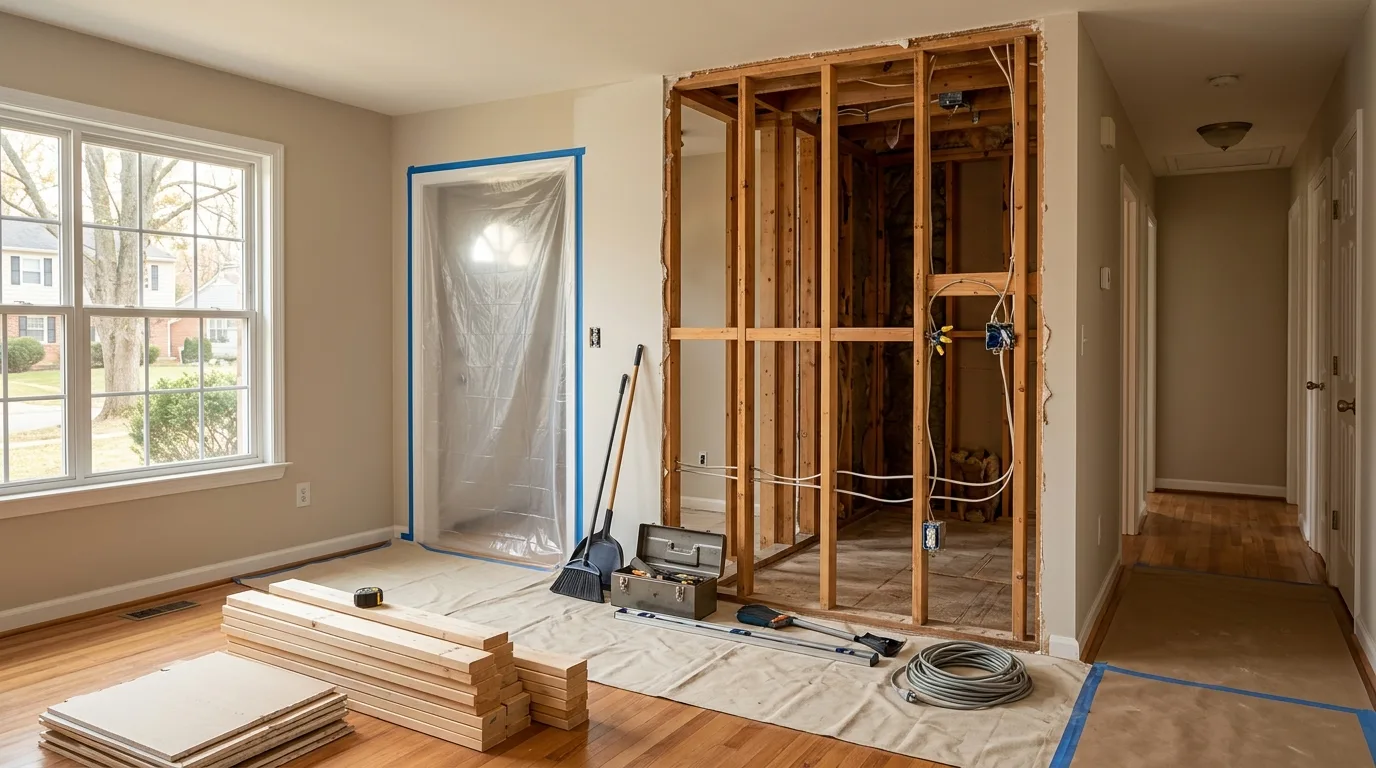
- Removing or moving a wall — always, and if it’s load-bearing you also need engineering
- Converting a tub to a walk-in shower (the drain moves)
- Finishing a basement
- Adding an exhaust fan where there wasn’t one
- Enlarging a window or door opening
- Anything that changes the footprint or height of the house
My working rule after years of this: if you’re touching water, wire, or structure, assume permit. You’ll be right most of the time and the times you’re wrong cost you nothing.
The three reasons people skip permits, and why each one is wrong
“It’ll slow the job down.” It will, a bit. Inspection is a real scheduling constraint. But the inspection is also the step where someone independent confirms nobody buried a mistake inside your wall. That’s not bureaucracy, that’s the whole point.
“Nobody will know.” Somebody will know, and the moment is predictable: you sell the house. Unpermitted work surfaces during the sale, at the worst possible time, with the least possible leverage. I’ve watched people open a finished bathroom back up to satisfy a buyer’s inspector. It costs multiples of what the permit would have.
“My guy said it’s fine.” Then ask your guy to pull it. A contractor confident enough to do the work should be confident enough to have it inspected. If pulling a permit is a problem for them, that tells you something the estimate didn’t.
The practical sequence
- Confirm your jurisdiction first. Not your mailing address — your actual municipal boundary. Mailing addresses lie; a “Silver Spring, MD” address can sit in Takoma Park city limits.
- Get any local pre-step out of the way. Municipality Letter in Takoma Park, tree protection if you’re disturbing anything near a protected tree.
- File with the right office. County DPS, or the city, per the table above.
- Build to the approved scope. Changes mid-job may need a revision.
- Don’t cover anything before the rough inspection. Drywall over unapproved rough-in means drywall coming back off.
- Close the permit. An open permit is nearly as bad as no permit at resale.
Where we fit
Part of what you’re hiring a local remodeler for is exactly this — knowing which office your address answers to before anyone picks up a hammer. We work across Silver Spring, Bethesda, Rockville, Gaithersburg, Takoma Park, Chevy Chase, Kensington and College Park, and the permitting path is different in nearly every one of them.
If you’re weighing up a project and want to know what it involves — including whether it needs a permit at all — our full range of services is on the site and estimates are free with no obligation. Sometimes the most useful answer I give is “that doesn’t need a permit and you can do it yourself in a weekend.”
Getting a Remodel Permit in Montgomery County: The Short Version
Whether you need a remodel permit in Montgomery County is rarely the hard question — the hard question is who issues it. Unincorporated areas go to county DPS; Rockville and Gaithersburg run their own offices; Takoma Park needs a city letter first; Chevy Chase approves after the county. Confirm your municipal boundary before you file anywhere.
Frequently Asked Questions
Q: Does my Montgomery County address mean the county issues my permit?
A: Not necessarily. Unincorporated areas like Bethesda go through Montgomery County DPS, but Rockville and Gaithersburg run their own permit offices, Takoma Park requires a city Municipality Letter before the county will process your application, and the Town of Chevy Chase approves only after the county permit is issued.
Q: What home projects need a permit in Montgomery County?
A: Moving or adding plumbing fixtures, new circuits or panel work, removing or moving walls, finishing a basement, adding an exhaust fan, and enlarging window or door openings. Paint, flooring over an existing subfloor and like-for-like fixture swaps generally don’t.
Q: What happens if I skip the permit?
A: It surfaces when you sell, at the point you have least leverage. Buyers’ inspectors find unpermitted work and it can mean opening finished work back up to satisfy them, which costs multiples of the original permit.
Q: Is College Park covered by Montgomery County permitting?
A: No. College Park is in Prince George’s County, so permits come from DPIE, and the City of College Park requires its own permit in addition to the county one.
