

Window salespeople have a simple answer to every window problem, and it costs about the same regardless of what the problem is.
The real question of window repair or replacement depends entirely on which part has failed. Some failures are genuinely terminal. Others are an afternoon’s work on a window that has decades left in it.
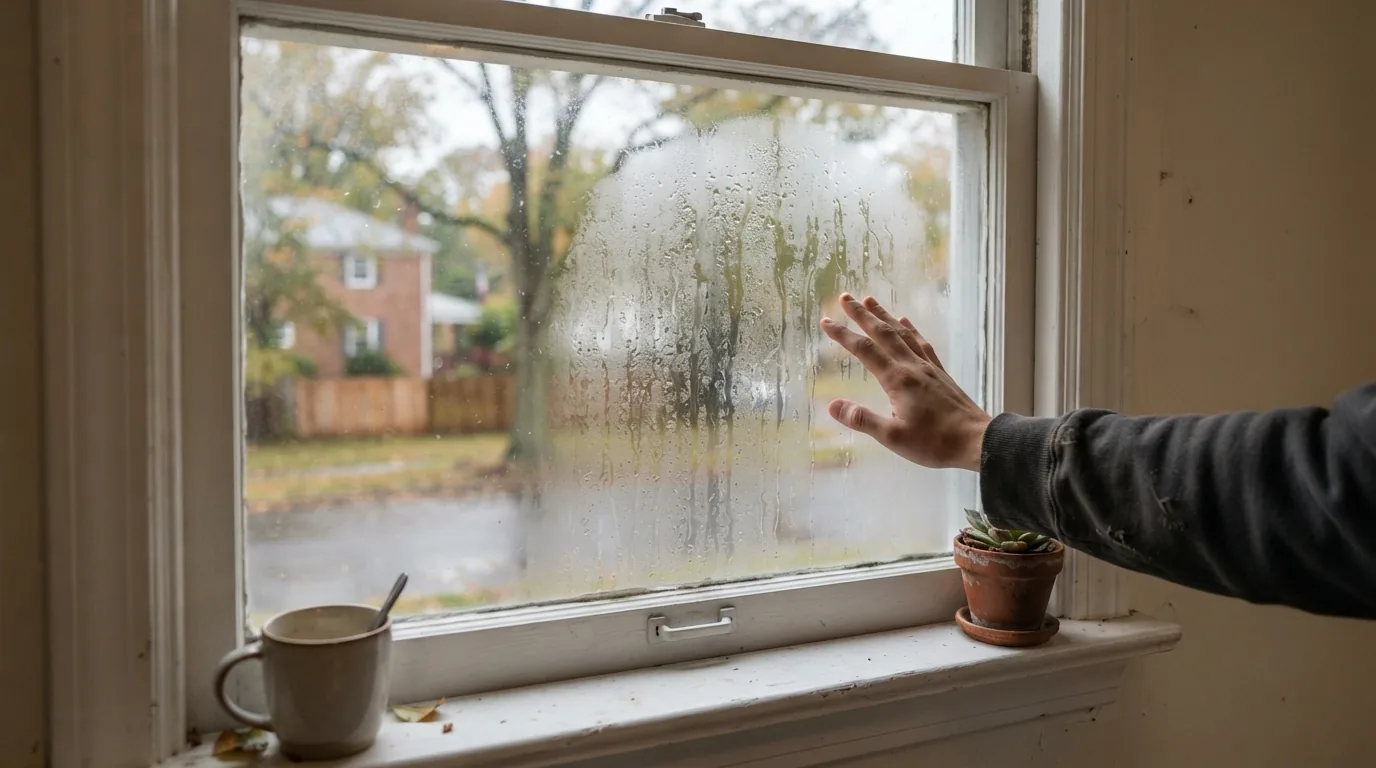
Fogged or cloudy glass
The moisture is between the panes, not on them. A double-glazed unit is two sheets of glass with a sealed cavity, and once that seal fails, humid air gets in and condenses where you can’t wipe it.
Here’s the part the sales pitch skips: the sealed unit can often be replaced without replacing the window. The frame, sash and hardware are usually fine — it’s the glass unit that’s failed. A glazier can measure and swap the unit into the existing sash for a fraction of a whole-window price.
That’s not always possible. Some modern windows have units bonded into the sash, and some older ones are no longer matchable. But it’s worth asking before accepting that the window is finished, because the answer is often yes.
Stuck or painted-shut sashes
Very common in older Silver Spring homes, and almost always repairable.
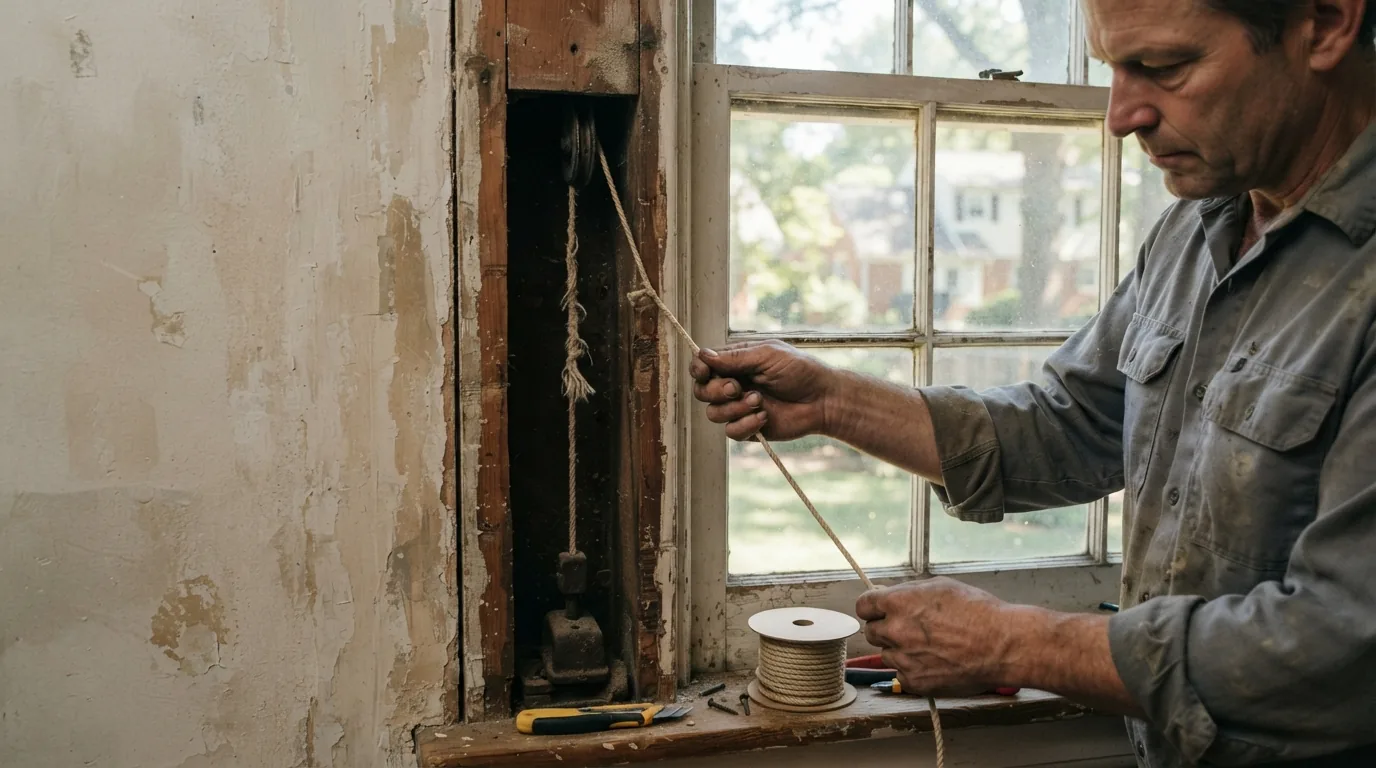
The usual causes are paint sealing the sash to the frame, swollen wood, or — in older double-hung windows — a broken sash cord. That last one is the classic: the window won’t stay up, or won’t move at all, because the weight inside the frame is no longer connected.
Sash cords are replaceable. It’s fiddly work involving opening the frame to reach the weight pocket, but it’s a repair, not a replacement, and it restores a window that was built to be repairable. Original wood windows in these houses were designed to be maintained indefinitely, which is more than can be said for a lot of what replaces them.
Painted-shut sashes free up with a proper cutting tool along the seam and patience. In a pre-1978 home, that paint may be lead-based, so it’s work with real precautions attached rather than a casual scrape.
Rotted sills and frames
This is where it turns. Rot is the failure most likely to justify replacement, and the deciding factor is how far it has gone.
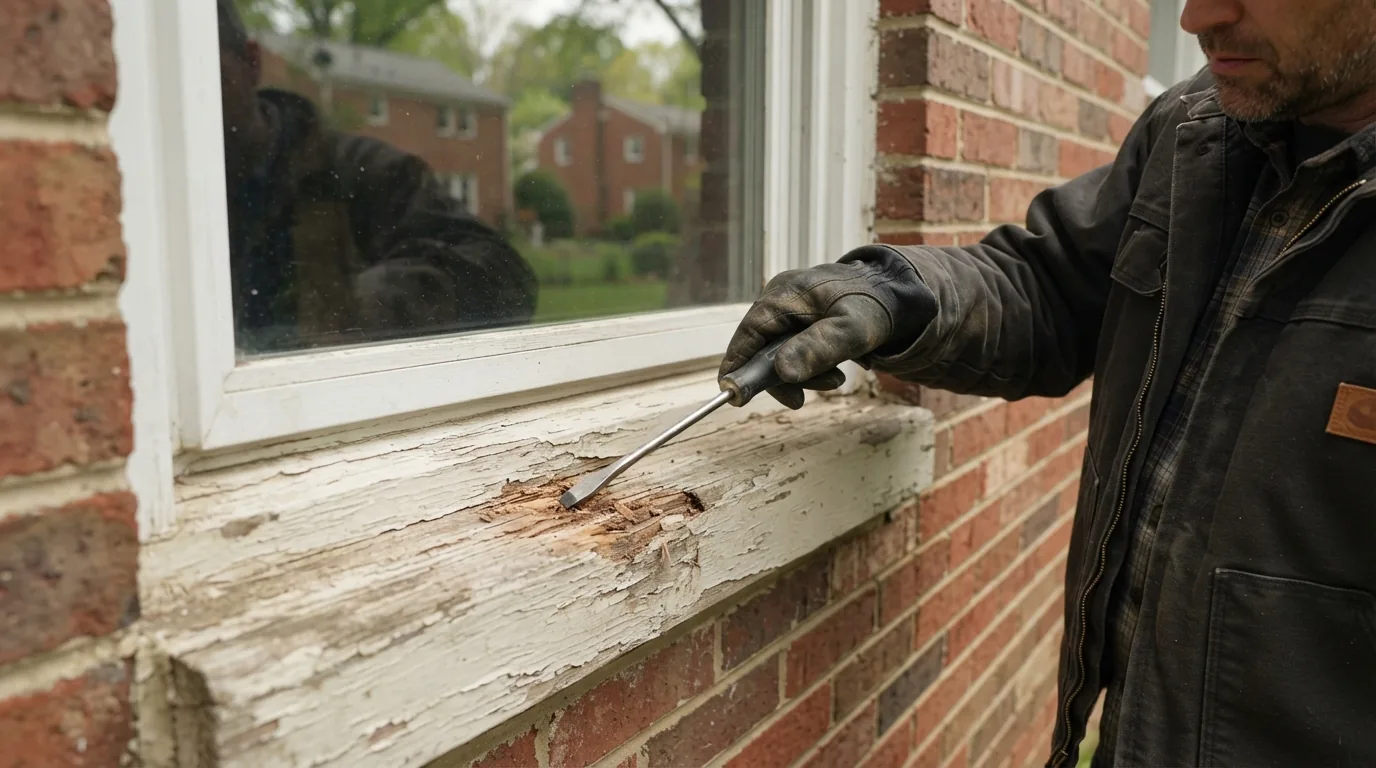
Test it with a screwdriver — press firmly into the wood at several points along the sill and the lower frame. Sound wood resists. Rotted wood gives, and the screwdriver goes in easily.
Localized rot in a sill can often be cut out and pieced in, or consolidated with epoxy for smaller areas. Rot that has reached the frame sides, or gone deep enough that there’s nothing solid to fix new material to, is a different matter — and rot in a sill usually means water has been getting in somewhere above it, so finding that comes first either way.
Drafts
Frequently not the window’s fault at all. Air commonly comes in around the frame rather than through it — the gap between the window frame and the wall opening, which is often poorly sealed and hidden behind trim.
Before condemning a window, check the perimeter. Weatherstripping is cheap and replaceable, and sealing the gap around a frame is one of the highest-return jobs in a house. The Department of Energy’s air sealing guidance puts the losses in perspective.
Plenty of homeowners have replaced drafty windows and found the room still drafty, because the leak was around the opening the whole time.
When replacement is genuinely the answer
- Frames rotted structurally, beyond piecing in
- Single-glazed windows where comfort and energy cost genuinely matter to you
- Windows that can’t be opened in a bedroom, which is an egress consideration
- Metal-framed windows from certain eras that conduct cold badly and cannot be improved
- Cases where several failures stack up — rot, failed seals and broken hardware in the same window
The honest economics
Replacement windows are sold heavily on energy savings, and the savings are real but usually slower to pay back than the pitch implies — often decades on a straight fuel-cost basis.
That doesn’t make replacement wrong. Comfort, noise, security, ease of use and not fighting a window every time you open it are legitimate reasons, and they’re more honest ones than a payback calculation that assumes the best case.
What I’d push back on is replacing sound, repairable wood windows purely on an efficiency argument. Repair the ones that can be repaired, seal the perimeters properly, and replace what’s genuinely finished.
The short version on window repair or replacement
Window repair or replacement comes down to which component failed. Fogged glass is usually a sealed unit that can often be swapped into the existing sash. Stuck sashes and broken sash cords are repairs, not replacements, on windows built to be maintained. Rot is the failure most likely to justify replacement, and a screwdriver tells you how far it has gone. Drafts are frequently around the frame rather than through the window, so check the perimeter before condemning anything.
If you’ve got a mix and want to know which is which before anyone quotes you for all of them, that’s worth a look. General repairs and carpentry across Silver Spring and the surrounding neighborhoods, free estimates, no obligation.
Frequently asked questions
Q: Can foggy windows be fixed without replacing them?
A: Often yes. The sealed glass unit can frequently be replaced within the existing frame and sash, which costs considerably less than a whole window. Whether it’s possible depends on how the unit is fitted.
Q: Are old wood windows worth keeping?
A: Frequently, yes. Original windows in older homes were built to be repairable — sash cords, glazing and hardware are all serviceable. Well-maintained wood windows outlast a lot of what replaces them.
Q: My window won’t stay open. What’s wrong?
A: On an older double-hung, almost certainly a broken sash cord. The counterweight inside the frame has come disconnected. It’s a repair, though it means opening the frame to reach the weight pocket.
Q: Will new windows pay for themselves in energy savings?
A: Usually not quickly — payback on fuel savings alone is often measured in decades. Comfort, noise reduction and windows that actually work are better reasons to replace than the energy math.
