

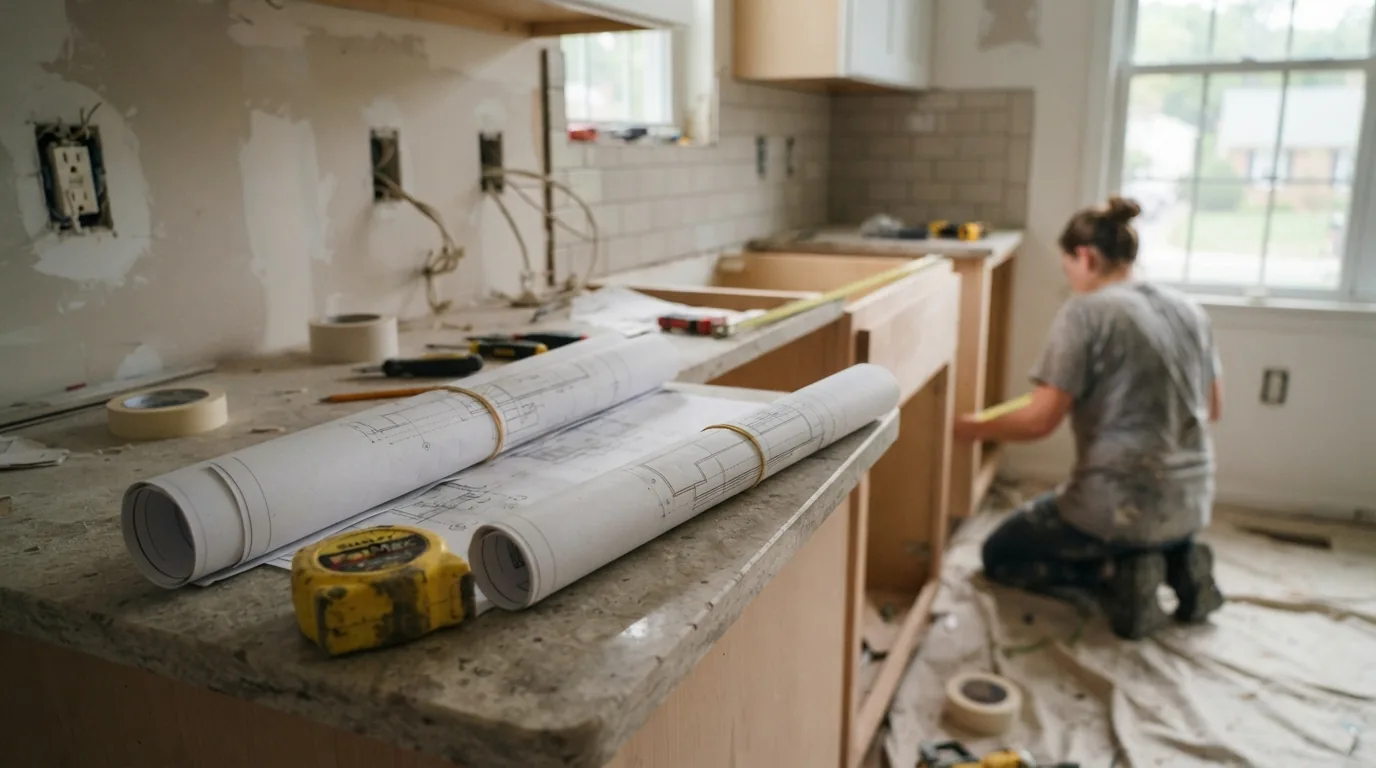
“Do I need a permit for this?” is asked at exactly the wrong moment — usually after someone has already committed to a design.
The answer for kitchen layout changes is more predictable than people expect. It comes down to four triggers, and if you’re not touching any of them, you’re generally in cosmetic territory.
(For the wider picture beyond kitchens, our guide to remodel permits in Montgomery County covers the general process.)
The four triggers
1. Moving plumbing
Relocating the sink or adding one to an island means new supply and waste. Waste especially, because it needs a specific fall and often ties into the vent system. That’s permit territory.
Replacing a sink in the same position isn’t.
2. Electrical work beyond swapping a fixture
New circuits, moving outlets, adding a dedicated appliance circuit, or rewiring a run — permit. Kitchens have specific requirements around circuit counts and GFCI protection on countertop receptacles, and those are inspected.
Swapping a light fitting for another light fitting in the same place isn’t.
3. Gas
Moving a gas line for a range, or adding one where there wasn’t one. Always. This is not a category to be casual about.
4. Structural changes
Removing or altering a wall, widening an opening, or anything involving a beam. If the wall carries load, you’ll need a structural engineer’s drawing as part of the application, not just the permit itself.
Kitchen layout changes that are genuinely cosmetic
Plenty, and this is the reassuring part:
- New cabinets in the existing footprint
- New countertops
- Backsplash tiling
- Flooring
- Painting
- Replacing appliances like for like
- Swapping a faucet or a sink in the same position
A full-looking kitchen refit that keeps every service where it is often needs no permit at all. That surprises people who assume “kitchen remodel” automatically means paperwork.

The part that catches people: which authority
This is where the same job gets two different answers depending on the address.
Unincorporated Silver Spring, Bethesda and Chevy Chase go through Montgomery County Department of Permitting Services — one authority, one process.
Rockville, Gaithersburg and Takoma Park are incorporated cities running their own permitting on top of, or instead of, the county’s. Takoma Park in particular has an extra municipal step people routinely miss. And College Park isn’t in Montgomery County at all — it’s Prince George’s, with an entirely separate department.
So “do I need a permit in Maryland” has no single answer. It depends which side of a line your house sits on, and that’s worth confirming before design rather than after.
Why it matters beyond compliance
Three practical reasons, none of them about getting caught.
Inspections happen with walls open. If rough-in isn’t signed off before you board and tile, you may be opening finished work. That’s a scheduling issue as much as a legal one.
Unpermitted work surfaces at resale. A buyer’s agent or appraiser noticing an unpermitted structural change is a bad moment to discover it, and retroactive permits are slower and more expensive than doing it in order.
Insurance. If something goes wrong and the work was unpermitted, the conversation with an insurer becomes considerably harder.
The gray areas people ask about
Not every plan sorts neatly into permitted or cosmetic. These are the kitchen layout changes that sit on the line, and none of them have an obvious answer from the outside.
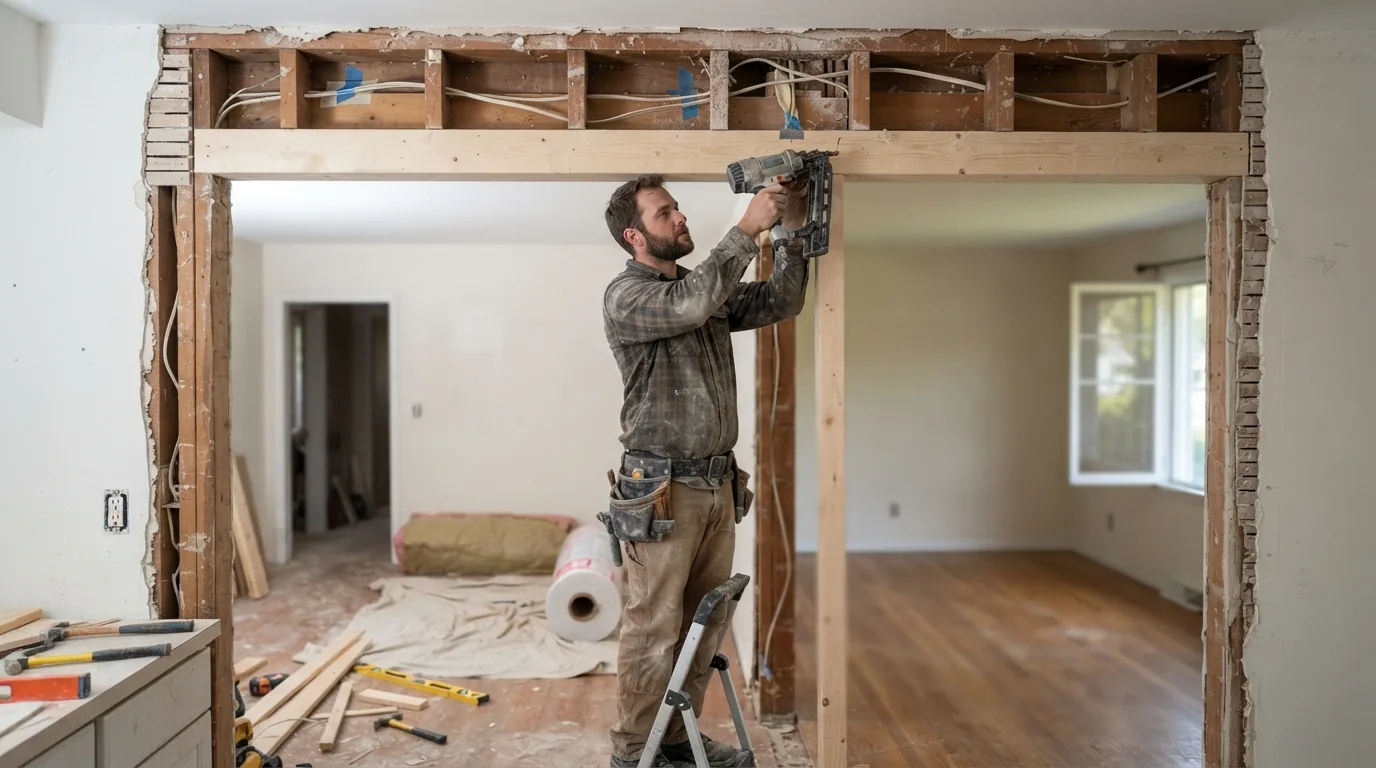
Widening a doorway. Sounds cosmetic, frequently isn’t. Taking a standard opening wider means altering the header above it, and once a header changes, it’s structural. Whether the wall carries load decides how big a job that is, but the permit question is usually settled by the header alone.
Moving a range from one wall to another. If it’s electric and there’s already a suitable circuit at the new position, you may be in easier territory than you expect. If it’s gas, or the circuit has to be run, you’re into two of the four triggers at once.
Adding a range hood that vents outside. The ducting itself is generally not the issue. Cutting a new opening through an exterior wall, and any electrical run to the unit, can be. Worth asking about specifically, because people assume a hood is an appliance swap and it often isn’t.
The honest bit about timing
Permits take time, and lead times vary. Structural work needing engineer’s drawings adds more, because the drawings come before the application.
Build it into the calendar at the start. The projects that run late are almost never late because of the building work — they’re late because the paperwork started when someone was ready to swing a hammer.
The short version on kitchen layout changes and permits
Kitchen layout changes need a permit when they involve one of four things: moving plumbing, electrical beyond a like-for-like swap, any gas work, or structural alteration. Cabinets, counters, tiling, flooring and appliance swaps in the existing footprint generally don’t. Which authority you deal with depends on the address — unincorporated Montgomery County goes to DPS, while Rockville, Gaithersburg and Takoma Park run their own processes and College Park is a different county entirely.
If you’re not sure which category your plan falls into, that’s worth establishing before you choose a single cabinet. Kitchen work across Silver Spring and the surrounding area, free estimates, no obligation.
Frequently asked questions
Q: Do I need a permit to replace kitchen cabinets?
A: Generally no, if plumbing, gas and electrical stay where they are and nothing structural changes. It’s treated as a cosmetic replacement.
Q: Who pulls the permit, me or the contractor?
A: Usually the contractor, and it should be stated explicitly on the estimate. If a contractor asks you to pull it as the homeowner, ask why — it shifts responsibility onto you.
Q: What if work was done without a permit before I bought the house?
A: It happens often. Options range from leaving it to seeking a retroactive permit, and which makes sense depends on what the work was and whether you’re planning to sell. Structural changes are the ones worth resolving.
Q: Does adding an island need a permit?
A: Only if it involves services. A freestanding island with no plumbing or electrical is furniture. One with a sink, or with outlets run to it, triggers the plumbing and electrical categories.
