

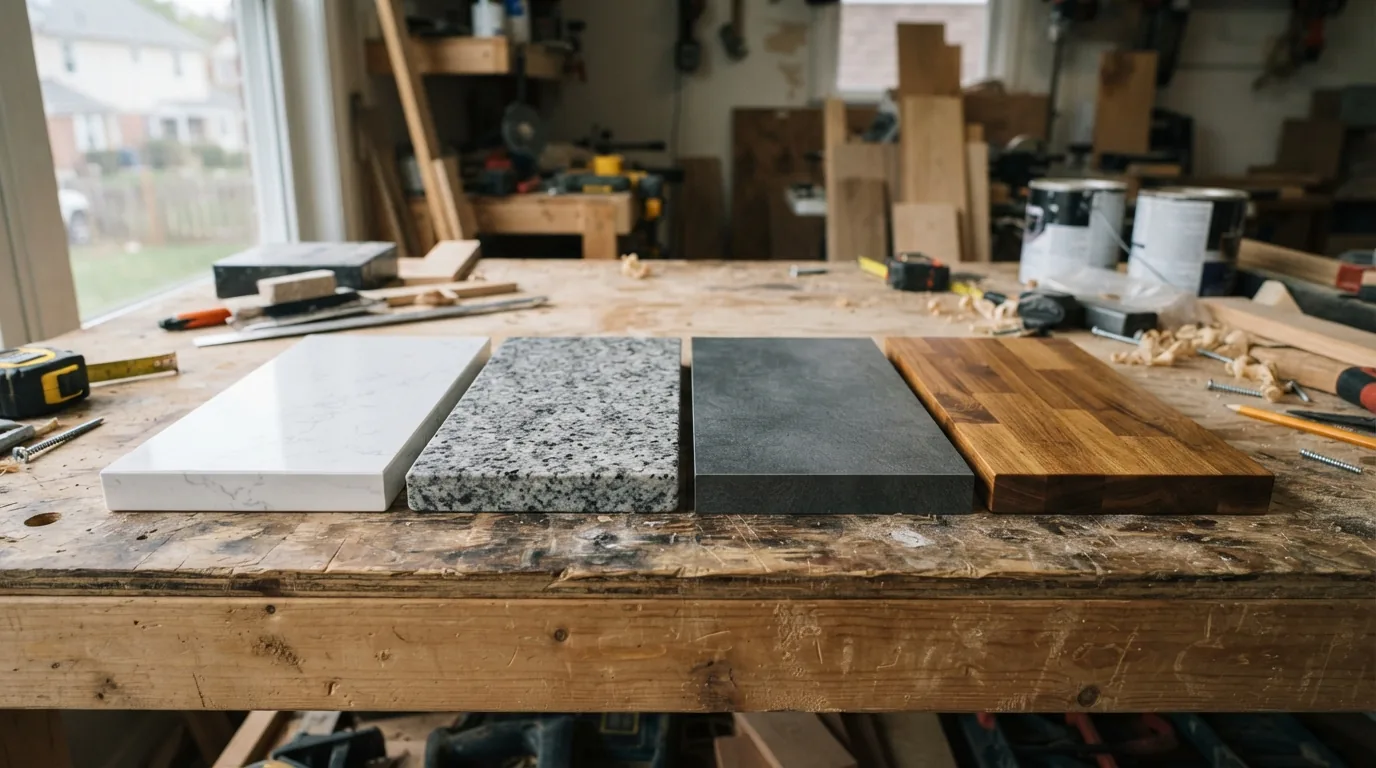
Countertop showrooms are lit to make everything look wonderful, which is their job. What they can’t show you is the material after four years of a family using it.
So here’s a comparison of kitchen countertop materials based on how they actually live, rather than how they photograph.
Quartz
Engineered stone — crushed quartz bound with resin. Non-porous, so it never needs sealing, resists staining well, and comes in consistent patterns because it’s manufactured rather than quarried.
It’s what I’d suggest for most families, and the reason is boring: it asks nothing of you. Wipe it and move on.
Two real limitations. Heat is one — the resin can scorch, so a pan straight off the burner is a genuine risk rather than a theoretical one. And direct sun can fade some colors over years, which matters for a countertop by a south-facing window.
Granite
Natural stone, every slab different. Handles heat far better than quartz, which matters if you’re the sort of cook who puts pans down without thinking.
It’s porous, so it wants sealing — typically once a year, though it varies by stone. That’s a ten-minute job with a bottle, not an ordeal, but it does need doing. Unsealed granite will take a stain from oil or wine.
The thing nobody mentions: because slabs vary, go and see the actual slab you’re buying rather than a sample. Two pieces of the same named granite can look meaningfully different.
Laminate
Deserves a fairer hearing than it gets. Modern laminate looks dramatically better than the laminate people remember, costs a fraction of stone, and is completely fine for a rental, a secondary kitchen, or a kitchen you plan to redo properly in five years.
Its weaknesses are real and specific: it can’t take heat, and water getting into a cut edge — around the sink especially — swells the substrate permanently. That damage can’t be repaired, only replaced.
If budget is the constraint, good laminate now beats stone you can’t afford until next year. It’s an honest choice, not a compromise to be embarrassed about.
Butcher block
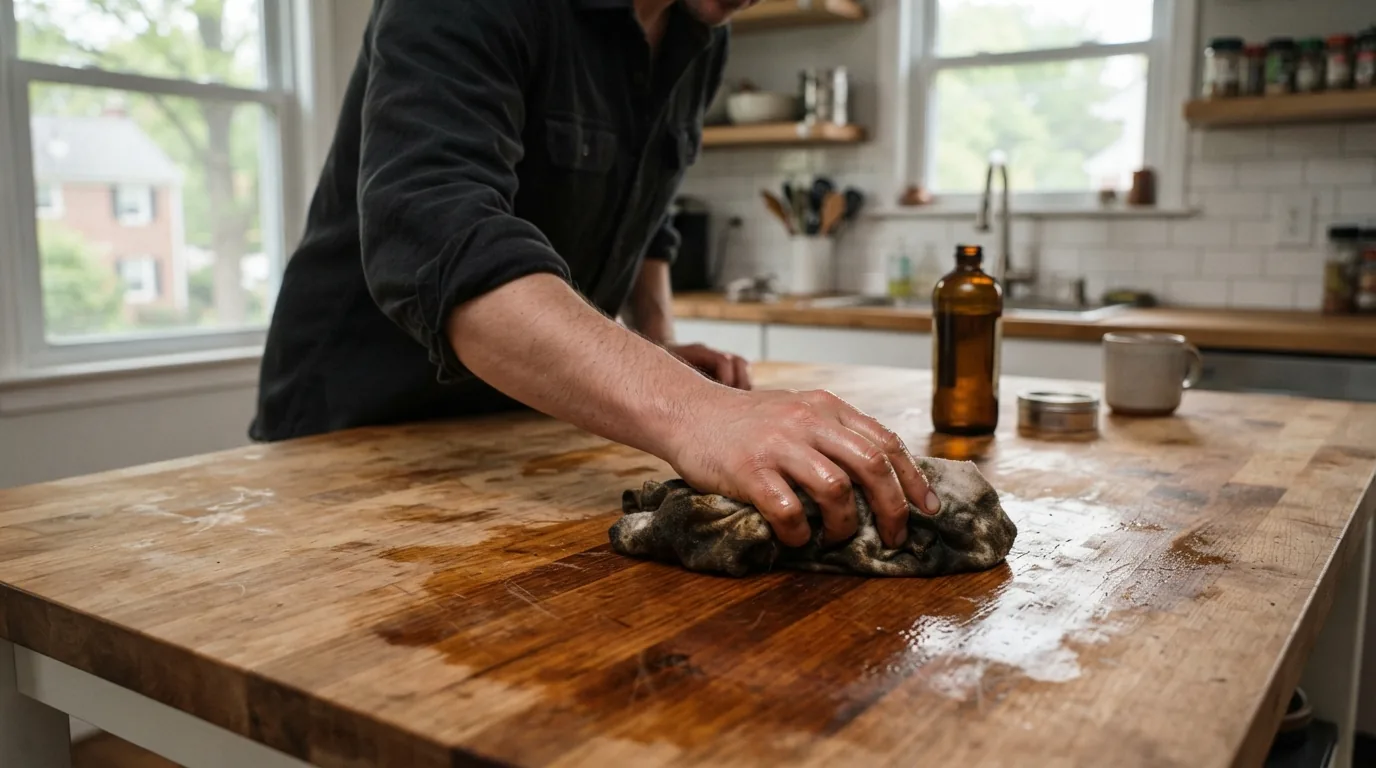
Warm, genuinely beautiful, and the most demanding of the four. Wood needs oiling periodically. It marks, scorches and dents. It moves with humidity, which in this climate means it moves noticeably.
It also has one advantage none of the others do: it’s repairable. Sand it back and re-oil, and it’s new again. Stone chipped at an edge is chipped forever.
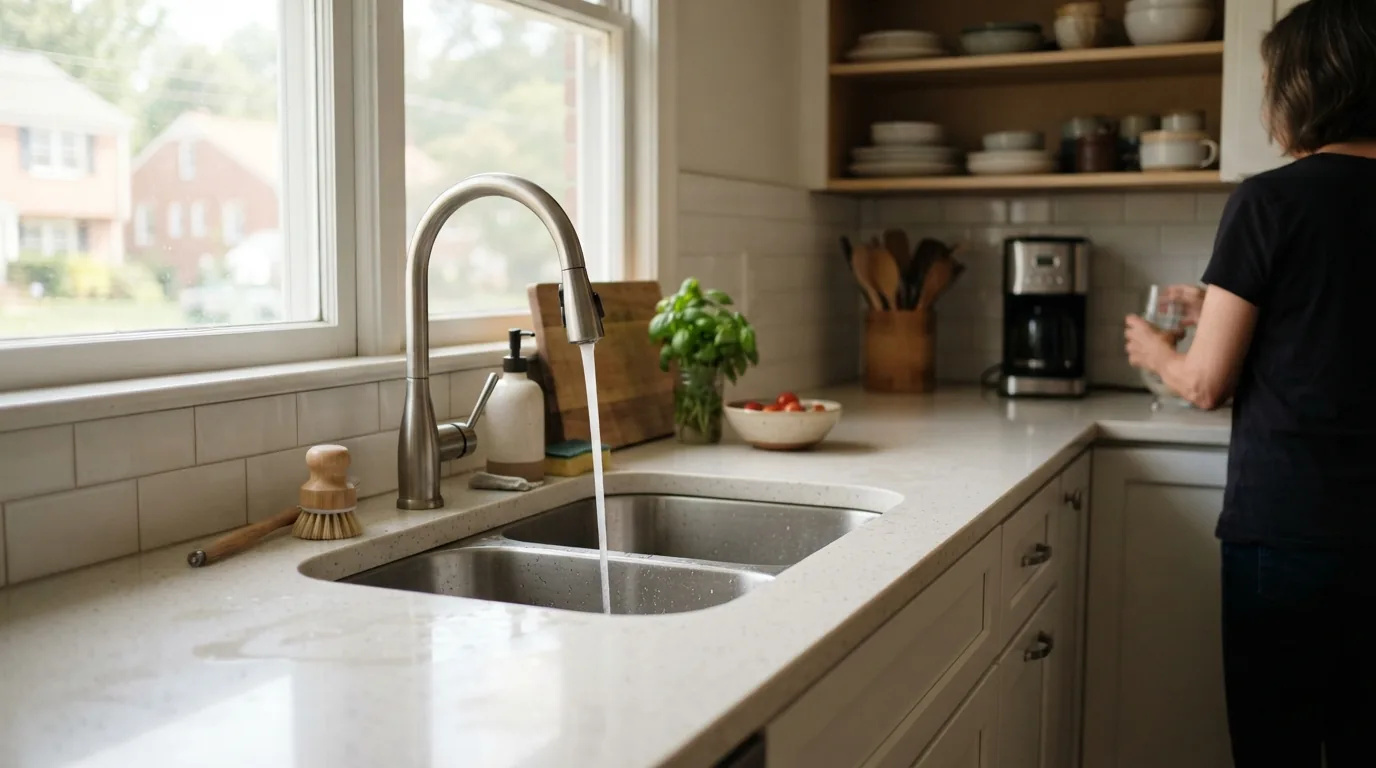
Where it goes wrong is around sinks. Standing water at a seam will eventually get into the wood, and once it’s black there, sanding won’t reach it. If you want wood and a sink in the same run, plan the sealing detail properly or put stone in that section.
The question that decides it
Not budget, not appearance. Across all four kitchen countertop materials it comes down to one thing: how much maintenance will you genuinely do?
Be honest rather than aspirational. Sealing granite annually and oiling wood quarterly sound easy in a showroom and are the sort of thing that quietly doesn’t happen. If you know it won’t, quartz or laminate is the right answer, and choosing on that basis is sensible rather than lazy.
What each of these kitchen countertop materials means for installation
Practical differences worth knowing before you choose:
- Stone is templated on site after cabinets are installed and level, then fabricated — usually one to two weeks between template and fitting, with no countertop in between.
- Stone is heavy. A long run needs proper support, and cabinets have to be genuinely level. In older houses with floors that aren’t, that means shimming.
- Wood needs a food-safe finish if you cut on it. The FDA’s home food safety guidance is the sensible reference on keeping prep surfaces clean.
- Seams are unavoidable on longer runs. Where they land is a design decision — ask, rather than discovering one across the middle of the island.
- Laminate and wood can often be worked on site, which shortens the gap considerably.
And the marble question
People ask about marble, which sits slightly apart from the four main kitchen countertop materials. It’s stunning and it etches — acidic things like lemon and vinegar leave dull marks that aren’t stains and don’t clean off.
Plenty of people love it anyway and accept the patina. Just choose it knowing that, rather than discovering it the first time someone makes a vinaigrette.
The short version on kitchen countertop materials
Among kitchen countertop materials, quartz is the low-maintenance default but dislikes heat and strong sun. Granite handles heat and needs sealing roughly yearly. Laminate is genuinely fine and honest value, provided water never reaches a cut edge. Butcher block is the most demanding and the only one that can be sanded back and renewed. Choose on the maintenance you’ll actually do, not the maintenance you intend to do.
If you want to talk through which suits how your kitchen gets used, that’s part of any quote. Kitchen work across Silver Spring and nearby, free estimates, no obligation, and no pressure toward the expensive option.
Frequently asked questions
Q: Does quartz need sealing?
A: No. It’s non-porous, which is its main practical advantage. Granite and other natural stone do.
Q: Can I put a hot pan on my countertop?
A: On granite, generally yes. On quartz, no — the resin can scorch. On laminate or wood, definitely not. Trivets are cheaper than any of the four.
Q: How long between template and installation?
A: Usually one to two weeks for stone, since it’s fabricated to the template. Plan for that stretch without a countertop, particularly if it’s your only kitchen.
Q: Is butcher block sanitary around raw food?
A: Wood is fine when maintained — kept oiled, cleaned properly and dried. What it doesn’t tolerate is standing water, which is the real risk near a sink rather than the food itself.
