

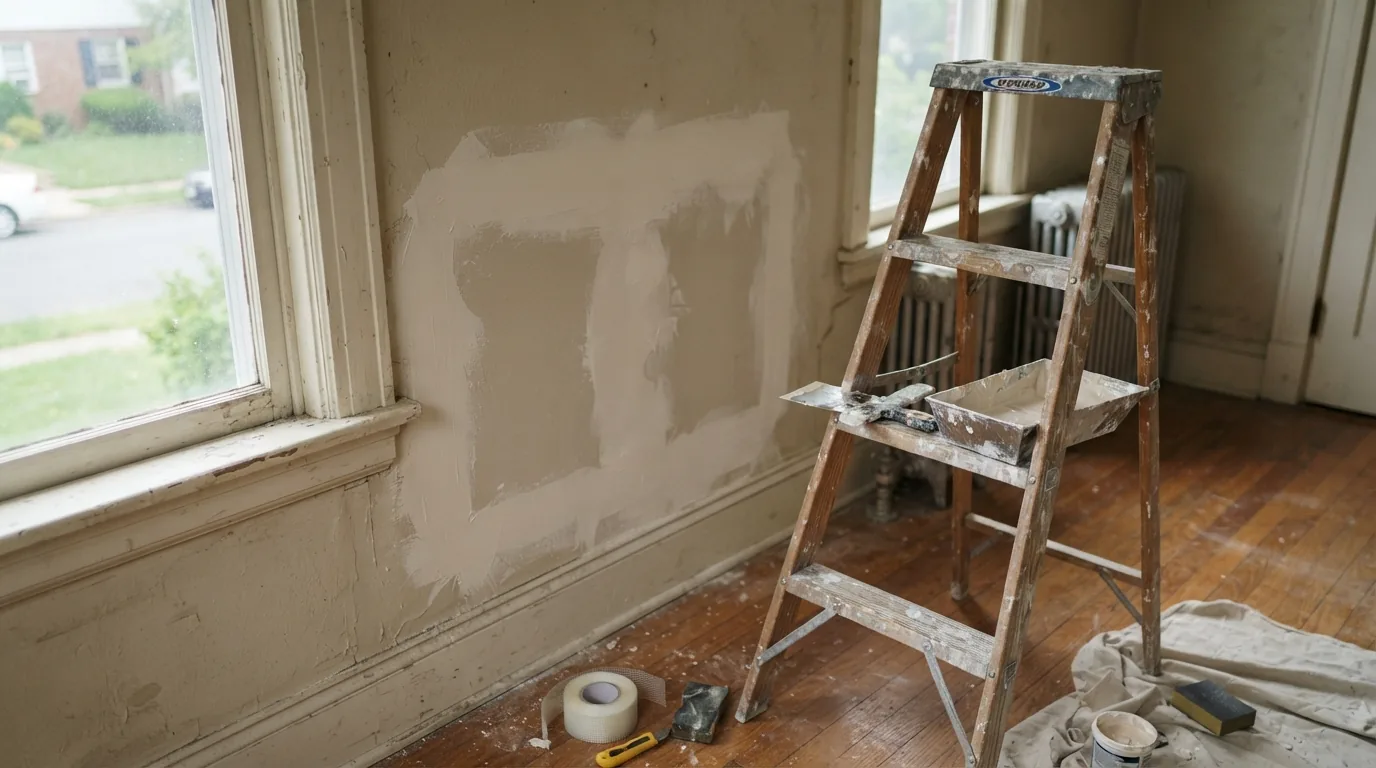
The question I get asked before any other is some version of “can you do it today?” — and the honest answer is usually “I can start it today.”
How long drywall repair takes has almost nothing to do with how hard the work is. Patching a hole is genuinely easy. What sets the schedule is that compound has to dry between coats, and you cannot argue with drying. That’s chemistry, not craftsmanship.
Why it’s two visits and not one
A proper repair is three or four thin coats of compound, each wider than the last, each dried before the next goes on. Thin coats are not fussiness — thick compound shrinks as it dries and cracks, which means starting again.
Under normal indoor conditions each coat wants several hours, and standard compound often wants overnight. Then sanding, priming and painting. That’s why almost every repair is a start-and-return rather than one continuous visit, and why anyone promising a same-day finish on a large repair is either using fast-set compound or planning to leave you a ridge.
Realistic timelines by job
- Anchor holes, dings, a few nail pops. An hour or two of actual work, spread over two short visits. Often finished the next day.
- A single fist-sized hole. Similar. Two visits, a day or two apart.
- A pieced-in section — a foot through the wall, a plumber’s access cut. Two or three visits across three to five days. Four new seams to feather is what adds the time.
- Water-damaged ceiling area. Add drying time for the structure itself before any repair starts, which can be days on its own. Then the normal sequence, plus stain-blocking primer.
- A full sheet or a whole wall. Usually a week from start to painted, most of which is waiting.
- A room’s worth after a leak or a renovation. One to two weeks realistically.
Those assume normal conditions. Which brings us to the thing nobody expects.
Humidity is the variable
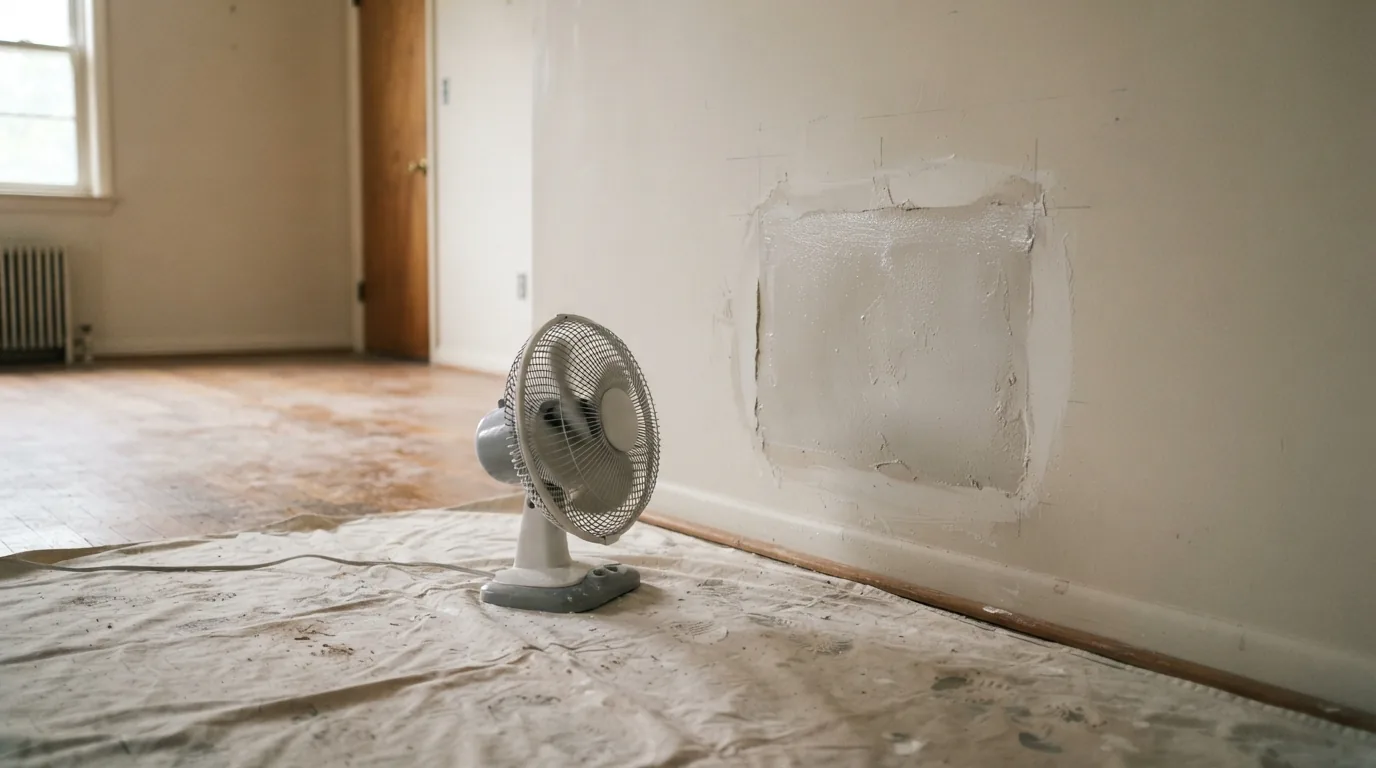
Compound dries by giving up water to the air. Air that’s already holding a lot of water takes it slowly.
In a Maryland August, with the house at 65% humidity and the AC struggling, a coat that would dry in four hours in February can take most of a day. It’s the single biggest reason a repair slips a day or two beyond estimate, and it’s genuinely outside anyone’s control.
What helps: running the AC (it dehumidifies as a side effect), a dehumidifier in the room, and moving air across the surface with a fan. What doesn’t help is heat alone — warming saturated air doesn’t make it accept more water.
Three things that actually speed it up
Fast-set compound. Sold in 20, 45 and 90-minute versions, it cures chemically rather than by drying, so it works in humidity and allows several coats in a day. The trade-off is that it’s harder to sand and unforgiving once it starts to go off, so it’s used for the build-up coats with standard compound for the final skim.
Doing all the damage at once. If you’ve got a hole in the hallway, two pops in the bedroom and a crack in the living room, batching them into one job costs far less time than three separate visits, because the drying happens in parallel.
Deciding the paint color before I start. Sounds trivial. It is the single most common cause of a finished repair sitting unpainted for two weeks.
What can’t be rushed, and shouldn’t be
If there’s been water, the structure behind the drywall has to be genuinely dry before it’s closed up. Sealing damp timber inside a wall is how you turn a leak into a mold problem, and the EPA’s guidance on mold in the home is clear that drying the material within a couple of days is what prevents growth.
Stain-blocking primer needs its own drying time too. Rushing that means the stain comes through the new paint a couple of weeks later, and then you’re repainting a ceiling to save an afternoon.
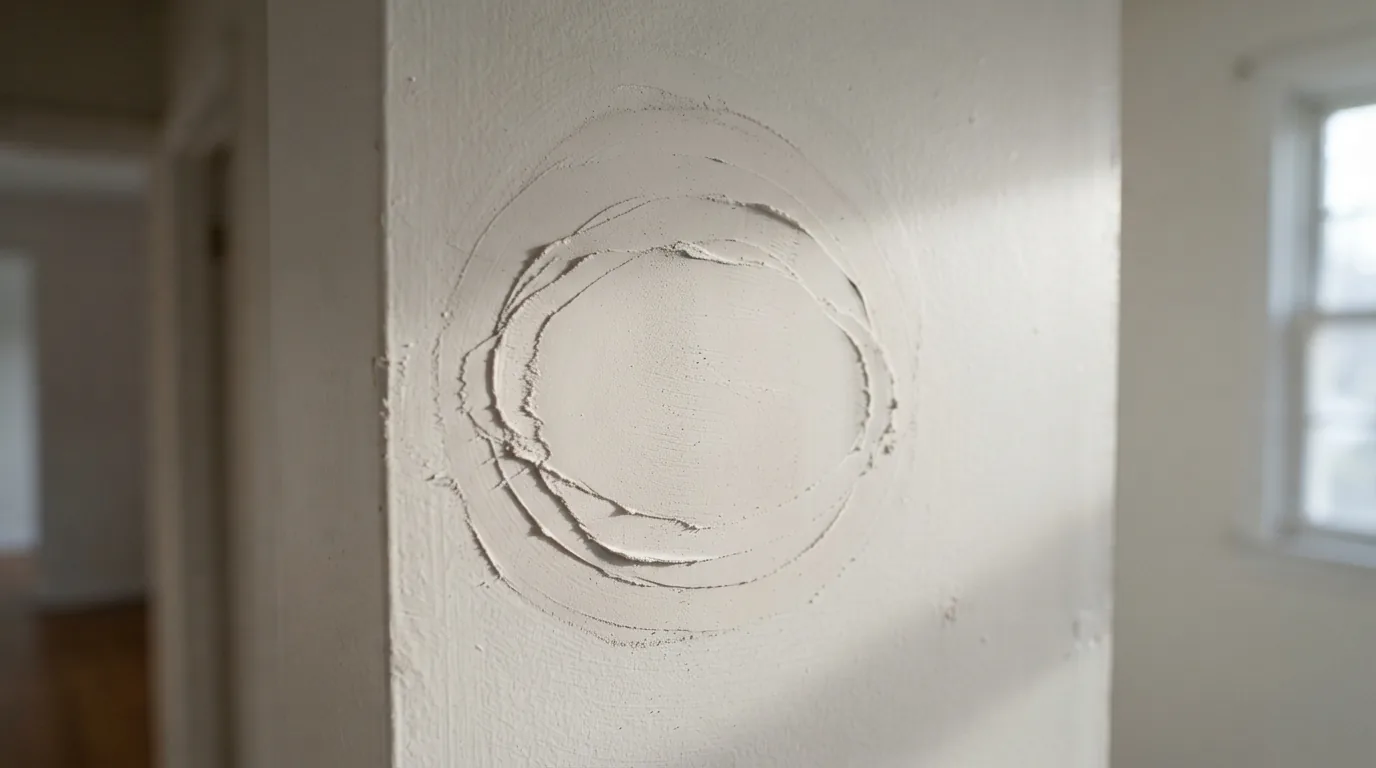
And texture matching needs the patch fully dry before it’s judged, because compound looks different wet and dry. I’ve seen a perfectly good match rejected while it was still damp.
The short version on how long drywall repair takes
How long drywall repair takes is set by drying time between coats, not by the difficulty of the work. Small repairs mean two short visits over a day or two; a pieced-in section means three to five days; a full wall is about a week, mostly waiting. Maryland humidity can add a day or more in summer. Fast-set compound, batching all the damage into one job, and choosing the paint in advance are the three things that genuinely compress it.
If you’ve got a deadline — a house going on the market, family arriving, a move-out inspection — say so up front. It changes how we sequence the work. Drywall and ceiling repair is core work for us across Silver Spring and the surrounding neighborhoods, and free estimates come with an honest calendar rather than an optimistic one.
Frequently asked questions
Q: Can a drywall repair be done in one day?
A: A small one, yes, using fast-set compound — though the paint may still want another day. Larger repairs genuinely cannot be, and anyone promising otherwise is skipping coats.
Q: Why does my repair take longer in summer?
A: Humidity. Compound dries by releasing water into the air, and humid air accepts it slowly. Running the AC or a dehumidifier in the room makes a real difference.
Q: Do I need to move out or cover everything?
A: No, but expect dust from sanding. We sheet the area and use dust control, and closing interior doors helps more than people think. It’s disruptive rather than uninhabitable.
Q: How long before I can paint over a repair?
A: Once the final coat is fully dry and sanded — usually the day after. Primer first, always, because bare compound absorbs paint differently from the wall around it and will show through as a dull patch otherwise.
