

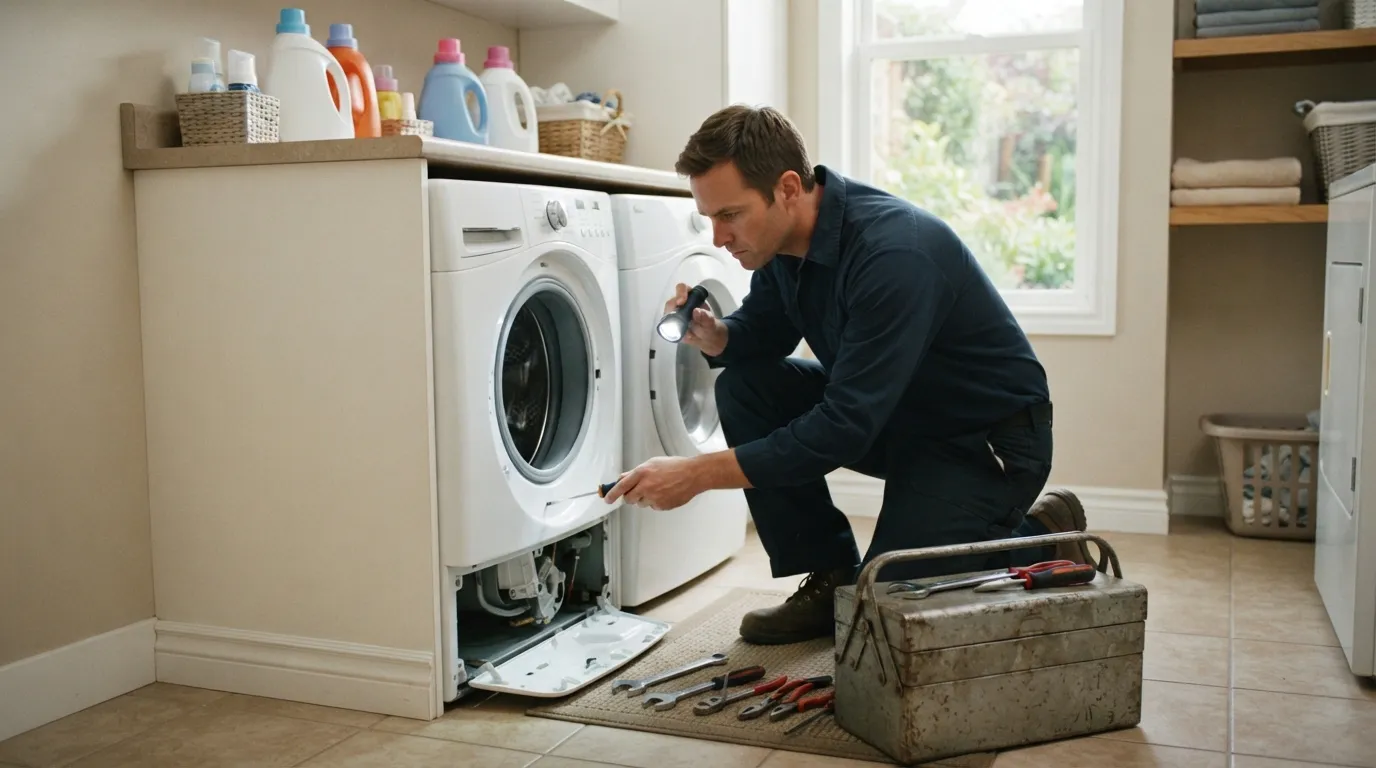
Decide whether to try a quick fix or call a pro
If you are looking for handyman washing machine repair, start by deciding how much risk you are willing to take and how much time you have. The simplest problems are worth trying yourself; anything that smells of burning, sprays water, or involves exposed wiring is not. Before you touch anything, make a quick safety check and then use this checklist to decide.
- If the machine won’t get power at all, check the outlet and the breaker rather than the machine itself.
- If water is pooling and you can’t stop it at the shutoff valve, stop and call for help.
- If the machine stops mid-cycle but shows an error code or a flashing light, note the code and call if your checks don’t clear it.
- If the problem is a one-off loud bang and the drum now spins normally, it may be worth watching the next cycle.
Try the simplest checks first and write down what you see. If a quick, safe check fixes the issue, you save time and a service visit. If the problem is uncertain, recurring, or involves water and electricity together, call a pro.
Simple checks you can do right now
Start with safety. Turn the machine off at its control, switch off the outlet or circuit if you can’t reach the plug safely, and close the water valves behind the unit if there is a visible leak. Work with the lid or door open so you are not surprised when something moves.
Check the power supply before anything else. Confirm the outlet is live by plugging in a small appliance you know works, or move the washer’s plug to another outlet if that’s practical. If the machine is hardwired or you are unsure about the electrical, leave that to a professional and focus on non-electrical checks.
Look at the water supply. Are the hot and cold inlet valves open? Are the hoses attached and free of kinks? A kinked hose can reduce or stop flow; a loose hose can leak. If you see moisture at a hose connection, dry it and watch that joint on the next cycle to see whether it beads up again.
Inspect the drain route. Front-loaders and many top-loaders have a pump trap or a lint screen you can access from a small panel or the front kickplate. If the machine fills but won’t empty, a clog in that trap or a kink in the drain hose is a common cause. You can look into the hose with a flashlight and feel along its run for obvious bends.
Open and close the door or lid and check the latch. A washer that will not start at all sometimes simply fails the door-sensing switch. Try gently closing the door to engage the latch; be careful not to force anything.
Listen and feel. Run a spin cycle with no clothes and stand close but not in the way. A loud scrape, a heavy thump, or violent wobble tells you there is a mechanical issue such as a loose weight, failed shock absorber, or a foreign object in the drum. A faint hum and no motion can point to a drive or belt issue.
Read and note any error codes or flashing sequences. If the display flashes or the control panel shows a code, write it down exactly. That code is one of the most useful things you can hand to a technician.
If you do any of the checks above and they clear the issue, try a short laundry load next. If the problem returns, stop and call a professional. Keep a note of what you tried and what the machine did in response.
The most common washing machine faults and what they mean
A few problems recur more often than others. Knowing the likely causes helps you describe the fault clearly and helps the person you call bring the right tools and parts.
If the machine powers up but won’t begin a cycle, the lid or door interlock and the user controls are the first places to check.
On direct-drive machines, a failed motor or motor control board is more likely. A common homeowner symptom is the drum not moving while the motor hums; that hum is a clue to pass on.
When a machine fills but won’t drain, expect a blocked pump, a stuck or clogged drain hose, or a failed drain pump. Items like socks, coins, or child-care objects commonly find their way into the pump area and stop water leaving the tub. If water stays in the tub while the motor tries to run, mention that to the technician.
Leaks come from several usual places: loose hose clamps at the inlet or drain, a split hose, a failed door seal on front loaders, a bad pump seal, or an overflowing dispenser. Small puddles under the front of the machine often point to the door seal or dispenser; puddles at the back often mean a hose or connection issue.
Strange or loud noises are often foreign objects between the drum and the tub, worn bearings, or failing suspension components. A scraping that changes with drum rotation usually means a foreign object; a rumble that worsens with load size suggests bearings or shock absorbers.
Vibration and shaking are usually balance problems. An off-center load, missing shipping bolts on a new installation, an uneven floor, or worn suspension parts can all cause a washer to walk or thump. If the machine moves an inch or two during spin, keep people and pets away.
Persistent odors and detergent residue point to low-temperature cycles, trapped moisture in the door gasket, or too much detergent. Cleaning cycles and leave-the-door-open airing help, but heavy mold in a seal or a clogged drain route may need professional cleaning.
When a fault is intermittent — the machine works sometimes and not others — it often means a wearable component near failure, such as a capacitor, a loose connection, or a failing sensor. These faults can be the hardest to diagnose without a systematic check during a service visit.
What a handyman will do on the first visit
When you book a visit, expect the technician to start by asking what you saw and what you tried. A clear symptom list and any error codes let them prioritize tests and bring likely parts. The first minutes are spent confirming the problem, checking obvious causes, and ensuring the situation is safe.
A typical diagnostic sequence is visual inspection, listening during a cycle, checking the inlet and drain, testing the door or lid switch, and verifying the electrical supply. The technician will test a short cycle to reproduce the fault whenever it is safe to do so, and they will look under, behind, and sometimes inside the machine by removing covers.
Many repairs are completed on a single visit if the issue is one of the common items: replacing a hose, unclogging a pump trap, tightening or replacing a clamp, swapping a belt, or reseating a loose connection. If a specific replacement part is needed and not carried on the van, the technician will explain the part lead time and options: return with the part, or schedule a follow-up when the part arrives.
A handyman will also tell you when a specialist is the right call. Problems that point to the cabinet-level wiring, sealed motor assemblies that require manufacturer parts, refrigerant or compressor issues on combo units, or complicated electronic control faults may be better handled by an appliance specialist or a service authorized by the machine’s maker. When that is the case, the technician should explain why and what referral options are available.
Before doing any work, the technician should describe the repair steps and the parts needed so you can decide. Expect an explanation of what they will replace, what they will test afterwards, and what you should watch for in the following days. If the fix leaves small debris or used parts, they should remove them and leave the area tidy.
If you want a plain example of the flow of a call and the checks performed, read our page on what a visit actually looks like for appliance issues to see the kind of diagnostic order and checks technicians follow.
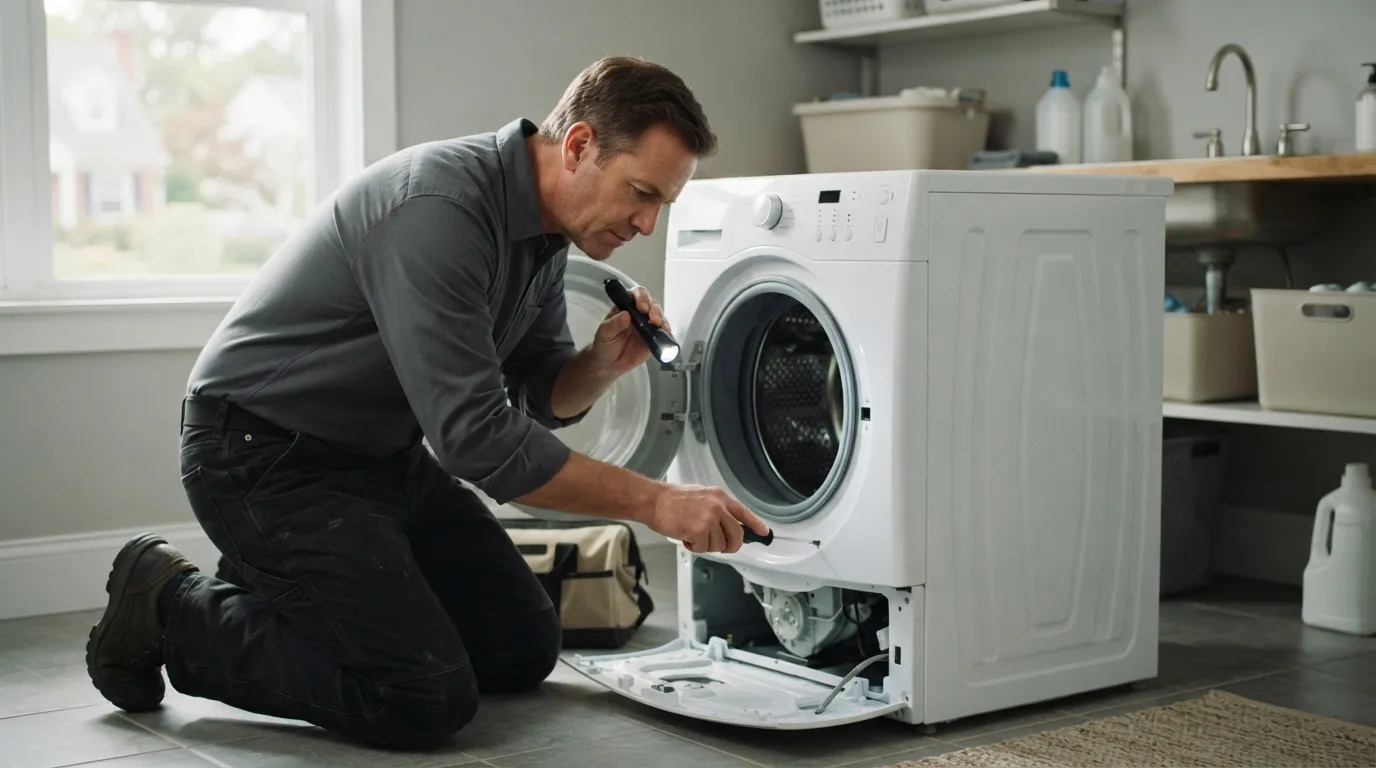
How a repair job is priced and what affects the bill
A repair bill is made of parts you can predict and variables you cannot. The clear parts are the inspection or trip charge, the time the technician spends on site, and the parts used. Local access, how the machine is installed, and how long a diagnosis takes are the variables that move the final figure.
An inspection or call-out allows the technician to confirm the fault and give you an itemised estimate. Labor is billed for the time spent diagnosing and repairing; a quick parts swap is different from a lengthy panel removal and pump replacement. Some parts are simple to change and others are labor- intensive because panels, hoses, or the drum must be removed to gain access.
Several local factors raise the time and difficulty. Machines tucked into a narrow closet, stacked laundry units, units set into cabinetry, or machines installed with difficult access at the back all increase the time on site. Older machines with faded fasteners or brittle hoses can take longer to disassemble safely. If a part is obsolete or special-order, the wait for the correct replacement also changes the schedule and the total cost.
Parts availability is another consideration. Standard items such as hoses, clamps, and common pumps are often available immediately; manufacturer-specific electronics and sealed assemblies may need ordering. Ask the technician whether the part is a standard replacement or a model-specific item and how long sourcing will take.
Transparency helps make the final bill match expectations. Before any work beyond simple fixes, ask for an itemised estimate that separates labor from parts and that explains what the technician will test afterwards. If you prefer to approve costs above a certain threshold, say so at the start so the technician can stop and call for approval if the job grows.
When a repair is small and quick, many homeowners prefer a one-visit fix. If the repair requires multiple hours or complex disassembly, weigh the inconvenience of a follow-up visit against the cost and the likelihood of success. The technician should lay out those trade-offs so you can choose.
When replacement is the better choice
Repair is often the right call, but sometimes replacement is a clearer path. Consider replacement when the machine has repeated failures in different systems, when repeated part changes have not restored reliable operation, or when the parts needed are obsolete or prohibitively slow to source.
If you face the choice between replacing a sealed assembly that will take long to source and installing a modern machine that restores reliability and efficiency, the long-term value of a replacement can be persuasive. Also factor in the inconvenience of multiple return visits for a machine that is unreliable even after repairs.
A newer machine may wash faster, use less water, and offer better spin extraction, which reduces dryer time and long-term operating cost. If you plan to keep the home for many years, a single replacement can be a sensible investment.
Finally, consider the non-monetary costs: time without laundry, the chance of a failure during an important week, and the disruption of removing and installing a new unit. A professional can help you compare the likely timeline to replace versus repair and present the options clearly so you can decide.
Laundry safety and routine maintenance you should not skip
A little upkeep prevents many common faults. Start by treating electrical and water shutoffs as primary safety points: know where the circuit breaker and the water valves are for your laundry, and turn water off before disconnecting hoses.
Keep the drain and inlet hoses in good condition. Replace older rubber hoses if they feel brittle, and avoid long runarounds or kinks in the drain hose. After every load, leave a front-loader door slightly ajar to allow the gasket to dry, and wipe out any visible detergent residue from dispensers and seals.
Clean the pump trap when your machine has one accessible. Removing trapped coins and lint keeps the pump running and stops many drain failures. Run a cleaning cycle on a warm setting occasionally to reduce detergent buildup and odor.
Watch what goes into pockets. Coins, buttons, and small toys are frequent causes of noisy failures and pump clogs. Use a mesh laundry bag for small items, and empty pockets before loading.
Maintain the dryer vent as part of laundry-room upkeep. A clogged dryer vent forces the dryer to work harder and increases the risk of lint getting into the laundry area; it also raises the chance of longer drying cycles that make the washer’s load sizes feel unbalanced. Regular lint clearing at the dryer and periodic vent cleaning help both appliances run better. If you want details on what to expect when having a vent installed or serviced, our guide on dryer vent maintenance explains the sequence of checks and the safety benefits.
If you see a persistent drip or a smell of gas or burning, stop using the machine and call a professional. Small routine tasks prevent most common failures, but when water and electricity meet, don’t delay.
Service area, scheduling and what to expect on arrival
We work with homeowners across Silver Spring and Montgomery County and nearby parts of Prince George’s County. If you are in that area and need help diagnosing a washer problem, contact us to arrange a visit.
When you call or book online, tell the scheduler the machine make and model if you can, the symptom in your own words, and any error codes you recorded. That information lets the technician bring likely parts and reduces time on site. Expect a short confirmation call that asks whether the machine is safe to test and whether children or pets need special handling.
On arrival, the technician will introduce themselves, confirm the symptom, and ask what you tried. They will then perform the safe checks described above, reproduce the fault if possible, and explain the likely next steps. If the repair is straightforward, they may complete it on the spot; if a replacement part is needed, they will explain the options and the scheduling for a return visit.
If you prefer a written estimate, ask for one at the time of inspection. If you have a preference about parts sourcing or a budget threshold, say so when the technician is diagnosing; that helps avoid surprises. When the job is done, expect the area around the machine to be left tidy and the repair steps explained so you know what to watch for.
Frequently asked questions
How much does it typically cost to fix a washing machine?
The total depends on the inspection, the time the technician spends, and any parts needed. Ask for an itemised estimate that separates the inspection or trip from labor and parts so you can compare repair against replacement.
Who should I call to fix a washing machine that won’t drain?
Start with a local appliance or handyman service that lists appliance work; tell them the machine fills but won’t drain and any error codes you saw so they can bring pump and hose parts or plan a pump inspection.
How do I know if the washer problem is a simple DIY fix?
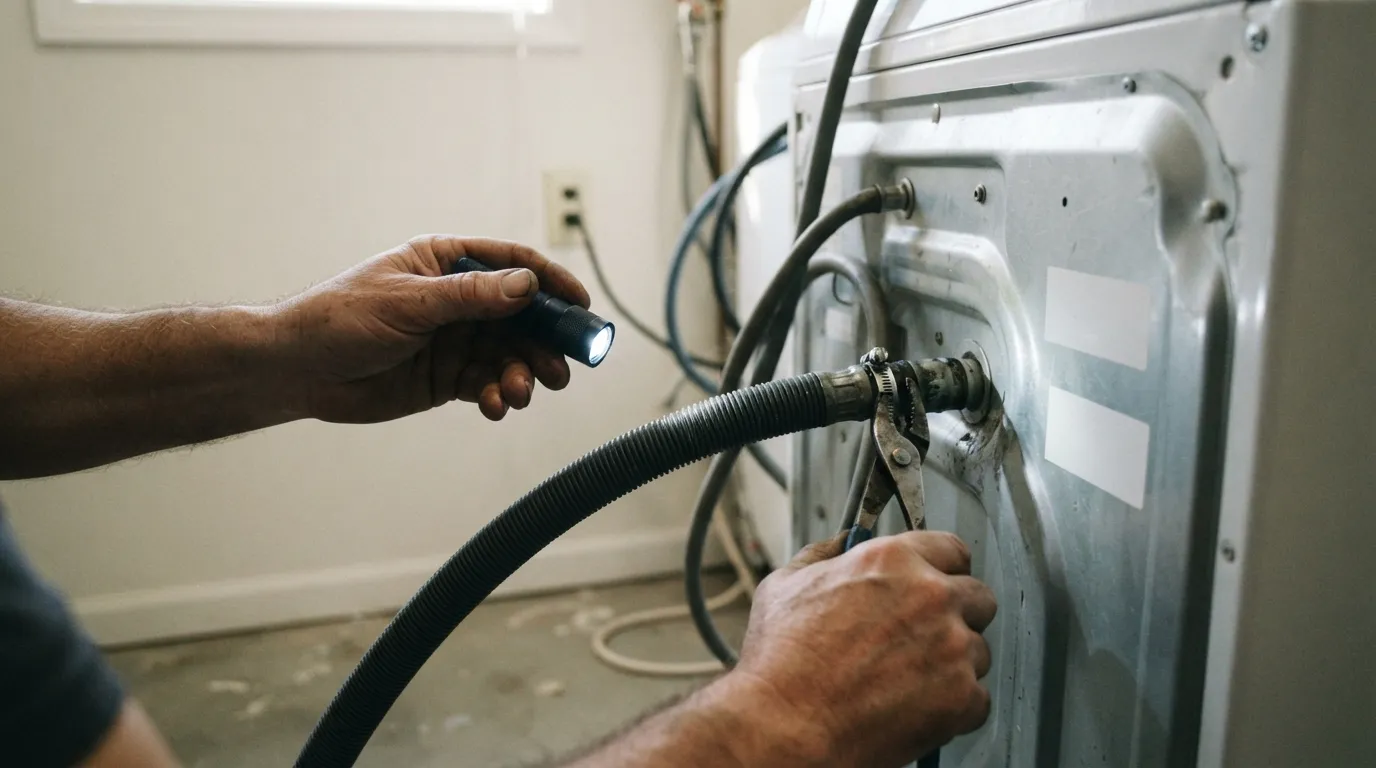
Simple fixes you can try safely are checking power, ensuring inlet valves are open, straightening kinked hoses, and clearing an accessible pump trap. If the issue involves exposed wiring, persistent leaks, or a burning smell, stop and call a professional.
What should I ask the technician when they arrive?
Ask what tests they will run, whether the likely part is carried on the van, how they will charge for labor and parts, and what the options are if a specialist or a replacement is the better solution.
