
People tend to use “drywall repair” for everything from a doorknob hole to finishing a basement. Fair enough — it’s all walls. But they’re separate jobs with separate skills, separate timelines and, sometimes, separate paperwork.
The distinction in drywall installation vs repair is simple: repair works with what’s already there. Installation puts up board where there wasn’t any, or where all of it is coming out.
When it’s genuinely installation
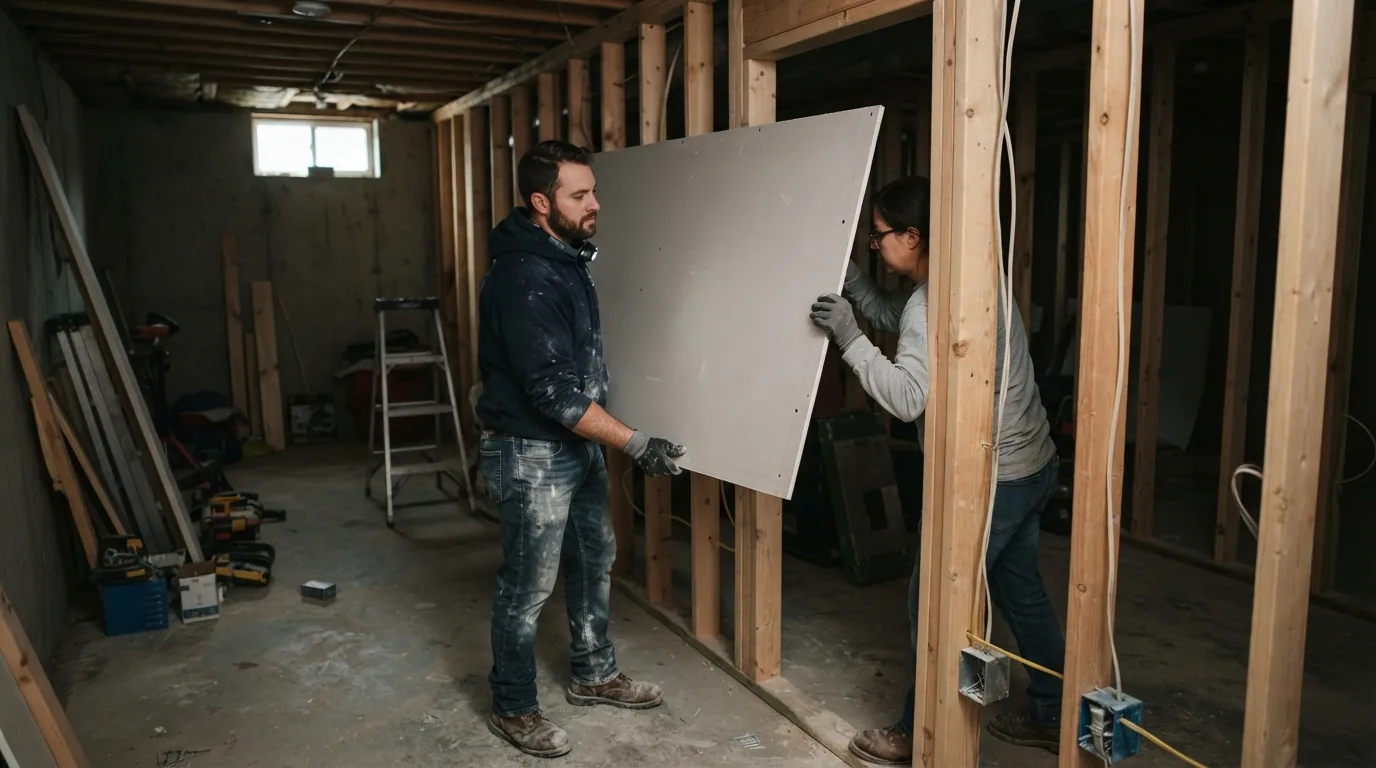
- Finishing a basement or attic. Bare framing, no board. Pure installation.
- Removing or adding a wall. New surfaces need boarding, and the ceiling where the old wall met it needs making good.
- After a serious leak or flood. Once board has been cut out across a room, you’re hanging new, not patching.
- Converting a garage or building out a closet. New surfaces throughout.
- Stripping failed plaster back to studs. Occasionally the right call in an old house, and once the plaster is off, what follows is installation.
Everything else — holes, cracks, water stains, nail pops, a section pieced in — is repair, however large it looks.
Why installation is a different skill
Repair is mostly finishing: blending new work into old so nobody can find the join. Installation is mostly layout, and layout decides how much finishing you’ll be doing later.
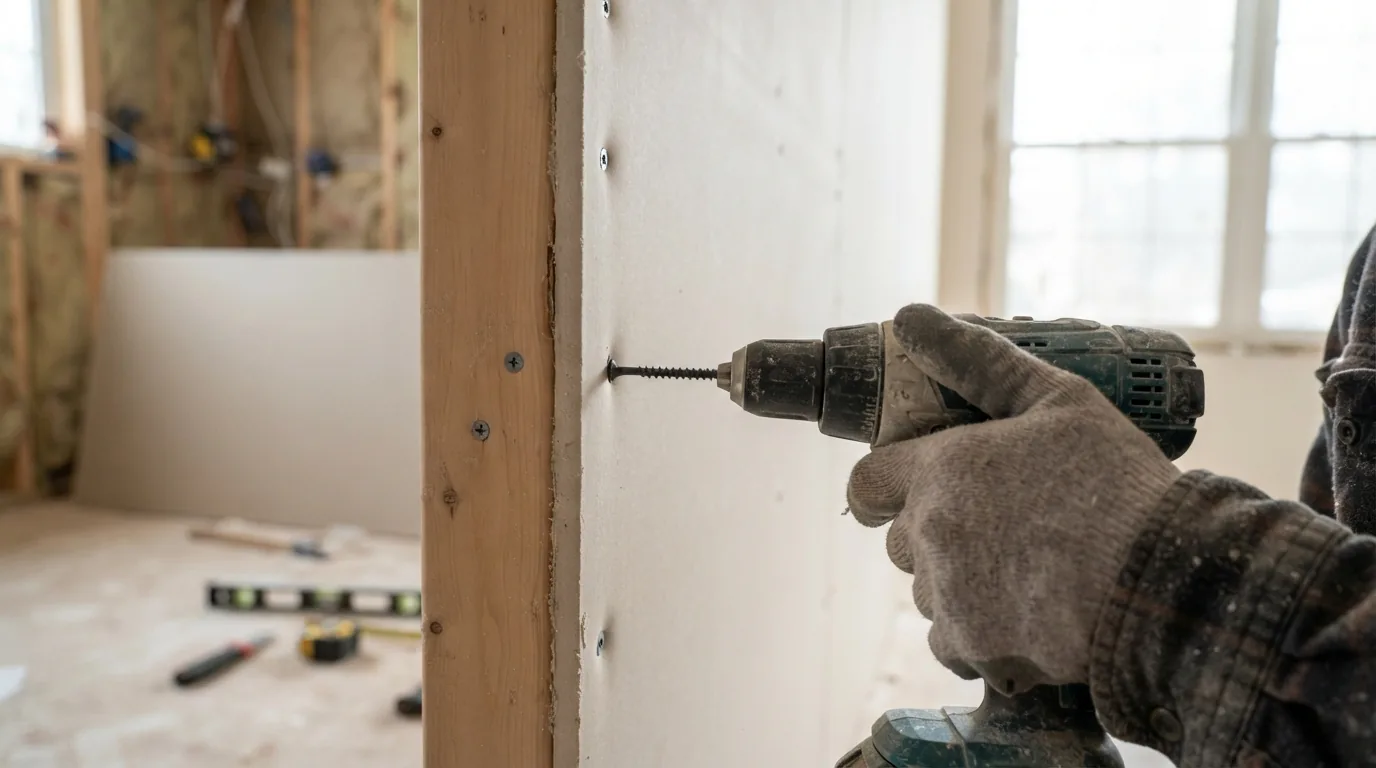
Hanging board well means planning where sheets land so seams fall in the least visible places, staggering joints so they don’t line up, keeping butt joints away from the middle of a wall where light will find them, and screwing to the right depth — deep enough to dimple the paper, not so deep it tears through and holds nothing.
A well-hung wall is quick to finish. A badly hung one is a finishing problem forever, and no amount of compound rescues seams in the wrong places. That’s the real difference: repair skill shows in the last coat, installation skill shows in the first hour.
The permit question, which is where it gets local
This is the part that genuinely changes between the two, and the part homeowners are most often surprised by.
Patching or replacing drywall as a like-for-like repair is maintenance, and doesn’t normally require a permit. But finishing a basement, converting a garage into living space, or moving and adding walls is altering the structure and use of the space — and that generally does.
In unincorporated Montgomery County, that’s Montgomery County Department of Permitting Services. If you’re inside an incorporated city — Rockville, Gaithersburg, Takoma Park — there’s a city process too, and it isn’t the same as the county’s. It’s worth ten minutes of checking before work starts rather than after.
The reason this matters beyond compliance: basement finishing has requirements about egress, ceiling height, smoke alarms and insulation that are much cheaper to design in than to retrofit once the board is up. And unpermitted finished space has a habit of surfacing during a home sale, at the worst possible moment.
What it means for cost
Counter-intuitively, installation is often better value per square foot. A repair is fiddly, access-limited work in an occupied room, matching existing texture and paint. Hanging a fresh basement is repetitive work in an empty space with no matching required.
What makes installation expensive isn’t the drywall — it’s everything that has to happen before it. Framing, insulation, electrical rough-in, and inspection sign-off where a permit applies. The board itself is one of the cheaper lines on the estimate.
So if you’re comparing a quote for finishing a basement against what you paid for a patch last year and the math seems wild, that’s why. You’re mostly not buying drywall.
The middle case: how much repair before it’s installation
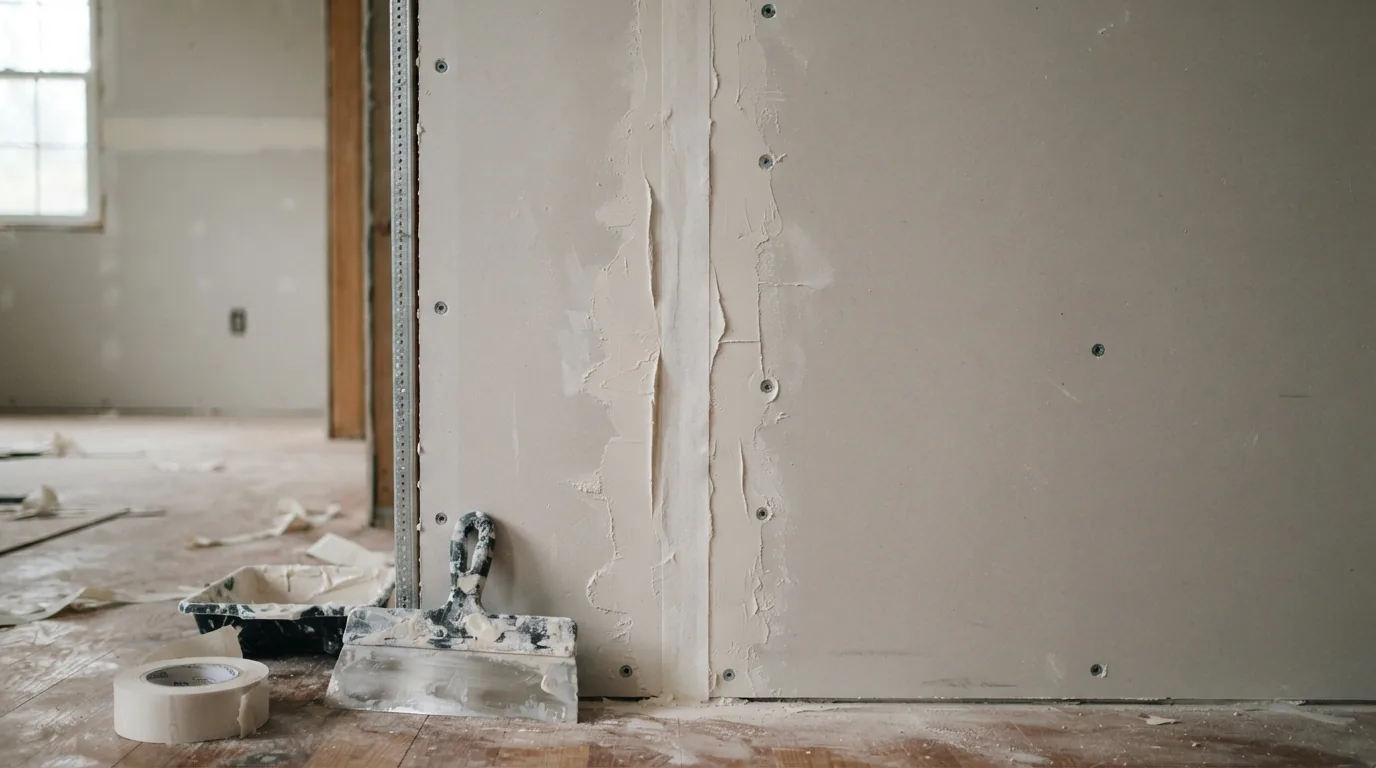
There’s a genuine gray zone, and the rule I use is about a third. Once you’re replacing more than roughly a third of a wall, or joining onto old repairs you don’t trust, taking the whole sheet off is faster, flatter and often cheaper than piecing around what’s there.
Old repairs are the deciding factor more than area. Joining good work onto three previous patches of unknown quality means inheriting every one of their problems, and you’ll be floating compound across a wide area to hide the differences.
The short version on drywall installation vs repair
Drywall installation vs repair comes down to whether board is being added or blended. Repair covers holes, cracks, stains and pieced-in sections, and rarely needs a permit. Installation covers basements, attics, garage conversions and wall changes — and those usually do, from the county or your city. Installation skill lives in layout; repair skill lives in the finish. And once you’re replacing more than about a third of a wall, replacing beats repairing.
Not sure which yours is? That’s a reasonable thing not to know, and it’s the first thing we work out on site. We handle both across Silver Spring and the surrounding area — free estimates, no obligation, and an honest answer about which job you’re actually looking at.
Frequently asked questions
Q: Do I need a permit to replace drywall?
A: For like-for-like repair, normally no — it’s maintenance. For finishing a basement, converting a garage or moving walls, usually yes. Check with Montgomery County DPS, or your city if you’re in Rockville, Gaithersburg or Takoma Park, because those run their own processes.
Q: Is it cheaper to replace a whole wall than repair it?
A: Sometimes, yes. Past roughly a third of the wall, or where there are several old repairs of unknown quality, starting clean is often quicker and gives a better finish.
Q: Can I hang drywall myself and have someone else finish it?
A: You can, and people do. Be aware that finishing cost depends heavily on how well it was hung — seams in awkward places take far longer to hide, so any saving on hanging can come back on the finishing.
Q: What’s the difference between drywall and green board?
A: Green board is moisture-resistant board for damp areas like bathrooms. It resists humidity, but it is not waterproof and it is not a substitute for proper tile backer behind a shower.
