

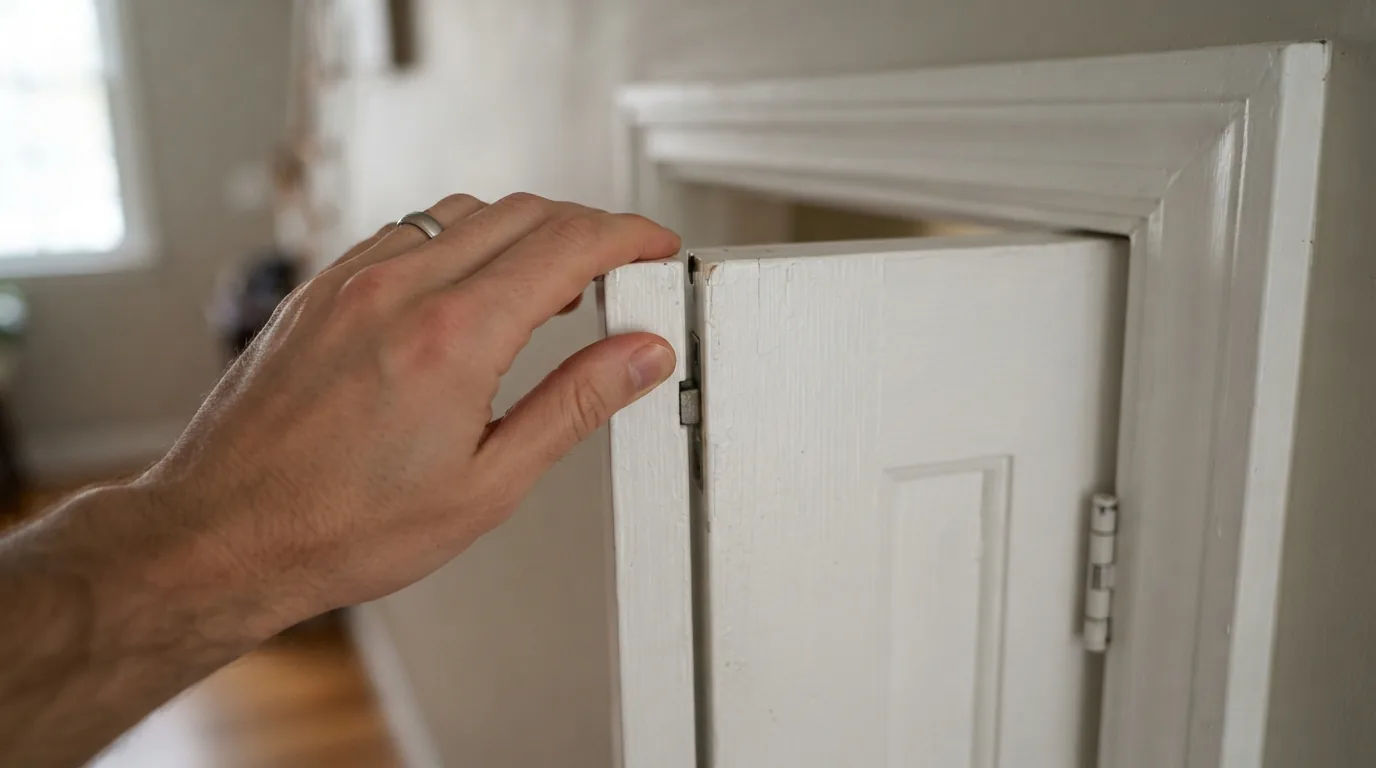
The instinct when a door sticks is to take a plane to the edge. It works, briefly. Then winter comes, the door shrinks back, and now there’s a draft and a gap you can see daylight through.
Doors that stick are almost always a symptom of something else, and where the door binds tells you what that something is. Ten seconds of looking saves a lot of unnecessary carpentry.
Doors that stick: read where it binds
Binding at the top of the latch side
The most common by far, and it means the door has dropped — hinge screws have loosened, usually the top hinge, and the door is now hanging slightly out of square.
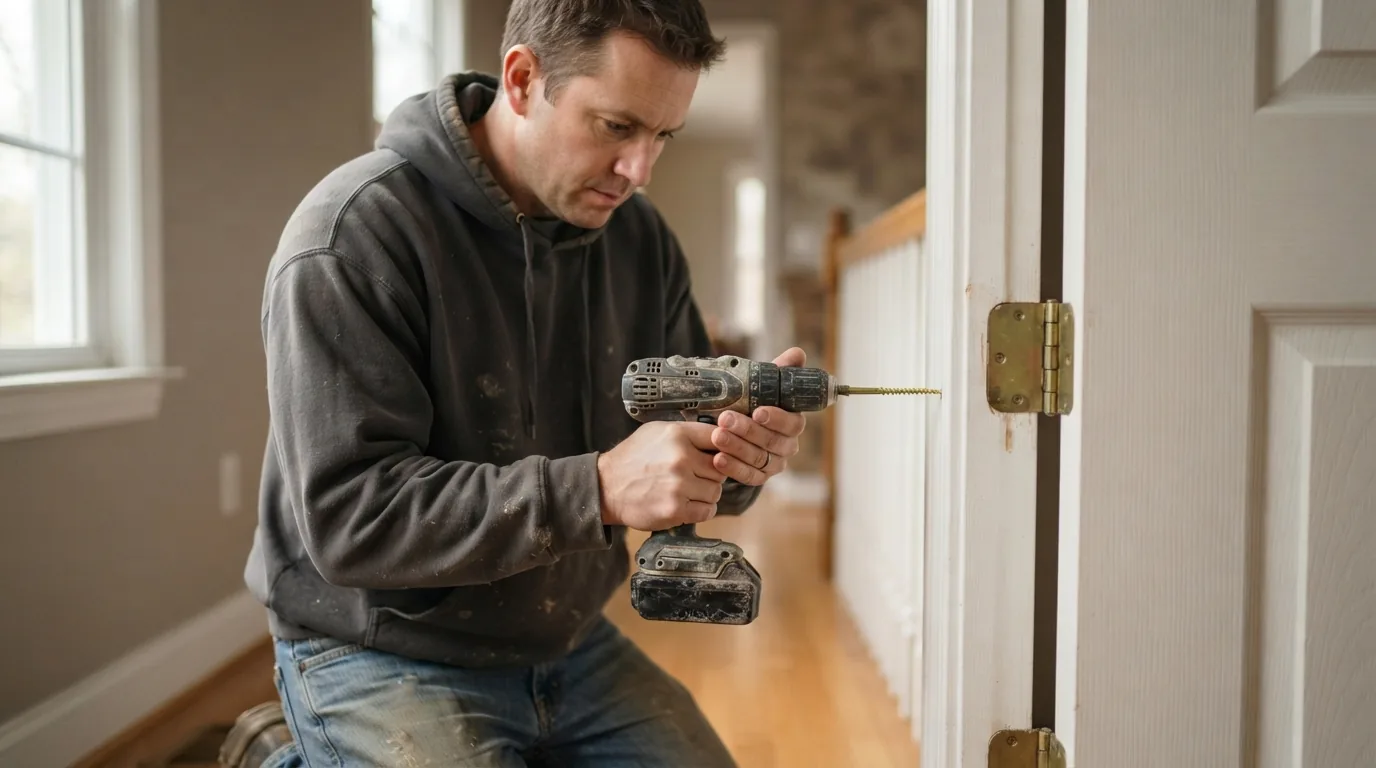
The fix isn’t the door. Open it, take the weight, and check whether the top hinge screws turn freely. If they spin without tightening, the screw holes in the frame have worn. The trick that actually holds is replacing one or two of the short screws in the top hinge with a 3-inch screw that reaches past the frame into the stud behind it. That pulls the whole frame back true and lifts the door.
Ten minutes, one screw, no planing. It fixes more sticking doors than any other single thing.
Binding along the whole latch side
Suggests the frame has moved, or the house has settled and the opening is no longer square. Worth checking whether the gap around the door is even top to bottom — if it tapers, that’s the frame rather than the door.
This one sometimes does need material removed, but confirm the hinges first.
Binding at the bottom
Often flooring. A new floor, or new underlay, raises the door’s travel. Sometimes it’s a carpet that has been stretched or replaced with something thicker.
Sticking only in summer
Wood swelling with humidity, and our summers are humid enough to do it noticeably. If a door is fine in February and tight in August, resist planing it — you’ll have a gap for the other half of the year. Ease it only if it’s genuinely unusable, and take off the minimum.
Won’t latch: a different problem
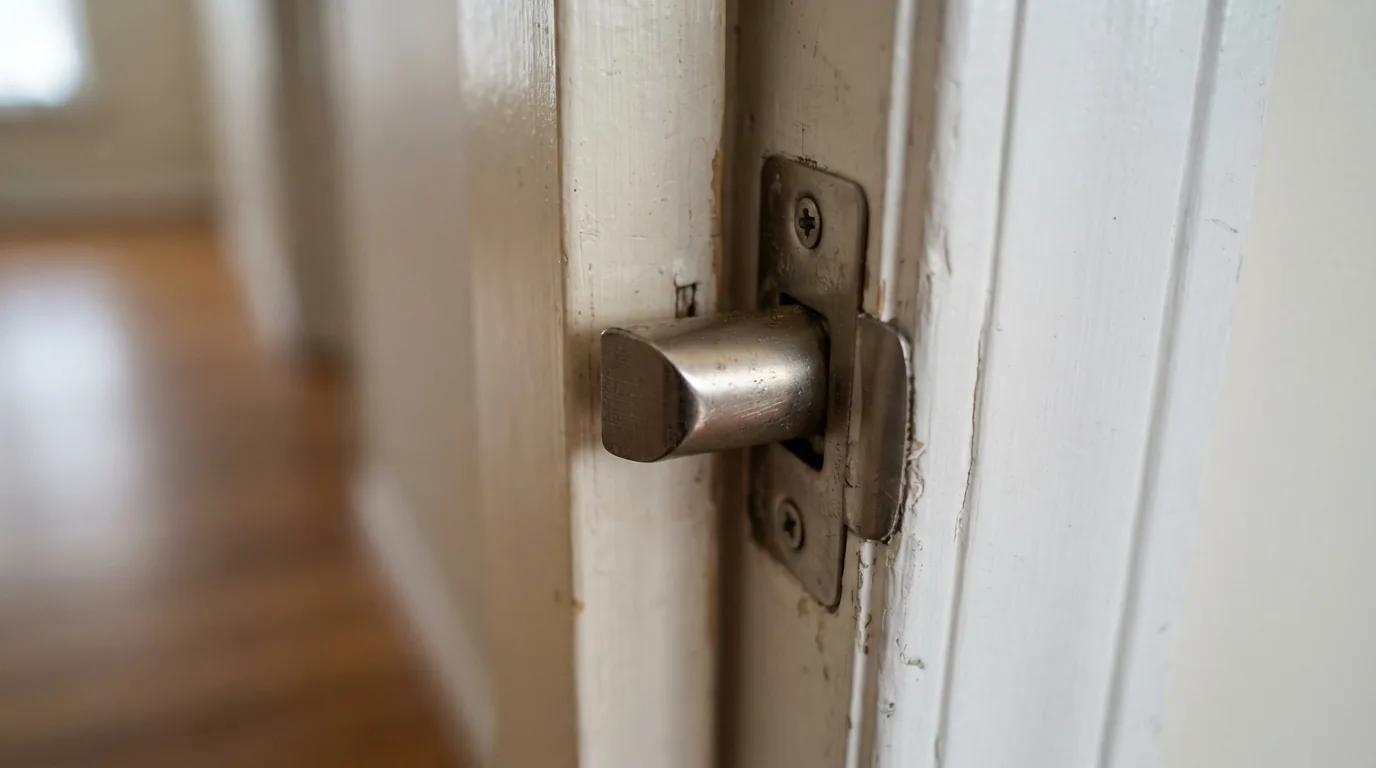
A door that closes but springs back, or needs a shove, usually isn’t sticking at all. The latch isn’t meeting the strike plate.
Find out where it’s missing by putting a little lipstick or a marker on the latch bolt, closing the door, and seeing where it prints on the strike plate. That shows you exactly whether it’s landing high, low, or short.
Then either move the strike plate — usually only a couple of millimeters, which means filling and redrilling the screw holes — or file the opening slightly. Filing is faster; moving it properly looks better. If the latch is landing short rather than high or low, the door isn’t closing far enough, which is usually a build-up of paint on the stop.
The paint problem nobody expects
Some doors that stick have simply been painted too many times. Decades of repainting a door and its frame without stripping anything builds up real thickness. Six coats on the door edge and six on the frame is enough to turn a door that closed fine into one that binds.
If a door in an older home has always been tight and none of the diagnostics fit, look closely at how much paint is on the edges. Stripping the edge is a better answer than planing through the layers.
Worth remembering that in pre-1978 homes, that paint may be lead-based, and sanding or heat-stripping it is exactly the activity that makes it hazardous. The EPA’s Renovation, Repair and Painting Rule covers who is required to be certified for that work.
Exterior doors, which are their own case
An exterior door that sticks in summer and rattles in winter is doing both because it’s wood and it moves. But an exterior door that has dropped, doesn’t seal at the bottom, or lets light through at the top is costing you conditioned air in both directions.
Check the weatherstripping and the threshold before deciding the door is at fault — adjustable thresholds exist on many doors and can be raised or lowered with a screwdriver, which solves a surprising number of complaints.
Fixing doors that stick yourself
The long hinge screw fix: absolutely, and it’s the highest-value ten minutes in this article. Adjusting a strike plate: yes, with patience. Weatherstripping: yes.
Where I’d stop: planing a door, which is easy to overdo and impossible to undo, and anything involving a door that has dropped because the frame itself is loose in the opening. That’s a bigger fix than it looks.
The short version on doors that stick
Doors that stick at the top of the latch side have almost always dropped from loose top hinge screws, and the fix is a long screw into the stud rather than planing the edge. Binding along the whole side suggests frame movement; binding at the bottom is usually new flooring; sticking only in summer is humidity and should mostly be left alone. A door that won’t latch is a strike plate alignment problem, not a sticking problem. And in older homes, built-up paint is a real cause.
If you’ve got several doors doing several different things, that’s a sensible afternoon to hand over. General repairs across Silver Spring and the surrounding neighborhoods, free estimates, no obligation.
Frequently asked questions
Q: Should I plane a door that sticks?
A: Rarely, and never as the first move. Check the hinges first — a dropped door is far more common, and planing it leaves a permanent gap once the door settles back or the humidity drops.
Q: Why does my door only stick in summer?
A: Wood absorbs moisture from humid air and swells. It’s normal, it’s seasonal, and taking material off in August means a draft in January.
Q: My door closes but pops back open. Why?
A: The latch isn’t engaging the strike plate properly. Mark the latch bolt, close the door, and see where it contacts. Then move or file the strike plate to suit.
Q: What’s the long screw trick?
A: Replacing a short hinge screw in the top hinge with one long enough to reach the stud behind the frame. It pulls the frame true and lifts a dropped door, and it fixes more sticking doors than anything else you can do in ten minutes.
