


Decide: DIY or call a pro
If you searched for “handyman blinds” you want to know whether this is something you can tackle with a drill and a few tools, or whether it deserves a visit from a tradesperson. Small jobs sometimes are straightforward: a single bracket to move, a slat to replace or a tilt mechanism to free up. They become harder when the window is awkward, the mounting surface is fragile, or the blind is old and parts are no longer available.
Start by checking access. A blind you can reach from the floor with stable footing is a different job from one above a stair, above a radiator, or set in a bay where a ladder won’t sit level. Look at the headrail and the bracket screws: if they sit in wood trim or a stud, a DIY fix is easier. If the blind is fitted into thin trim, old plaster, or a suspended ceiling, drilling risks cracking paint, splitting trim or loosening plaster around the fixings.
Another deciding factor is the blind type. Standard horizontal blinds and roller blinds share many common fixings and are repairable at home; integrated cellular blinds, shutters or motorised units are more complex. If the blind has cords and a child-safety concern, or a motor and wiring, the risk and the paperwork change the choice.
Think about parts and time. If you need a replacement slat or a new cord, measure and confirm you can source the part quickly. Some parts are generic; others are unique to a manufacturer and may take time. If you value a neat, durable finish and want the job done once, bring in someone who does this work regularly.
Finally, consider what else the job touches. Repeated drilling near old trim can leave hairline cracks, and removing a headrail badly can peel paint. If the window area has recent paint, delicate trim or plaster, hiring help reduces the chance of a repair turning into a repaint.
What happens on the first visit
When we arrive the visit follows a clear order so you know what to expect and can watch for the points that matter. First we measure and inspect, then discuss the fix or install, gather the right fixings, install, test, and tidy up. This makes the appointment efficient and reduces surprises on site.
The measurement and inspection start with the window and the surrounding finish. We check how the window opens, whether there is a sill or trim to sit the blind on, and whether the mounting is face-fix (on the trim), reveal-fix (inside the window frame), or ceiling-fix. Those choices affect which brackets we use, whether the blind sits inside or outside the opening, and how the light and privacy behave after installation. We also look for rot, loose plaster or paint that could lift when screws go in.
Next we look at the blind itself. For a repair this means testing the tilt, the lift and any cord locks, and finding the failed part: a broken slat, a snapped cord, a failed tilt mechanism or a loose bracket. For a replacement we verify the model, confirm whether the headrail will need trimming, and decide whether endcaps or valances will be refitted.
Choosing fixings on site matters. A single visit that finishes the job depends on having the right screws, toggles and plugs for the wall type and the blind headrail. We bring a selection so we can swap from wood screws to plaster anchors or metal toggles as needed. That avoids a second trip and reduces the chances of a temporary, weak fix that fails after a few pulls.
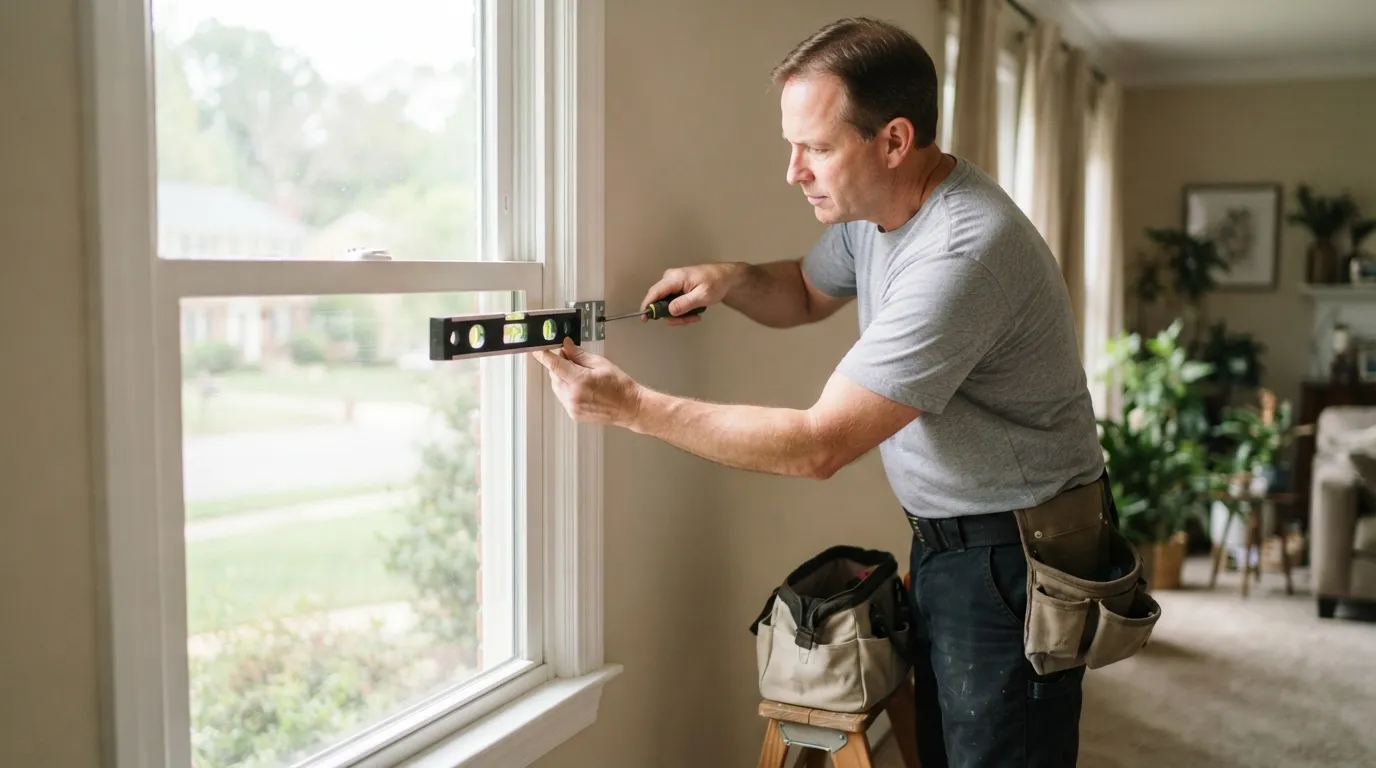
Installation is methodical. Brackets are temporarily positioned and leveled, pilot holes are made in a way that protects the surface, and the headrail is clicked in and tested. For reveal-fit jobs we test that the blind clears the window sash and does not foul hardware; for face-fit installations we align the blind so the light gap is predictable and consistent from window to window.
Testing includes operating the blind through its full range. We look for smooth lift and even slat tilt, a secure bracket with no movement, and tidy routing of cords where present. If cord safety devices are needed we discuss options. We finish by cleaning the immediate area, collecting debris and showing you how to use or maintain the blind.
If the window has fragile trim or plaster we explain any temporary protection used during the job and show you the existing holes or new fastenings. That way you can decide whether you want to touch up paint later or have us include a small trim repair on a different visit.
How pricing and quotes break down
A clear quote separates the parts of the job so you can compare estimates and avoid surprises. A typical quote for a blind job breaks down into the visit or call-out, labor, materials and any special work such as repairs to trim or plaster. Knowing what each line means helps you challenge an estimate that seems high or incomplete.
The visit or call-out fee covers travel and the initial assessment on site. Labor is usually quoted either as a flat fee for a defined job or as a time-based charge for open-ended repairs. Materials are listed separately when specific parts are supplied: anchors, replacement slats, new brackets, or a full replacement blind. If a job needs special anchors for hollow plaster, longer screws for thick trim, or a retrofit cordless mechanism, those are material costs that belong on the quote.
Compare quotes by checking whether the supplier includes the same items. One estimate might show a low labor line but add higher material or call-out charges; another might include common fixings in the labor price but add extras for uncommon parts. Ask whether the technician will bring a selection of fixings and whether the price covers the correct anchor for your wall type.
Also look for how the quote treats complexity. Jobs that require work on several windows, work above a stair, or work around delicate trim often need more time and may be quoted as a project rather than an hourly callout. If a job includes minor trim or plaster repair after an old blind is removed, that should be itemised rather than hidden in a vague line.
Ask the estimator these direct questions: what do you include in the call-out fee; which parts will you supply and which I must buy; how do you price time if the repair takes longer than expected; and will you tidy and remove old parts? Clear answers let you compare like with like and avoid the quote that looks cheap until extras are added on site.
Finally, for landlords or multiple-unit work, ask whether there is a different rate for repeated or batch work. That leads into the next section on practical options for property managers.
Common blind repairs and when to replace
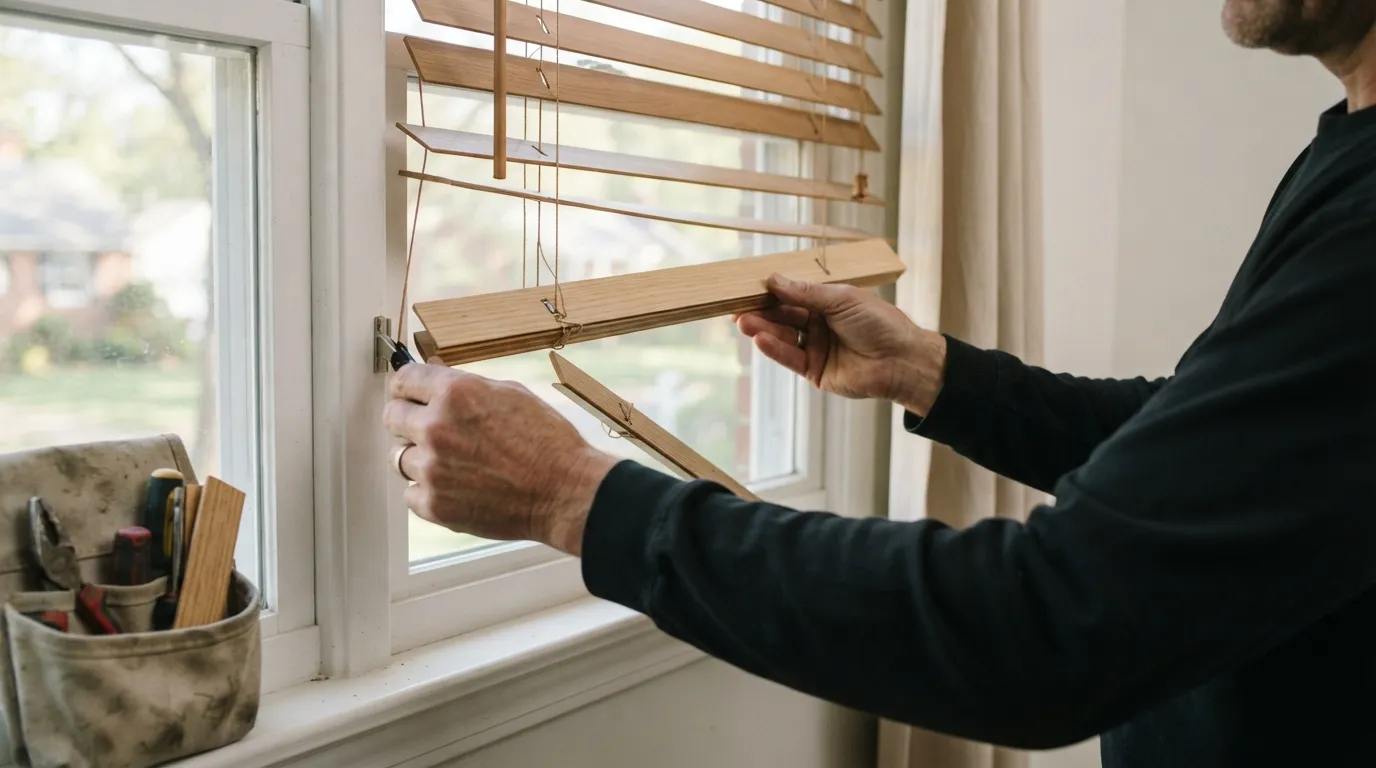
Many blind problems are repairable, but there are sensible limits. Common repairs include replacing a snapped lift cord, swapping a single slat, tightening or replacing brackets, and freeing or replacing a worn tilt mechanism. These fixes are often quick and leave the blind looking and working as before.
A snapped cord is usually straightforward when the headrail’s cord lock is intact and the spare cord is accessible. Replacing one slat is a small job when the slat type is standard and you can match the finish. A loose bracket often only needs a better anchor or a longer screw to stop movement. Tilt mechanisms wear with use; sometimes they can be opened and lubricated or a small internal part swapped, other times the mechanism is integrated into the headrail and is harder to service.
Replace the blind when repairs become a series of patches. If the headrail is bent, several slats are damaged or the blind’s control is intermittent because of internal corrosion, the lifetime cost of repeated repairs will exceed the cost of a new blind. Also consider replacement when parts are obsolete: older or unusual models may have components that are no longer made.
Another reason to replace is a change in function. If you want better light control, improved insulation, or a cordless option for child safety, replacing the blind with a different type is often the best route. A retrofit can sometimes convert a corded blind to cordless, but the result can alter the look and may not be as durable as a purpose-made cordless unit.
Before you decide, ask whether a repair will leave visible mismatches or whether a new blind would improve the overall finish. In many cases a well-chosen replacement gives more reliable operation and a cleaner appearance than repeated repairs.
Preparing your windows before the installer arrives
A little preparation cuts time and reduces the chance of surprises. Clear the area around the window so a ladder can be placed safely and so drillings and dust won’t fall onto furniture. Remove curtains, valances and any ornaments from the sill.
Take a few photos of the window from a distance and one close-up of the headrail or the damaged part. Those images help if a part needs ordering after the visit and make the first assessment faster. Note any odd measurements or features: an unusually deep reveal, a sash that projects, or an internal blind routed behind a radiator.
On the day, clear access to any sockets and switches near the window, and move fragile items away from the sill. If you have pets, secure them so they won’t jump underfoot when a ladder is in use. If paint around the window is fresh, tell the installer so they can protect it while drilling.
A short checklist you can follow:
- Clear the floor and move furniture away from the window.
- Remove curtains, tiebacks and any soft fittings.
- Take a close photo of the headrail and a wide shot of the whole window.
- Note anything odd about the reveal, trim or sash that might affect mounting.
This small amount of work usually saves time on site and reduces the chance of a follow-up visit for an unexpectedly difficult fix.
Options for landlords and repeat work
If you manage multiple units, the priorities are speed, predictability and tidy invoicing. Batch scheduling — grouping several jobs on the same day or week — reduces travel and lets you plan tenant access more efficiently. Many providers will offer different turnaround options for repeat work; discuss timeslots and how cancellations are handled.
For turnover installs, consider standardizing the blind type across units so repairs and replacements use the same parts. That simplifies stocking spares and often speeds up jobs because the installer knows the fitting by heart. Also agree in advance how minor touch-ups will be handled: whether you want holes filled and painted, or just the new blind installed and the old fixings removed.
On invoicing, ask for consolidated billing where possible. A single invoice for multiple units itemises each job and reduces administration. If you need work logged for compliance or tenant records, request brief job notes with each invoice showing what was fixed, what parts were used, and which units were covered.
Finally, agree a plan for emergency or out-of-hours access where tenant safety is involved, and set expectations for how long a standard install or repair takes when scaled to many units. That makes it easier to plan cleaning, key turnover and other parts of a swift tenancy change.
Child safety and cordless options
Corded blinds present a well-known hazard where loops and long cords are accessible to children. The safest option is to remove the corded control entirely and fit a cordless blind or a tensioned, anchored cord control that cannot form a loop. A handyman can advise whether a cordless replacement is a straightforward swap or whether a different headrail is needed.
Retrofit options exist for some blinds: a cordless conversion kit or a tensioning device can reduce risk without a full replacement. These retrofits vary in finish and durability, and they sometimes change how the blind looks or operates. If child safety is the main driver, choosing a purpose-built cordless blind often gives a neater, more reliable result.
When you discuss options, ask about lifetime use: cordless mechanisms rely on springs or alternative lift systems that have different wear characteristics to corded systems. If the blind will see heavy use, a new cordless unit built for the purpose is usually the better long-term choice.
Frequently asked questions
How much does a handyman charge to hang blinds?
Prices vary with the job. The total depends on access, the type of blind, whether parts are needed, and if the mounting surface requires special anchors; ask for a written quote that lists call-out, labor and parts.
What is a fair price to pay a handyman per hour?
Hourly rates differ between providers and by the work involved. Compare quotes that show what the hourly work includes, which parts are supplied, and whether the price covers clean-up and disposal of old blinds.
What is the best company to buy blinds from?
The best supplier depends on the blind type you want, the range and the warranty offered. Look for a supplier with clear return terms, a good selection of the type you prefer, and reviews that mention reliable delivery and correct sizing.
Can a handyman install blinds in multiple rental units?
Yes, many handymen work with landlords on batch installs and turnover work. Ask about standardization across units, consolidated invoicing and any reduced lead times for repeating the same fitment.
