
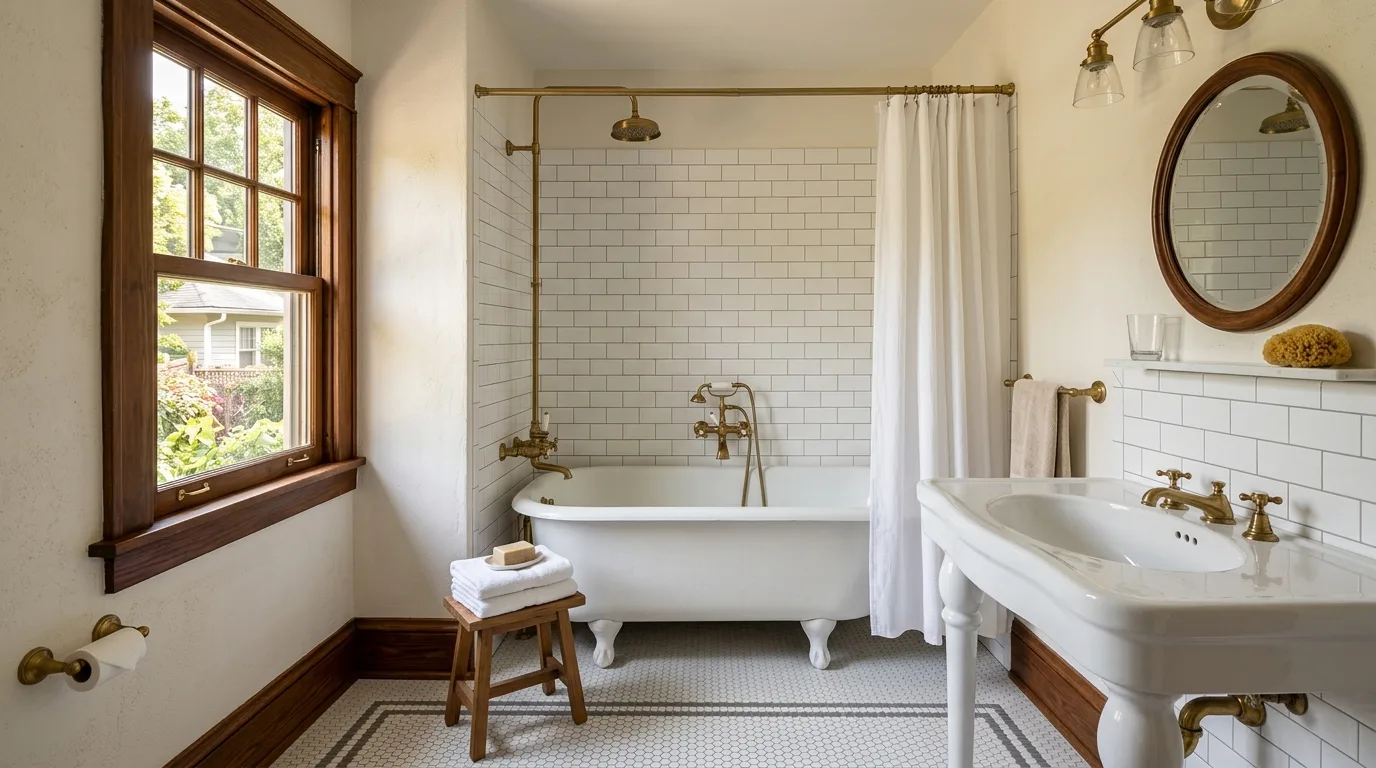
A Takoma Park bathroom remodel is really a plumbing project wearing a tile costume.
In a house built in the 1920s, the visible part — tile, vanity, fixtures — is the easy half. What determines whether the project runs smoothly is a hundred-year-old supply and waste system that nobody has looked at properly since it was installed.
So here’s an honest account of bathroom remodeling in Takoma Park, MD: the permit sequence, what’s genuinely behind the wall, and which of it is worth spending on while you have the chance.
The permit sequence — city first, then county
Takoma Park does not issue your building permit. Montgomery County DPS does. But before the county will process your application, you need a Municipality Letter from the City of Takoma Park.
City letter, then county permit. In that order. It’s the reverse of the Town of Chevy Chase, where the county permit has to exist before the town will approve, which is exactly why generic Montgomery County advice is unreliable at this level of detail.
The city also separately permits tree protection and removal, stormwater management, and work in the city right-of-way. And if your house is in the historic district, a Historic Area Work Permit comes into play — relevant for a bathroom mostly if anything changes on the exterior, such as a new vent penetration or a window.
For a bathroom specifically: anything altering plumbing or electrical needs a permit. That covers almost every real remodel. Painting and swapping a vanity into the same footprint generally doesn’t.
What’s actually in the walls
Galvanized supply lines
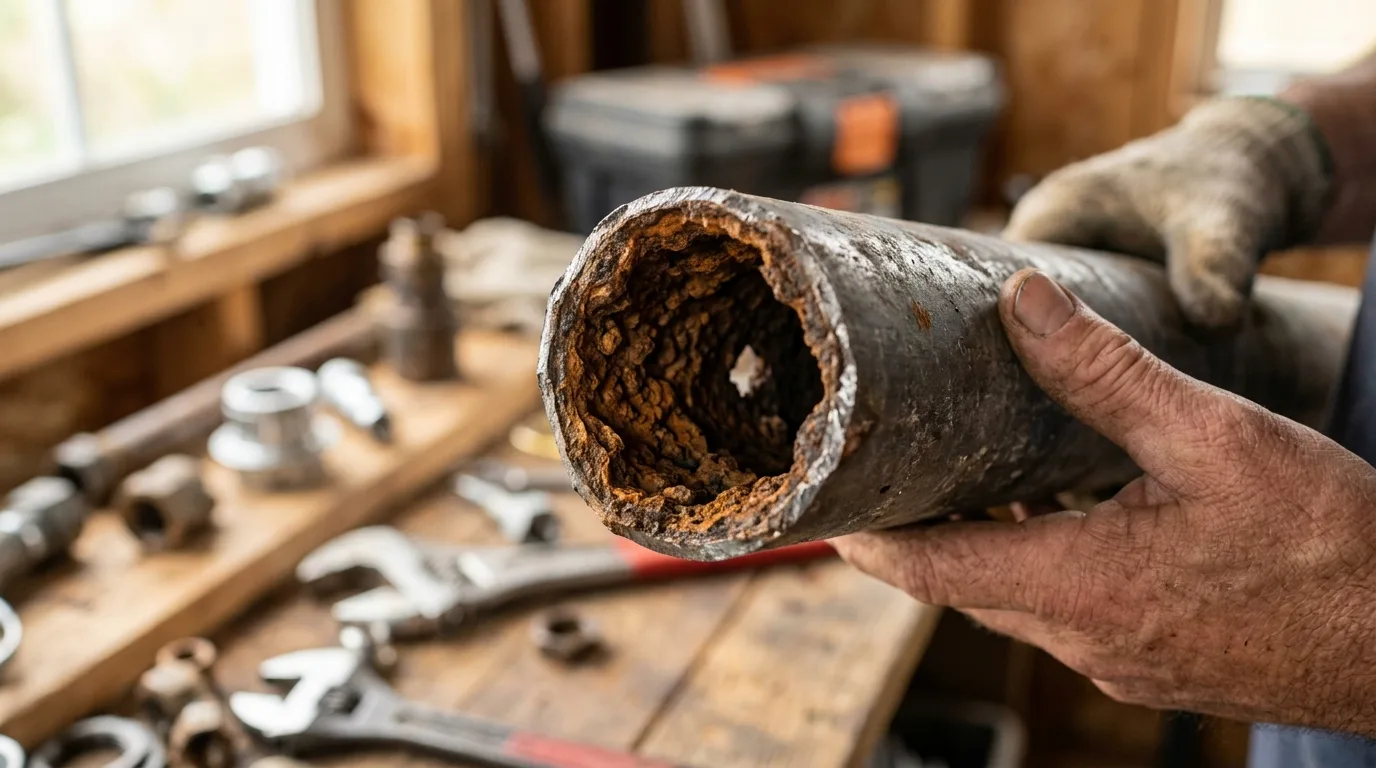
The defining find in houses of this era. Galvanized steel pipe corrodes from the inside out, and after eighty or ninety years the effective opening can be down to a fraction of the original bore.
Symptoms you’ll recognise: weak pressure that drops further when another fixture runs, water that runs brown for a moment after the house has been empty, and hot water noticeably worse than cold because heat accelerates the process.
This is the single most worthwhile thing to address during a remodel. Replacing accessible runs while the wall is already open costs a fraction of doing it later as a standalone job requiring its own demolition. If you take one piece of advice from this article, take that one.
Cast iron waste lines
Cast iron can be entirely serviceable at ninety years old or can be substantially scaled internally. It’s genuinely unpredictable, which is why any honest estimate on an old house names it as a possibility rather than pretending it can’t be.
The connection points, where old cast iron meets anything modern, are where problems usually concentrate.
Lead or lead-jointed connections
Older waste systems sometimes used lead in bends and joints. Worth identifying while things are open, and worth having someone who’s seen it before making the call about it.
Knob-and-tube or mixed-era wiring
Bathrooms need GFCI protection, and a modern bathroom typically wants a properly rated circuit for the fan and lighting. In a house where wiring has been extended piecemeal across a century, you often find three different eras meeting in one box. The remodel is the sensible moment to sort that section out.
Mortar-bed tile and plaster
Original tile set in a thick mortar bed is durable and slow to remove — heavier and messier than modern tile demolition, which shows up in labour. Walls are plaster over lath rather than drywall, needing different technique and different patching.
The subfloor under the toilet
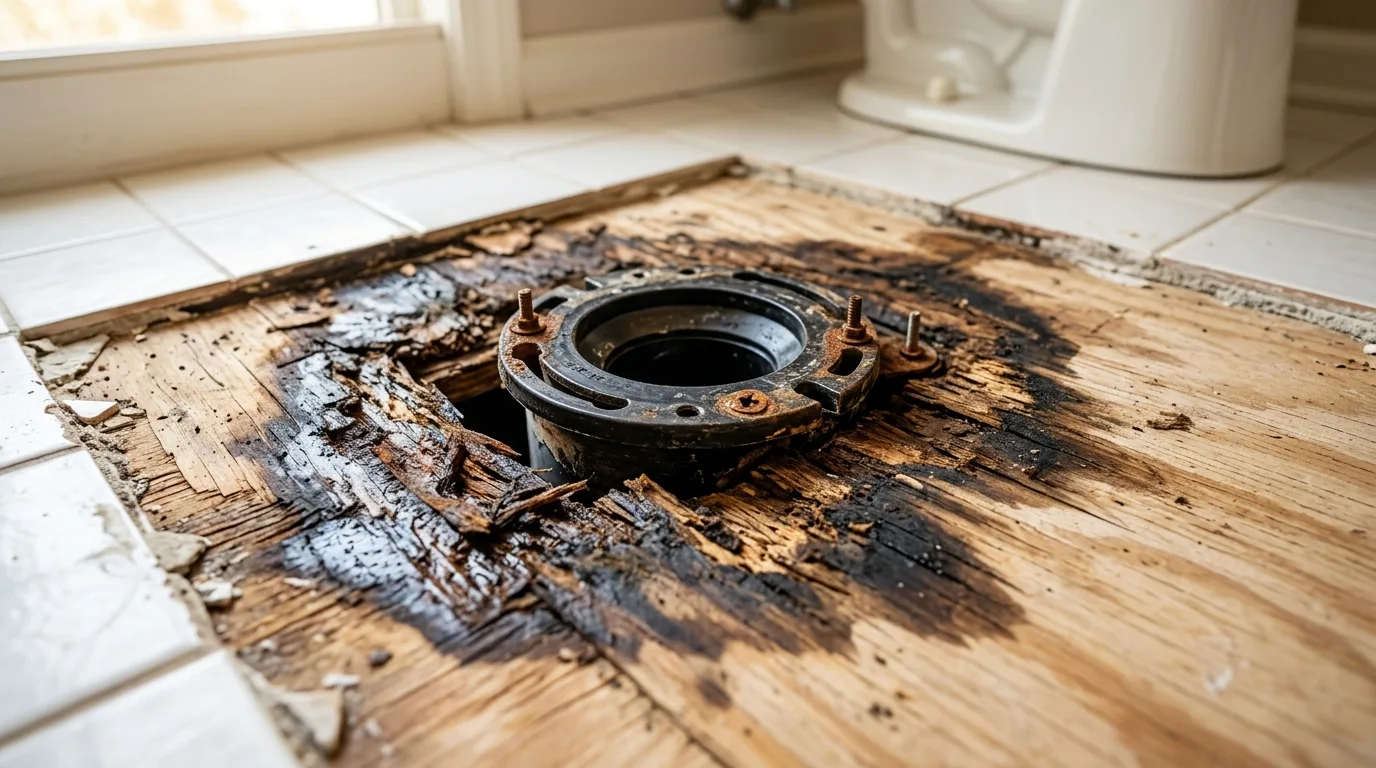
In a hundred-year-old bathroom, decades of slow seepage around the flange is common enough that I price for the possibility as standard. It’s rarely dramatic — just soft, and it must be dealt with before anything is tiled over it.
The size problem
Bathrooms from the 1920s are small, and often there’s only one of them serving the whole house. That produces two recurring questions.
Can we make it bigger? Sometimes — by taking space from an adjoining closet or hallway. But it means moving drains, and in an old house that means opening the floor and reworking venting. Real money. Worth it if the room is genuinely unusable; often not worth it if the room is merely small.
Can we add a second bathroom? Frequently the better investment in a one-bathroom house. A powder room under a staircase or in a corner of the basement, near an existing stack, changes daily life more than enlarging the existing bathroom would — and in resale terms, going from one bathroom to one-and-a-half is a meaningful step.
What’s worth keeping
Genuinely important in these houses: some of what’s in your old bathroom is better than its replacement.
Cast iron tubs hold heat far better than modern acrylic and last indefinitely. Refinishing in place is often cheaper than removal — and removal is a serious physical job, they’re extraordinarily heavy.
Original hex or subway tile in good condition is period-appropriate, well made, and currently being imitated at considerable expense by people who removed theirs twenty years ago.
Solid wood doors and original trim. Nothing sold today at a comparable price matches them.
There’s a version of this remodel that strips out a century of character for something that will look dated by 2040. There’s a better version that modernises the systems, the waterproofing and the ventilation while keeping what’s worth keeping. The second one usually costs less, too.
What it costs
Published market ranges for Maryland put a full bathroom remodel at roughly $12,000 to $28,000, with DC-metro averages near $19,000 and most projects between about $9,500 and $27,000. Standard work runs about $150 to $400 per square foot, typically near $300.
Sourced market ranges, not our pricing. For a 1920s Takoma Park house I’d add the same honest caveat as always: those figures assume nothing unpleasant appears behind the tile. A good estimate on a house this age names what might be found — the galvanized run, the soft subfloor, the questionable junction box — and what each would add, rather than presenting a single confident number and revising it on day three.
The one universal item
Check where the exhaust fan vents. In this area, in houses of every age, it very often terminates in the attic rather than outside. That puts your bathroom’s moisture into your roof structure, and Maryland summers finish the job. It’s cheap to correct while the ceiling is open and expensive to discover years later as damp sheathing.
Getting a real number
For a Takoma Park bathroom I want to see the supply lines from the basement, the age and state of the panel, whether the walls are plaster, the floor around the toilet, and where the fan goes. Twenty minutes in the house is worth more than any number of photographs.
We handle bathroom remodeling throughout Takoma Park and the rest of Montgomery County. Estimates are free with no obligation, and the Takoma Park page has the rest of what we do locally.
And if the answer for your house is a refinished tub, new fixtures, a properly vented fan and a replaced run of galvanized pipe rather than a full remodel — that’s a real answer, and often the right one.
Bathroom Remodeling in Takoma Park: The Short Version
Bathroom remodeling in Takoma Park is really a plumbing project wearing a tile costume. City letter first, then the county permit. The single most worthwhile thing you can do is replace accessible runs of galvanized supply pipe while the wall is already open.
Frequently Asked Questions
Q: What’s the permit sequence in Takoma Park?
A: City first, then county. You need a Municipality Letter from the City of Takoma Park before Montgomery County DPS will process your building permit. The city also separately permits tree protection, stormwater and right-of-way work.
Q: Why is water pressure poor in my old Takoma Park house?
A: Almost always galvanized steel supply pipe, which corrodes inward over decades until the opening is a fraction of the original bore. Hot is usually worse than cold because heat accelerates it.
Q: What’s the most worthwhile thing to fix during a bathroom remodel?
A: Replacing accessible runs of galvanized supply line while the wall is already open. It costs a fraction of doing it later as a standalone job that needs its own demolition.
Q: Should I enlarge my only bathroom or add a second one?
A: Adding a powder room near an existing stack often changes daily life more than enlarging the existing bathroom, and going from one bathroom to one-and-a-half is meaningful at resale.
