
The most expensive flooring mistake I see isn’t choosing a cheap product. It’s choosing a good product and putting it in the wrong place.
Specifically: installing solid hardwood in a basement. It’s a beautiful floor, it’s a proper investment, and below grade in Maryland it will fail. Not maybe — reliably.
Here’s how to think about flooring installation in Gaithersburg, MD depending on which level of the house you’re standing on.
Why below grade is a completely different problem
Two things make basements different, and neither is obvious until it bites.
Concrete transmits moisture. A basement slab is in contact with the ground, and ground moisture moves up through concrete as vapour continuously — even when the slab looks and feels bone dry. That vapour reaches whatever you’ve laid on top of it.
Basements swing in temperature and humidity differently from the rest of the house. Cooler surfaces plus Maryland’s summer humidity means condensation. It’s why basements smell in August.
Solid hardwood responds to that moisture by absorbing it, expanding, cupping, and eventually buckling. This is not an installation-quality issue. It’s the material doing exactly what wood does.
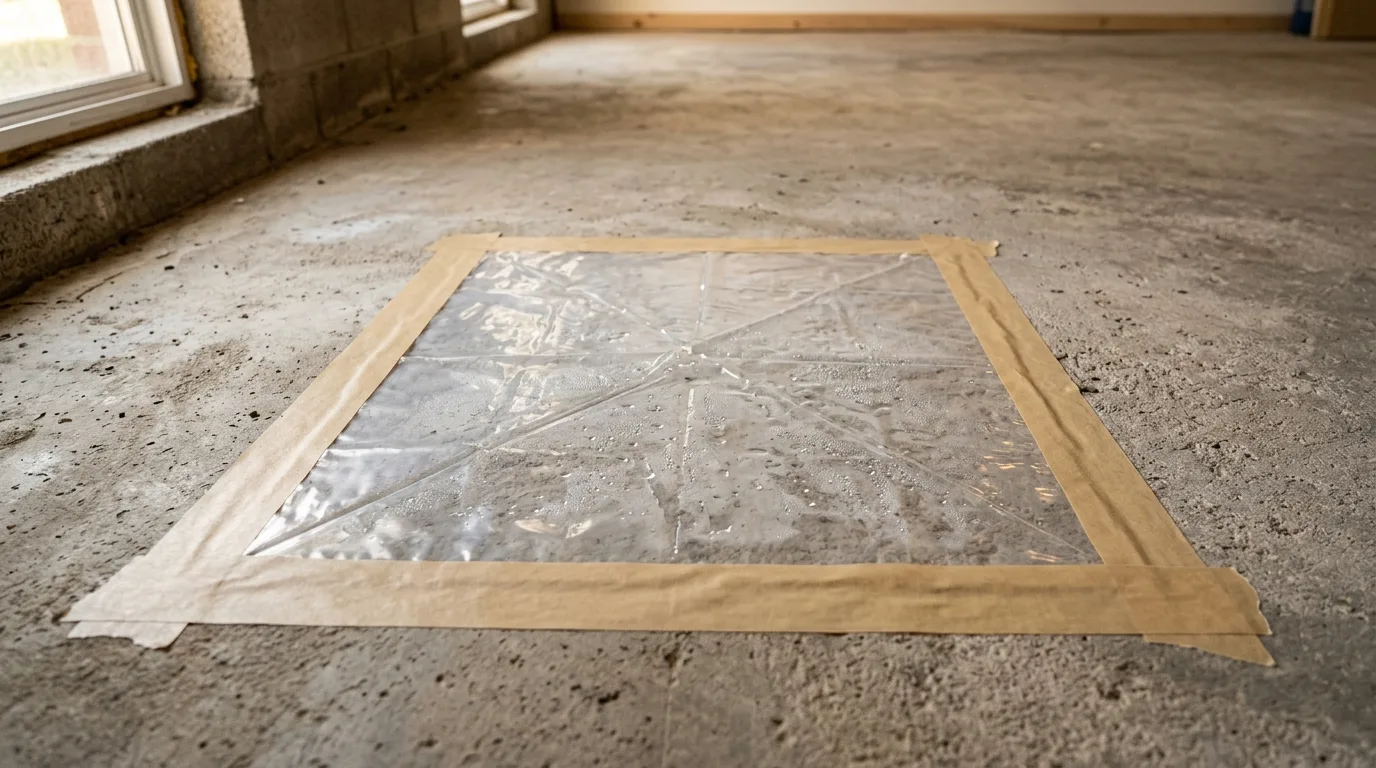
Quick test before choosing anything: tape a square of plastic sheeting tightly to the bare slab and leave it a couple of days. Moisture beading underneath means the slab is transmitting vapour, and that dictates your options.
What actually works in a basement
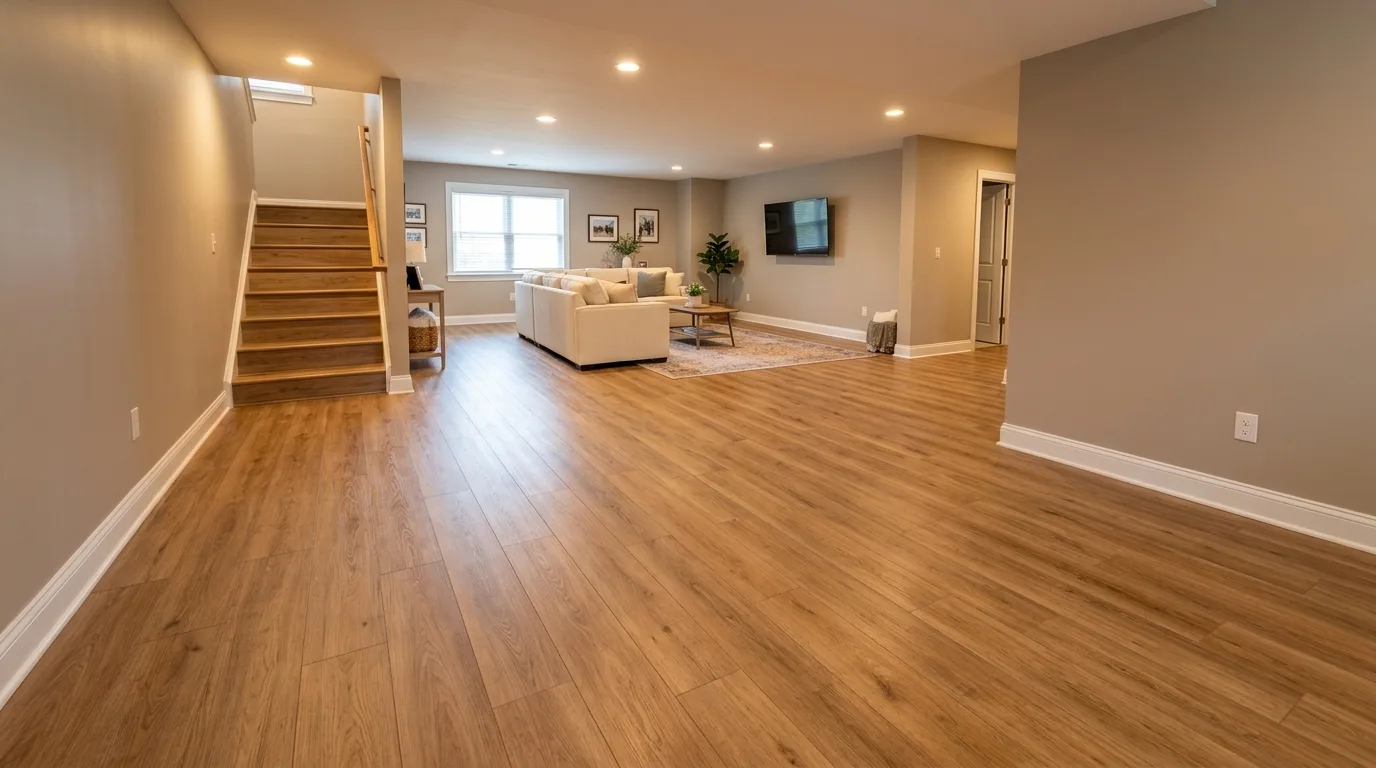
Luxury vinyl plank (LVP) — the default answer, and deservedly so. Waterproof, dimensionally stable, tolerant of temperature swings, comfortable underfoot, and convincing to look at now in a way it wasn’t a decade ago. If a pipe lets go, it survives. Individual planks can be replaced.
Tile — the most durable option available and completely unbothered by moisture. Cold underfoot unless you add heating, and it needs a flat slab. Excellent in a basement bathroom or laundry.
Engineered hardwood — possible, with care. Its layered construction is far more stable than solid wood, but it still isn’t waterproof and it needs an appropriate vapour barrier and acclimatisation. It’s a considered decision, not a default.
Carpet — works if and only if the basement is genuinely dry and stays that way. If it ever gets wet, carpet holds the water and becomes a mould problem rather than a flooring problem. I’d avoid it unless you’re confident.
Not solid hardwood. Not laminate with a fibreboard core, which swells irreversibly at the edges once wet.
Before any basement floor goes down
Three things matter more than the product:
Fix the water first. If there’s ever standing water, damp at the base of a wall, or an efflorescence bloom on the block, no flooring solves that. Gutters and downspouts carrying water away from the foundation, and grading that slopes away from the house, do more for a basement than any product choice.
Vapour barrier, correctly specified. Non-negotiable on a slab, and it needs to suit the flooring going on top.
Flatness. Basement slabs are frequently out of flat, often notably so near a drain. Click-together flooring over an uneven slab flexes at the joints until they fail. Self-levelling compound is a real line item and skipping it is a false economy.
Main floors: a different set of trade-offs
Above grade, moisture from below stops driving the decision and you’re choosing on wear, feel, resale and budget.
Solid hardwood — the resale answer in this market, and it can be refinished several times over decades. It moves seasonally with our humidity swing, which is normal, and it needs a stiff, flat subfloor. In a house with long joist spans it’s worth checking deflection first.
Engineered hardwood — real wood surface, more stable, and a better choice over concrete or in-floor heat. Refinishable only as far as its wear layer allows, so the thickness of that layer is the number to compare, not the price.
LVP — increasingly common on main floors too, particularly in kitchens and with pets or children. Doesn’t carry the resale story hardwood does in this market, but the practical case is strong.
Tile — kitchens, bathrooms, entries. Demands a flat, stiff substrate, and this is where a bouncy floor causes cracked tiles.
What Gaithersburg houses bring to it
Gaithersburg spans a wide range, and each era has a characteristic issue:
Newer construction (1990s onward), including the Kentlands and similar: generally sound framing and reasonably flat subfloors. The common finding is builder-grade flooring reaching the end of its life all at once.
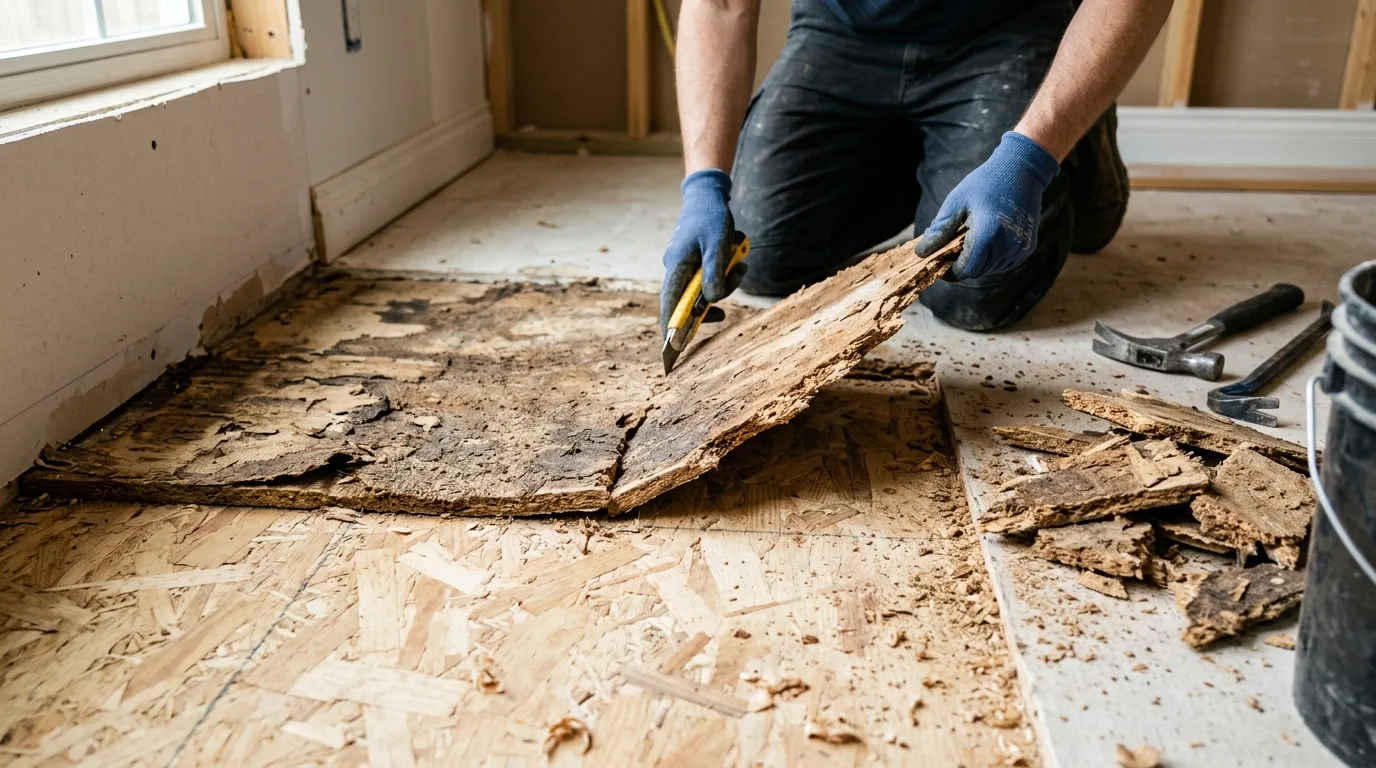
1970s–80s: particleboard underlayment is common in this era and it does not tolerate water — one dishwasher leak and it swells irreversibly. Frequently needs replacing before new flooring goes down, and it’s better to know that before quoting than during.
Older homes: original hardwood that’s often worth refinishing rather than replacing, plus subfloors that have settled out of flat. Under old carpet or vinyl there is sometimes a genuinely good floor nobody has seen in forty years — always worth lifting a corner in a cupboard to check before you buy anything.
All eras: our humidity swing. Any wood product needs acclimatising in the room where it will live before installation, and needs proper expansion gaps at the perimeter. Floors that buckle in August almost always turn out to have been installed tight to the walls.
The parts of a quote people forget
Flooring estimates get compared on price per square foot, and that’s not where the differences are:
- Removing and disposing of the old floor — and old adhesive, which can be laborious
- Subfloor repair or replacement — particularly that 1970s–80s particleboard
- Self-levelling where the floor isn’t flat
- Transitions between rooms and to stairs — the fiddly, visible details
- Trim — removing and refitting skirting, or adding quarter-round
- Door clearance — a thicker floor means doors that need trimming
- Moving appliances, and reconnecting them
A cheap quote and an expensive quote often differ entirely on this list rather than on the flooring itself.
Working out what your house needs
Most of this is answered by standing on the floor in question — checking for bounce, for flatness, for what’s under the current surface, and running that plastic-sheet test on a basement slab.
We handle flooring installation — tile, wood and vinyl throughout Gaithersburg and the rest of Montgomery County, including the subfloor work underneath that determines whether it lasts. Estimates are free with no obligation, and the Gaithersburg page covers the rest of what we do locally.
And if you lift the carpet and find original oak in decent condition, refinishing it is nearly always the better answer than covering it with something new.
Flooring Installation in Gaithersburg: The Short Version
Flooring installation in Gaithersburg depends on which level you are standing on. Below grade, concrete transmits moisture continuously and solid hardwood will fail — luxury vinyl plank or tile instead. Above grade the choice is about wear and resale. Tape plastic to the slab for two days before deciding anything.
Frequently Asked Questions
Q: Can I install hardwood in my basement?
A: Solid hardwood below grade will fail — concrete transmits ground moisture as vapour continuously, and wood responds by cupping and buckling. Luxury vinyl plank or tile are the reliable choices, with engineered wood possible if properly detailed.
Q: How do I test a basement slab before flooring?
A: Tape a square of plastic sheeting tightly to the bare slab and leave it a couple of days. Moisture beading underneath means the slab is transmitting vapour, and that dictates your options.
Q: What gets left out of cheap flooring quotes?
A: Removing and disposing of the old floor and adhesive, subfloor repair, self-levelling where the floor isn’t flat, transitions, trim, door trimming and moving appliances. That list is usually where two quotes actually differ.
Q: Is my old carpet hiding a good floor?
A: Sometimes. In older Gaithersburg homes there’s often original hardwood under carpet or vinyl that’s worth refinishing rather than replacing. Lift a corner inside a cupboard before buying anything new.
