

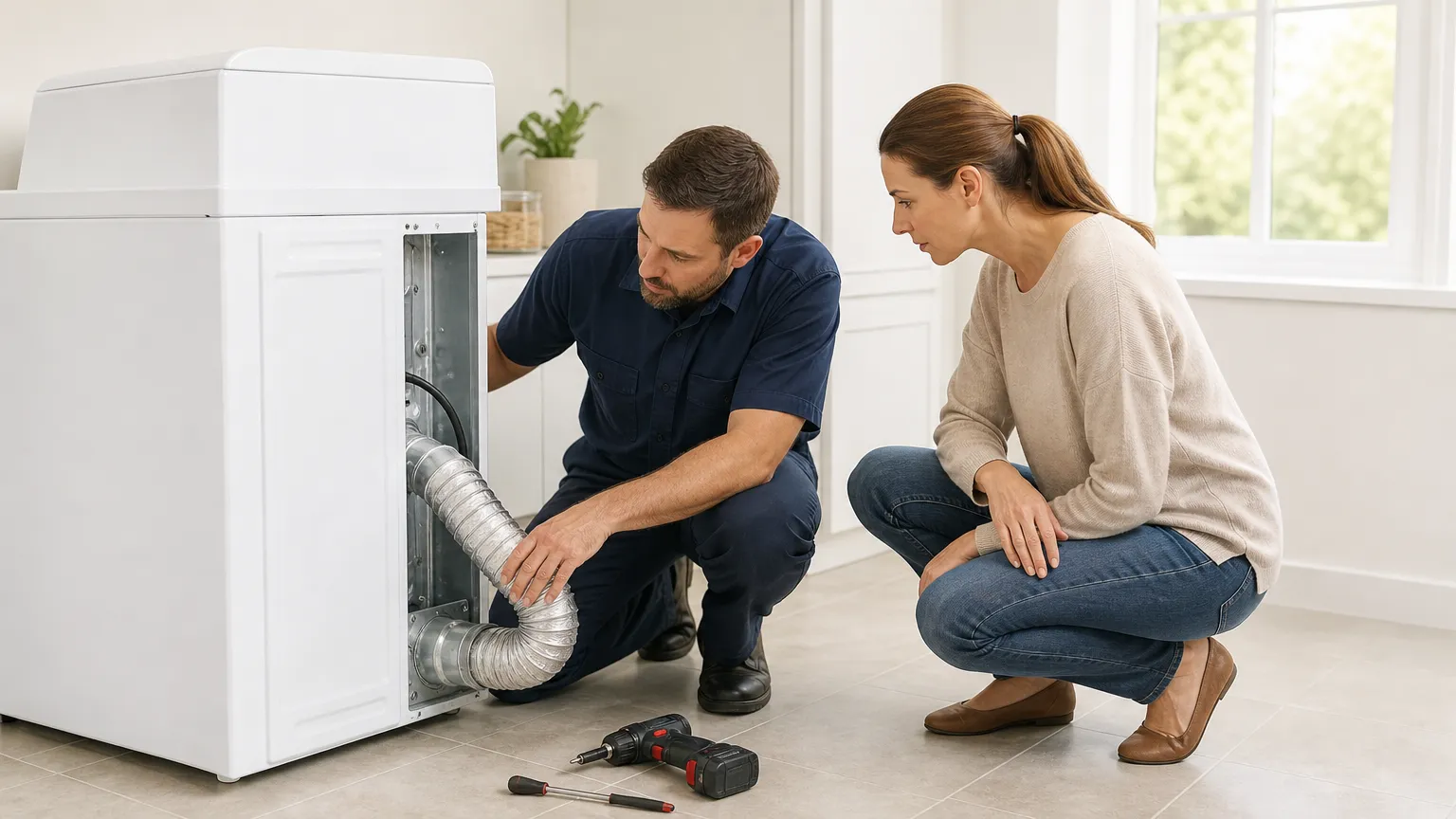
Dryer vent cleaning in Kensington, MD should start with checking the full exhaust path, not simply treating slow drying as proof of one problem. Longer drying times and frequent overheating can signal a vent issue. An inspection is needed to determine what is restricted. It must also determine what can be reached and what work is safe to complete.
Slow drying is the first warning sign
A dryer that takes longer to dry clothes deserves attention, especially when the change is new or keeps happening. Sluggish drying can indicate that the vent needs cleaning. A dryer that seems to overheat frequently may also signal a more serious vent problem. Blocked vents can affect dryer efficiency and create a fire hazard.
Those signs are reasons to arrange an inspection, not proof that cleaning alone will solve the problem. The dryer itself, the connection behind the appliance, the exhaust path, and the outside termination can all matter. A careful visit should separate what has been observed from what has been confirmed.
Start by paying attention to the pattern. Has drying become slower across different loads, or does the problem appear only with bulky items? Does the dryer seem unusually hot during a cycle? Has the appliance been moved, the laundry area changed, or access behind the dryer become tighter? These details help explain what the technician should examine.
A useful conversation does not depend on you diagnosing the vent in advance. Tell the person you hire what you have noticed, when it began, and whether the dryer has been serviced or relocated. Mention any part of the exhaust route that you know about. This could include a long run, a difficult connection, or an outside outlet that is hard to reach.
You should also ask what the visit is meant to establish. A cleaning appointment may involve inspecting the dryer exhaust and identifying accessible parts of the path. The scope should make clear whether the proposed work is cleaning only. It should also show whether inspection found an access, connection, or repair concern needing separate discussion.
The reason for starting with symptoms is simple. Slow drying gives you a reason to look closer, but it does not tell you exactly where the restriction is or what caused it. We recommend treating the symptom as a prompt for a proper assessment rather than approving a vague promise about performance.
If the dryer seems to overheat frequently, stop relying on repeated cycles to test it. Arrange a professional assessment and explain the concern before work begins. Safety questions deserve a clear answer about what was inspected and what could not be reached.
A homeowner in Kensington may also want to review our dryer vent cleaning service information before arranging a visit. The useful point is not to assume that every drying problem has one cause. It is to give the technician enough information to inspect the right path and explain the next step.
A proper cleaning visit starts with the exhaust path
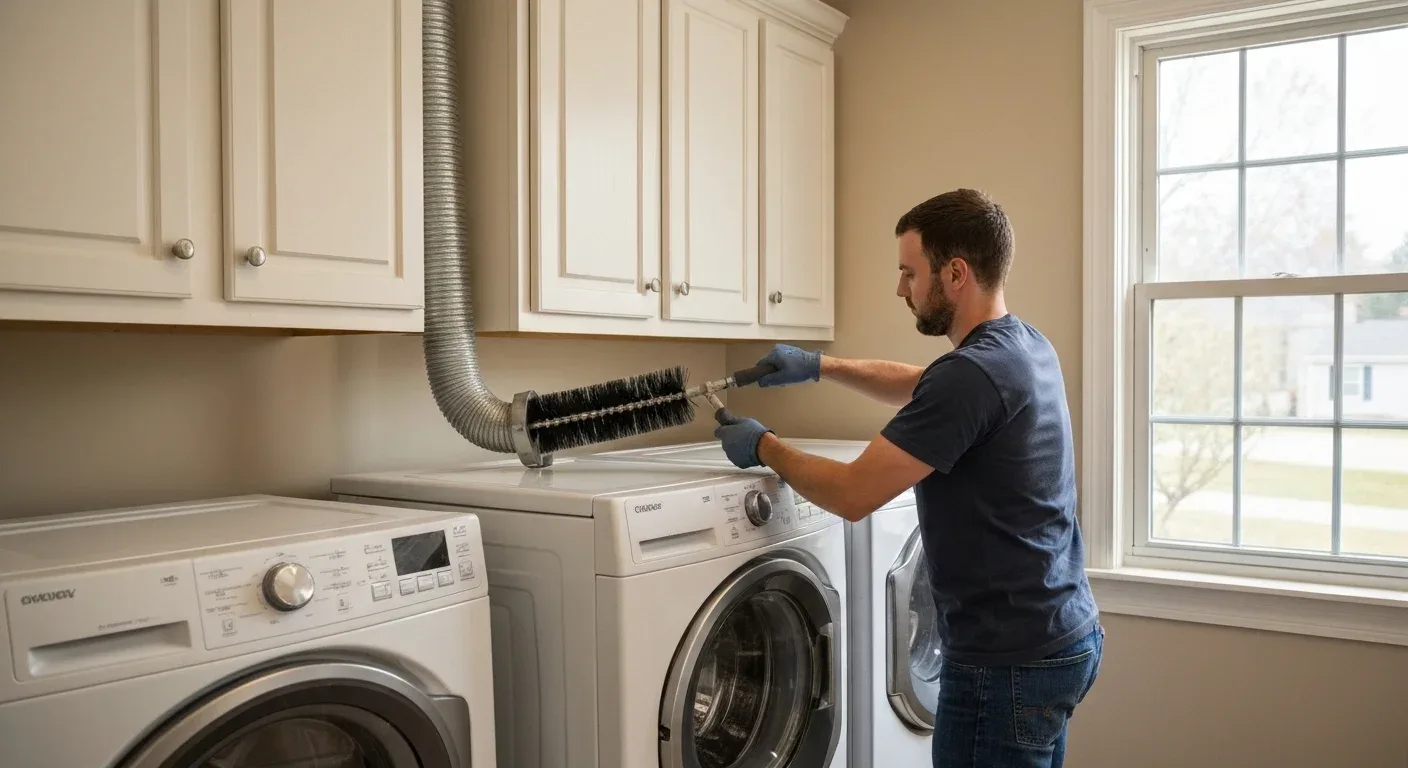
A meaningful cleaning visit begins with the route the dryer uses to move exhaust out of the home. The technician should look at the connection behind the dryer and consider how the exhaust continues through the property. The work should be based on what can be inspected, reached, and completed safely, rather than on a general statement that the vent is dirty.
Before the visit, clear the laundry area as much as you reasonably can. Make space around the dryer so the connection can be considered without forcing equipment or working around loose items. Keep the route to any accessible outside termination clear as well. You do not need to prove what is wrong, but you should make the relevant areas easier to inspect.
A sound visit should establish the condition of the exhaust path before cleaning starts. That means identifying which sections are accessible, noting any limits, and separating visible findings from assumptions about hidden sections. If the path cannot be fully reached, the quote or explanation should say so plainly.
The technician should also discuss documentation. A Kensington service page in the supplied research describes before-and-after photos for accessible areas when those photos are safe and meaningful. Photos are not a substitute for an explanation, and they may not be appropriate for every part of a route. Ask what the images show and which areas were not photographed.
Cleaning should follow the inspection, not replace it. The person doing the work should explain which portion of the exhaust path is included. They should explain what access is required. They should also explain whether the work can finish without creating a new problem. If an obstruction, damaged connection, or unusual access issue becomes apparent, pause for an explanation before approving additional work.
Keep the laundry area approachable. Move loose storage items away from the appliance, protect anything that could be disturbed, and tell the technician about recent appliance or remodeling work. A changed wall, cabinet, closet, or appliance position can affect how the exhaust connection is reached.
A proper visit should leave you with more than a general statement that cleaning was performed. You should understand what was checked, what was cleaned, what remained inaccessible, and whether the technician saw a reason to discuss repair or further investigation. If before-and-after photos are safe and meaningful, they can help show the accessible work. They should not be treated as proof of every hidden condition.
The practical scope usually needs to answer these questions:
- Which part of the dryer exhaust path will be inspected?
- Which accessible sections will be cleaned?
- What access will be needed around the dryer or elsewhere in the home?
- What conditions could require a separate repair discussion?
- What will be documented after the work?
This is also where you should ask how long the visit is expected to take. A useful answer depends on the layout, the path, the access, and what the inspection finds. A person who gives a time without asking about those conditions may be describing a general appointment rather than your actual job.
The same applies to safety. You should receive a direct explanation if a section cannot be safely reached or if the observed condition calls for work beyond cleaning. We would rather see an honest limit stated in the scope than have a hidden section treated as complete without being inspected.
For background on related work, you can review our page about dryer vent repair and installation. Cleaning and repair are not the same request, so the written scope should keep them separate when both are discussed.
The quote should spell out the work
A clear quote should describe the work in plain language before you approve it. The important question is not simply what the visit costs. It is what you are paying someone to inspect, clean, document, and explain, along with what is outside the proposed scope.
Ask for the exhaust path to be described rather than accepting a line that only says dryer vent service. The proposal should identify the areas the technician expects to access and clean. If the full route cannot be confirmed before arrival, the quote should explain how the scope will be handled once the inspection is complete.
Access is another cost and timeline driver. A dryer in an open laundry area presents a different working situation from one in a tight closet or a room with built-in storage. A long or difficult route may require more inspection and explanation than a short, readily accessible connection. The written proposal should leave room for those differences without becoming vague.
Ask what happens if the technician finds a problem beyond cleaning. The quote can state whether repair, replacement, additional access, or further investigation is excluded unless separately approved. That distinction protects you from treating an unexpected recommendation as part of the original cleaning without understanding the change.
A useful proposal should also explain documentation. If before-and-after photos are available for accessible areas, ask whether they are included and what they can realistically show. If photos are not safe or meaningful in a particular area, the proposal or completion discussion should not imply otherwise.
The person preparing the quote should know the basic facts of your home. Have the dryer location ready. Describe any known route through a wall or ceiling. Mention whether the property is a house, condo, townhome, or apartment. Tell them about recent remodeling, a moved appliance, or any area that is difficult to reach.
Before approving the work, check that the proposal answers the following in ordinary language:
- What is being inspected?
- What is being cleaned?
- What access is included?
- What findings would change the scope?
- What documentation will be provided?
The price is shaped by the work described, the condition found, and the access required. A vague service promise makes it hard to compare proposals because two people may be describing different jobs. We recommend asking for clarification before the appointment rather than waiting until equipment is in the laundry area.
You can also ask about the expected sequence. The clearest answer will usually describe inspection first, cleaning within the agreed scope, and a discussion of findings afterward. If the provider cannot explain what happens when a section is inaccessible, ask that question directly.
A quote should not pressure you to approve work you do not understand. You should be able to ask what is included, what is not included, and what would require permission before proceeding. Those answers are especially useful when the original symptom is slow drying, because cleaning may not address every possible dryer or exhaust issue.
Our guide to planning handyman services in Kensington can help you organize those questions before requesting a visit. Bring the same information to any conversation: the symptom, the appliance location, the known access points, and the result you want clarified.
Home layout changes the access question

The home’s layout can change how a dryer vent is inspected and what access is practical. A house, condo, townhome, or apartment may place the dryer and exhaust route in different parts of the building. The type of property does not prove that a cleaning will be difficult, but it does affect the questions you should ask before work begins.
In a house, the dryer may sit near an exterior wall. The exhaust may instead travel through another part of the structure before reaching the outside. In a townhome, the route may pass through tighter building spaces or serve a laundry area that is surrounded by finished surfaces. A condo or apartment may involve shared building conditions, limited access, or property rules that affect where a technician can work.
The key issue is not the label on the property. It is the route from the dryer to the outside and the places where that route can be reached. Ask whether the technician expects to work only at the appliance, at an exterior termination, or at another accessible point. If access depends on a building area, confirm who can provide it before scheduling.
Closets and built-in laundry spaces deserve particular attention. The appliance may need to be moved or approached from a restricted angle. Cabinets, shelving, doors, and stored items can limit the working area. Tell the person preparing the quote about those conditions instead of assuming they will be obvious from the property address.
A long route or one with difficult access may affect the time needed for inspection and cleaning. The same symptom can lead to different work depending on where the appliance sits and how the exhaust leaves the building. That is why a written scope should identify access assumptions and explain what happens if the planned route cannot be reached safely.
Apartment and condo residents should also ask about building coordination. A technician may need access beyond the private laundry area, or the outside termination may be located where another person controls entry. Do not wait until the appointment to discover that a shared space, locked area, or property manager must be involved.
For homes with recent remodeling, explain what changed. A relocated dryer, new cabinetry, a closed access panel, or altered wall finish can affect the route and the work area. The technician should know about those changes before giving a final scope.
When you ask for a quote, provide:
- The property type and laundry location.
- Any known access point along the exhaust route.
- Recent appliance, cabinet, or remodeling changes.
- Building access rules or shared areas that may matter.
A local service page in the supplied material describes coverage for homes, condos, townhomes, apartments, and commercial businesses in Kensington. That broad property range does not make every job identical. It makes it more useful to describe your layout clearly before the visit.
Our Kensington handyman service area is a place to continue the local planning conversation. When you contact us, explain the property type and access conditions so the proposed work can be discussed in the right context.
Simple habits help protect the cleaned vent
After a cleaning visit, pay attention to how the dryer behaves and keep the laundry area easy to inspect. A clean accessible section does not remove the need to notice new symptoms. Slower drying, frequent overheating, or a change after the appliance is moved should lead to another conversation rather than repeated testing.
Keep the area around the dryer clear enough for the connection to be seen and reached when needed. Avoid turning the laundry space into storage that prevents inspection. If the appliance is moved for another project, make sure the exhaust connection is discussed before the work is considered complete.
Use ordinary observation as part of your maintenance routine. Notice whether drying changes, whether the dryer seems unusually hot, and whether the outside termination can be considered safely. Do not force access or take apart a connection you are not prepared to handle. When something looks damaged, blocked, or difficult to reach, ask for professional guidance.
Record useful details for the next visit. Note when the symptom returned, whether it affects different loads, and whether anything changed in the laundry area. This gives the technician a clearer starting point and helps separate a recurring vent concern from a one-time change in use.
You can also keep the previous scope and any documentation together. A written proposal, completion explanation, and meaningful photos of accessible areas can help show what was discussed. They do not replace a new assessment if the dryer later develops a different symptom.
Do not rely on a fixed cleaning schedule without considering the actual condition of the exhaust path and the way the appliance is used. The supplied sources support attention to slow drying and overheating concerns, but they do not establish one schedule that fits every property. Ask for advice based on your home, access, and observed symptoms.
If you are ready to discuss dryer vent cleaning in Kensington, MD, contact us. Share the dryer location, symptoms you have noticed, and any access limits. We can start with the information that helps define the inspection and the written scope, then you can decide how to proceed.
Our goal in that conversation is clarity about the work, not a promise that cleaning will resolve every possible dryer problem.
Frequently asked questions
How can I tell whether slow drying is caused by the vent?
Longer drying times or a dryer that seems to overheat frequently can signal a dryer vent problem, but those symptoms do not confirm one cause. A professional inspection should examine the exhaust path and explain what was found, what was cleaned, and what remains uncertain.
What should a dryer vent cleaning visit include?
A dryer vent cleaning visit should begin with an inspection of the exhaust path and the access available around it. The scope should identify the areas to be cleaned, explain any inaccessible sections, and describe what documentation or completion information you will receive.
How much should it cost to have your dryer vents cleaned?
The cost depends on the scope of work, the condition found, the route of the exhaust, and how easy the relevant areas are to reach. Ask for a written proposal that separates cleaning from any repair, extra access, or further investigation.
How long does it take a professional to clean a dryer vent?
The timeline depends on the dryer location, the exhaust route, the available access, and what the inspection finds. Ask the person preparing the proposal for an expected sequence and what conditions could change the time needed.
Who should I call to clean out my dryer vent?
Choose someone who will inspect the exhaust path, explain the scope in writing, and identify areas that cannot be safely reached. Before approving work, ask what will be cleaned, what will be documented, and how additional repair concerns will be handled.
