

Quick summary: what this article gives you
If you want a sensible answer to “fence repair cost per linear foot,” start by measuring the runs you actually need fixed and record what kind of work each run needs. This article shows exactly how to measure linear feet, what typically sits inside a per-foot price and what is nearly always extra, how different contractors build their quotes, and the Montgomery County checks you should make before work starts.
How to measure your fence in linear feet
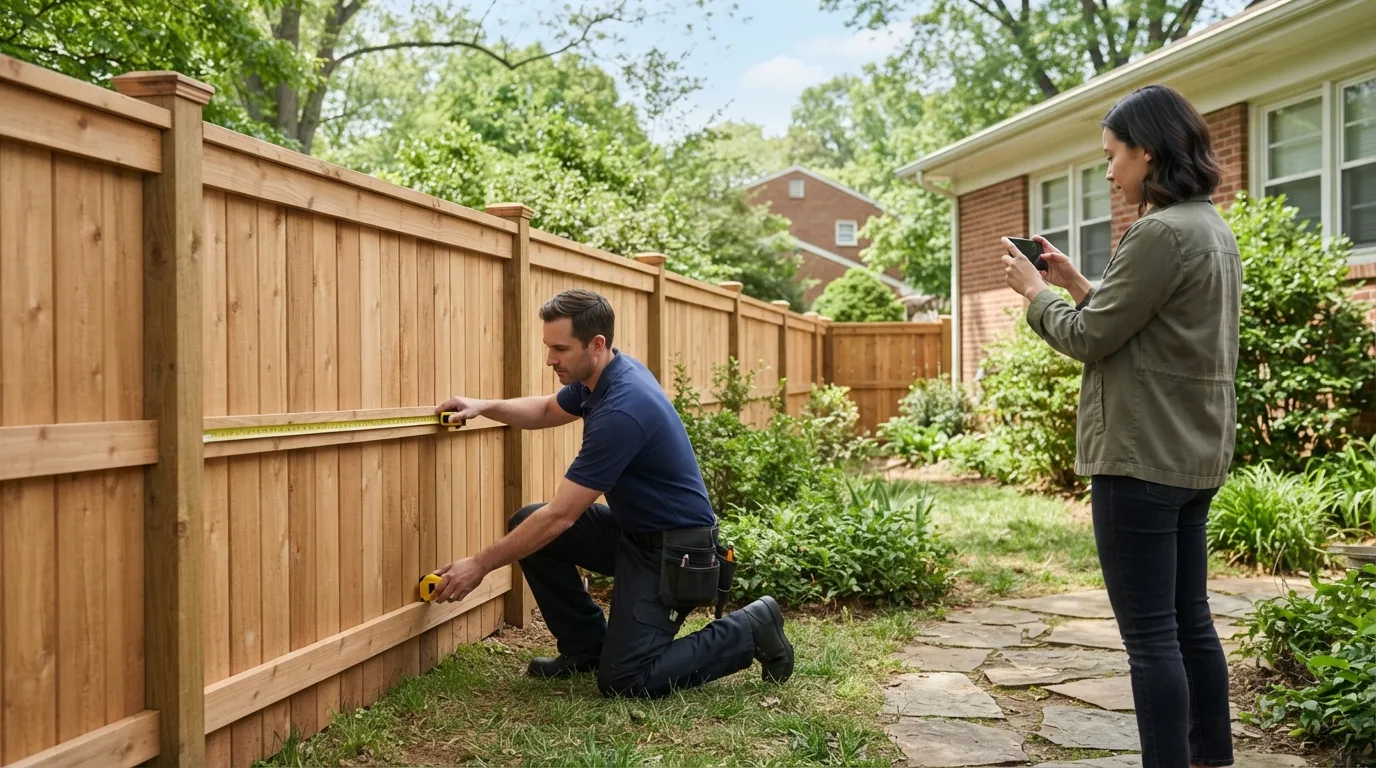
Measuring so contractors can compare quotes is a small job that saves time and arguments. Treat each straight run between corners or gates as its own measurement. Measure along the fence line, not around posts or landscaping, and write down runs in feet so a contractor can total them without guessing.
Use this simple ordered method:
- Walk the line with a tape measure, measuring from the outside face of one post to the outside face of the next post for each straight section. Note the length in feet and whether the run is one continuous piece or interrupted by a gate.
- Measure gates separately and note their width and swing direction. A gate is usually treated as its own item because it needs latches, hinges, and possible framing work.
- At corners, stop the run and start a new one. A corner post usually counts for both runs but make sure your notes show two separate straight lengths meeting at that post.
- Mark any runs that sit on a slope, cross steps, or have hard-to-reach access from the street or alley. Describe access plainly: narrow path, steep yard, or long carry from the curb.
- Photograph each run from a few angles: one straight-on showing the full length of the run, one close to the damaged area, and one showing the path a crew would use to reach the fence.
Contractors compare apples to apples when you give them that level of detail.
What actually drives the price per linear foot
A per-linear-foot number sounds neat, but the work behind each foot can vary wildly. The single biggest drivers are material and how many posts and rails need replacement. If you are repairing a few boards on a generally sound run, most of the cost is simple board and labor. If the posts are rotten or the rails are bent, the same linear foot can require heavy carpentry and reset work.
Here are the factors that change the per-foot job the most:
- Material type. Wood, chain link, steel and concrete all behave differently. A split or warped wood board is fast to swap; bent metal or concrete posts usually need different tools and more time.
- Number of posts needing work. Posts hold the fence up. Replacing a post is an effort that touches several linear feet of fence because rails and boards must come off and go back on. A quote that fixes boards only will be lower per foot than one that replaces multiple posts.
- Hidden damage. Surface rot can hide deeper decay at post bases or rail joinery. What looks like an easy board swap can become a post replacement once you start, and that changes labor and disposal needs.
- Access and terrain. Narrow pathways, stairs, or yards with steep slopes make even a small repair take longer, which raises the labor portion of a per-foot price.
- Gate work and hardware. Gates need alignment, hinges, latches and sometimes framing. A gate repair is usually charged separately or priced higher per foot for the adjacent runs.
- Disposal and cleanup. Old wood, metal and concrete have different removal requirements. If a job needs a pickup, a skip, or special disposal, that will usually be added on top of a per-foot line.
Because per-foot pricing folds together materials, labor and waste into a single number, two quotes for an identical linear measurement can differ honestly if one includes post replacement or a gate rebuild and the other does not. When you compare, make sure you and the contractor use the same definitions of “repair.” A contractor who writes “boards only” means something different from one who writes “boards and posts as needed.” If they both provide written line items you can compare them piece by piece.
How contractors and calculators price repairs (per-foot, per-board, hourly)
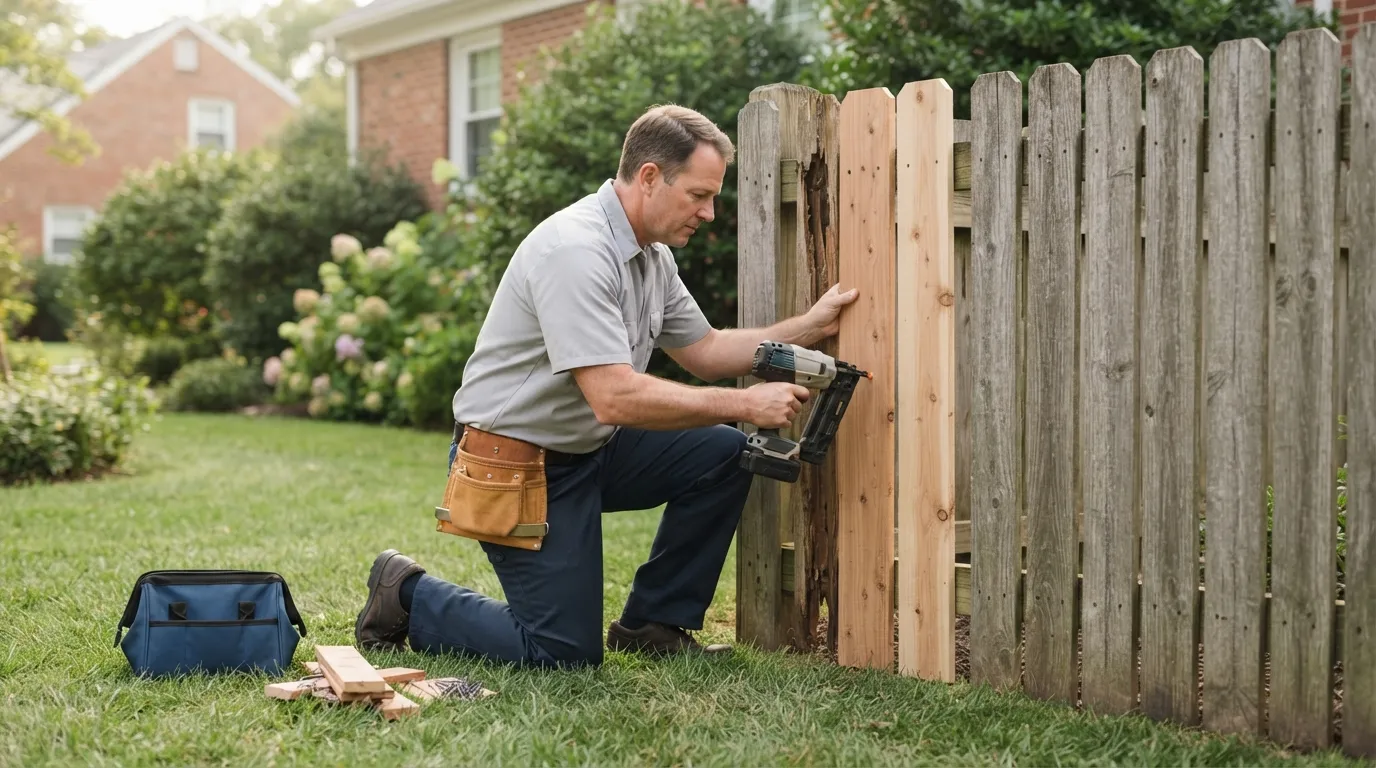
Contractors use three common ways to price small fence repairs: per-linear-foot, per-board or per-panel, and hourly. Calculators you find online usually let you toggle between these, but they rely on assumptions you must check against the quote.
Per-linear-foot is convenient when the damage and the work involved are roughly uniform along a run. It folds materials, labor and small extras into a single number. The risk for you is that uneven conditions along the run, a rotten post, a difficult access point, or a gate, can make two quotes that use “per linear foot” not comparable unless they list what they include.
If you have a few broken boards scattered along a long run, per-board pricing can be fairer because you are charged only for the pieces actually replaced. Per-board quotes are also easier to compare when damage is patchy; they tend to be less useful when whole panels or rails must be rebuilt.
Hourly pricing charges for on-site labor time and typically adds materials and disposal on top. Some platforms and contractors advertise a starting hourly rate; if you see a quoted hourly figure, be sure to ask what the estimate assumes about the number of posts, how many boards per hour they expect to replace, and who supplies materials.
When you convert between models to compare quotes, be explicit about assumptions:
- That converts a per-board approach into a per-foot equivalent.
- If a contractor quotes hourly, ask how many linear feet they expect to complete in an hour under the site conditions you described. Use that to get a per-foot comparison.
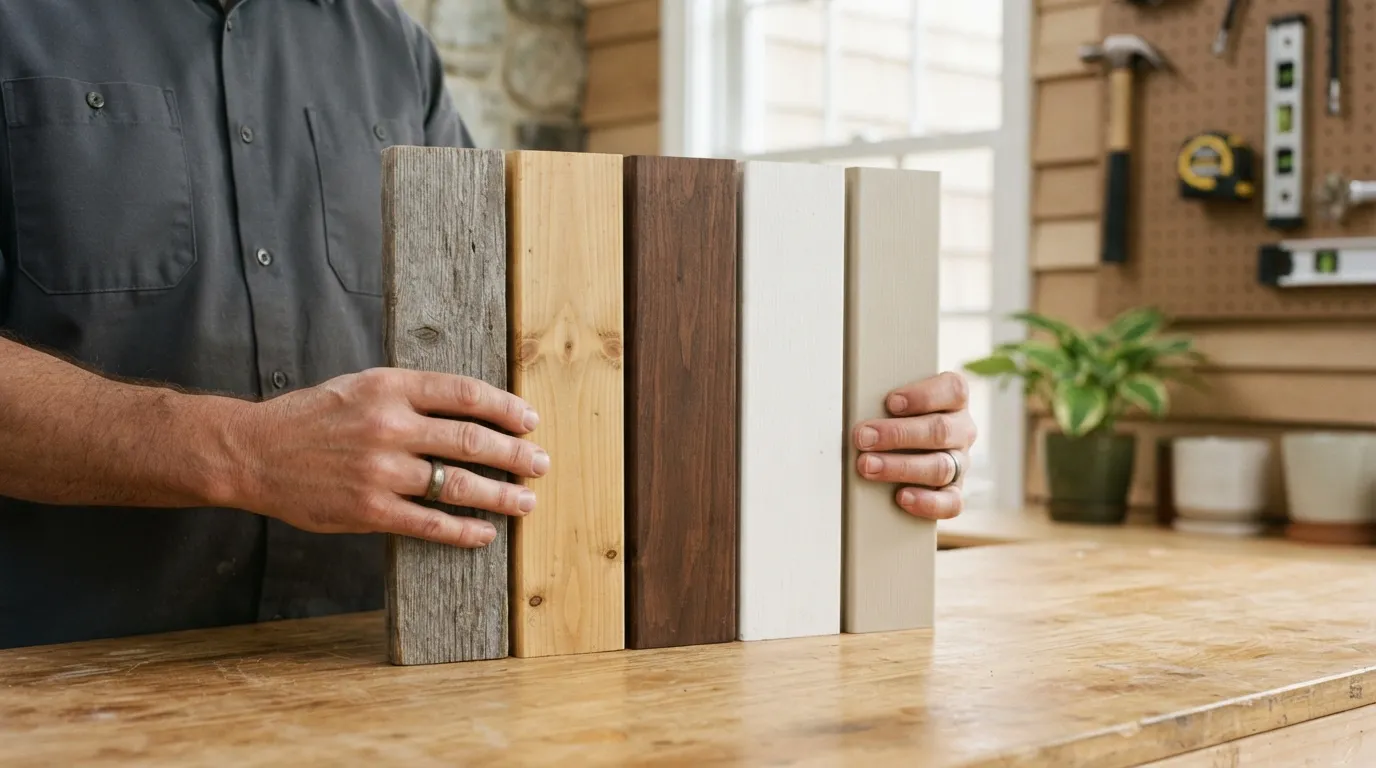
- Check who supplies materials and whether the quote lists material grades. Two contractors using the same per-foot number can be supplying different board widths, board grades, or post sizes.
Some online calculators break a repair into line items so you can see the labor, materials and waste separately. Those are useful because they make it clear where a per-foot price will rise if the contractor finds rot or if posts need replacing. When a quote breaks things down, you can spot which assumption is the outlier and ask about it.
When repairing is sensible, and when replacement is the better deal
Deciding between repair and replacement hinges on how much life the remaining structure has and how many concentrated problems the fence shows. Repairing individual boards, realigning a leaning panel, or replacing a single post usually makes sense when the rest of the run is solid and the underlying rails and posts are sound.
Look for these signs that repair is the right short-term option: a few broken boards, a panel pushed out by an impact, loose boards at a single location, or a gate that only needs hinge adjustment. Repair keeps costs down and is quick when the posts and rails are not compromised.
Replacement becomes the better deal when problems are widespread or concentrated at structural points. If posts along a run show rot at the base, if many rails are split, or if the fence has been patched so often it no longer lines up, the labor to fix each spot adds up. In those cases, a full replacement gives you a consistent structure and avoids repeated call-backs.
A practical way to tell is to sample the posts along the run: if a few posts need replacement, repair those and monitor. If a large share of posts show decay or the rails are deteriorated across multiple panels, plan for replacement. Replacement also makes sense when you want to change material or style, because mixing old and new pieces often looks uneven and raises the chance of future repairs.
When you get quotes, watch for a contractor who separates repairs into “boards only,” “post replacement,” and “full panel rebuild.” That makes it easy to see how costs add up if hidden damage appears once work begins. If the quote bundles everything into a single per-foot number with no line items, ask for a breakdown so you can compare fairly.
What is nearly always included and what is nearly always extra
A clear quote separates the usual inclusions from the extras. What is nearly always included is the labor to replace the parts listed, the new boards or panels specified in the quote, and normal cleanup of debris created by the work. What is almost always extra are large disposals, special permits, heavy equipment for concrete or metal work, or replacement of hidden structural items found once the fence is opened.
When you compare quotes, ask that each one show these line items so you can compare like with like:
- Labor for the listed repairs
- Materials specified by type and grade
- Cleanup and usual disposal
- Any separate line for gate hardware or gate framing
- A note about how hidden issues will be handled and priced
If a quote omits one of these, ask for it to be added. A clear line item for post replacement or concrete footings helps you see why one contractor might be higher: posts and foundations change the job more than short runs of board replacement.
How to get a clear, comparable local quote
The goal is a written quote that you can compare line for line. To get that, prepare measurements and photos, and give contractors the same access information. Provide the list of runs you measured, label each run, and attach the photos you took for each run.
Include these notes when you contact contractors:
- The run list with feet for each section and gate widths. Mark slopes and difficult access.
- Photos for every run: one showing the whole run, one close to the worst damage, and one showing how a crew would reach the fence.
- A short note about buried utilities, sprinkler lines, or irrigation close to the fence line.
- Specify whether you expect “boards only,” “boards and posts as needed,” or “full panel rebuild” so quotes use the same scope.
A clear quote itself should list the labor, the materials by type, any disposal or permit fees, and how the contractor will handle hidden damage if it appears. Compare two quotes by removing the material and disposal lines and seeing whether the labor hours or post allowances differ; that usually explains most price variance.
Ask these questions before you hire:
- Who supplies the materials, and what grade of board or post will you get? If a contractor supplies a lower-grade material, the per-foot price will look lower but will cost more over time.
- How will you price post replacement if you find rot? Ask them to provide a per-post line item so you can compare.
- Does the quote assume concrete footings for posts or compacted gravel? That changes the scope and the time on site.
If you want an apples-to-apples comparison, ask two or three contractors to provide their quotes using the same scope statement you prepared. When they do, differences come down to labor assumptions and material grade rather than guessing about what each of them thinks the job will contain.
A simple local estimator you can use tonight
Once you have your measurements and one or two contractor assumptions, you can convert per-board or hourly numbers into a per-linear-foot comparable figure. The method below is a step-by-step you can follow after you get a first quote or a starting hourly rate.
- Start with your total linear feet from the measurement list. Keep gate widths separate.
- Multiply boards per foot by the material cost per board and add the contractor’s labor on top. This gives you a material-plus-labor per-foot figure for that quote.
- From an hourly quote, ask how many linear feet the contractor expects to finish in an hour under your site conditions. Divide the contractor’s hourly rate by that feet-per-hour number to get an hourly-derived per-foot labor cost, then add per-foot material and disposal from the quote.
- For a per-linear-foot quote, make sure the quote specifies whether it assumes post replacement or not. If it does not, add a per-post cost for any posts you believe need replacing and spread that additional cost over the affected linear feet to get a true like-for-like number.
- Compare the per-foot totals you calculated. Outliers usually show up because one quote assumed more posts or heavier gates, or because the material grade differs.
This process uncovers the assumptions that create differences and lets you ask targeted questions. If one quote is much lower, check its assumptions about posts, gates and disposal. If one is higher, see whether they are using higher-grade materials or including concrete footings.
Permits and local checks for Montgomery County properties
Before a repair or replacement, check Montgomery County rules and any HOA requirements that affect your property. Local permits and setback rules can change whether a repair is straightforward or needs paperwork and inspections.
Start by confirming whether the work you plan is classed as repair or as replacement under county rules. Repairs that keep the same footprint and do not change height or location are often treated differently from a full replacement that might require a permit or a review. Also check your deed covenants or HOA rules for style and height limits; they can require a different material or a variance.
Finally, mark out utilities and note sprinkler systems before work begins. Contractors will want to know if there are irrigation lines or buried services close to the posts, because those change excavation methods and the time a crew spends on-site. Contact your local utility marking service before any post digging to avoid accidental damage.
When you combine careful measurements, clear photos and an understanding of what each quote actually includes, you will be able to compare per-linear-foot prices sensibly and choose the option that fits the life you want from the fence.
Frequently asked questions
How do I measure linear feet for a fence so contractors can compare quotes?
Measure each straight run from the outside face of one post to the outside face of the next, treat each corner as the end of one run and the start of another, and measure gates separately. Photograph each run straight-on, close to the worst damage, and showing access, and label your notes so contractors can add the lengths without guessing.
Is per-linear-foot pricing better than per-board or hourly for my repair?
Per-linear-foot is convenient when damage and work are uniform along a run, but it can hide differences when posts or gates need work. Per-board pricing is clearer for scattered broken boards, and hourly pricing is useful when the scope is unclear; convert assumptions into a per-foot figure to compare them.
What should I send contractors to get a comparable written quote?
Send a list of runs with linear feet, gate widths, photos for each run, and a note about access and any buried utilities or irrigation. Ask each contractor to state whether the quote covers “boards only,” “boards and posts as needed,” or “full panel rebuild” so you can compare like for like.
Do I need a permit in Montgomery County to repair my fence?
Check whether your work is a repair that keeps the same footprint and height or a replacement that changes location or height, because county rules treat those differently. Also review any HOA or deed restrictions and mark out utilities before any digging so you can plan the correct scope and timing.
