

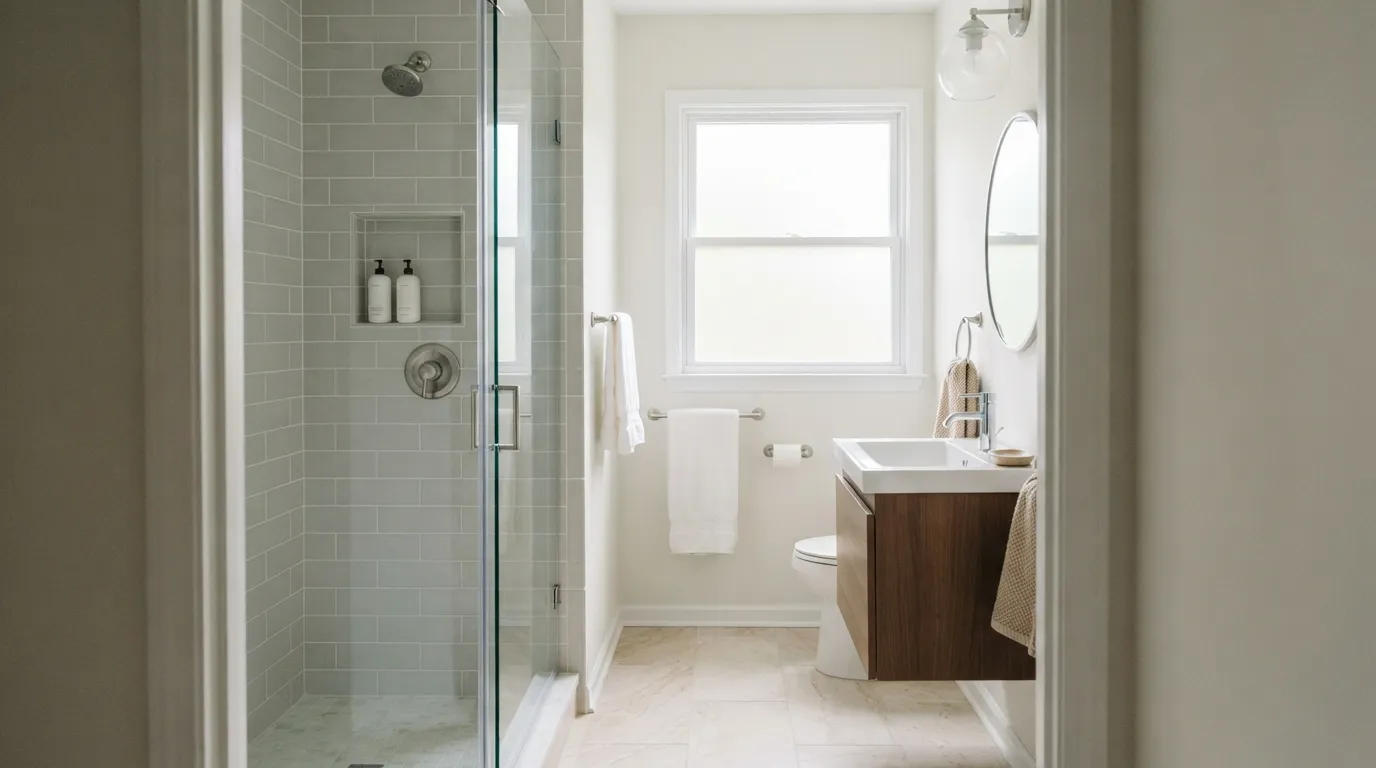
Bathroom remodeling in Silver Spring costs what your chosen scope requires, rather than one fixed amount. You will pay for demolition, disposal, labor, materials, fixtures, plumbing, electrical work, and possibly permits and inspections. A refresh involves less work than a mid-range remodel or full gut. Moving plumbing or changing layout adds complexity.
Bathroom remodeling Silver Spring cost, answered up front
Bathroom remodeling Silver Spring cost comes down to scope: how much demo, plumbing and electrical work you need, and whether permits and inspections are required. Those choices change every major line on the bill for you. Start by deciding whether you want a surface refresh or a mid-range update. Or decide if you want a full gut and rework of the layout. Read on to see what each choice really adds to the price and the schedule.
How a bathroom bill is actually put together
A remodel bill is a list of trades, materials and the work that links them. The big lines you will see on any quote are demolition and waste disposal. You will also see labor for carpentry and trades and plumbing and electrical work. Finally, expect fixtures and finishes, and permit and inspection costs. Each of those lines can grow or shrink depending on choices you make before demo.
Demolition is simple on paper but it reveals old pipes and wiring. If demo uncovers rot or outdated electrical, that adds trades time and parts. Plumbing and electrical are separate trades on the quote because they require specific skills and, sometimes, separate inspections. Fixtures and finishes is where choices multiply: a tile floor, a tile shower, or a prefabricated surround all land in different parts of the budget.
Waste and disposal are often listed as a job cost rather than folded into labor. Permits and inspection rework show up late in the bill if a change requires a new inspection or a failed inspection needs correction. The practical consequence for you is simple. When you compare two quotes, match those line items one for one. That way you know whether a low price is missing a trade or a required permit.
Three project scopes and what they include
When you compare quotes, think in scopes not in brands. That keeps you from comparing an apples-and-oranges price.
Refresh or mini update, what it is: a cosmetic touch that keeps plumbing and layout exactly where they are. What trades do: light demo, carpentry to replace or refinish a vanity, a plumber to swap fixtures, and minor electrical for lighting or fan replacement. Materials and choices: new vanity top, paint, and new faucets or toilet. Permits: often not required if nothing structural or new plumbing runs are added, but check local rules.
Mid-range remodel, what it is: replaces finishes, swaps showers for tubs or vice versa, and updates surfaces without moving major plumbing locations. Trades handle demolition of finishes. A plumber and electrician move fixtures and outlets within the same area. An installer fits tile or a prefabricated tub surround, and finishing carpentry completes work. Materials and choices: tile or acrylic surrounds, mid-range fixtures, new lighting and ventilation. Permits: commonly required for plumbing and electrical work and for replacing bathtubs or changing venting.
Full gut and rework, what it is: the room is taken back to studs and nearly every system is replaced or relocated. What trades do: full demo, framing, rerouting plumbing, new electrical circuits, possible new subfloor, tile or waterproofing installers, and often more than one inspection step. Materials and choices: choices here affect labor most, custom tile showers, freestanding tubs, or relocating the toilet all add coordination. Small bathrooms and condo footprints react to a full gut by adding access and sequencing constraints, so expect more coordination time from the contractor.
For your very small bathroom, the same three scopes still apply, but your choices shift. A refresh that clears clutter and replaces a vanity can feel like a big change. A full gut in a tight footprint often requires careful planning to avoid losing storage or circulation. That is why you should read every quote for what trade work is included, not just the final fixture list.
How Montgomery County permits change price and timing
Permits and inspections are part of the local reality and they shape both the schedule and the final cost. In Montgomery County, a remodel that alters plumbing, electrical, ventilation, or the structure will go through permit review. It will also require one or more inspections during the job. That means the contractor or the permit-holder has to schedule inspections at the right stages and correct anything an inspector flags.
Who pulls permits is usually decided before work starts. Contractors commonly pull permits because they know the submittal requirements and the sequence of inspections, but some homeowners choose to pull them themself. If a contractor pulls the permit, their experience usually keeps inspections on time. If not, you must be prepared to manage scheduling and to receive inspection notices.
Permit fees and post-inspection rework add cost in two ways for you. There is the direct fee itself and the labor and materials needed if an inspector requires a fix. A missed or late inspection can delay subsequent trades, which raises labor costs indirectly through schedule slippage and extra site visits. That is why a quote that shows permit handling and inspection coordination is covering a real cost rather than padding the bill.
Common inspection milestones to expect are framing/rough-in, plumbing rough-in, electrical rough-in, and final. Each rough-in requires access and clear staging so inspectors can see concealed work. If plumbing lines are moved or a new vent is added, allow more time for scheduling and for any corrective work the inspector might request.
Delays happen for straightforward reasons: a missed paperwork item, a rainy week that limits exterior work, or a backlog at the permit office. Ask any potential contractor how they handle inspection failures and who will be your point of contact when the county requires a correction. That answer tells you how familiar they are with local workflows and how much time you should allow in the schedule.
Small bathrooms, where to save and where not to
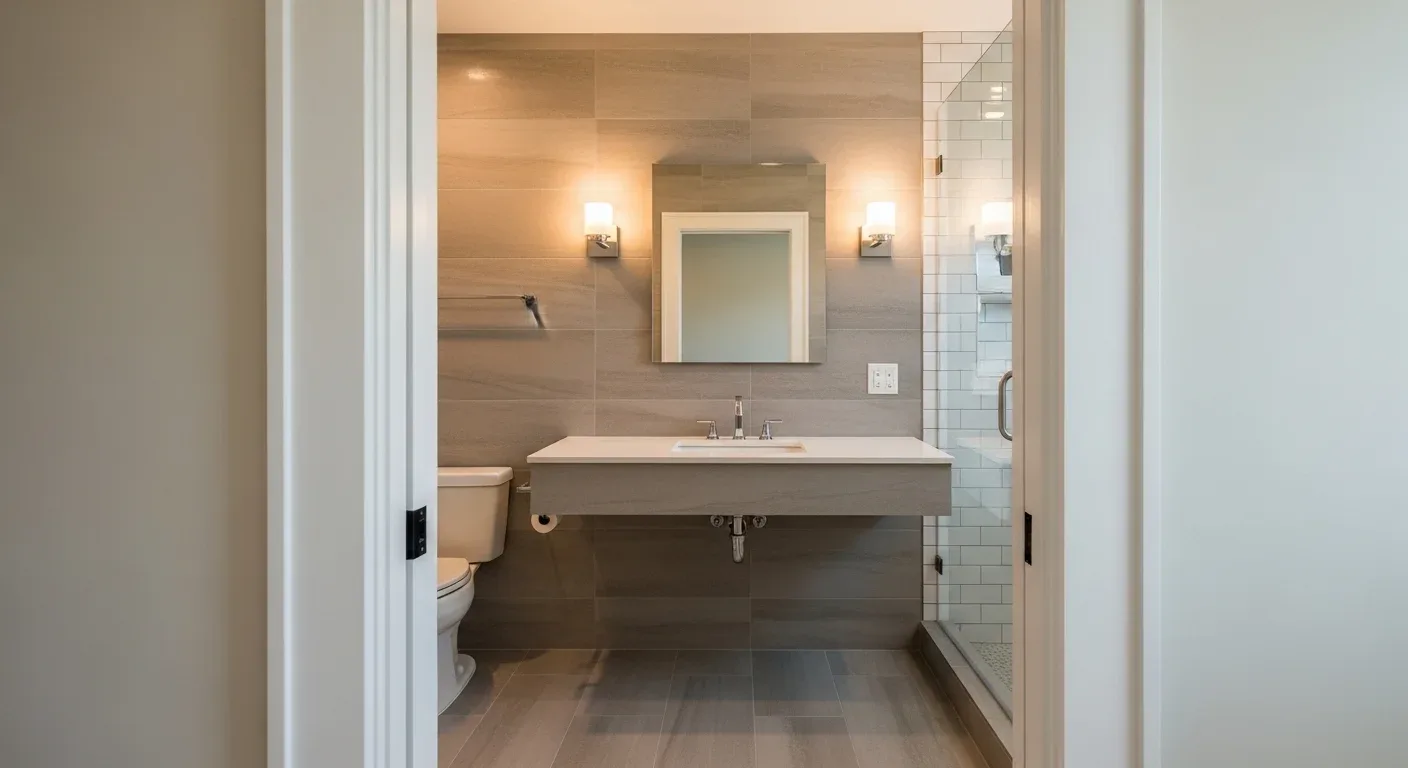
Small bathrooms reward decisions that prioritize function over ornament. The obvious place to save is by keeping plumbing fixtures in the same locations. Moving the toilet or shower requires new plumbing runs and sometimes a new vent or floor work, and that is where costs and complexity spike.
Choose finishes with installation in mind. A prefabricated shower surround installs faster and needs less waterproofing skill than a tiled shower, and that often reduces labor exposure. A tiled shower gives you a longer-term look and better resale appeal in many houses. But tile adds time for waterproofing, drain placement, and grout work. If you pick tile, choose a format and pattern that installers can lay without elaborate cuts; that saves hours on a small floor.
Do not try to make the room look larger with low-grade materials. Cheap, visually similar finishes often show gaps and edges within months. Spend instead on the few things a visitor notices: lighting, a good mirror, and a vanity that fits the circulation path. Wall-mounted lighting and a narrow, well-proportioned vanity will create usable space without structural changes.
Storage choices also matter. Shallow recessed cabinets or medicine cabinets that fit within an existing wall save floor space without moving plumbing. Open shelving can look airy but trades the benefit of storage for more careful installation to avoid sag or water damage behind items.
Watch the ventilation decision. If a fan is too small for the room, you will have humidity problems. If a fan is oversized, it can be noisy. It can also be expensive to install if a new duct run is required. In a small space, matching fan capacity to the room size and the expected shower use is a better choice than buying the cheapest unit.
You should avoid finishing shortcuts like patching a problem area and painting over it without fixing the cause. Also avoid installing a cheap shower sill that does not meet water-management needs. Those shortcuts look fine at first and cause call-backs later, which doubles the cost and the disruption.
How to vet local remodelers and read reviews
Find someone who understands local permits, common Silver Spring footprints, and trade sequencing the county expects. That is more useful to you than hunting for the lowest price. Focus your checks on competency and local experience.
Ask to see recent, complete examples of work similar to yours. A contractor who shows several small-bathroom projects, with before-and-after photos and details about how they handled plumbing or ventilation, is easier to assess. When you read reviews look for patterns: several notes about on-time inspections or clear site communication are more informative than one-off praise.
Documents to ask for before you commit:
- Proof that the person you will rely on is the one who will do the work on site, and who will handle the permit submittals.
- A clear scope of work that lists the trade tasks included, not just a fixture list.
- A timeline that triggers inspections and notes who will schedule them.
Ask these questions in the interview and in writing. The answers reveal how a contractor manages local details:
- Who will pull the permits, and who will be the contact at the permit office? That shows whether they know Montgomery County procedures.
- How do you sequence rough-in inspections for plumbing and electrical? A thoughtful answer shows experience with inspection timing.
- Can you show a past project where inspection rework was required, and how you handled it? The real story shows whether they absorb the coordination or pass it back to the homeowner.
When you read online reviews, flag two kinds of comments. First, logistical notes about arrivals, cleanup and communication, those describe site habits rather than taste. Second, technical notes about inspections, hidden damage discovered, and how it was resolved matter to you. Those notes tell you whether the contractor knows how to work through the permit process and local inspection expectations.
If a candidate cannot answer the permit and inspection sequencing questions clearly, that is a reason to be cautious. Local rules and the county inspection rhythm make up much of the timeline and unexpected costs for you. Hire someone who treats them as routine.

Where homeowners most often overspend
Overspend usually comes from three choices: moving plumbing, upgrading to high-end fixtures without altering other finishes, and choosing labor-intensive finishes without locking in staging. Moving plumbing is expensive because it affects floor and wall framing, drain slopes, and venting. If you can achieve your layout goals by reusing existing plumbing locations, you cut both time and coordination.
Upgrading one visible item to a high tier while leaving surrounding finishes basic often creates a mismatch for you. You then try to solve that with additional changes. For example, a high-end faucet will look best against a countertop and tile that match its quality. If you find yourself replacing adjacent finishes after the fact, you have overspent on sequencing.
Material choices that drive labor deserve extra attention. Large-format tile requires careful subfloor and leveling work. Intricate mosaic patterns increase cutting and laying time. In a small bathroom these choices can add hours of artisanal labor for modest visual return. If you are saving money, pick tile formats that installers in your area commonly use.
Another place homeowners add cost is the desire to change the use of a space without changing its constraints. Turning a half-bath into a shower room may sound appealing to you. If the drain location, ventilation, and access do not support it, you will need extra plumbing runs. You may also need a new vent and likely face an elevated permit scope. The better move is to design within the room’s limits and choose finishes that enhance function without forcing big moves.
Where to spend for long-term value: fix water management first. Proper waterproofing and a correct shower drain detail protect the investment and prevent mold or rot later. Good lighting and ventilation make the room more usable for you. A well-chosen layout that preserves circulation yields more day-to-day value than trendy finishes you tire of quickly.
From quote to final inspection
A typical local sequence is predictable when you know what to look for. Below are the ordered steps you should expect once you choose a contractor.
- Quote and written scope, where the contractor lists trades, sequences and who handles permits.
- Contract and scheduling, with a start date and an outline of inspection points.
- Permits pulled and permit documentation posted at the site before demo begins.
- Demolition and prep so trades can access framing, plumbing and electrical systems.
- Rough-in plumbing and electrical, staged inspections, and any corrective work the inspector requires.
- Finishes, fixtures installation, and the final inspection and punchlist.
Each of these steps can delay the next. For example, inspections are scheduled windows, not instant approvals. If an inspector requires a correction after a rough-in, that correction must happen before finish trades can close walls, which extends the schedule. A realistic timeline includes those inspection windows and a contingency for fixes.
When you compare promised timelines, ask what the contractor does if an inspection fails and who pays for retesting or extra visits. Their answer will show whether they view inspections as routine project checkpoints or as potential extras to be billed separately.
Frequently asked questions
What drives the cost of a bathroom remodel the most?
The single biggest drivers for your cost are how much demo you need. Also factor in whether plumbing or electrical lines are moved. The choice of finishes and whether permits and inspections are required also matter. Each of those changes a different line on the quote and can multiply coordination time.
Do I always need a permit for a bathroom remodel in Montgomery County?
If your work changes plumbing, electrical, ventilation or the structure, a permit and one or more inspections are typically required. Confirm with your contractor or the county before you start so you know who will pull permits and schedule inspections.
How can I save on a small bathroom remodel without making it look cheap?
Keep plumbing in the same locations. Pick finishes installers commonly use in your area. Invest in lighting and a correct fan rather than low-grade surface fixes. Those choices cut labor exposure while preserving a finished look.
What should I ask a contractor about local inspections?
Ask who will pull the permits and who will be your point of contact at the permit office. Ask how they sequence plumbing and electrical rough-ins. Ask for an example of a past project where inspection rework was required and how they handled it.
