

Cabinets are usually the largest single line on a kitchen estimate. Which makes the refacing-versus-replacement decision the biggest lever most homeowners have, and the one they’re least equipped to judge from a showroom.
The good news: there’s a straightforward test, and you can run it yourself this afternoon.
The cabinet refacing vs replacement question is worth getting right, because cabinets are usually the largest line on the estimate.
What each one actually means
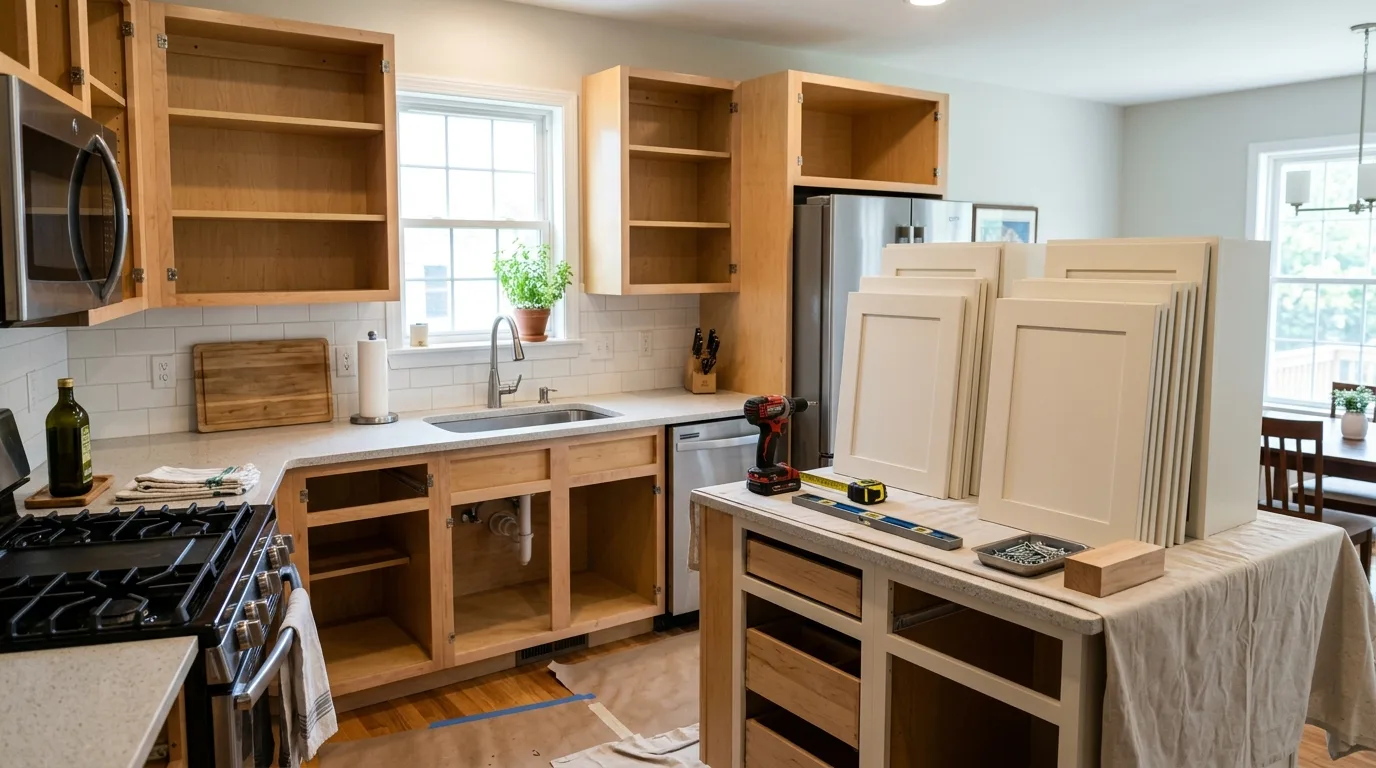
Refacing keeps your existing cabinet boxes — the carcasses screwed to the wall — and replaces everything you see. New doors, new drawer fronts, new hardware, and a matching veneer applied to the exposed frame edges. Done properly, the finished result is difficult to tell from new cabinetry.
Replacement removes everything and starts again. New boxes, new doors, new layout if you want one.
There’s a third option people forget: repainting, where the boxes and doors both stay and get professionally finished. Cheaper than either, and genuinely good on solid wood doors with a decent profile. Not an option on thermofoil or laminate doors, which don’t take paint.
The test: are the boxes sound?
Everything hinges on this. Go and check, honestly:
- Open a door and press on the box sides. Firm and solid, or flexing?
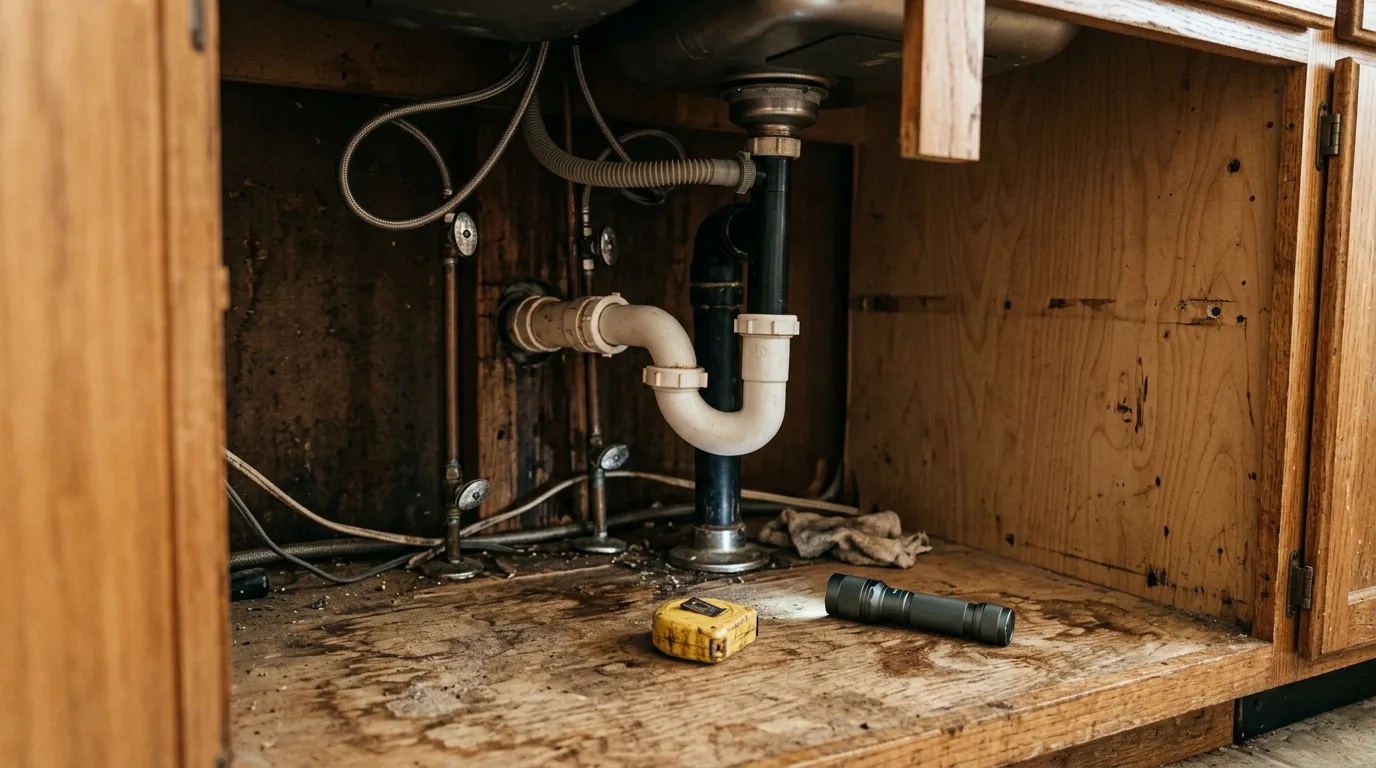
- Look under the sink. This is where cabinets die. Swollen particleboard, a soft floor, dark staining, or that faintly musty smell means water has been working on it for a while.
- Check the shelves. Sagging shelves are normal and replaceable. Sagging boxes are not.
- Look at the back corners. Are the boxes square, or has one dropped?
- Pull a drawer all the way out. Is the box behind it intact?
If the boxes are solid and the layout works for you, refacing is very likely the right answer. If they’re swollen, sagging or coming apart, no amount of new doors fixes that — you’d be bolting a nice face onto a failing structure.
When refacing is clearly right
The boxes are solid — especially in an older house. Cabinets built in the 1950s and 60s are frequently plywood or solid wood, and better made than a lot of what’s sold new today. Ripping those out to install particleboard boxes is a downgrade with a big invoice attached.
The layout works. If you’re happy with where things are and the complaint is purely that it looks dated, you’re describing a cosmetic problem. Solve it cosmetically.
You want it done quickly. Refacing typically runs days rather than weeks, and — this matters more than people expect — you keep your kitchen usable through most of it. No demolition, no counter removal, no going three weeks without a sink.
Budget is the binding constraint. Refacing is a fraction of full replacement. If the choice is refacing now or replacement in four years, refacing now is often the better call.
When replacement is the honest answer
The boxes are water damaged or failing. Non-negotiable. Refacing a rotten box wastes the money you spend on it.
The layout is genuinely wrong. Four narrow cabinets where you need one deep one. A corner that swallows everything you put in it. Twelve inches of dead space nobody can reach. Refacing preserves a bad layout in a nicer finish, which means paying to keep the problem.
You’re moving plumbing or appliances anyway. If the sink is relocating or you’re going from a 30-inch range to a 36, the cabinet run changes. Once you’re that far in, replacement usually makes more sense.
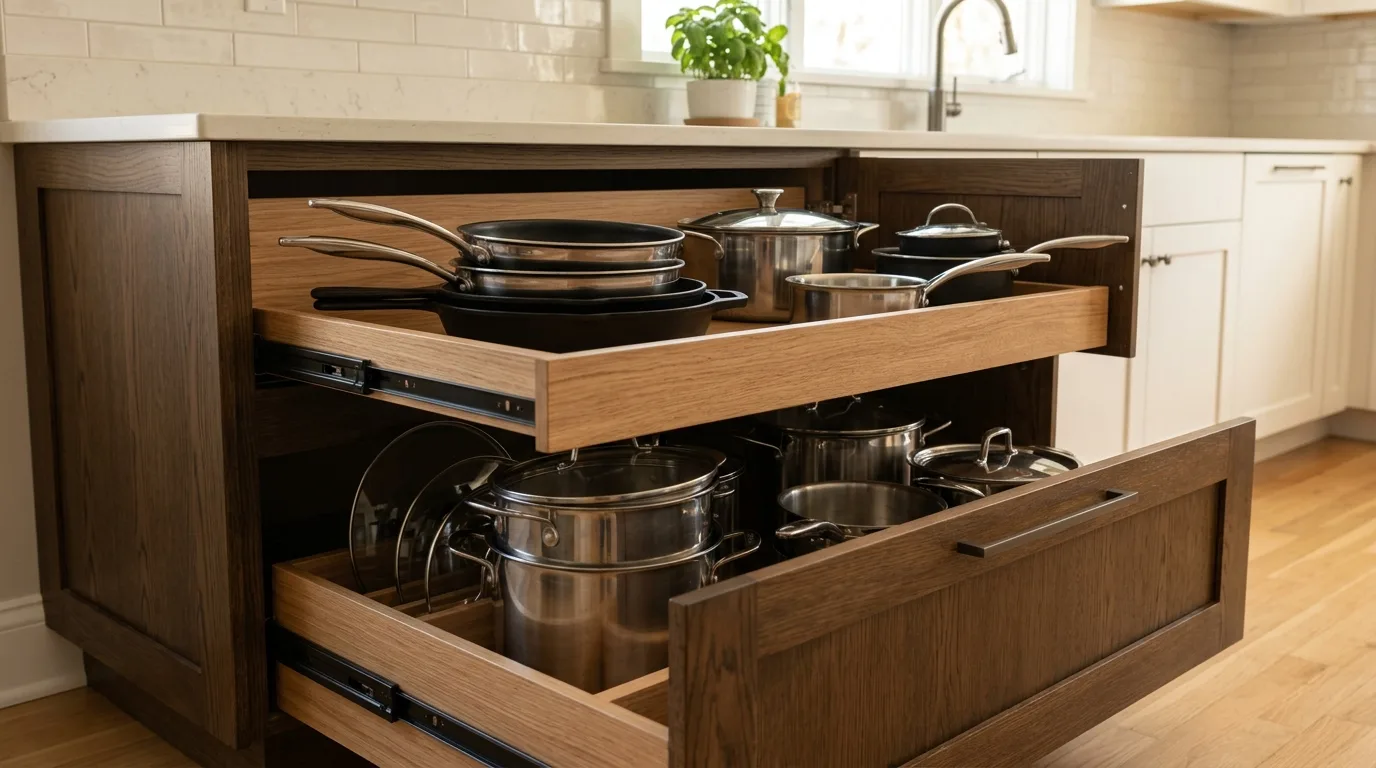
You want a fundamentally different kind of storage. Deep drawers instead of lower cabinets with shelves is the upgrade people mention most a year on. You can’t reface your way to that — a drawer bank is a different box.
Where refacing goes wrong
Two ways, and both are avoidable.
DIY peel-and-stick veneer. I’ve been called in to fix this more than once. It bubbles, it lifts at the edges, it doesn’t quite match the doors, and it looks worse than what you started with. The material is the problem, not the person applying it.
Refacing a kitchen that needed replacing. This is on whoever quoted it. If someone offers to reface boxes with a soft floor under the sink, they’re selling you a job rather than solving your problem. That’s the moment to get another opinion.
What each costs
Published market data for Montgomery County puts a full kitchen refresh — refacing or repainting cabinets, plus new counters, backsplash and fixtures — at roughly $15,000 to $35,000 for the whole package. Full mid-range remodels with new cabinetry range from around $40,000 to $95,000 depending on scope and materials.
Cabinets alone are the biggest slice of either. Market ranges, not our prices — but the shape of it is the useful part: refacing lands in a different budget conversation entirely, and it’s frequently the difference between doing your kitchen this year and doing it in three.
A middle path most people don’t consider
You don’t have to pick one for the entire kitchen.
I’ve done kitchens where we replaced the run under the sink — where the water damage was — and refaced everything else to match. Or kept the perimeter and replaced one bank with deep drawers where the pots go. It takes a bit more care to make the match invisible, but it’s often the best value in the room: you’re spending replacement money only where replacement is actually needed.
Similarly, refacing plus one structural change is a strong combination. New doors throughout, and a pantry cabinet where there was dead corner space.
Whichever you choose, three things matter more than the doors
Hardware. Soft-close hinges and quality drawer slides change how the kitchen feels every single day, far more than the door profile does. Don’t economise here.
Lighting. Under-cabinet lighting is cheap and it’s the change people comment on most. Whatever you’re doing to the cabinets, do this at the same time.
Level and plumb. New doors on boxes that aren’t level will show every misalignment, because the eye reads the gaps between doors rather than the doors themselves. This is where the craft actually is.
Not sure which you’ve got?
This is a ten-minute call in person. I look under the sink, press on a few boxes, check whether the layout is fighting you, and tell you which conversation we’re having. Sometimes I’ve told people their cabinets are better than anything I could sell them and they need new hardware and a light.
We handle both refacing and full kitchen remodeling across Silver Spring, Bethesda, Rockville, Takoma Park and the rest of Montgomery County. Estimates are free and come with no obligation — including the estimate that concludes you don’t need us yet.
Cabinet Refacing vs Replacement: The Short Version
The cabinet refacing vs replacement decision comes down to one thing you can check yourself: open the cabinet under your sink and press on the box. Solid boxes and a layout that works means refacing. Swollen, sagging or water-damaged boxes, or a layout that fights you daily, means replacement.
Frequently Asked Questions
Q: How do I know if my cabinets can be refaced?
A: Check the boxes, especially under the sink. If they’re firm, square and free of swelling or water damage, refacing works. Soft, sagging or swollen boxes need replacing — new doors on a failing box is money wasted.
Q: How much cheaper is refacing than replacing cabinets?
A: Refacing is a fraction of full replacement and sits in a different budget conversation entirely. Published ranges put a full kitchen refresh including refacing, counters and backsplash at roughly $15,000 to $35,000, against $40,000 or more for a remodel with new cabinetry.
Q: How long does cabinet refacing take?
A: Usually days rather than weeks, and you keep your kitchen mostly usable throughout because there’s no demolition and the counters stay in place.
Q: When is replacement the better choice?
A: When the boxes are water damaged, when the layout genuinely doesn’t work, when you’re moving plumbing or appliances anyway, or when you want deep drawers instead of lower cabinets with shelves — that’s a different box, not a new door.
Planning cabinet refacing vs replacement? A free estimate costs nothing and carries no obligation.
