

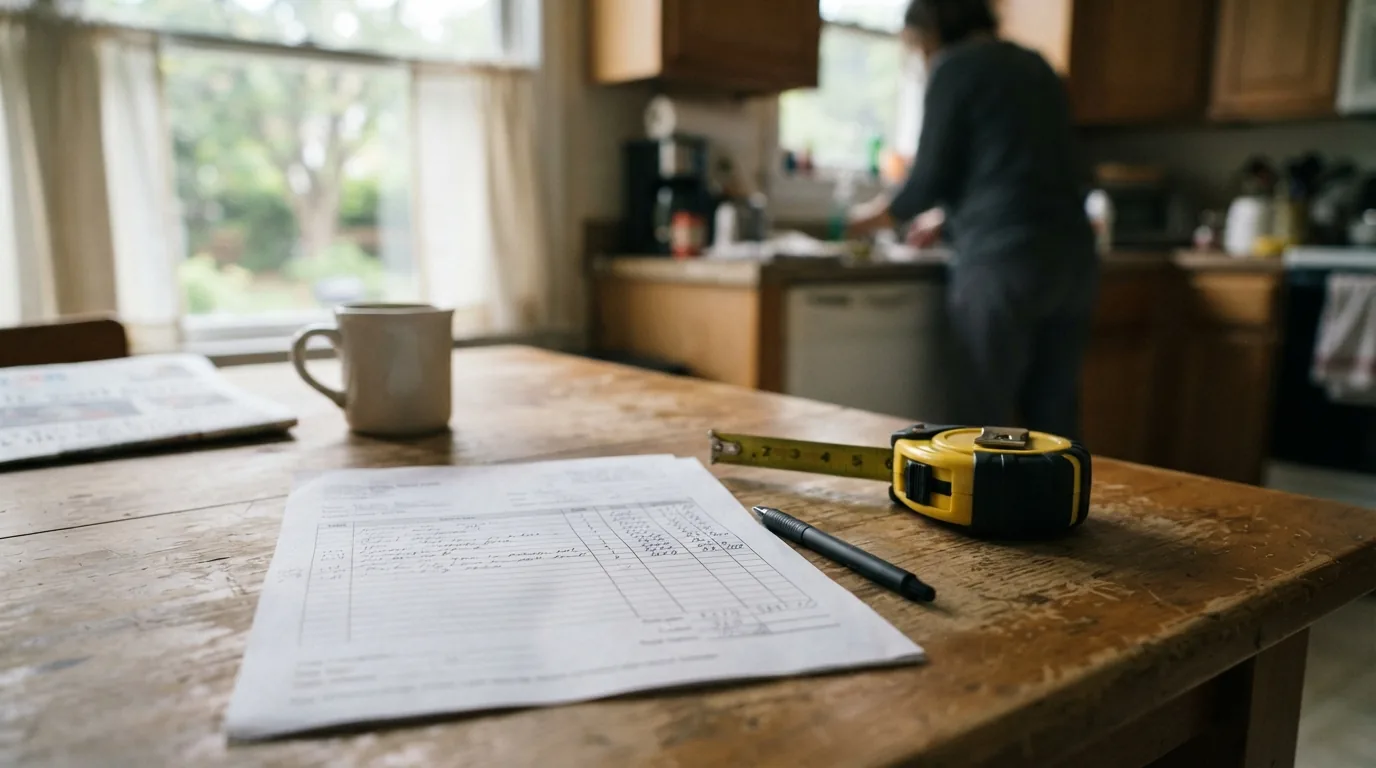
Somebody once showed me a competitor’s quote for a full bathroom. It was one page, one line, one number. That was the whole document.
They wanted to know if it was a good price. I genuinely couldn’t tell them, and neither could anyone else, because a bathroom estimate with no breakdown isn’t a price — it’s a guess you’re being asked to trust.
What should be on the page
A useful bathroom estimate separates at minimum:
- Demolition and disposal. Including where the debris goes. Old tile and a cast iron tub are heavy, and dumpster or haul-away costs are real.
- Plumbing. Explicitly stating whether fixtures stay in position or move. This single line has more effect on the total than any other.
- Electrical. Fan, lighting, and any outlet work. GFCI protection is required in bathrooms.
- Substrate and waterproofing. The layer behind the tile. If this isn’t itemized, ask what’s being used.
- Tiling, separated into labor and materials, with the material figure marked as an allowance if you haven’t chosen yet.
- Fixtures and fittings, again split between supply and install.
- Ventilation, with the duct route stated. Venting into an attic is not venting.
- Making good: patching, priming, painting.
- Permits, if applicable, and who is pulling them.
You don’t need a costed line for every screw. You need enough separation that you can see what you’re buying and compare two quotes without guessing.
The word that matters most: allowance
An allowance is a placeholder for something you haven’t chosen — tile, vanity, fixtures. It’s normal and sensible. It’s also where most estimate-to-final-bill gaps come from.
The problem isn’t allowances; it’s vague ones. “Tile allowance” tells you nothing. “Tile allowance, $X per square foot for Y square feet” tells you whether the number is realistic for what you actually like. If the allowance assumes builder-grade and you’ve been photographing handmade zellige, the final figure will not resemble the estimate, and nobody will have lied to you.
Ask what the allowance assumes. Then go and look at things at that price before signing anything.
What an honest estimate says about the unknown
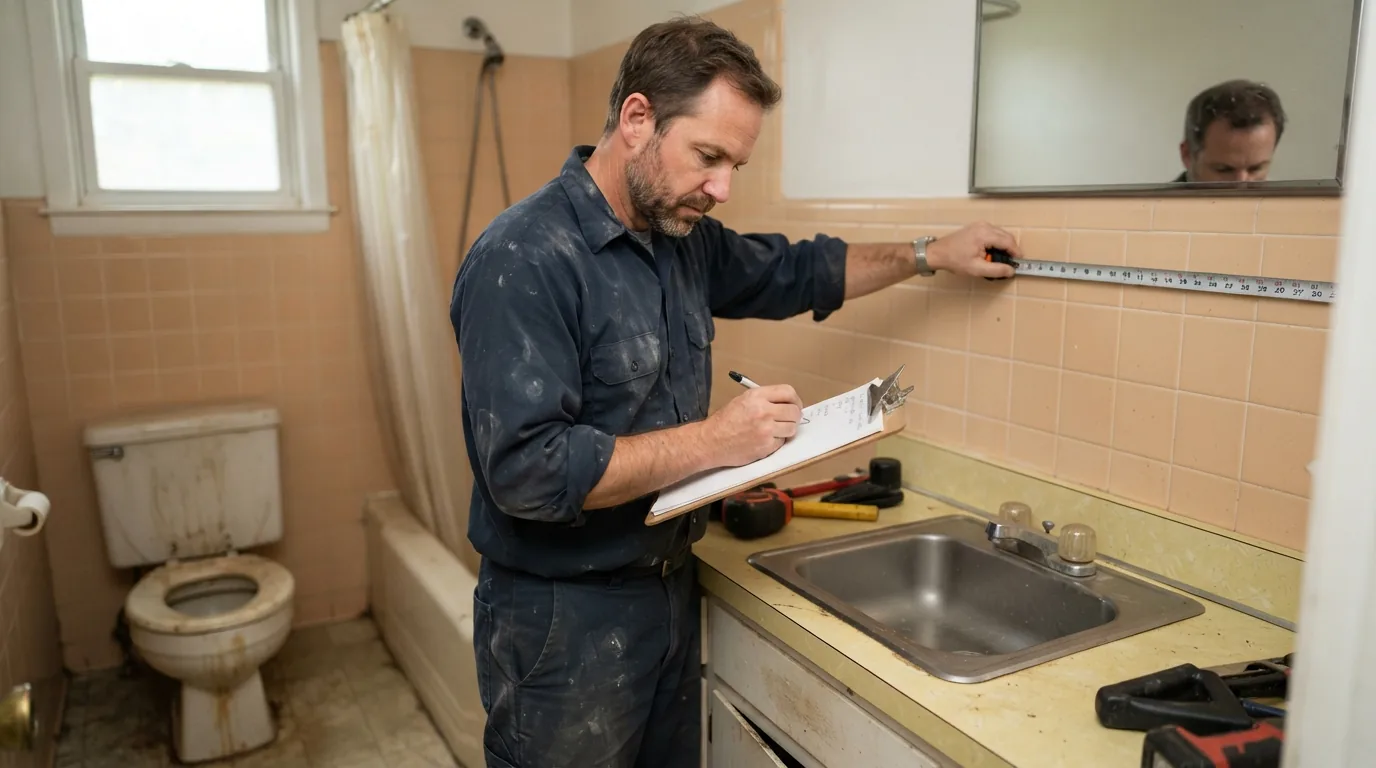
In an older Silver Spring home, nobody can see behind the tile or under the floor until work starts. A good bathroom estimate says so explicitly and states what happens next — usually that any rot, failed substrate or unusable pipework is priced separately once exposed, with your approval before it proceeds.
That clause isn’t a contractor protecting themselves at your expense. It’s the alternative to padding the quote heavily just in case, which is what happens when nobody’s allowed to say “we’ll look and tell you.”
What you should push back on is open-endedness. “Additional work charged as required” is too loose. “Additional work quoted and approved in writing before proceeding” is the version you want.
Things people forget to ask about
Who is doing the work. Employees or subcontractors, and whether the same people are there throughout.
Whether the bathroom is usable. If it’s the only bathroom in the house, the days it’s out of action matters enormously and should be discussed before it becomes a surprise.
The payment schedule. A deposit is normal. A very large upfront payment before materials are on site is not.
Licensing and insurance. Ask what the contractor holds, and ask to see a current insurance certificate rather than taking it on trust — check the dates rather than glancing at the logo. The FTC’s guidance on hiring a contractor is a sound general checklist.

Comparing two quotes fairly
The instinct is to compare totals. That’s exactly what makes cheap quotes win jobs they shouldn’t.
Read down the line items and check whether they’re describing the same job. Most large gaps between two bathroom estimates come from one of four things: one includes waterproofing and one doesn’t, one assumes fixtures stay put and one prices moving them, the tile allowances differ wildly, or one includes making good and painting while the other leaves you with a bathroom that needs a decorator.
When you find the difference, you usually find that the two quotes weren’t comparable at all.
The short version on a bathroom estimate
A bathroom estimate should be itemized enough to see what you’re buying: demolition, plumbing with fixtures staying or moving stated plainly, electrical, waterproofing, tiling split into labor and materials, fixtures, ventilation with its duct route, making good, and permits. Allowances should say what they assume. Unknowns behind walls should be named, with a written-approval clause rather than an open-ended one. And compare line items, never totals.
If you’d like an itemized estimate to compare against something you’ve already been given, that’s a perfectly reasonable thing to ask for and we’re happy to be the second quote. Bathroom work across Silver Spring and the surrounding neighborhoods, free, no obligation.
Frequently asked questions
Q: Should an estimate be free?
A: For a straightforward bathroom, yes, ours are. Some contractors charge for detailed design work on complex projects, which is legitimate — but it should be stated up front, not discovered afterwards.
Q: How much deposit is reasonable?
A: Enough to cover materials being ordered is normal. A demand for most of the value before anything arrives on site is a reason to pause.
Q: What if the quote changes once work starts?
A: In older homes it sometimes does, because nobody can see behind tile until it’s off. What matters is that changes are quoted and approved in writing before the work happens, not presented at the end.
Q: Is the cheapest quote ever the right one?
A: Sometimes, genuinely. But check it includes waterproofing, ventilation and making good before deciding — those three are the most common omissions that make a quote look competitive.
