


Common household electrical hazards deserve attention before they become harder to understand or safer to address. Start with what you can see, avoid touching damaged or exposed parts, and treat moisture as a reason to stop experimenting. A careful visual check can help you explain the concern and choose the next step.
Warning signs you can see
Potential electrical hazards can exist in any home, including a home that looks tidy and well cared for. Awareness helps you reduce avoidable risk, but awareness starts with noticing changes rather than taking equipment apart.
Look around the area where you first noticed the concern. You may see damage, discoloration, moisture, a loose-fitting cover, or a cord that no longer looks sound. You may also notice that an electrical item behaves differently from before. A concern does not become safe simply because it is small, familiar, or easy to reach.
Pay attention to signs such as:
- Damage to a cord, plug, outlet cover, or other accessible part
- Discoloration, scorching, melting, or an unusual mark near an electrical connection
- Water, dampness, or staining close to an outlet, switch, appliance, or cord
- A loose cover, a part that moves, or an electrical item that no longer sits securely
- An unusual smell, sound, heat, or change in how something operates
These signs do not tell you the exact cause. They do tell you that guessing may be the wrong next step. A mark could come from a past problem, a current problem, or something unrelated to the electrical equipment. You cannot settle that question safely by removing a cover or probing the area.
Give special attention to changes that repeat. A one-time observation can be difficult to interpret, while a recurring smell, sound, warmth, or interruption gives a professional more useful information. Note where it happened, what was being used, and whether the condition was dry or damp. Keep your notes simple. The purpose is to describe the concern, not to diagnose it.
Do not ignore a hazard because the rest of the room works normally. Electrical problems can be limited to one outlet, one cord, one appliance, or one section of a property. A working light or nearby outlet does not prove that another item is safe.
The safest response to a visible warning sign is distance and documentation. Keep people away from the affected area and avoid handling the damaged part. Arrange qualified help for exposed, damaged, hot, wet, or changing electrical equipment.
Moisture changes the decision
Water and electricity are a poor combination, so damp conditions should make you stop experimenting rather than make you work faster. Moisture may be obvious, such as a spill or leak, or less obvious, such as dampness, staining, or condensation near an electrical item.
Do not touch a wet outlet, cord, switch, appliance connection, or exposed electrical part to find out how wet it is. Do not wipe the area while your hand, cloth, or body could come near the electrical equipment. Moving quickly can turn a problem you can observe into a problem you have contacted directly.
Start by creating distance. Keep children, tenants, visitors, and pets away from the area. Avoid using the affected item. If the source of the moisture is still present, deal with the situation without approaching the electrical part, or arrange appropriate help. The electrical concern and the water concern may need to be considered together.
A dry surface does not automatically settle the matter. Water may have reached a place you cannot see, and a mark left after drying can still be useful information. Record what you noticed before the area changes again. Describe the location, the apparent source of moisture, and what equipment was nearby.
Moisture also changes how you think about timing. A dry-looking outlet beside a recent leak deserves more caution than an ordinary visual check. The same applies to an appliance or cord that was exposed to damp conditions and now behaves differently. Stop using it until the concern has been assessed.
The right question is not only, “Is it dry now?” Ask whether you know what happened and whether the electrical equipment was affected. Ask whether you can stay clear while getting qualified help. If you cannot answer those questions, do not experiment.
This approach applies in occupied homes and rental properties. If you are a landlord or property manager, preserve a clear record of the condition. Tell the tenant not to use the area. Arrange an assessment instead of asking them to investigate electrical equipment. A simple record can help the next person understand what was seen and what changed.
Safe checks without opening anything
A safe check is an observation, not a repair. You can look at accessible surfaces and describe what you see. Do not remove covers, open equipment, handle exposed parts, or touch an uncertain area to test it.
Begin from a position that keeps you away from the concern. Look at the surrounding wall, floor, cord, plug, outlet cover, switch, and appliance exterior. Do not pull on a cord to inspect where it enters an appliance. Do not move a heavy appliance closer to a wall outlet if doing so could disturb the cord or connection.
Use your senses without making contact. Look for visible damage or discoloration. Notice an unusual smell or sound from a safe distance. Consider whether the item is operating differently. If you feel heat coming from an accessible surface, do not place your hand on it to confirm the temperature. Your observation is enough to justify caution.
A useful visual check follows a simple order:
- Stop using the item if its condition has changed or damage is visible.
- Keep people and pets away from the area.
- Look only at accessible surfaces without removing anything.
- Record the location, visible condition, and what was happening when you noticed it.
- Contact a qualified electrical professional when the concern involves damage, moisture, heat, exposed parts, or uncertain behavior.
Do not use a visual check as permission to continue using the item. It is a way to gather information while keeping the situation from becoming more complicated. If you see a damaged cord, do not bend it, tape it, or keep using it to see whether the problem returns. If a cover is loose, do not press it back into place if doing so brings you close to the electrical connection.
Avoid improvised tests. Do not insert anything into an outlet. Do not use another device to see whether an uncertain outlet works. Do not bypass a protective feature, force a plug into place, or connect equipment in a way that changes the original setup. These actions can hide the warning sign while leaving the underlying concern unresolved.
Documentation matters most when someone else will need to act. A landlord, property manager, or homeowner can note the room and affected item. Also note the visible sign, surrounding conditions, and whether the issue was repeated. A photograph may help document an accessible condition, but do not get close to take one and do not move anything for a better view.
Keep the description factual. “The area looked discolored near the outlet” is more useful than guessing why it happened. “The cord was damaged near the appliance” gives a professional a location to assess. Avoid labeling the cause unless a qualified person has identified it.
You can use a home electrical safety checklist as a prompt for ordinary observations. It does not replace an assessment of damaged, wet, hot, or exposed electrical equipment. A safe checklist helps you notice concerns. It should never encourage you to open equipment or make contact with uncertain parts.
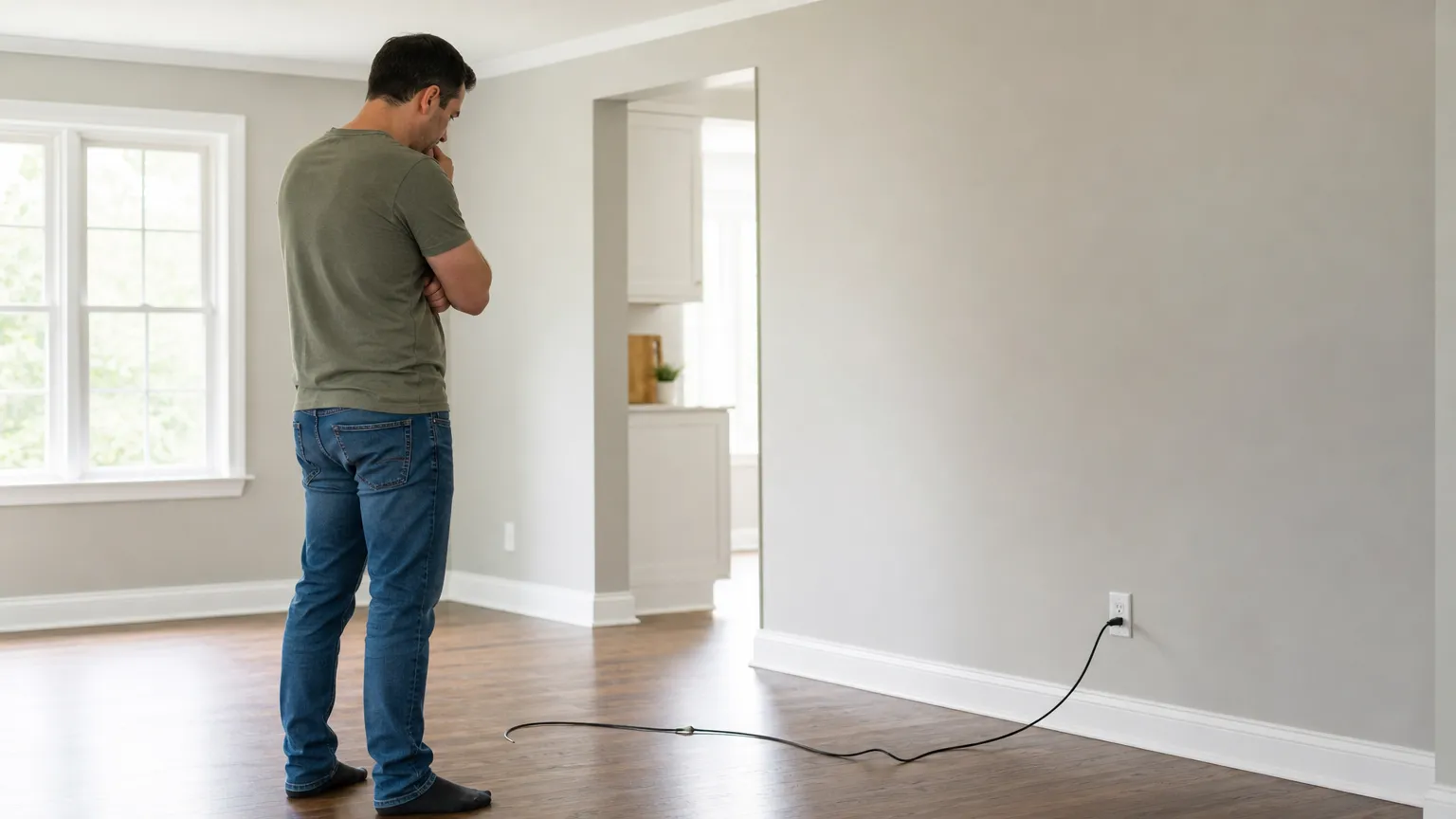
When professional help should take over
The boundary between observation and repair is straightforward. Observe accessible conditions, then stop before contact, removal, testing, or judging wiring you cannot see.
Qualified electrical help is the right next step when you see exposed or damaged electrical parts. It is also needed for moisture near electrical equipment, unusual heat, scorching, melting, repeated changes, or unexplained behavior. It is also right when the concern is inside a wall, behind a cover, or inside an appliance. It is also right when the concern involves a connection you cannot inspect without opening something.
A small-looking problem can still deserve professional attention. A loose cover may be easy to describe but may not reveal what is behind it. A damaged cord may seem replaceable, but the damage may involve the plug, the appliance connection, or the equipment itself. A mark may be old, but you cannot confirm that from appearance alone.
Use the following decision path:
- If the area is wet or recently became wet, stop using it and keep away while arranging qualified help.
- If you see exposed, damaged, hot, melted, or discolored parts, do not touch them or continue using the item.
- If the condition repeats or changes, document what happens and arrange an assessment.
- If a repair requires removing a cover, opening a panel, or handling wiring, do not take it on. If it requires testing an uncertain connection, do not treat it as a visual check.
The obvious choice is not always the right choice. Replacing a visible cover may seem simpler than investigating why it became loose. Continuing to use an appliance may seem reasonable because it still works. Trying a quick adjustment may feel less disruptive than arranging help. Those choices focus on restoring normal use, not on understanding the hazard.
A qualified professional can assess the condition and explain what work is needed. You should expect the discussion to begin with the location, the visible signs, what was in use, and any history you can provide. Clear information helps separate the facts you observed from assumptions about the cause.
Electrical work also deserves a clear boundary between a general home repair and work requiring electrical qualifications. A handyman may be able to help with related home work, but the electrical portion should be handled by someone qualified for the task. Do not assume that a person who can complete one kind of household repair should also handle every electrical concern.
For a repair conversation, describe the problem before choosing the remedy. Say what you saw, what you did not touch, and whether moisture, damage, heat, or repeated behavior was involved. Ask what will be assessed and what the proposed repair addresses. You can also review guidance about electrical repairs before the conversation so you have a clearer way to describe the concern.
Record the report, preserve the condition as safely as possible, tell occupants not to use the affected item, and arrange qualified attention. Do not ask a tenant to remove a cover, test a connection, or decide whether a damaged part is safe.
[[image: A qualified professional in work clothes examines an electrical outlet from a safe position while a homeowner points out a nearby water stain, with natural afternoon light and no exposed wiring visible.]]
A routine that keeps concerns clear
A simple safety routine works best when it is repeated during ordinary cleaning, turnover, and home upkeep. The goal is not to turn you into an electrician. The goal is to notice change early, avoid unsafe contact, and leave a useful record for the person who takes over.
Walk through accessible areas with your eyes, not your tools. Look at cords, plugs, outlet covers, switches, and the outside of appliances. Notice damage, discoloration, moisture, unusual heat, smells, sounds, or changes in operation. Do not remove a cover to make the check more complete.
Keep a short record when something looks wrong. Write down the room, the item, the visible condition, and what was happening when you noticed it. Add whether the area was dry or damp and whether the condition happened once or returned. A clear record supports a better conversation than a guessed diagnosis.
Use this routine for each property you manage:
- Notice changes during ordinary use without touching uncertain equipment.
- Keep damaged, wet, hot, or exposed electrical items out of use.
- Record the location and visible condition while the details are fresh.
- Tell occupants, tenants, or other responsible people what should not be used.
- Arrange qualified help when the concern goes beyond safe observation.
The routine should be practical, not dramatic. You do not need to inspect hidden wiring to respond responsibly to a visible concern. You do not need to identify the exact hazard before asking for help. You do need to avoid turning observation into an experiment.
For homeowners, this approach makes the next decision clearer. For landlords and property managers, it creates a consistent way to receive reports and pass useful information along. Everyone involved can understand what was seen, what was avoided, and what still needs assessment.
Do not let a normal-looking room end the process too early. Electrical equipment may appear ordinary while a cord, connection, or nearby condition deserves attention. Awareness is useful because it prompts action before casual handling makes the situation less clear.
When you are unsure, keep people away from the concern and arrange qualified help. Contact us to discuss the condition and the appropriate next step.
Frequently asked questions
Which electrical warning signs should I take seriously right away?
Take visible damage, discoloration, moisture, unusual heat, smells, sounds, exposed parts, and changes in operation seriously. Stop using the affected item, keep people away, and arrange qualified help instead of trying to identify the cause by touch.
What can I check safely without removing a cover or opening a panel?
You can observe accessible surfaces, cords, plugs, outlet covers, switches, and appliance exteriors without touching uncertain parts. Record the location and visible condition, but do not open equipment, handle exposed parts, or test a concern by contact.
How should moisture near an outlet change what I do?
[[image: A qualified professional in work clothes examines an electrical outlet from a safe position while a homeowner points out a nearby water stain, with natural afternoon light and no exposed wiring visible.]]
Moisture near an outlet, switch, cord, appliance, or other electrical equipment should make you stop using the affected area and avoid contact. Keep people away, record what you noticed, and arrange qualified help rather than wiping or testing the equipment.
What should a landlord document after noticing an electrical hazard?
A landlord should record the room, affected item, visible sign, surrounding conditions, and whether the concern repeated or changed. The landlord should also tell occupants not to use the affected item and arrange qualified attention without asking a tenant to investigate it.
