

Quick summary: what this article gives you
You searched for a curtain installation handyman and want to know what the visit will look like, what a pro does that a DIYer often misses, and which jobs really need hands you can trust. Read the expectations to know what the installer will measure and bring, skip to the comparison checklist to get comparable quotes, and use the local checklist before the visit in Montgomery County.
This article explains the common installation types you will see, the practical steps that protect your trim and paint, and the questions to ask so quotes line up. It also helps you decide whether to tackle the work yourself or call a handyman for a safer, cleaner result.
What a professional handles that DIYs often miss
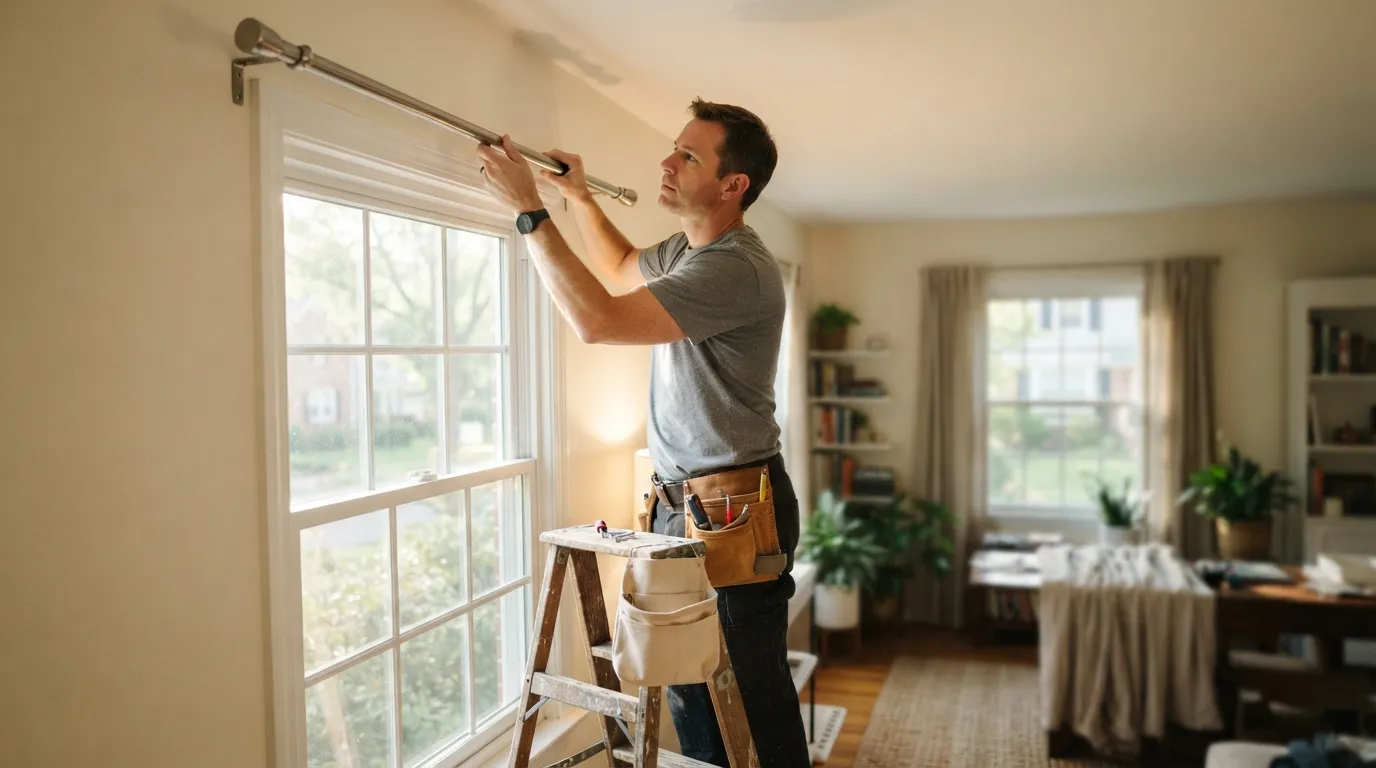
A good installer starts with measurements, not assumptions. Measuring for curtain fit means more than the window’s glass size: the installer checks the full opening, how the curtains will stack when open, how much overlap you want at the center, and the vertical drop from rod or track to skirt or floor. Those numbers determine rod length, bracket placement and whether you need a return at the wall or a longer rod for full coverage.
Once the dimensions are set, the installer looks at the wall behind the rod. Stud location changes everything. A bracket screwed to a stud will support far more weight than one relying on a small drywall anchor, so finding studs and selecting the correct anchor is routine. Where a stud is not available the installer chooses an anchor rated for the load and the wall material. That is critical when you have heavy drapes, layered curtains, or a long run of rod that will be loaded in several places.
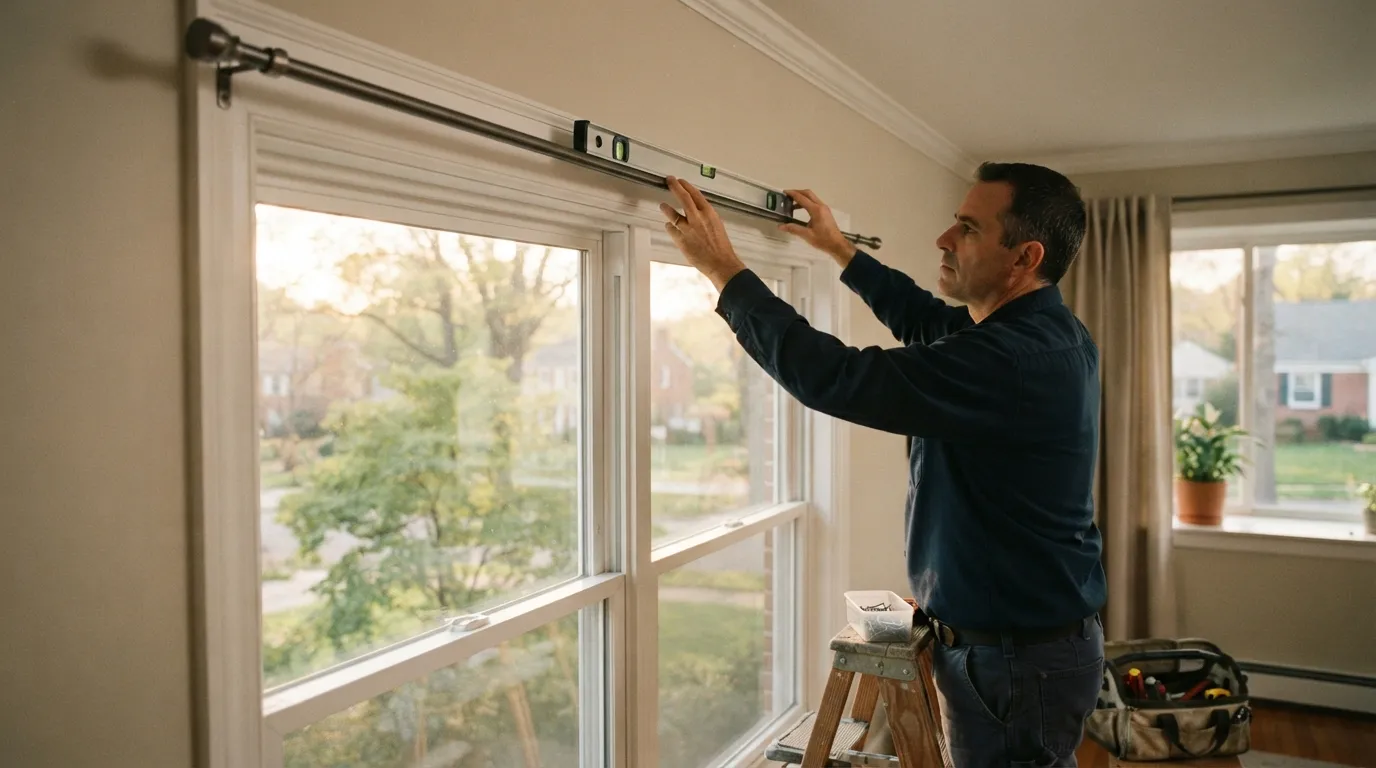
Level and alignment are the next attention points. A crooked rod is the most obvious sign of a poor job and it happens when hanging points are not checked from more than one vantage. A pro uses a level and sightlines from the center and the ends, and checks the rod after the brackets are tightened and the curtains are hung. Small adjustments at the bracket make a big visual difference once fabric is in place.
Concealment and finish matter. Pros know how to minimize visible fixings: whether to mount brackets inside the window frame or project them out to clear moldings, how to set returns so curtains meet the wall, and how to locate brackets to avoid hitting cornices or existing trim. They will touch up minor scuffs if you ask, and they will explain where the finish might show a tiny hole once a long rod is removed later.
Handling heavy or specialty hardware is different from a quick shower-rod swap. Motorised tracks, telescoping rods with internal wiring, or continuous tracks for wide expanses require different anchors and sometimes a two-person lift to keep the track straight while it is fixed. A pro plans for the weight of the fabric and hardware together and distributes fixing points accordingly.
Finally, testing and adjustment are part of the job. The installer hangs the curtains, runs them, checks stacking and overlaps, and corrects hangs or puckering before leaving. That last set of checks is what turns a neat set of holes in the wall into a finished window treatment.
Common installation types and what each needs
Curtain rods over windows are the simplest common job but even they come in several variants. A single rod with light curtains is straightforward: you fix two end brackets and, for longer spans, one or more center supports. A double rod system for a blackout liner and a decorative face curtain adds weight and needs extra supports. The fitter will choose bracket spacing and anchor types with that combined weight in mind.
Drapery tracks work differently. Tracks can be surface-mounted to the wall or ceiling-mounted. Wall-mounted tracks need careful packing and support where the track meets the wall, while ceiling-mounted tracks often require different anchors and sometimes countersunk fixings through a plaster ceiling. Tracks also need the correct clips or carriers and often a slight pre-bend to allow the fabric to draw smoothly. If your track is motorised, the installer checks clearance for the motor housing and the route for any wiring, and confirms where the control will sit.
Shower rods and tension-mounted rods are a special case. A tension rod in a tiled shower is only as secure as the compression it can hold; many installers prefer a fixed bracket where tile and backing behind the tile allow it. For shower curtains, rust-resistant hardware and safe, drip-free bracket positions are important. When a pro mounts a rod in a bathroom they also look for routing that avoids splash zones and checks that brackets will not interfere with tile grout lines or existing fixtures.
Ceiling mounts and high windows introduce access and safety concerns. High ceilings often need a ladder or an extendable pole system, and long spans demand intermediate support points to avoid rod sag. If cornices or decorative moldings are present, the installer decides whether to attach to the face of the molding, to the wall above it, or to the ceiling. Each option affects how the curtains hang and how visible the fixings are.
Mounting into masonry or older plaster walls is common in older homes. Brick or concrete requires masonry anchors and a hammer drill; a plaster wall over lathe might hide voids that make anchors unreliable unless a stud or solid backing is found. The fitter assesses the substrate and selects fixings designed for that material.
A tricky but increasingly common job is mounting over wide expanses of glass or across multiple windows to create a continuous header. Those runs need joining hardware and either concealed splices or a continuous rod with intermediate supports; otherwise you get a visible dip and uneven drape. A pro plans the support spacing so the curtain hangs straight and the carriers run smoothly.
Finally, consider corded or motorised systems. If you plan to automate your drapes, the fitter confirms clearances for the mechanism, checks power access or battery housing, and aligns the track so the motor does not stall against misalignment. Motorised systems often require a different mounting approach than manual ones, and that can affect the overall job time and tools needed.
How to get a clear, comparable quote
When you ask for quotes, the aim is to make them comparable so you can see what you are actually paying for. Start by describing the same scope to every installer: the number of windows, the rod or track type, whether you need single or double layers, the fabric weight, and whether there are any high or awkward mounts. If you have already bought hardware, say so and give the make and model; if you expect the installer to supply hardware, ask for the exact parts to be listed.
A comparable quote separates the core elements. Ask installers to list these line items so you can compare apples with apples:
- Labor for measuring and installation
- The specific hardware to be supplied (brand and model where possible)
- Travel or parking charges if applicable for your area
- Any wall repairs, touch-ups, or patching included after the job
- Additional anchors, blocking, or structural fixings if required by the substrate
When you read a quote, look for where a cost could increase. For example, a base labor line that assumes simple drywall but does not allow for masonry or plaster repair will understate work on older homes. Ask the installer to note any assumptions they made about wall type, how many brackets they have included, and whether the quoted labor includes curtain hanging and final adjustments.
Ask for the timeline in plain language. A quote should say how long the on-site work will take and whether there is a separate measuring visit first. If an installer needs a separate site visit to measure before giving a firm price, that should be explicit. That visit is often the moment hidden issues are discovered, from incorrect previous fixings to unseen moldings that force a change in bracket position.
Request photos or examples of the hardware proposed when possible. If the quote lists a generic “heavy duty anchors” ask which anchor type and whether they are rated for masonry, hollow-wall, or plaster. A pro who specifies the anchor type and why it is chosen is easier to compare with another pro who simply lists “anchors.”
Clarify patching and finish work. Some installers include minor touch-ups to paint around holes; others expect you to arrange cosmetic repair later. If you want paint tidy-up included, ask for that as a separate line item so comparisons are fair.
Finally, ask exactly what the installer will test at the end of the job. A good quote states that the fitter will hang the curtains, run them, check stacking and overlaps, and make final adjustments. If you have a motorised system, ask the quote to confirm testing of the motor and limits are included.
When you should hire a pro and when DIY is fine
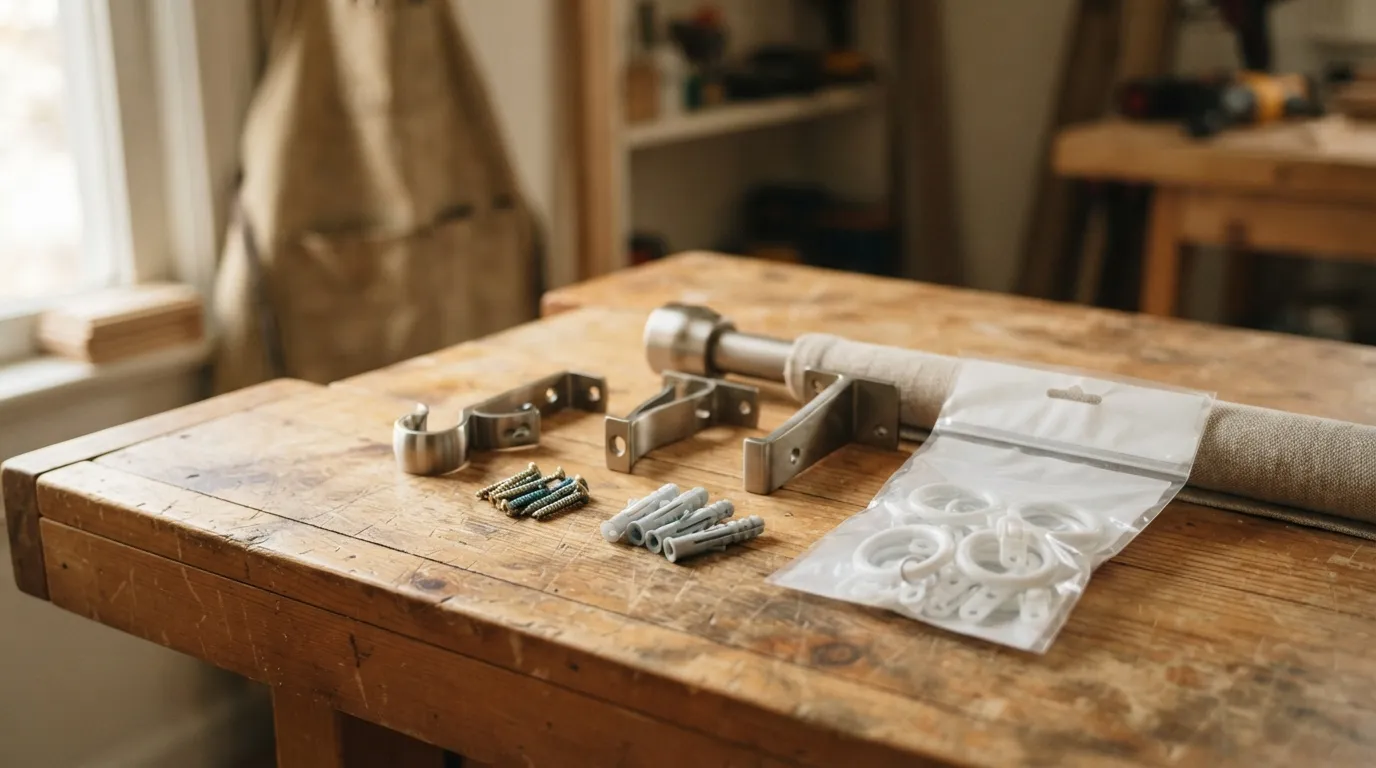
DIY is reasonable for small, simple tasks where the spanning length is short, the fabric light, and the wall is clearly modern drywall with an obvious stud. If you are hanging a single, light curtain on a short rod inside a window frame and you are confident using a drill and a stud finder, you can often do the work in an afternoon with minimal tools.
Hire a pro when the job contains any of these complicating factors: heavy drapes, long spans that need intermediate supports, high ceilings or windows that require ladders, mixed or uncertain wall materials such as plaster or masonry, motorised tracks, or when you want a continuous run across multiple windows. Those scenarios change the tools and fixing strategies and increase the chance of visible problems if done poorly.
Insurance and risk are another reason to call a fitter. If the windows are above a living area where a dropped rod could cause harm or damage, or if the installation could interfere with electrical wiring or trim that you cannot easily repair, a professional visit reduces risk. A pro will also carry the hardware and anchors suited to the substrate and will plan for safe access when heights are involved.
If you are a landlord or property manager fitting curtains across multiple units, the efficiency of a professional often outweighs the cost of piecemeal DIY. A single pro can measure, order the correct hardware, and standardize the installation so tenants get consistent results. That saves time on callbacks where holes are misaligned or where inadequate anchors fail under daily use.
A common trap DIYers fall into is underestimating fabric weight. Curtains look light on the rail but once layered or with blackout lining the weight increases substantially. That weight concentrates at bracket points and will reveal inadequate anchors within days. If you plan to use lined drapes, double tracks, or heavy materials, plan on calling a fitter.
Motorised systems are a further dividing line. If you are not comfortable with basic wiring or the motor’s clearances and limits, a pro will ensure the track aligns and the motorisation operates without strain. A misaligned motor can shorten the life of a system and cause it to stall or overheat.
In short: DIY for short, light, and simple jobs when you can measure, use tools safely and the wall type is straightforward. Call a pro for anything that raises safety, weight, access, or substrate concerns.
A local checklist for your job
Before the visit, take a few clear photos and some notes. A short set of images helps the fitter understand what to expect and reduces surprises on site. Photograph the whole window, the top of the frame where the rod will sit, any cornice or molding above the window, and the wall on either side as wide as the window plus a few inches.
Measure and note these points so the installer can advise before the visit:
- The width of the window glass and the full width you want the curtains to cover
- The desired drop from the chosen fixing point to the floor or sill
- Any obstructions above or beside the window (cornices, blind boxes, HVAC registers)
- Whether you want curtains to stack behind a side return or to meet at the wall
Tell the fitter about access and parking. Let them know whether you have a driveway they can use, or whether street parking with a short walk is the only option. If access to a unit is via a locked entry or elevator, say so and provide any necessary instructions ahead of the visit.
If you are in a rental or managed building, check permissions first. Some landlords or condo boards restrict fixing into certain surfaces or require a sign-off on anchor types. It is easier to get permission in advance than to change the plan during the visit.
Bring or show the hardware if you have already bought it. If you have not, tell the fitter the style and weight of the fabric so they can propose hardware that matches. If you have a preferred look—exposed finials, concealed track, or a specific metal finish—note that in the photos or a short message.
Finally, prepare a small clear space beneath the window and remove breakables. Even simple jobs benefit from an uncluttered work area and give the fitter room to lay out tools and hardware safely.
For more about what a local team can handle and to compare how we work, read what handyman services cover and if you want to bring in a local company for larger lists of tasks, you can look at how to hire a local handyman company.
Frequently asked questions
How much does a handyman charge to hang curtains?
A single number rarely tells the whole story. Charges are driven by the size of the job, how hard the walls are to reach, whether heavy or layered drapes are involved, and whether the installer supplies hardware. Ask for a quote that separates labor, the hardware to be supplied, travel or parking, and any patching or finishing so you can compare offers.
Can a handyman install curtains on brick or plaster walls?
Yes, but the approach changes with the substrate. Masonry requires masonry anchors and usually a hammer drill, while older plaster may need searching for solid backing or special anchors to avoid voids. Tell the installer about your wall type and show photos so they can plan the correct fixings.
Do I need permission or a permit to install curtain rods in a rental or condo?
Check with your landlord or condo association before drilling; some buildings restrict the types of fixings or require advance approval. A permit is rarely needed for a simple curtain or track installation, but building rules and lease terms can still require permission.
Should I buy the hardware before the installer arrives?
You can buy hardware first if you know the correct length and the curtain weight, but there is value in getting a pro to confirm fittings before purchase. If you already have a chosen rod or track, show the installer photos or the product details so they can confirm compatibility with your walls and the planned mounting.
Can you install motorised curtain tracks, or do they need a specialist?
Motorised tracks require correct mounting and clearance for the motor and controls, so they need someone familiar with that hardware. Ask whether the installer has experience with the specific motor model and whether testing and limit-setting are included in the job.
