


When repair makes more sense than replacement
handyman flooring repair is the right move when the damage is local, the subfloor is sound, and you want less disruption than a full replacement causes. Start by looking at how the damage is distributed. A single scratched plank, a loose tile, or a small water stain in one corner is usually a repair job. Widespread cupping across a room, persistent moisture under multiple planks, or areas where the floor no longer sits flat point toward a larger intervention. Those issues often mean replacement will be the better long-term choice.
Also weigh the remaining life of the existing floor. If the material is near the end of its useful life, patching may only delay the inevitable and add cost later. Where the surface finish is worn but the boards or tiles are sound, a repair plus refinishing or a color-corrected patch can restore appearance. This avoids replacing the whole floor.
Consider disruption. Repairing isolated planks or tiles usually takes less time and keeps most of the room usable. Replacing an entire floor requires moving furniture out, longer drying times for adhesives or finishes, and greater coordination. Landlords and property managers often prefer targeted repairs to reduce vacancy time; homeowners weighing a resale upgrade may prefer replacement for a unified look.
Finally, factor in hidden damage. Surface fixes fail fast when moisture, rot, or subfloor movement is present beneath the visible problem. If you see soft spots, a persistent musty smell after drying, or repeated failures in the same area, get an inspection that checks the subfloor. Do not assume a surface repair will last. Where there are warning signs of damaged floors, prompt attention is important to avoid further spread and costlier work later.
This guidance applies to homes in Silver Spring and across Montgomery County. The trade-offs above let you decide whether to call for a focused repair visit or plan a replacement that treats the whole room.
Common flooring problems and the repairs they need
Different materials fail in different ways, and each call works out better when you know what to expect. Below are typical problems by material and the handyman approaches you will see on site.
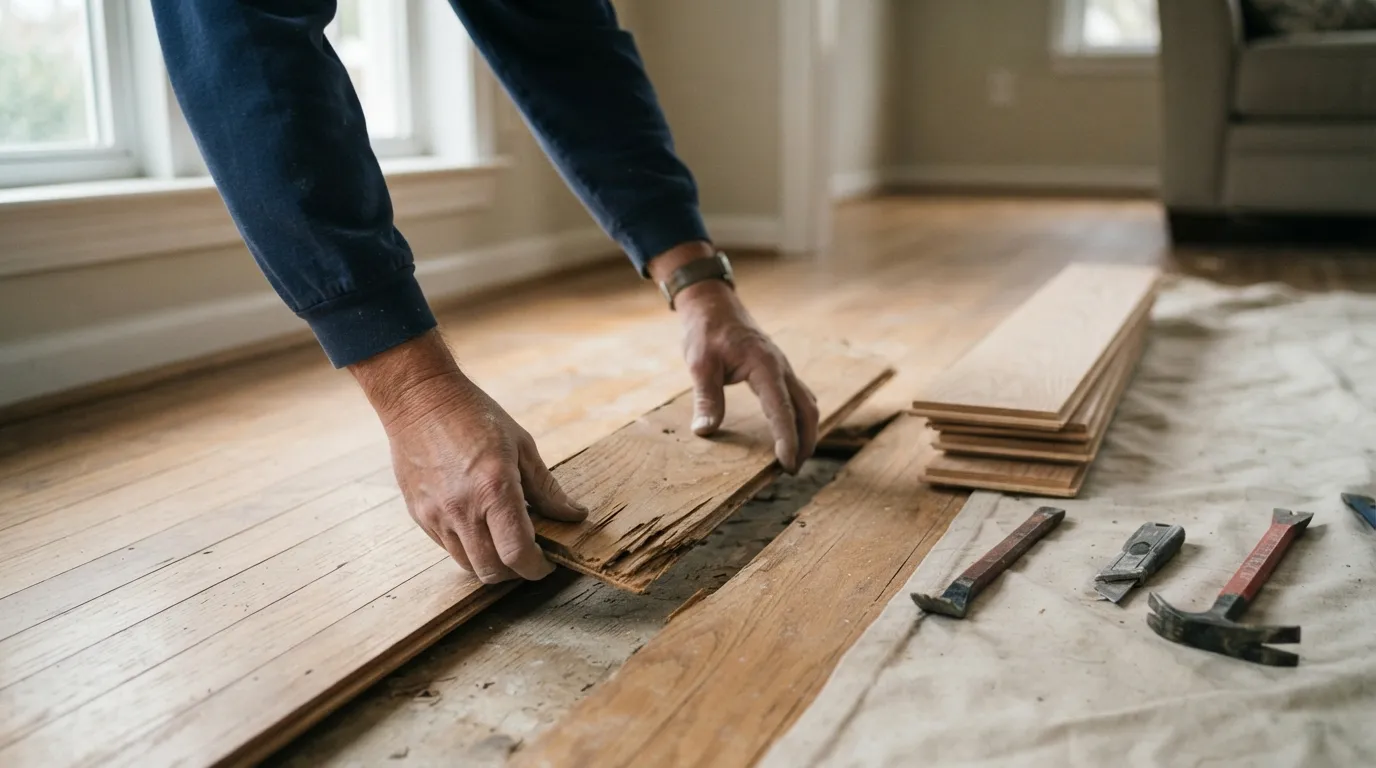
Hardwood: the usual issues are surface scratches, isolated cracked or split planks, loose boards that squeak, and limited water damage. Surface scratches can be blended with sanding and a finish touch-up when the area is small. Replacing a single plank is a standard repair when the pattern and tongue-and-groove allow it. The old board is removed and a matching plank is fitted, glued or nailed, then finished. Squeaks often come from a nail that has worked loose or from movement at joins. Stabilizing the board to the joist or adding a discreet screw can stop the noise.
Laminate: look for swelling at edges and delamination where water has reached the core. Small sections that lift can sometimes be removed and re-laid if matching planks are available and the locking profile is intact. Where the locking joints have swollen or broken, replacement of affected boards is the usual fix. Extensive water damage to laminate commonly requires replacing the affected area and, where the subfloor is damp, treating or replacing the underlayment first.
Vinyl: problems include tears, bubbles from trapped moisture or poor adhesion, and seam separation. Patching a tear or replacing a small section of vinyl is feasible when the pattern and backing match. Heat-welded seams can be reworked to stop water ingress. Adhesive failure under sheet vinyl often needs lifting the edge, cleaning the substrate, and re-adhering correctly.
Tile: grout cracking, loose tiles, and hairline cracks are typical. Re-grouting will address many cosmetic failures and prevent water reaching the substrate. A loose tile is usually replaced after cleaning the bedding mortar and re-setting the tile. A cracked tile can be swapped out if you have a match. Cracks that repeat across several tiles suggest movement below and need a subfloor check.
Carpet: beyond stains and wear, carpets can show ripples or loose seams. Stretching and re-stretching with a power stretcher is the usual handyman repair for ripples. Seam repairs and local patching are possible when you have matching material from a remnant or closet. Tack strip replacement and reattachment of edges are common tasks when a carpet edge has worked loose.
Warning signs needing faster attention include soft or spongy patches underfoot and standing water or persistent moisture after a spill. Also watch for foul odors suggesting rot and structural movement visible in adjacent finishes. When those signs appear, an inspection that includes the subfloor and moisture source is essential. What looks minor on the surface can be a symptom of a failing subfloor, which a surface patch will not fix.
What a handyman does during a repair visit
When you book a flooring repair visit expect an initial inspection to be the focus of the first hour or so. A good visit starts with a walkthrough of the affected area and the surrounding room. The technician looks for the visible damage and checks how broad it is. They inspect edges and transition strips to see whether the problem crosses into other rooms. They check the subfloor where visible and look for signs of moisture, mold, or structural movement that the surface problems might hide.
Next comes the diagnosis and a plain explanation of options. The tradesperson will describe whether a surface repair, a local plank or tile replacement, or a more extensive repair is the right approach. Technicians will often test a small area to assess the issue. They may lift a trim piece, pry a loose plank, or probe the grout to see how the material comes away and whether matching material is usable.
If you agree to proceed, the typical on-site steps are predictable. The tech will isolate and protect surrounding finishes, remove the damaged piece or area, prepare the substrate, fit and secure the new piece, and finish the surface to blend it in. For hardwood the repair means carefully removing the damaged board and checking the subfloor or joist. If needed they repair those, install a replacement board, plane or sand a tiny area, then apply finish. For tile it involves removing grout and the old tile, cleaning and re-bedding the tile, and re-grouting once the mortar has set.
A repair visit also covers finishing touches: color-matching stains, feather-sanding a tiny area, replacing transition strips, and cleaning the workspace. The technician should leave the room tidy and point out any final curing or drying time you must allow before moving furniture back.
Where the job uncovers deeper issues — active leaks, rot, or an unstable subfloor — the visit shifts from repair to diagnosis. In those cases you will be given the scope of the extra work needed. You will also get a note about disruption so you can decide whether to proceed now or schedule a larger repair.
If you want to read more about the install sequence for larger jobs, see what flooring installation in a Silver Spring home involves.
What affects the price and how quotes are built
A quote for flooring repair is built from a handful of predictable drivers. These are material and labor needed, access difficulty, subfloor repairs, and how closely the new material must match the old.
Material cost is straightforward for a small plank or tile replacement — you either have a remnant that matches or you buy a matching piece. Special-order planks, discontinued colors, or wide-plank hardwoods are more expensive to match and may lengthen the job while a supplier source is found. Adhesives, primers, stain and finish, or grout will add small material items to the quote.
Labor depends on access and the techniques required. A single plank swap in an empty room is quicker than extracting a plank from a fully furnished living room. Furniture must be temporarily moved and door frames may need adjustment in the latter case. If demolition reveals a subfloor that needs patching, the labor and time increase because the repair becomes two tasks: the subfloor and the surface finish.
Matching adds cost where homeowners want a near-invisible repair. Staining and finishing to blend a new board into a worn surface takes time and skill. Sometimes a larger area needs a light sand and finish to make the match acceptable. When exact matches are impossible, you will be shown the visual trade-off between a small patched area and a wider, blended repair.
A written quote should list the work items separately. Include the inspection fee if charged, labor lines for each task, materials named where possible, any preparatory work like subfloor or moisture mitigation, and the expected timeline. That clarity makes it easier to compare quotes and to understand which elements can be omitted or staged later.
Prices vary between jobs for good reasons. Access, hidden damage, matching difficulty, and whether the work is an isolated call or part of a larger project change time and materials needed. Ask the contractor to explain which elements are estimates and which are fixed. That way you can see where costs might rise if the job uncovers more than expected.
How long repairs take, and scheduling expectations
Most repair jobs begin with an inspection that you can book first. That visit determines whether the work can be completed that day or will need a follow-up appointment. Small surface repairs and simple plank replacements are often completed in a single visit when the materials are on hand. When matching material must be ordered, or when the subfloor requires drying or repair, the timeline stretches to multiple visits.
Work that involves adhesive or mortar often needs at least one overnight cure before grouting or finishing. Finishing coats on hardwood require drying time between coats, and you should expect to keep the area clear of heavy traffic until the finish cures. These are the routine pauses that extend a repair from a few hours to a day or two.
Scheduling also depends on access. If furniture must be moved or a room cleared, plan time for that work and for the technician to bring protective coverings. Landlords coordinating multiple turnovers commonly set block bookings so work across several units can be done more efficiently. Single-home repairs are scheduled around the availability of both you and the technician.
If there are signs of moisture or rot, allow time for a proper diagnosis and any remediation; haste here creates repeat calls. When the job is straightforward, expect the chains of communication—inspection, quote, authorization, and repair—to move quickly. Still plan conservatively so your furniture and family routines are not disrupted.
Matching materials and hiding visible damage
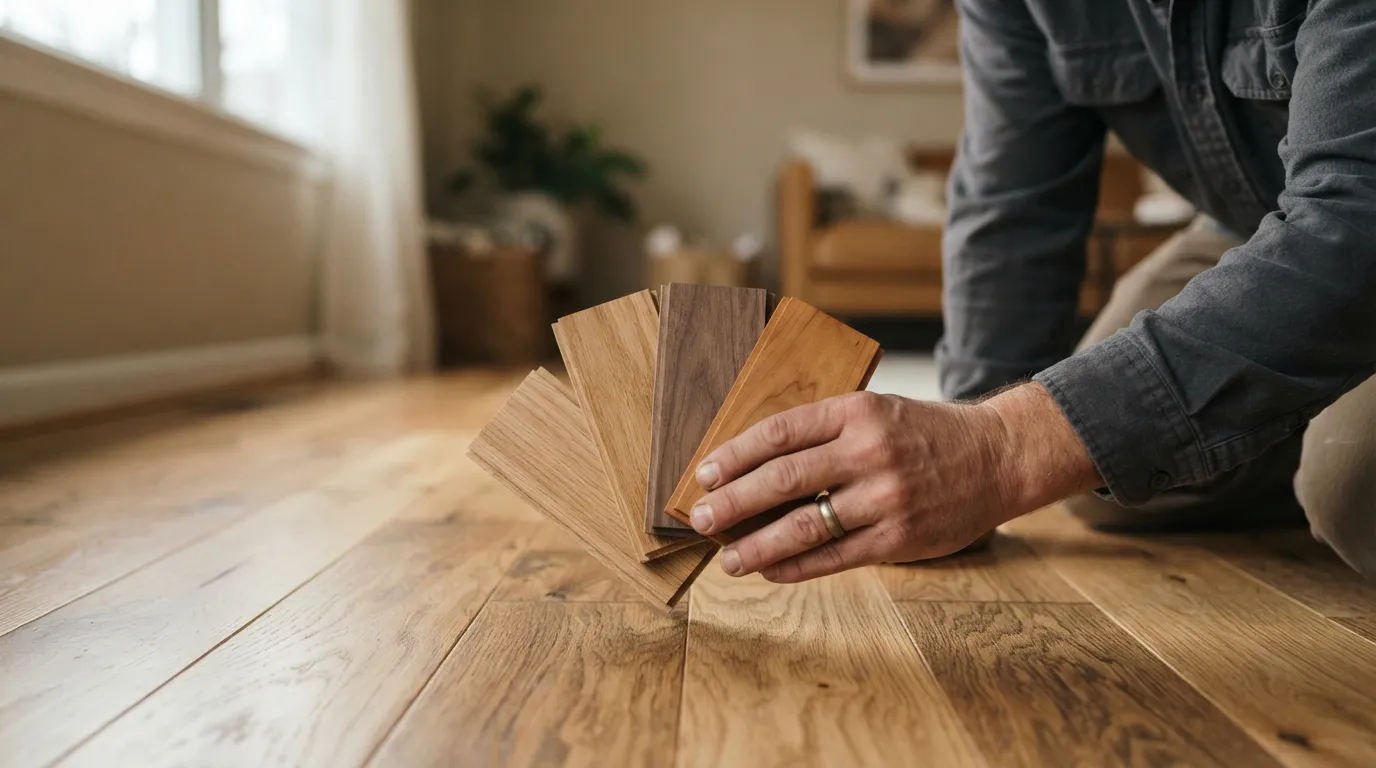
Matching is where trade-offs become visible. You have three realistic outcomes when you replace a plank or tile. One is a near-perfect match when the original material and finish are available. The others are a blended repair, stained or finished to sit with the old, or a visible patch that is well-executed but not identical.
The first option—finding the exact plank or tile—is the least disruptive. It depends on what is still available from the original supplier or whether leftovers remain. The second option uses finish work to soften the contrast. A thin sand plus a carefully chosen stain and topcoat can make a small repair read from a few feet away as part of the floor. Under close inspection the patch may still be visible.
Blending has limits. Old floors patinate with sunlight and wear; a brand-new plank will always look fresher. For that reason, technicians sometimes recommend refinishing a wider area so the new part ages into the whole. That choice increases time and cost but can be the right call when appearance matters.
When no match exists, you still have cosmetic options. You can use a slightly different plank or tile in a discrete pattern, for example replacing one row across a room as a deliberate inlay. You can also place a rug to conceal a visible repair. Discuss the options with the technician so you can choose the balance between cost, speed and appearance you prefer.
Sometimes the right answer is functional rather than cosmetic. Stop ongoing water ingress, replace rotten subfloor, and install a durable patch rather than chasing a perfect color match that will fail if the underlying problem is not fixed.
Preparing your home and what we need from you
A little preparation makes a flooring repair visit faster and reduces the chance of accidental damage. Clear the work area of small items, lamps and loose décor. Move lightweight furniture out of the room if you can, or make a clear path for the technician to carry tools and materials in and out. Where you cannot move heavy pieces, mark them and tell the technician so they can plan protective coverings and a safe working sequence.
Please keep pets and children away from the work area for the duration of the job. A repair that uses adhesives, solvents, or power tools benefits from a controlled environment while the work is underway and during early drying.
We bring usual tools, small materials, and testing aids to a visit. Expect pry bars, grout removal tools, a small sander or plane, stains and finishes for color-matching, and adhesive or mortar as appropriate. Expect us to lay down rosin paper or drop cloths to protect adjacent floors and thresholds.
You should have a plan for how long you will keep the area free for curing finishes and drying mortar. If you need the room back quickly, tell the technician so they can suggest options that reduce downtime, such as small repairs rather than area sanding.
Finally, ask for a written note of what was done and any follow-up care recommended. That record helps when you sell the home or manage a turnover. It also keeps a record of materials and colors used in case you need the same match later.
Options for landlords and property managers
Landlords and property managers often face the same choice as homeowners but with added constraints: minimize vacancy time, coordinate access across units, and keep costs predictable. For turnover work, plan batch scheduling so multiple units with similar needs are done in sequence. That reduces per-unit call-out time and makes it easier to use the same material runs where possible.
Provide clear access instructions and a single contact for scheduling so the technician can move from unit to unit without delay. When several identical small repairs are needed, ask for a consolidated written proposal that lists each unit’s work line by line; that makes invoicing and accounting straightforward.
Small repairs reduce vacancy time much more than waiting for a full replacement. A patched plank, re-grouted tile, or a re-stretched carpet can make a unit ready for new tenants faster than months-long replacements. Where a consistent look is required across multiple units, discuss a staged plan. Balance immediate repairs to get the unit back on the market with later scheduled replacements done when multiple units can be done together.
For property managers, a punch list that standardizes the kinds of repairs you expect at turnover helps enormously. It sets expectations for what is repaired now and what is deferred. Consider keeping a small stock of common materials — transition strips, a few planks, grout — to speed repairs and reduce waiting for orders.
If you manage several units, ask the contractor for a written process covering scheduling, keys and access. Also ask how they document completed work so you can turn units over quickly and keep tenants and owners informed.
Frequently asked questions
How much does it cost to get a floor repair?
Costs depend on what needs doing rather than a single number. Key factors are the material you need, how much labor the repair takes, whether the subfloor must be fixed, and how closely the new piece must match the old. Ask for a written quote that separates materials and labor so you can see which elements drive the price and where you might stage work.
Can a handyman install vinyl flooring?
Many local handymen work with vinyl for both installation and repair. They can lift, patch, reseal seams, and fit replacement sections when matching materials are available. For full-room installs or complex substrate issues, confirm the scope with the contractor. Know whether they cover the entire installation or will partner with a specialist.
Can damaged wood floors be repaired or do they need replacement?
Damaged wood floors can often be repaired when the issue is limited to a few planks, surface scratches, or loose boards. Replacement is usually the right choice when damage is widespread, the subfloor is compromised, or moisture has caused widespread swelling. Have an inspection that checks the subfloor and moisture so the repair will be durable rather than temporary.
Do I need to clear the room before the technician arrives?
Clear away small items and, if possible, remove lightweight furniture so the technician can work efficiently and protect larger pieces that stay in place. Keep pets and children out of the work area during repairs and early drying to avoid accidental damage or contact with fresh adhesives or finishes.
