

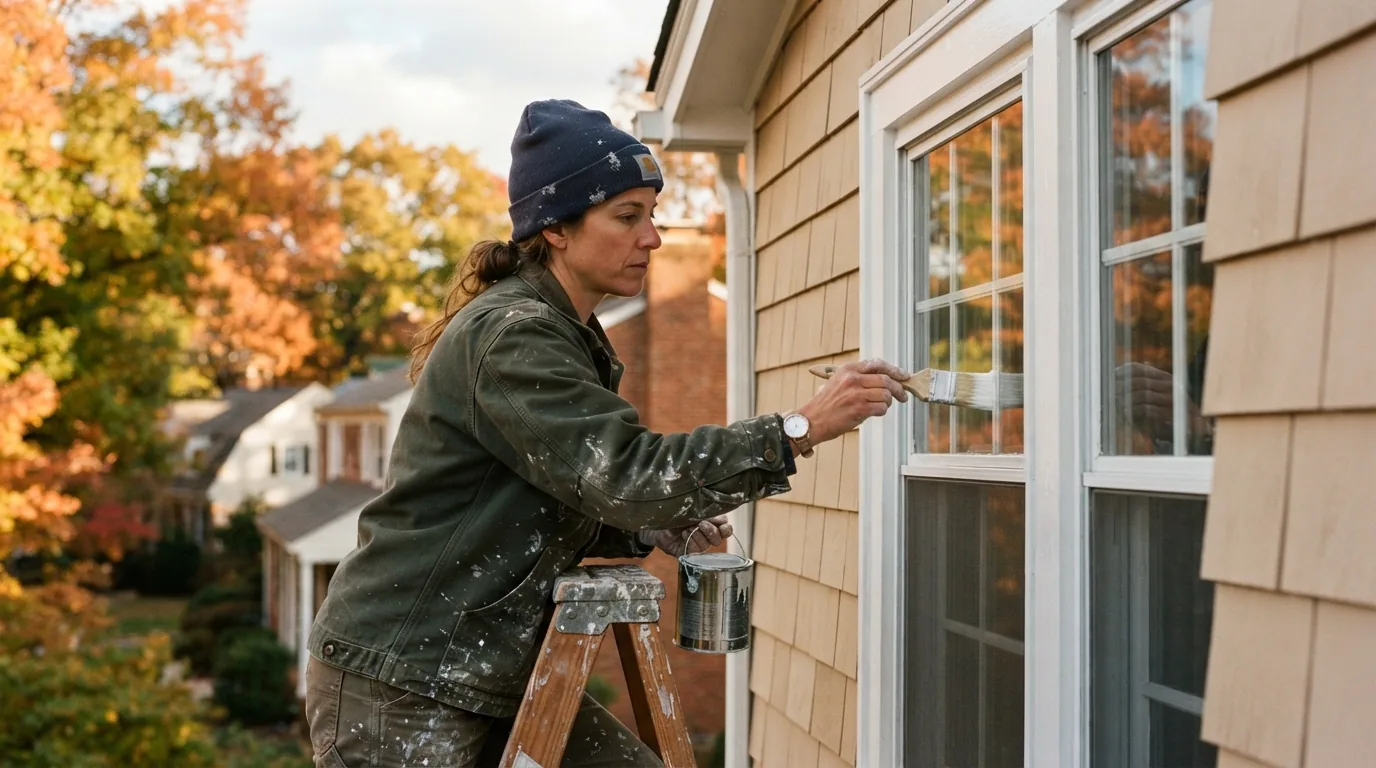
Exterior paint almost never fails because someone bought the wrong paint. It fails because it went onto a surface that wasn’t ready, or on a day that wasn’t suitable, and no product survives either.
Exterior painting in this climate is a timing problem as much as a craft one, and the good windows are narrower than people assume.
When to paint here
Paint needs a temperature range to cure, and it needs the surface dry. Our summer gives you heat but also humidity and afternoon storms; our winter gives you cold surfaces and dew.
Late spring works well once night temperatures are reliably up.
Summer is workable but constrained. Start early, follow the shade around the house, and stop mid-afternoon. Paint applied to a wall in direct August sun skins over before it can level or bond properly, and the storm that arrives at four o’clock can ruin a morning’s work.
Early fall is arguably the best window of the year. Lower humidity, moderate temperatures, and long enough dry spells to get through prep and two coats. September and much of October are usually excellent.
Late fall gets risky as night temperatures drop. The daytime figure can look fine while the surface is still cold and damp from overnight dew, and paint applied over that won’t bond.
The overnight temperature is the one people miss
Most exterior paints specify a minimum application temperature, and plenty also specify that it should stay above that for a number of hours afterward.
So a 60-degree afternoon in November that drops to 40 overnight is not a painting day, even though it felt like one. Curing continues after you’ve packed up, and a cold night during that window causes poor adhesion and sometimes surfactant leaching — those streaky runs that appear on fresh paint after a damp night.
Check the overnight low, not just the daytime high. It’s the single most useful habit in exterior painting here.
Prep, which is where the job actually is
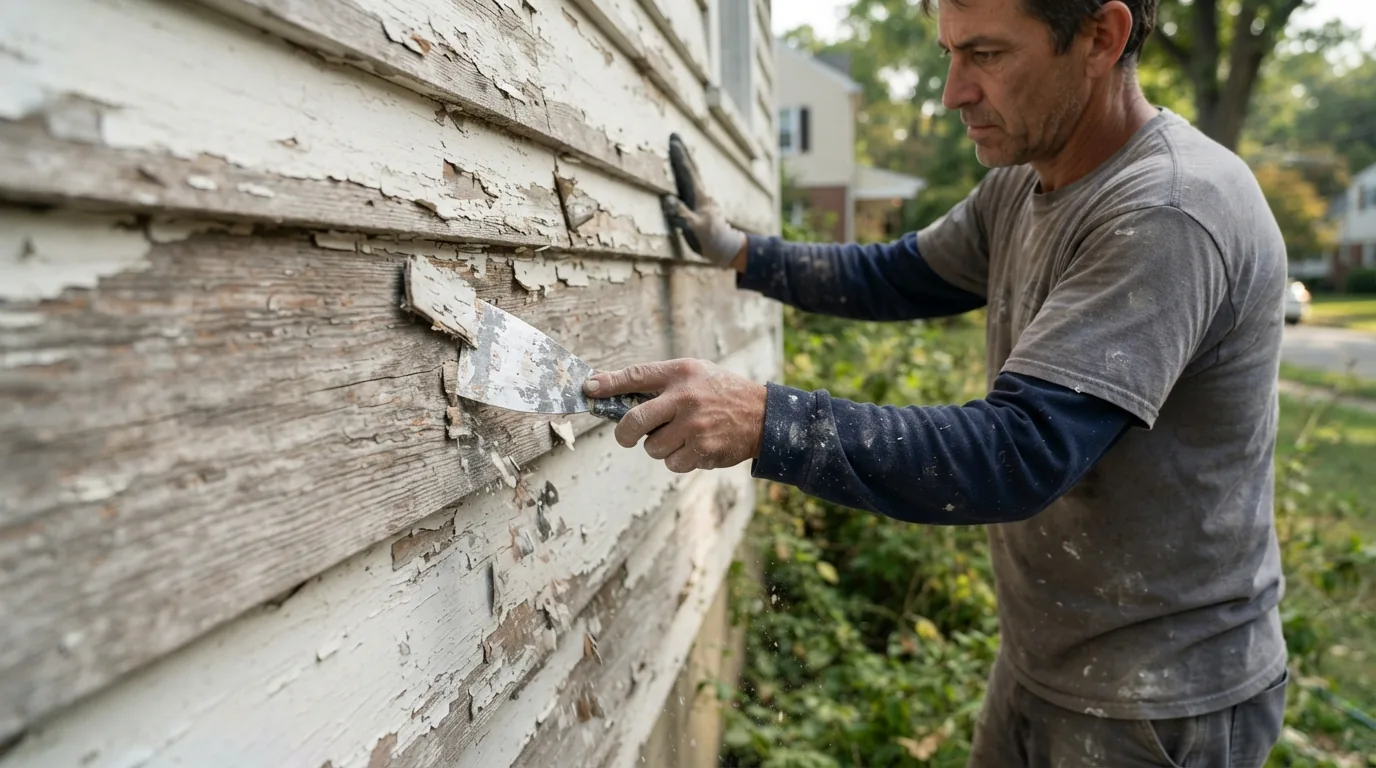
The rough split on a good exterior job is most of the time in preparation and a minority in application. If someone quotes you a fast job, that’s where the time is being taken from.
Proper prep means washing to remove dirt, chalking and any mildew — and our humidity means mildew is common on north-facing walls. Painting over mildew simply feeds it under the new coat.
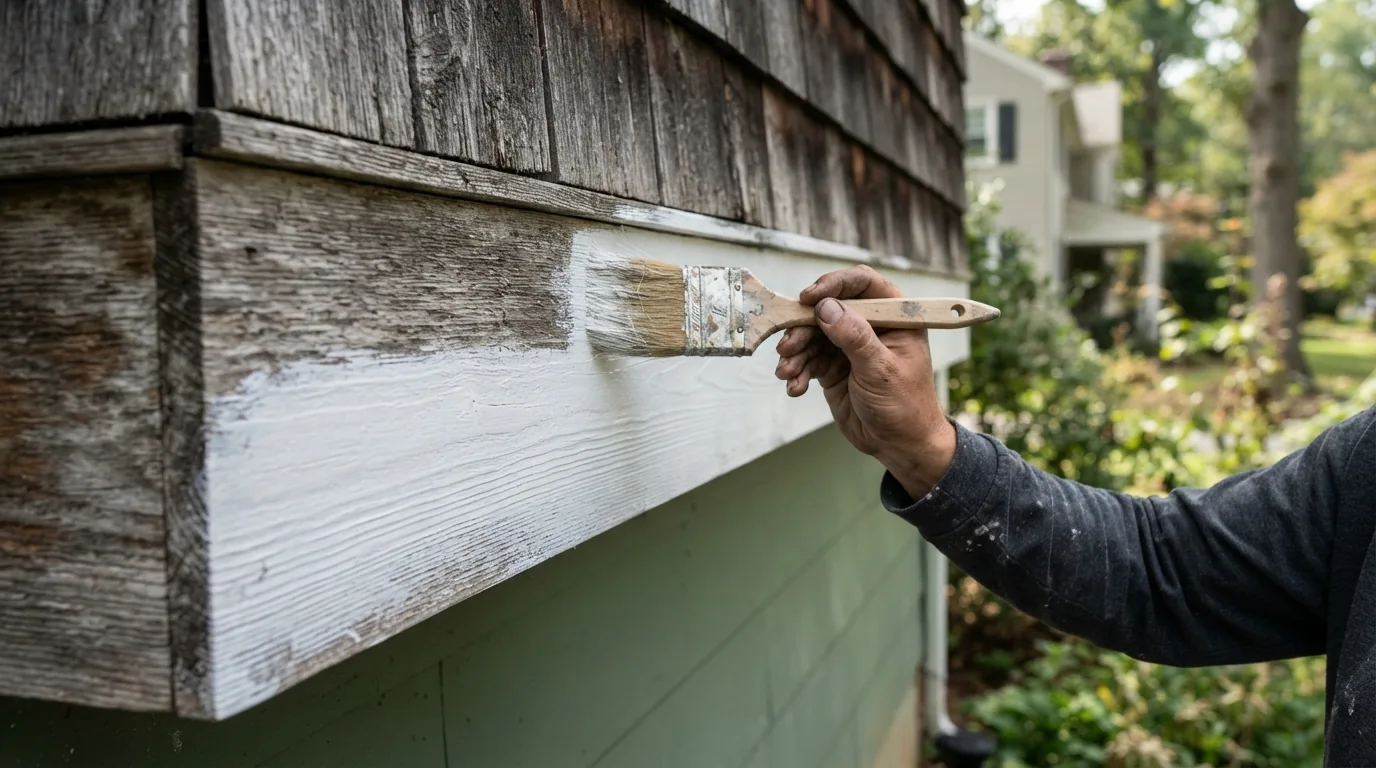
Then scraping loose material, sanding edges so the transition doesn’t show, filling and caulking joints, and priming bare wood. Bare wood left unprimed is the most common reason paint fails early on trim.
The lead paint question, which is not optional
If the house was built before 1978, exterior paint may be lead-based, and scraping or sanding it is precisely what makes it hazardous — outdoors, that means contaminated soil around the house where children play.
Contractors disturbing pre-1978 paint are required to be certified under the EPA’s Renovation, Repair and Painting Rule, which sets out containment and cleanup requirements. Given how much of Montgomery County’s housing predates 1978, this applies to a large share of exterior work here.
It’s a fair and specific question to ask anyone quoting: are you RRP certified, and how are you containing the debris?
What to expect from a proper job
- Washing, and time allowed for the surface to dry fully afterward — not washing on Monday and painting Monday afternoon
- Scraping and sanding, with containment if the house predates 1978
- Caulking joints, but not the drainage gaps at the bottom of lap siding or brick weep holes
- Priming all bare wood and any stains that would bleed through
- Two finish coats, with the manufacturer’s stated time between them
- Attention to end grain on trim, which drinks water and is where rot starts
How long it should last
A properly prepared and painted exterior should give many years, with south and west elevations weathering fastest because they take the most sun. Expect those faces to need attention before the others, and treat that as normal rather than as failure.
Trim and horizontal surfaces go first everywhere — they hold water. Sills, the tops of railings and anywhere flat will always be the first thing to need touching up.
The short version on exterior painting
Exterior painting in Maryland lives or dies on timing and preparation. Early fall is usually the best window — lower humidity and moderate temperatures — with late spring next. Check the overnight low rather than the afternoon high, because curing continues after you finish. Most of a good job is prep: wash, let it dry properly, scrape, sand, caulk the right joints, prime all bare wood. And on any house built before 1978, disturbing old paint brings EPA lead rules into play.
If you want the exterior looked at before the fall window closes, that’s a sensible time to ask. Painting work across Silver Spring and the surrounding neighborhoods, free estimates, no obligation.
Frequently asked questions
Q: What’s the best month for exterior painting in Maryland?
A: September and early October are usually ideal — moderate temperatures, lower humidity and reasonably reliable dry spells. Late spring is the next best window.
Q: Can you paint in summer?
A: Yes, with care. Work early, follow the shade around the house, and watch for afternoon storms. Direct sun on a hot wall makes paint skin over before it bonds properly.
Q: How long after pressure washing can painting start?
A: Long enough for the surface to be genuinely dry, which for wood is usually a couple of days depending on conditions. Painting over damp wood traps moisture and causes early failure.
Q: Do I need to prime everything?
A: Not everything, but all bare wood, any repairs, and anything that would bleed through. Skipping primer on bare wood is the most common reason trim paint fails within a year or two.
