

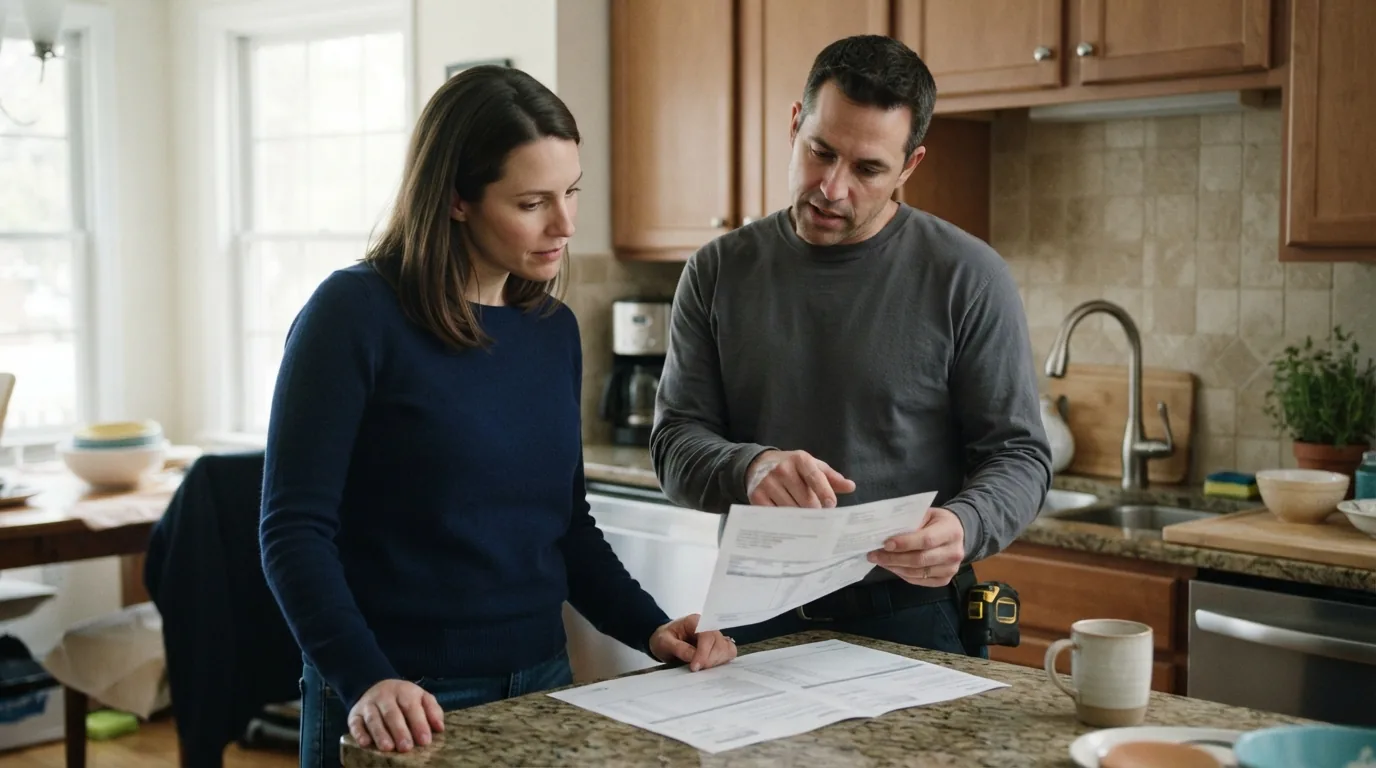
Most people vet a contractor by reading reviews and comparing totals. Reviews are the easiest thing on the internet to manufacture, and comparing totals tells you nothing unless the quotes describe the same job.
The useful questions to ask a contractor take about five minutes and are mostly about how the work will be run, not how good it will look.
Before the estimate
“Have you done this specific job before, locally?” Not a general experience question. A contractor who regularly works on 1950s houses in this area knows what’s behind the walls before opening them. That’s worth more than years in business.
“Who will actually be doing the work?” Employees, subcontractors, or a mix. Neither answer is wrong, but you want to know whether the person quoting is the person working, and whether it’s the same crew throughout.
“What’s your availability, honestly?” A contractor who can start tomorrow on a job everyone else is booking six weeks out is worth a second thought.
About the estimate itself
“Can I have it itemized?” A single number is not a price, it’s a request for trust. You want enough separation to see what’s included — demolition and disposal, materials, labor, making good, permits — and enough to compare two quotes fairly.
“What are the allowances based on?” An allowance is a placeholder for something you haven’t chosen. Perfectly normal, and the single biggest source of estimate-to-final-bill gaps. “Tile allowance” tells you nothing; a figure per square foot tells you whether it’s realistic for what you actually like.
“What happens if you find something once it’s open?” In an older home nobody can see behind tile or under a floor until work starts. The answer you want is that additional work is quoted and approved in writing before it proceeds — not “charged as required”, which is open-ended.
About money
“What’s the payment schedule?” A deposit covering materials is normal. A demand for most of the value before anything arrives on site is not.
“Is the contract in writing?” Maryland requires home improvement contracts to be in writing and to contain specific information. A number scribbled on the back of a card is a bad sign whatever else is true.
“What’s not included?” Often more revealing than what is. Painting after drywall work, hauling debris away, and making good after plumbing or electrical are the three most commonly omitted items, and each of them is real money.
About the practicalities
“Who is pulling the permit?” It should be stated explicitly on the estimate. If a contractor asks you to pull it as the homeowner, ask why — it shifts responsibility onto you.
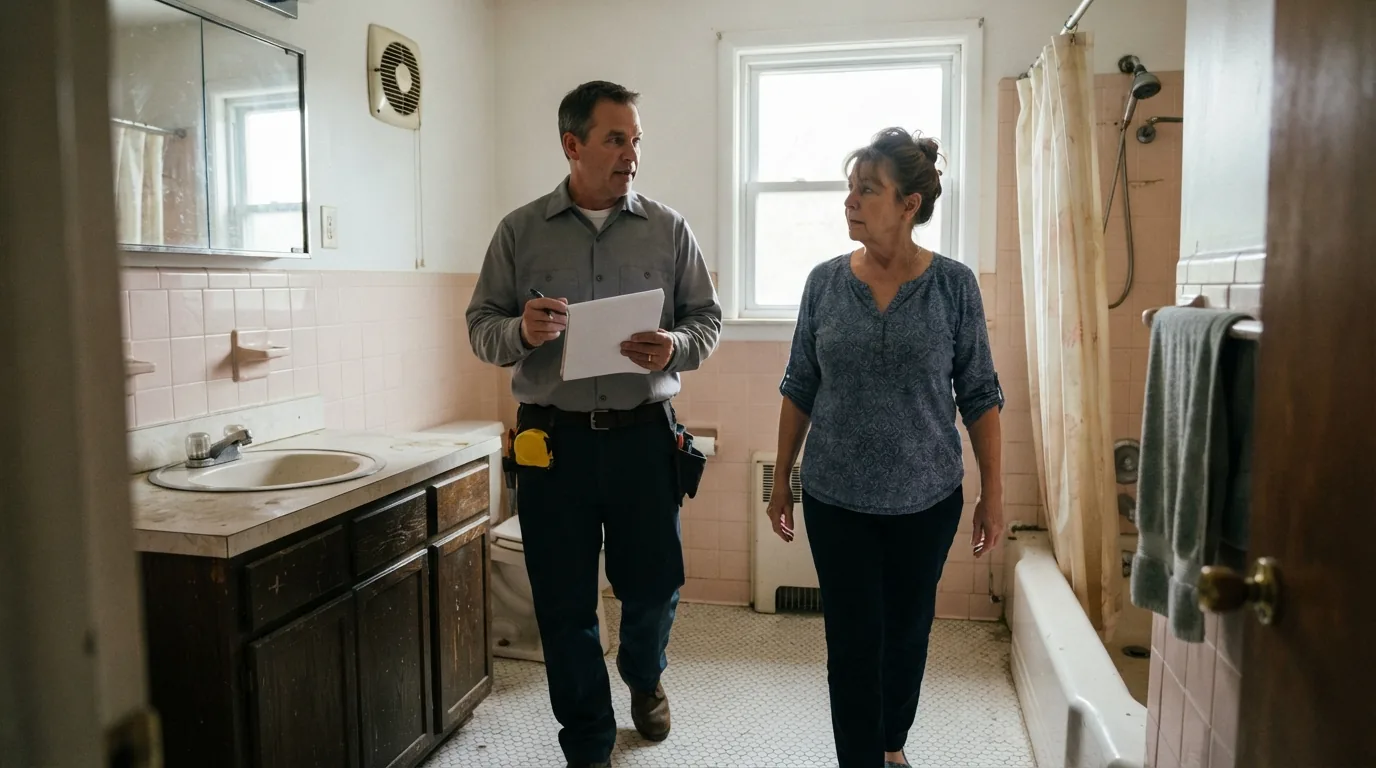
“How long will the room be out of action?” Particularly important if it’s your only bathroom or kitchen. A contractor who has worked in single-bathroom houses will have thought about it.
“How will you protect the rest of the house?” Dust travels much further than people expect. Sheeting, dust control and closing interior doors make a real difference, and a contractor who mentions it unprompted has done this in occupied homes.
“Are you insured?” Ask to see a current certificate rather than taking it on trust, and check the dates rather than glancing at the logo.
Answers that should give you pause
- Pressure to decide today. A quote that expires in 24 hours is a sales technique, not a price.
- Cash-only, or a large payment before materials.
- No written contract offered, or reluctance when you ask for one.
- Vagueness about who does the licensed portions of a job — the electrical and plumbing parts have their own requirements.
- A quote dramatically below the others that turns out, on reading the line items, to have left out waterproofing, making good or debris removal.
- Irritation at being asked any of this. Straightforward questions get straightforward answers from people who work straightforwardly.

The comparison mistake almost everyone makes
Comparing totals. It’s the instinct, and it’s how cheap quotes win jobs they shouldn’t.
Read down the line items instead and check the two quotes describe the same work. Most large gaps come from one of four things: one includes waterproofing and one doesn’t, one assumes fixtures stay put and one prices moving them, the allowances differ wildly, or one leaves you with a room that still needs a decorator.
Find the difference and you usually find the quotes weren’t comparable at all. The FTC’s guidance on hiring a contractor is a good general checklist alongside this.
The short version on questions to ask a contractor
The most useful questions to ask a contractor are about process rather than craft: who is actually doing the work, can the estimate be itemized, what are the allowances based on, what happens if something is found once it’s open, what’s the payment schedule, who is pulling the permit, and what isn’t included. Compare line items rather than totals. And treat pressure to decide today, cash-only terms and reluctance to put anything in writing as the warnings they are.
If you’d like a second, itemized estimate to compare against one you already have, that’s a reasonable thing to ask for and we’re happy to be the second quote. See the work we cover across Silver Spring and the surrounding neighborhoods — free estimates, no obligation.
Frequently asked questions
Q: How many quotes should I get?
A: Three is the usual advice and it’s reasonable, provided you compare line items rather than totals. Two well-understood quotes beat five you haven’t read properly.
Q: Should an estimate be free?
A: For most straightforward work, yes. Some contractors charge for detailed design on complex projects, which is legitimate — but it should be stated up front rather than discovered afterward.
Q: Is the cheapest quote ever the right one?
A: Sometimes, genuinely. Check it includes the things most commonly left out — making good, debris removal, and waterproofing on any wet area — before deciding it’s actually cheaper.
Q: What if the price changes once work starts?
A: In older homes it sometimes does, because nobody can see behind a wall until it’s open. What matters is that changes are quoted and approved in writing before the work happens, not presented at the end.
