

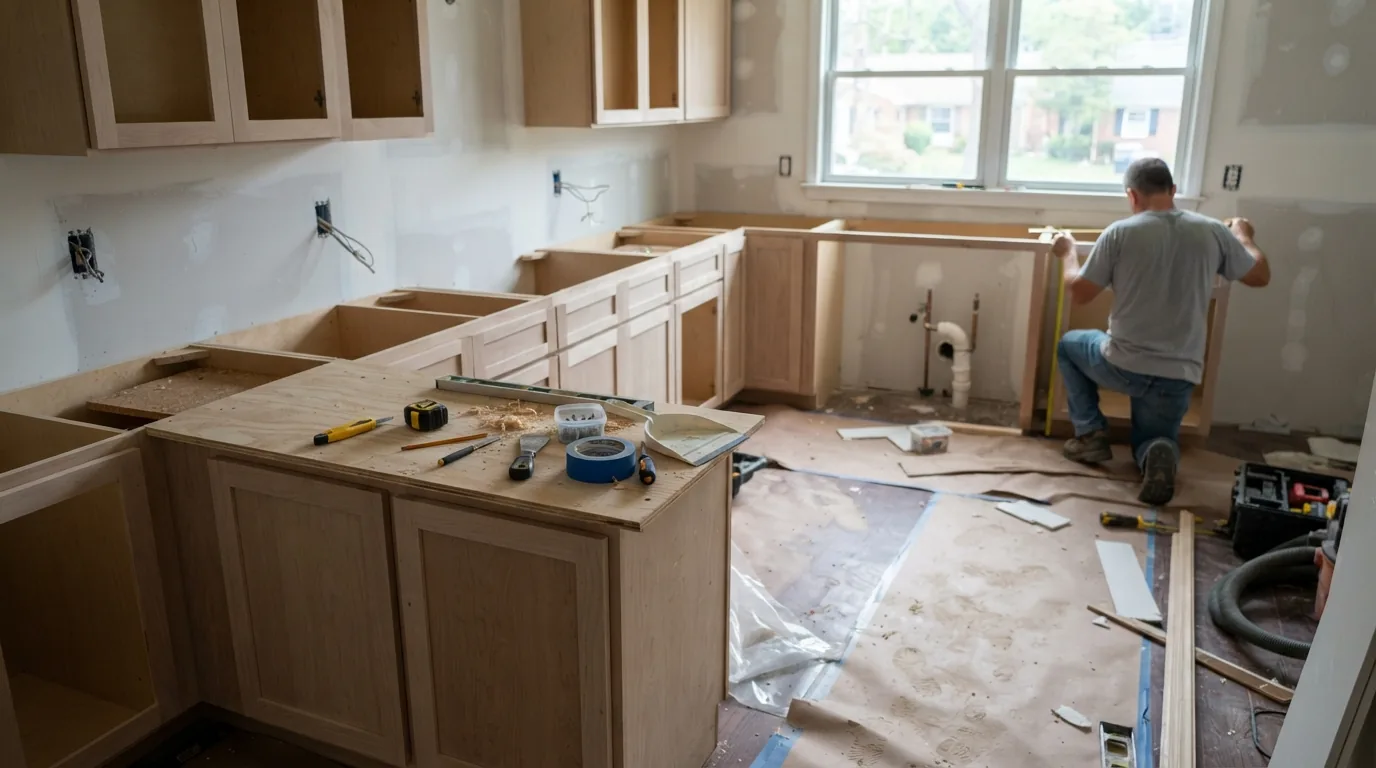
The building work in a kitchen is measured in days. The project is measured in weeks. The gap between those two numbers is where most of the frustration lives.
How long a kitchen remodel takes is decided far more by what you’re waiting for than by how fast anyone works.
A realistic schedule
For a straightforward kitchen keeping its existing layout:
- Design and decisions: two to four weeks. Longer than people expect, and the stage most often rushed.
- Ordering and lead times: two to eight weeks, running in parallel with nothing else. Cabinets are usually the long pole.
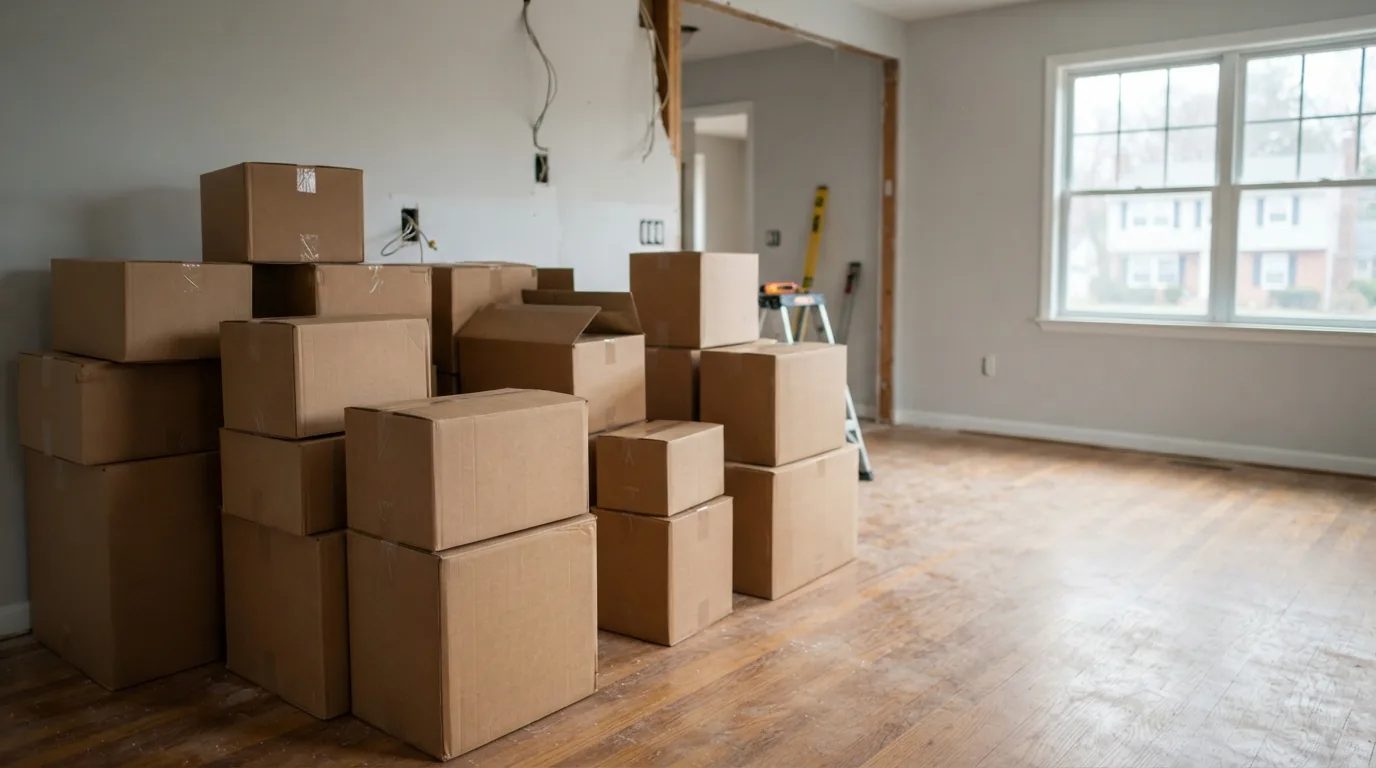
- Demolition: one to two days.
- Rough-in, if services move: two to four days, plus inspection scheduling.
- Drywall and prep: two to four days including drying between coats.
- Flooring: one to three days.
- Cabinet installation: two to four days.
- Countertop template to fit: one to two weeks of waiting, with no countertop.
- Backsplash, plumbing and electrical finish: two to four days.
- Paint and snagging: two to three days.
On-site work is often three to four weeks. Start to finish including decisions and lead times is realistically six to twelve.
Add structural change and permits, and you extend at the front rather than the middle.
The countertop gap nobody plans for
Worth isolating because it’s the stage people are least prepared for.
Stone countertops are templated after cabinets are installed and level, then fabricated off site. That’s typically one to two weeks during which you have cabinets, no countertop, and usually no sink connected.
It cannot be compressed by ordering earlier — the template has to come after installation, because it’s measuring what’s actually there rather than what the drawing said. In an older Silver Spring house with floors that aren’t level, the difference between drawing and reality is exactly why.
Plan for it. A sheet of plywood as a temporary surface and a plan for washing up elsewhere makes those two weeks considerably more civilized. We’ve written more about living through a kitchen remodel if that’s the part you’re dreading.
The three things that actually cause delays
1. Decisions made late. The single biggest cause, and entirely within your control. Anything touching a wall, floor or pipe has to be chosen before rough-in. A tile choice made in week five stops everything.
2. Something arriving damaged. It happens, and it isn’t anyone’s fault. A damaged cabinet door or a chipped slab means a replacement on the original lead time, not an express one. Checking deliveries the day they arrive rather than the day they’re needed buys back weeks.
3. Discovery. Opening an older kitchen sometimes reveals galvanized supply pipe, undersized electrical, or a floor that needs levelling. Real work, genuinely unforeseeable, and it adds days.
Notice what isn’t on that list: the actual building. Trades rarely cause the delay.
What can genuinely be compressed
Ordering everything before demolition, so lead times run while the room is still usable. Batching decisions into one session rather than two weeks of individual choices. Choosing in-stock cabinets rather than made-to-order, which can take weeks off. And keeping the existing layout, which removes rough-in and inspection entirely.
What can’t be compressed: the countertop template gap, drying times, and inspection lead times where a permit applies. Anyone promising otherwise is either skipping something or hasn’t scheduled an inspection with Montgomery County DPS recently.
If it’s your only kitchen
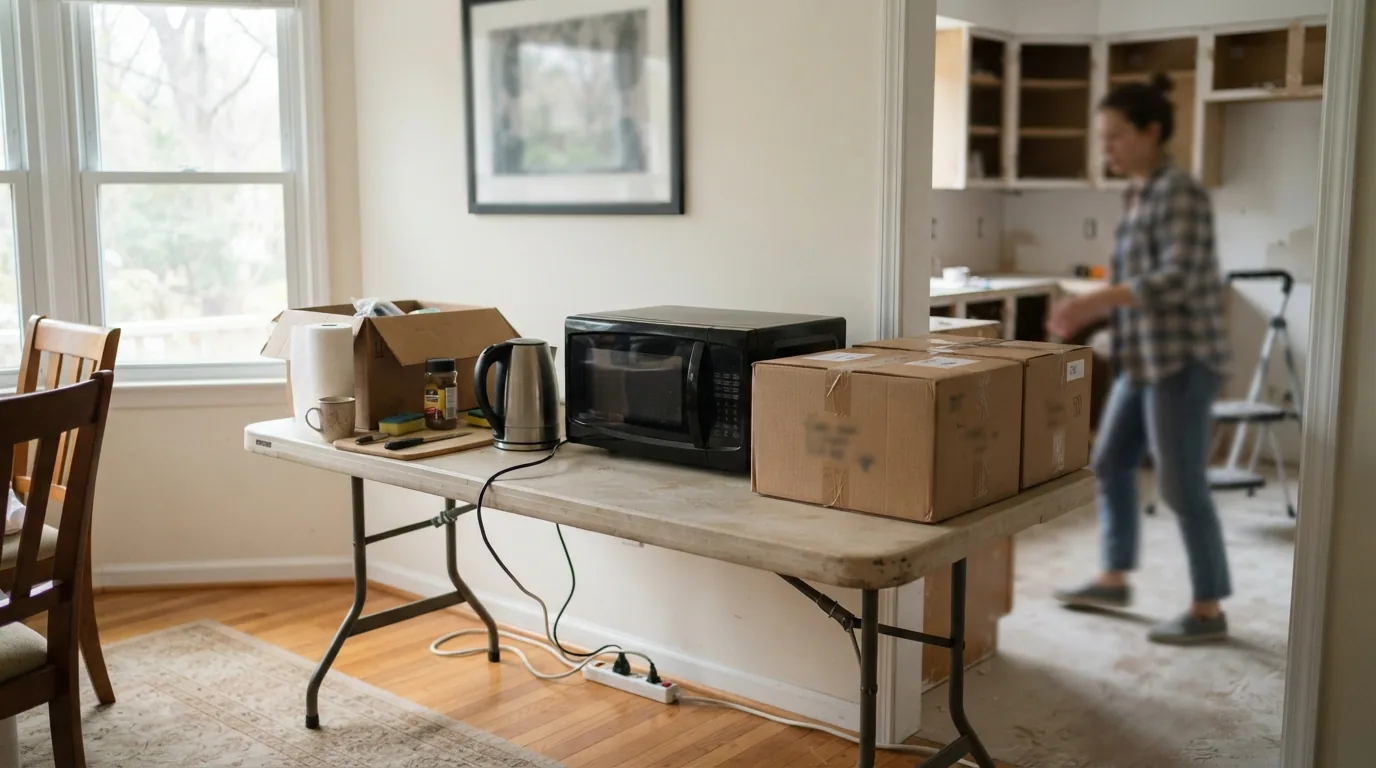
It usually is. Set up a temporary kitchen properly before demolition rather than improvising — microwave, kettle, fridge somewhere accessible, and a plan for washing up that isn’t the bathroom sink.
The households that cope well are the ones that treated the temporary setup as part of the project rather than an afterthought.
The short version on how long a kitchen remodel takes
How long a kitchen remodel takes is six to twelve weeks realistically, of which only three or four involve anyone on site. Cabinet lead times and the one-to-two week countertop template gap account for most of the rest. The three genuine causes of delay are late decisions, damaged deliveries and discovery in older homes — not the building work. Keeping the existing layout removes rough-in and inspections and shortens everything.
If you have a fixed date — a sale, a vacation, family arriving — say it at the estimate stage. It changes what we order and in what order. Kitchen work across Silver Spring and the surrounding neighborhoods, free estimates with an honest calendar.
Frequently asked questions
Q: Can a kitchen be done in two weeks?
A: The on-site work sometimes, if everything is on site beforehand, the layout isn’t changing and the countertop is laminate or wood rather than stone. With stone, the template gap alone makes two weeks unrealistic.
Q: Why do cabinets take so long to arrive?
A: Made-to-order cabinets are built after you order them. In-stock ranges are much faster and can take weeks off the schedule if the sizes suit your room.
Q: Can I live in the house during the work?
A: Almost always yes. It’s dusty and noisy rather than uninhabitable. The kitchen itself is out of action for most of it, so the temporary setup matters more than anything else.
Q: What’s the longest single wait?
A: Usually cabinet lead time, then the countertop template gap. Both are supply chain rather than labor, which is why choosing early matters more than pushing anyone to work faster.
