

The most expensive sentence in remodeling is “actually, could we move that?” — asked three weeks in.
Nothing about a bathroom is technically difficult in isolation. What costs money is doing things in the wrong order and having to undo them. The bathroom remodel order of operations isn’t project-management theory; it’s the reason two identical bathrooms can differ by thousands.
The sequence, and why each step is where it is
- Decisions and ordering. Before anything is touched.
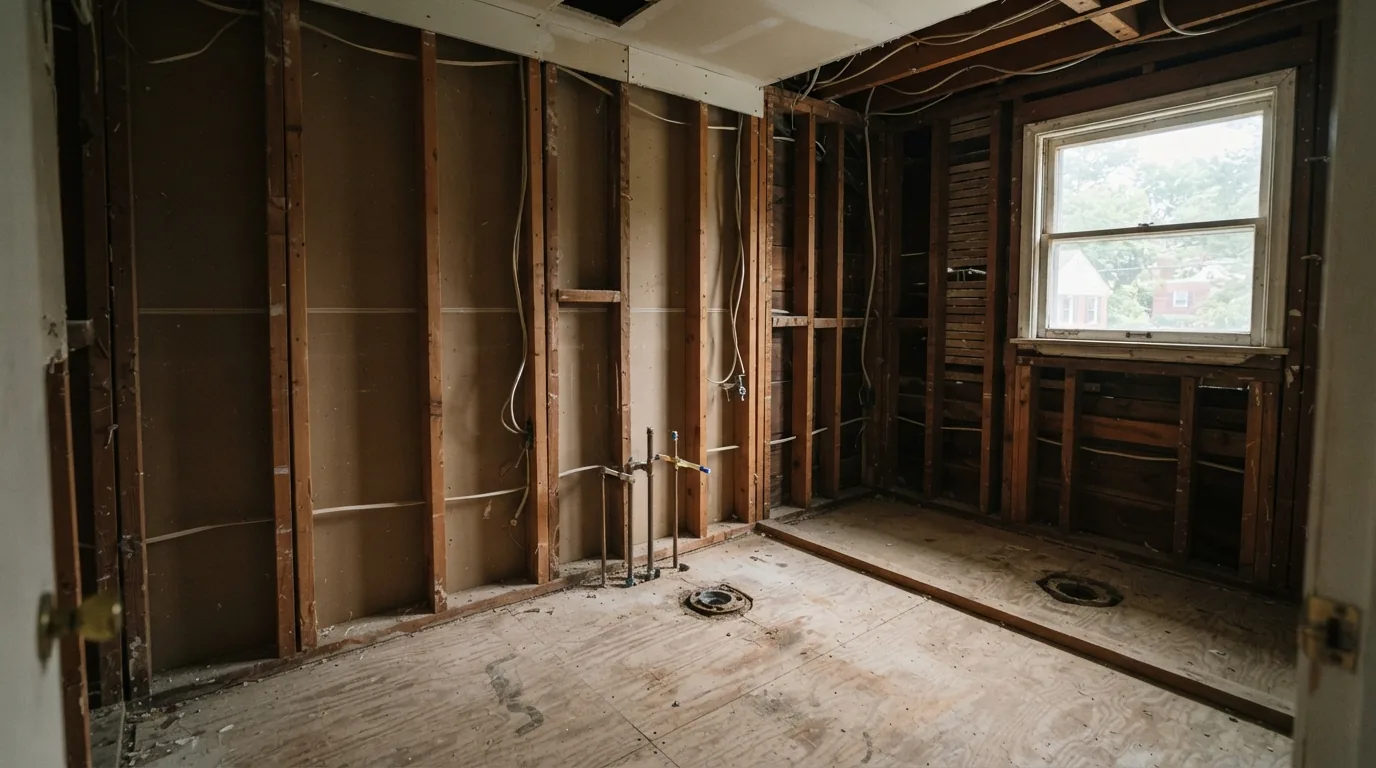
- Demolition. Strip back to studs and subfloor where needed.
- Discovery. The pause where everyone looks at what was behind the tile.
- Rough-in. Plumbing and electrical moved and run while the walls are open.
- Inspection, if a permit applies — before anything is covered.
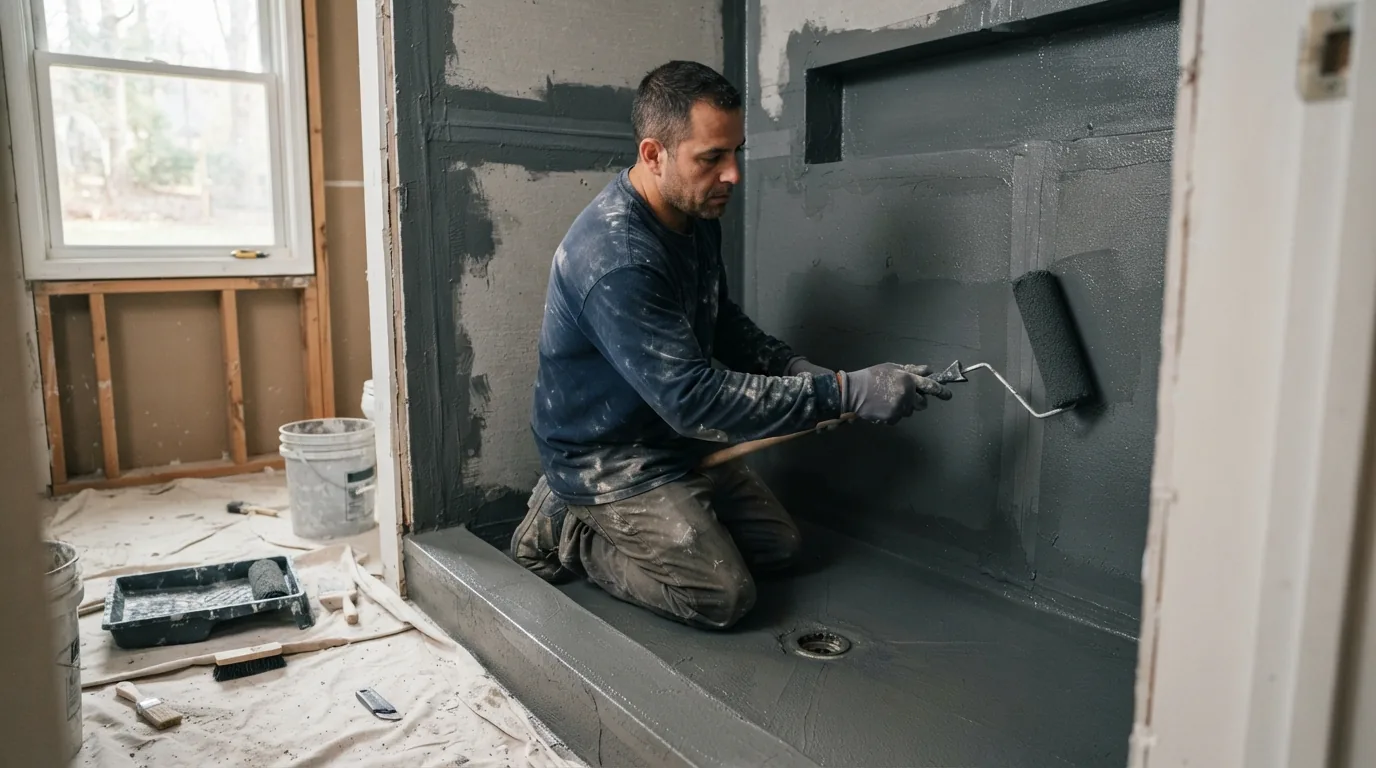
- Board and waterproofing. Backer in wet areas, membrane, drywall elsewhere.
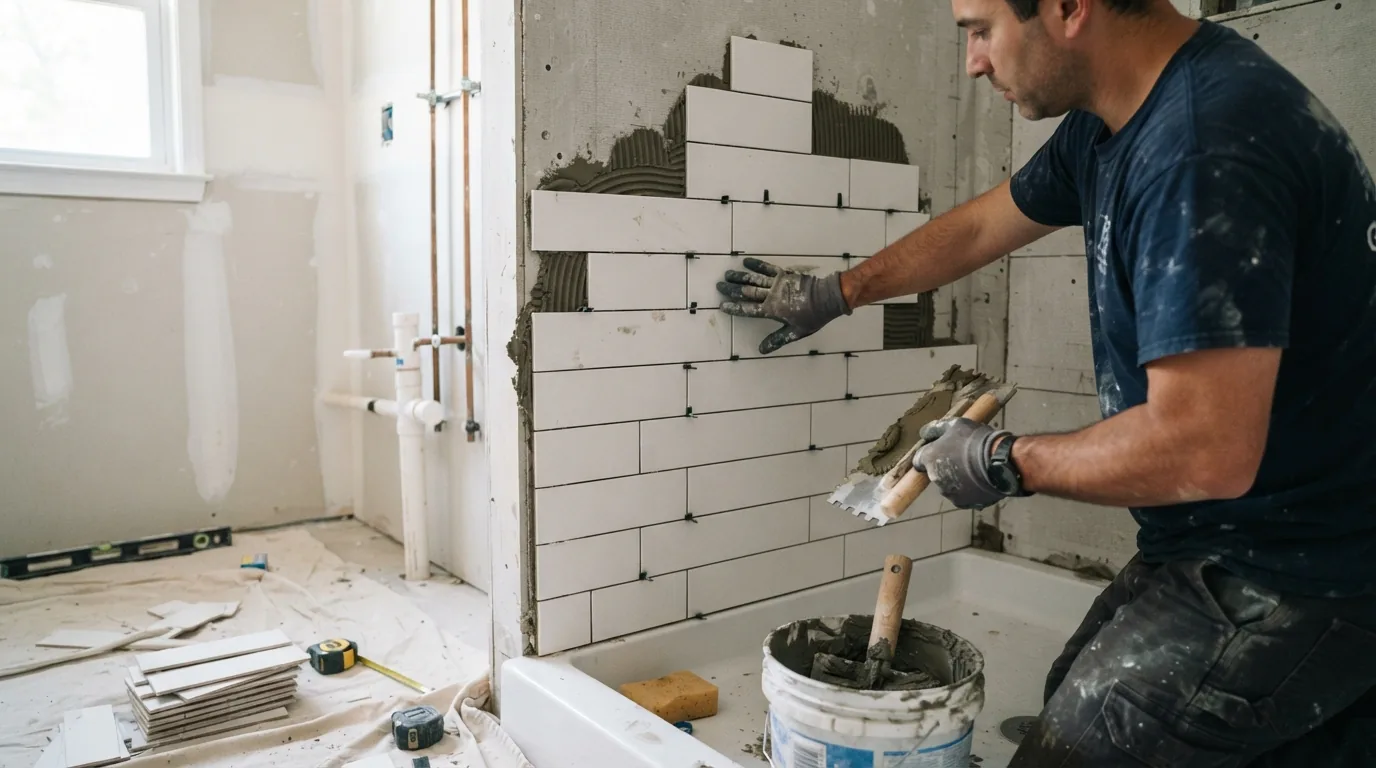
- Tile. Floors and walls.
- Fixtures and fittings. Vanity, toilet, valve trim, screen, accessories.
- Paint and making good.
Every one of those has to come after the one before it, and the expensive mistakes are all the same shape: something from step 1 arriving at step 7.
Why decisions come before demolition
This is the part homeowners resist, understandably. Choosing everything before the room even looks different feels premature.
But rough-in positions depend on the actual items. A wall-hung vanity needs blocking at a specific height. A freestanding tub filler needs its supply in a precise floor position. A shower screen needs a wall that’s flat where it lands. A niche has to fall between studs and align with tile courses.
Decide those after the walls are closed and you’re opening them again. That’s the single most common source of overrun I see, and it’s entirely avoidable.
The practical rule: anything that touches a wall, a floor or a pipe has to be chosen before rough-in. Paint color and towel rails can wait.
The discovery pause
In an older home there should be a deliberate stop after demolition — a look at the substrate behind the old tile, the condition of the framing, and what the supply and waste pipe actually are.
This is when soft board, past leaks and choked galvanized pipe show themselves. It’s the right moment to decide about them, because everything is open and access is free. The same decision made later costs several times more.
A contractor who builds this pause into the schedule is being realistic, not slow.
Inspection before covering
Where a permit applies — generally when plumbing moves or electrical changes — inspection happens with the walls open. This is not negotiable and it’s not a formality.
Close a wall before the rough-in is signed off and you may be opening it again, having already tiled it. For unincorporated Silver Spring the authority is Montgomery County Department of Permitting Services; in Rockville, Gaithersburg or Takoma Park a city process applies as well, which affects scheduling.
Inspections have lead times. Building them into the calendar rather than discovering them is a real part of the order of operations.
Waterproofing before tile, always
Obvious written down, routinely skipped in practice. Tile is not the waterproof layer — the membrane or backer behind it is. Tiling onto ordinary drywall in a shower will work for a few years and then fail invisibly.
It cannot be added afterwards. It’s the least visible line on the estimate and the one that decides whether the bathroom lasts fifteen years or five.
Paint genuinely last
Small point, saves annoyance. Paint after tiling and after fixtures, not before. Tiling marks walls, fixture installation scuffs them, and touching up a fresh wall never quite matches.
What this means for your only bathroom
If it’s the only bathroom in the house, sequence matters even more, because the days it’s unusable are the ones you feel. The order above can be compressed — a toilet can sometimes be refitted temporarily between stages — but it needs planning before demolition, not improvising on day four.
Ask for that plan up front. Any contractor who’s done a single-bathroom house will have thought about it.
The short version on bathroom remodel order of operations
The bathroom remodel order of operations runs: decide and order everything, demolish, pause to look at what’s behind, rough-in plumbing and electrical, inspect if permitted, board and waterproof, tile, fit fixtures, then paint. Anything touching a wall, floor or pipe must be chosen before rough-in — choosing later means reopening finished work. Waterproofing cannot be retrofitted. And in a one-bathroom house, plan the unusable days before demolition starts.
If you’d like a sequence mapped out for your specific room before committing, that’s part of how we quote. Bathroom remodeling across Silver Spring and the surrounding neighborhoods, free estimates, no obligation.
Frequently asked questions
Q: Do I really have to choose the tile before demolition?
A: Tile size and layout affect niche positions and how walls are prepared, so yes, ideally. At minimum choose the format and thickness before rough-in, even if the exact color comes later.
Q: Can I supply my own fixtures?
A: Usually yes, and it can save money. The two conditions are that everything arrives before rough-in and that anything faulty is your responsibility to replace — a missing part can stall a whole schedule.
Q: What happens if something is found after demolition?
A: It gets priced and approved before work continues. That’s exactly what the discovery pause is for, and it’s why an estimate on an older bathroom should name that possibility up front.
Q: How long is the bathroom out of action?
A: For a full remodel, expect most of the project. If it’s the only bathroom in the house, say so early — the sequence can often be arranged to shorten the worst of it, but only if it’s planned from the start.
