
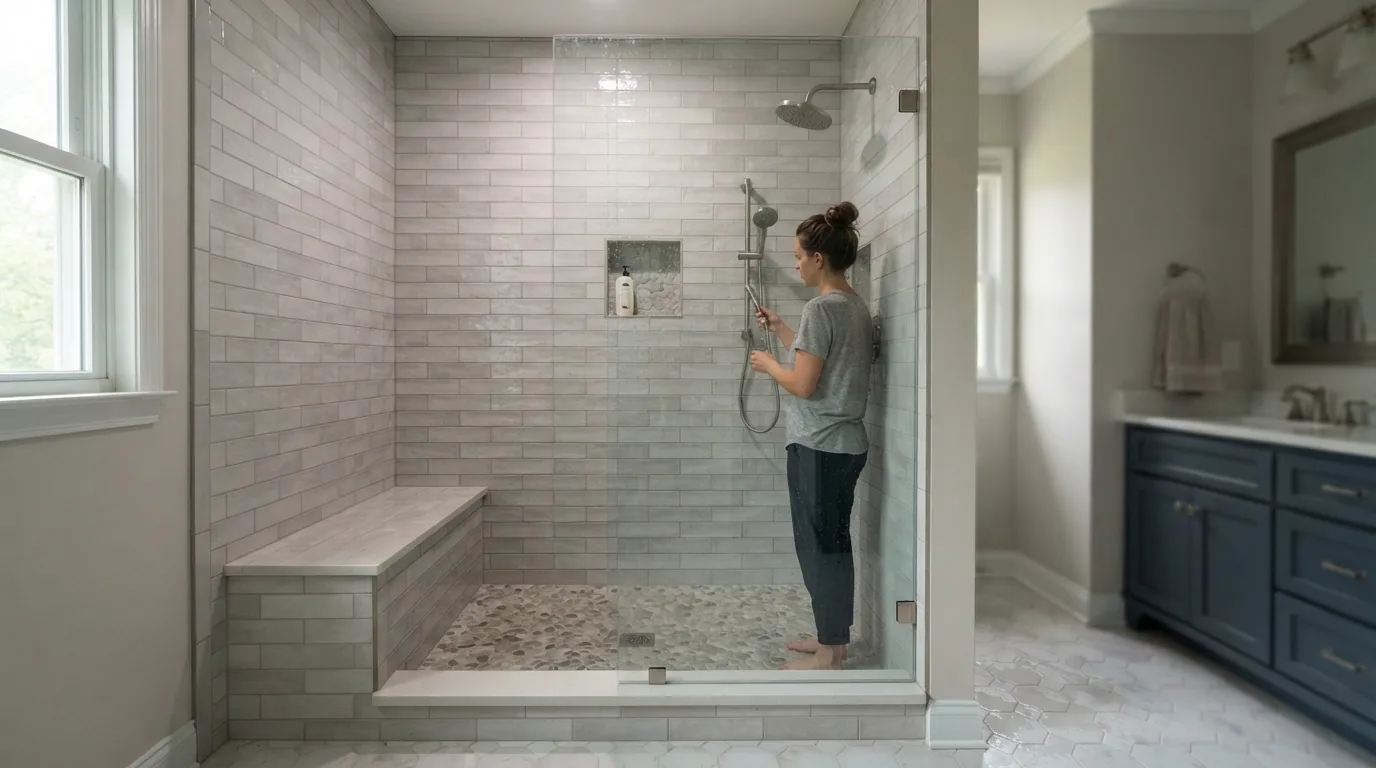
The bathtub in a lot of Silver Spring houses has been used as a shower for thirty years and as a bath roughly twice. At some point somebody does the math and realizes they’re stepping over a fifteen-inch wall every morning to use a shower.
A tub to shower conversion is one of the few remodeling jobs that’s cheaper than people expect and delivers more than they expect. It’s also the job where older homes throw up the most surprises, so it’s worth knowing what’s involved.
Why it’s usually simpler than a full remodel
The plumbing mostly stays put. A tub and a shower in the same alcove share a supply position and a drain location — the drain moves a modest amount and the valve typically goes higher up the same wall.
That means you avoid the expensive part of bathroom work: no opening the floor to re-run waste at a new fall, no relocating the toilet, no reconfiguring the room. You’re working inside an existing footprint, which keeps both cost and permit exposure down.
What’s actually involved
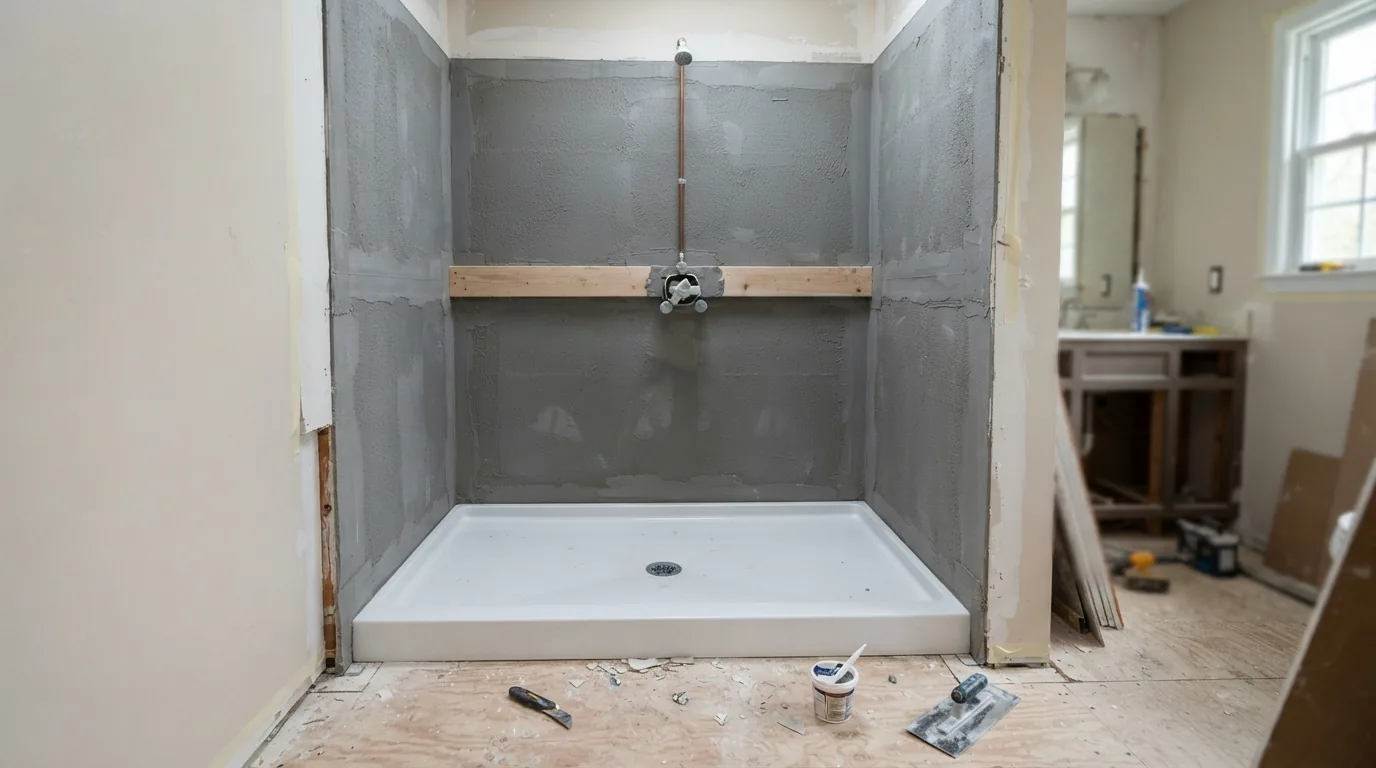
Remove the tub and surround. Adjust the drain from a tub waste to a shower drain — a change in fitting and usually a small change in position. Move the valve up to shower height. Then the part that matters most: build the base and waterproof it.
The base is either a pre-formed shower pan, which is faster, cheaper and very reliable, or a tiled floor built over a sloped bed with a waterproof membrane. Tiled looks better and costs more, and it is completely dependent on the membrane being done properly.
Then tile the walls over a proper backer, install the screen or door, and finish.
The three things older homes throw up
1. What’s behind the old surround
Pull off a 1950s tub surround and you frequently find the tile was set on drywall or plaster with no waterproof layer. Decades of shower use later, the board behind it is soft and sometimes the framing has taken damage.
This is the most common reason a conversion estimate changes once work starts, and it’s why any honest quote on an older bathroom should say what happens if the substrate is gone.
2. Cast iron and galvanized
Older houses here often have cast iron waste and galvanized steel supply. Cast iron is usually fine and can be worked with. Galvanized supply is the one to watch — it corrodes from the inside and narrows over decades, so the flow you get today is a fraction of what the pipe was built for.
Connect a new shower to choked galvanized and you get a beautiful new shower with disappointing pressure, then blame the shower. If we find it, we’ll tell you before it becomes that conversation.
3. Cast iron tubs are heavy
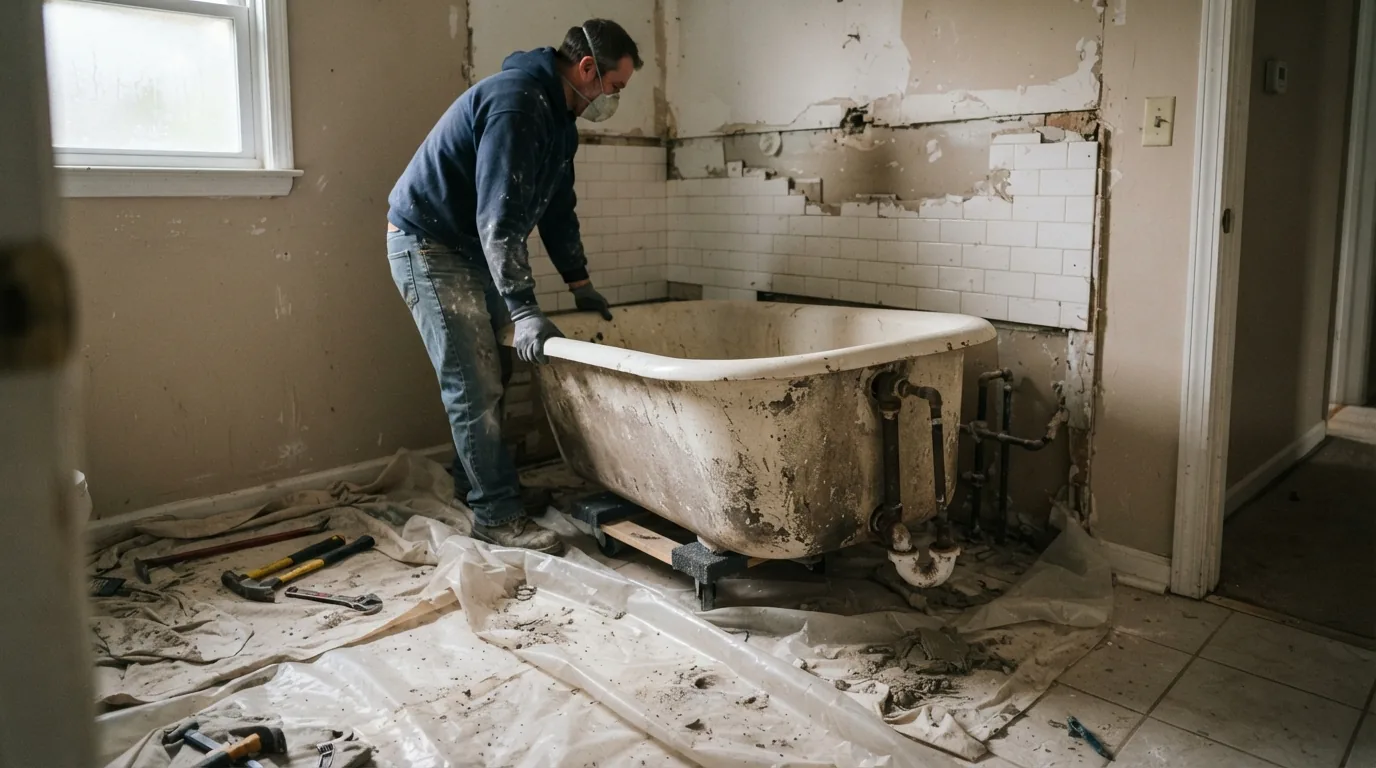
A genuine practical point: an old cast iron tub can weigh several hundred pounds. It usually has to be broken up in place to get it out, which is loud, or carried by more than one person down stairs it was carried up before the walls existed. It’s not a difficulty, just a reason the removal day is more involved than people picture.
The mistake to avoid: removing your only tub
Here’s the one piece of advice I give unprompted. If it’s the only bathtub in the house, think carefully before removing it.
Families with small children want a bath, and buyers know it. A house with no tub at all narrows your market when you sell. If you have two bathrooms, converting one and keeping a tub in the other is the answer that costs nothing extra and keeps every option open.
If it’s your only bathroom and you’re staying long-term, that’s a different calculation and a legitimate one. Just make it deliberately rather than discovering it at resale.
Accessibility, which is often the real reason
A lot of these conversions are about staying in the house comfortably rather than about style. Stepping over a tub wall gets harder, and it’s a common place for falls.
If that’s the driver, design for it properly: a low or curbless entry, a bench, blocking behind the wall for grab bars — installed now even if the bars go on later, because adding blocking afterwards means opening the wall again. Grab bars must fix into blocking or studs; anchors in tile will not hold a falling adult.
The CDC’s guidance on preventing falls at home is worth reading if this is the reason you’re considering it, since the bathroom is where a lot of them happen.
The short version on a tub to shower conversion
A tub to shower conversion keeps the plumbing roughly where it is, which is why it’s one of the best-value bathroom jobs available — no floor opening, no relocating fixtures, limited permit exposure. In older Silver Spring homes expect three possibilities: missing waterproofing behind the old surround, choked galvanized supply pipe, and a very heavy cast iron tub to remove. And if it’s the only tub in the house, think about resale before it goes.
If you’re weighing it up, we’ll come and look at what’s actually behind your surround before quoting — bathroom work across Silver Spring and nearby, free estimates, no obligation.
Frequently asked questions
Q: How long does a tub to shower conversion take?
A: Typically several days to a week, depending on whether the base is a pre-formed pan or a tiled bed, and on what’s found behind the old surround. Tiled bases add time for the membrane and for tiling itself.
Q: Do I need a permit?
A: Usually not for a like-for-like conversion in the same alcove, since fixtures aren’t relocating. If plumbing moves meaningfully or electrical changes, that shifts. Montgomery County DPS is the authority for unincorporated Silver Spring.
Q: Pre-formed pan or tiled floor?
A: A pan is cheaper, faster and very hard to get wrong. Tiled looks better, costs more, and lives or dies on the waterproofing underneath. Both are good choices for different reasons.
Q: Will it hurt my home’s value?
A: Not if another bathtub remains in the house. Removing the last one narrows your pool of buyers, particularly families with young children.
