

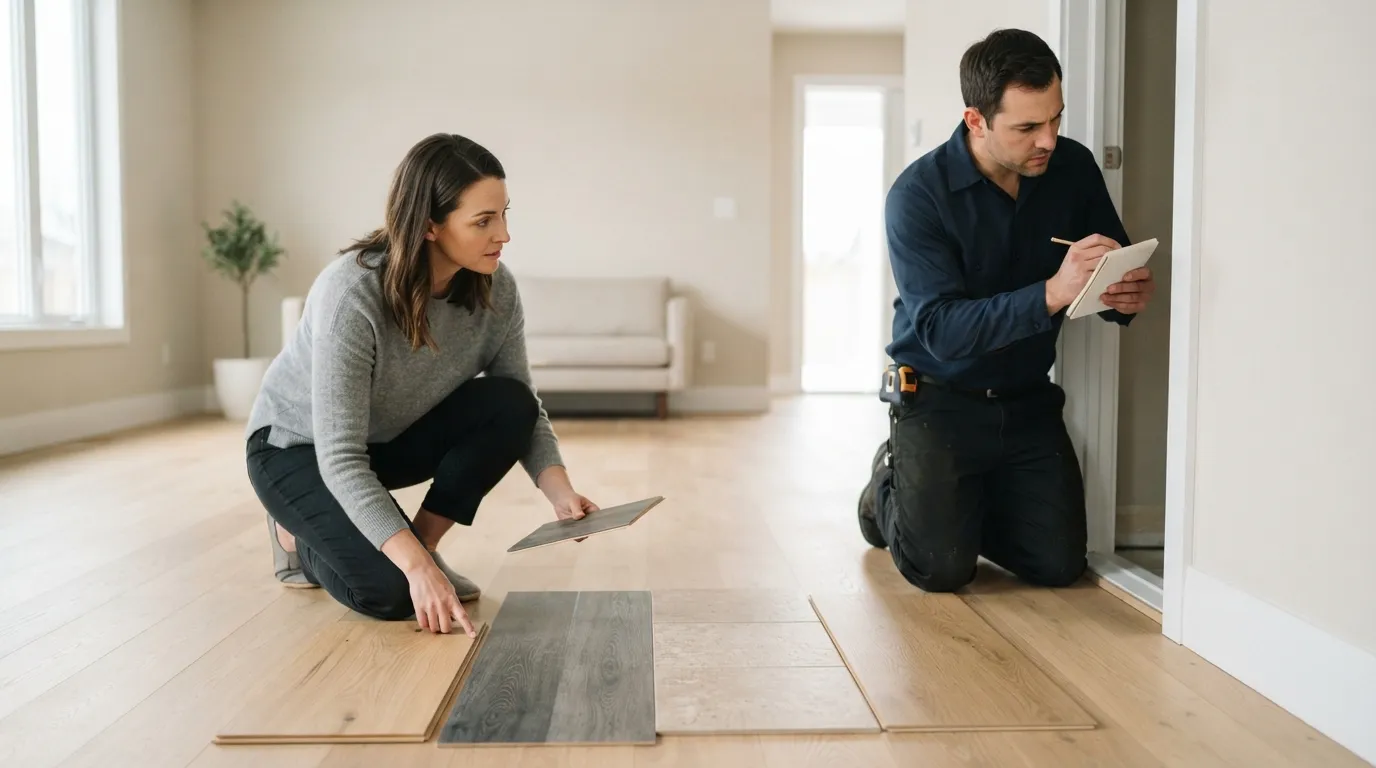
Start with the room, not the material
Compare hardwood vinyl and tile flooring by room needs instead of searching for one winner. Add laminate to the conversation when appearance, comfort, upkeep, moisture, and project goals point in a different direction. Each flooring type brings its own benefits, appearance, and long-term considerations, so the sensible choice depends on how the room will be used.
Begin with the conditions you can describe clearly. Is the room dry or likely to see spills? Does it carry steady foot traffic, or is it mainly a quiet place? Do you care most about the look under changing light, the feel underfoot, the work needed to keep it clean, or the way the floor connects to nearby rooms? Your answers narrow the field before you look at colors and patterns.
A bedroom and a bathroom do not ask the same thing from a floor. A hallway may need a different answer again because it connects rooms and makes transitions more noticeable. A kitchen can bring together appearance, cleaning, traffic, and moisture in the same decision. The best material for one of those settings may be a poor fit for another.
Budget belongs in the discussion, but it should not stand alone. Consider what preparation the existing floor needs, how much material must meet other flooring, and whether the chosen finish suits the work involved. A material that looks appealing in a sample may create a difficult installation plan if the surface below it or the neighboring rooms are not ready.
Use this order to make the choice easier:
- Describe the room’s moisture and traffic conditions.
- Decide how much upkeep fits your routine.
- Compare comfort, appearance, and the connection to nearby rooms.
- Check the existing floor before choosing a material.
The point is not to crown hardwood, vinyl, laminate, or tile as the best flooring everywhere. A comparison works better when it shows which trade-off you are accepting. A warm appearance may matter more in a living space. Easy cleaning may carry more weight in a room where spills are part of ordinary use. A continuous look between rooms may matter more than choosing a separate finish for every space.
Keep the decision grounded in your home. Look at the rooms together, not just one sample in isolation. Notice where people enter, where furniture moves, where water may be present, and where one flooring surface must meet another. That room-by-room view gives you a useful shortlist before installation questions begin.
Hardwood brings a specific kind of upkeep
Hardwood deserves consideration when the appearance of a natural floor is central to your plan. The appeal is not only the surface itself. It is also the way the flooring contributes to the character of a room and connects with the rest of the home. Those qualities can make hardwood an attractive choice, but they do not remove the need to examine the room’s conditions.
Start by asking whether the room supports the kind of care hardwood requires. A flooring choice should match your cleaning routine and your expectations for the surface over time. If you want a floor that needs little thought after installation, do not select hardwood only because it looks warm in a photograph. Ask what daily use will ask of it and how you want the room to look as it is lived in.
Appearance can also work against a quick decision. Samples are small, while a floor covers a broad field and meets walls, trim, furniture, and other rooms. Look at the color in the room’s actual light. Consider whether the selected finish works beside the flooring that will remain. A beautiful surface can feel out of place if the transition is abrupt or the surrounding materials do not relate to it.
Room conditions matter just as much. Keep moisture exposure in the discussion rather than treating hardwood as a universal answer. A room with different conditions from a dry living area deserves a separate review. The question is not whether hardwood is attractive. The question is whether its appearance, care, and placement fit the way you use that room.
Hardwood may also suit a plan that values continuity. If several connected spaces are being considered together, examine how the floor will travel through doorways and around fixed elements. This does not mean every room must receive the same material. It means you should decide where a change will look deliberate rather than accidental.
Ask these questions before you place hardwood at the top of the list:
- Will the room’s conditions support the maintenance routine you expect?
- Does the appearance work with the neighboring flooring and trim?
- Is the existing surface ready for the installation plan?
- Will the floor meet another material at a doorway or room boundary?
Hardwood is not automatically the more sensible choice because it has a natural appearance. It may be right when that appearance and the required upkeep fit your priorities. It may be wrong when moisture, cleaning expectations, or preparation needs point elsewhere. Treat those limits as part of the value of the comparison, not as objections to be hidden.
Before discussing installation, decide what you are actually choosing. Are you choosing the look of hardwood, the continuity it may give the home, or the specific behavior you expect from the finished surface? Those are related, but they are not the same question. A clear answer helps you compare hardwood with the alternatives honestly.

Vinyl and laminate solve different problems
Vinyl and laminate should not be treated as interchangeable just because both can offer a broad range of appearances. Compare each one with the room, the routine, and the project goal in mind. The useful question is not which label sounds more appealing. It is which set of trade-offs best fits the space you are changing.
Begin with appearance. Both materials can be considered when you want the room to relate visually to wood or another design direction, but the result should be judged in the actual space. Look at samples near walls, cabinets, trim, and nearby flooring. A surface that works alone may not work beside the material staying in the next room.
Comfort belongs beside appearance. Think about how the room feels during ordinary use, not only how it looks after installation. A bedroom, hallway, and kitchen can create different expectations. You may care about a quieter, more comfortable feel in one room and place easier cleaning or a particular visual effect ahead of that in another.
Moisture changes the discussion. Do not assume that a material that resembles another material has the same suitability in every room. Ask what the product instructions permit, how the room is used, and what preparation the installation requires. In a space exposed to spills or damp conditions, the flooring choice and the installation details need to be considered together.
Upkeep is another dividing line to examine. Decide what cleaning routine you are prepared to follow and what kinds of marks or wear you expect the room to see. A floor that looks good only when maintained in a way you will not use is not a practical choice for your home. Ask how the finished surface should be cared for before you approve the material.
Laminate belongs in the comparison when you want to examine appearance, comfort, upkeep, and project goals without assuming that vinyl is the only alternative to hardwood. It should be evaluated on its own terms. Compare the room’s conditions with the product requirements rather than treating laminate as a generic substitute.
Vinyl may become more interesting when your priorities center on the room’s everyday use and cleaning expectations. That does not make it the answer for every room. It means you should ask whether its characteristics suit the conditions you have identified. The same process applies to laminate: begin with the space, then test the material against it.
Use a direct comparison before requesting installation work:
- Appearance: Does the surface fit the room and nearby materials?
- Comfort: Does the room need a particular feel underfoot?
- Upkeep: Does the care routine fit your household?
- Moisture: Do the room conditions and product instructions align?
- Project goal: Are you changing one room or creating continuity?
Vinyl and laminate also raise the question of what happens at the edges. A new floor may need to meet hardwood, tile, or another surface. Doorways, room boundaries, and changes in floor height can affect the plan. Bring those details into the comparison rather than choosing from a single-room photograph.
If you are comparing hardwood, vinyl, and laminate, keep the decision tied to what you want the room to do. Hardwood may lead on the appearance you want, while vinyl or laminate may better match another combination of comfort, care, room conditions, and project goals. The right answer is the one that remains sensible after you include the existing floor and the neighboring spaces.
For related planning, review what to expect from flooring installation in Bethesda homes before you settle on a material. A comparison becomes more useful when it includes the work below and around the finished surface.
Tile changes the trade-offs in wet rooms
Tile deserves a close look when moisture and cleaning expectations shape the room. Its place in the comparison is not based on appearance alone. Consider how the surface fits the room’s use, how it will meet nearby materials, and whether the installation conditions support the result you want.
A bathroom can make tile seem like the obvious choice, but the room still needs a practical review. Look at the existing surface, the room boundaries, and the way the new flooring will meet other materials. A material can suit the general purpose of a room while the particular installation plan remains difficult.
Tile also changes how comfort enters the decision. Think about how the room feels underfoot and whether that matters to you there. A surface can be attractive and useful for the room’s conditions while still creating a different comfort expectation from hardwood, vinyl, or laminate. Put that difference on the list before you approve the material.
Cleaning expectations deserve equal attention. Ask what kind of routine fits the surface and the room. Do not compare only the visible field of the flooring. The finished area includes the places where materials meet, the edges that require attention, and the details that affect how the room is cared for.
Durability expectations should be specific. Instead of asking whether tile is simply durable, describe what the floor must handle in your home. Is the concern regular foot traffic, spills, furniture, cleaning, or the connection between rooms? A useful answer depends on the conditions you name, not on a broad label applied to every tile installation.
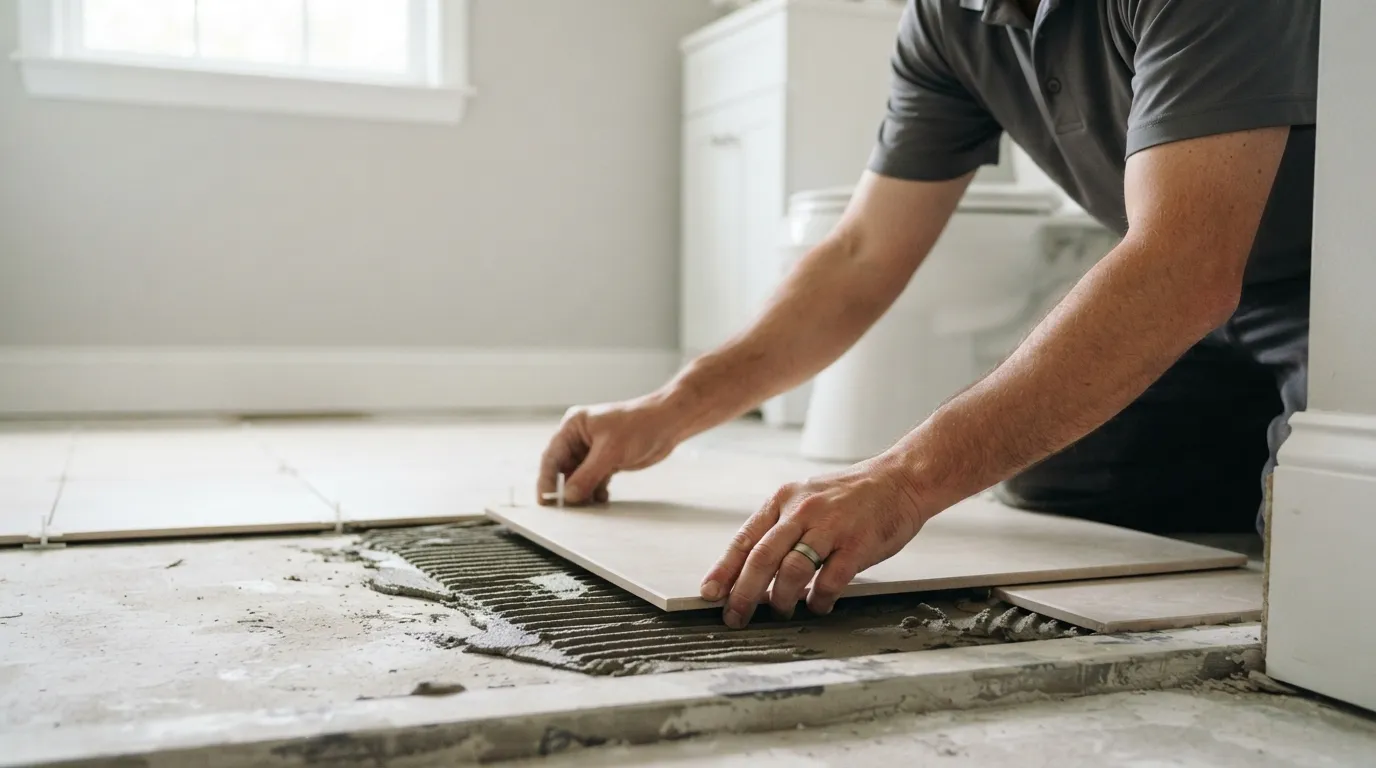
Installation conditions may change the decision. The existing floor needs to be examined before any material is treated as ready to install. Uneven areas, damaged sections, changes in height, and transitions can all affect the work plan. If the surface below is not suitable, the material comparison is incomplete until preparation is discussed.
Tile can be the sensible direction when the room’s moisture and cleaning priorities outweigh a preference for a softer or warmer feel. It may be less appealing when comfort, continuity with adjoining rooms, or a particular appearance carries more weight. That is not a contradiction. It is the reason to compare materials by room instead of ranking them in isolation.
For a kitchen, consider the same questions without assuming the answer must match the bathroom. The room may combine traffic, spills, cleaning, appearance, and connection to nearby living spaces. For a hallway, the main concern may be how the material travels between rooms and how transitions look. Let the room set the priorities.
A tile decision should also include the design around it. Examine the relationship between the floor, trim, cabinets, walls, and any neighboring surface. A material that works in a sample may feel too disconnected once it covers the room. If the plan changes flooring at a doorway, decide whether the change is part of the design or simply a response to an installation problem.
For tile-specific work in a related setting, see the page about tile installation in Rockville. The useful next step is not to copy a material choice from another room, but to compare the conditions that led to it.
Build a shortlist before requesting installation work
A good flooring shortlist begins with the floor you already have. Before choosing hardwood, vinyl, laminate, or tile, inspect the existing surface and the rooms around it. The material is only part of the plan. Preparation, transitions, measurements, and continuity can change what the work involves.
Walk the room slowly. Look for damaged areas, uneven places, loose sections, and points where the existing floor meets walls or fixed features. Notice where the surface changes at doorways. You do not need to decide the repair method yourself, but you should record what you see and raise it before approving a material.
Next, look beyond the room. Identify the flooring in the neighboring spaces and decide whether the new surface should relate to it or deliberately contrast with it. A material change can be useful, but it should be planned. Consider the direction of the floor, the location of doorways, and the places where a transition will be most visible.
Measurements matter because they shape the installation discussion. Record the rooms included in the project and the areas that must remain untouched. Include closets, thresholds, fixed cabinets, and awkward edges in the conversation. A simple room outline is enough for an initial discussion, but the final plan should account for every area the flooring must reach.
Preparation should be a direct quote question. Ask what happens if the existing floor needs attention, which parts of the surface are included in the work, and how the plan changes if the underlying condition differs from what was expected. Do not treat preparation as a minor detail. It can affect the material, the transitions, and the sequence of work.
Use these questions before approving a flooring plan:
- What condition is the existing floor in?
- Which transitions will the new material require?
- How will the selected flooring connect to nearby rooms?
- What preparation is included in the proposed work?
- Which areas are measured, moved, protected, or left untouched?
- How will the finished surface be checked at the edges?
Ask how the installation will move through the home. Discuss access to the room, protection for nearby areas, removal of the existing surface, and the point at which preparation is reviewed. You are not asking for a promise about an unknown condition. You are making sure the plan has a place for questions before work begins.
A quote discussion should also separate the material decision from the work decision. Confirm which flooring type is being considered, where it will be installed, what preparation may be needed, and how the work meets the existing surfaces. If those points are unclear, the shortlist is not ready.
Repair may be a better starting point than replacement in some rooms. Look closely at the condition of the current flooring and decide whether the project goal is a new material or a better-functioning surface. For that next conversation, see how a handyman handles flooring repair in Montgomery County.
Our role in the discussion is to help keep the choice tied to the actual room and the work required. Bring the conditions, priorities, and questions together before committing to a material. Then ask us to review the shortlist and discuss the installation work it would involve.
The strongest flooring plan is not the one with the most confident material choice. It is the one that explains why the material fits the room, what preparation the existing floor needs, how transitions will be handled, and which upkeep routine you are prepared to follow. Use that standard before you move ahead with us.
Frequently asked questions
Can you mop vinyl flooring?
Treat mopping as a product-specific care question rather than assuming every vinyl floor should be cleaned the same way. Ask for the product’s care instructions and match the cleaning routine to the room’s conditions before installation.
What is the difference between vinyl and tile flooring?
Compare vinyl and tile by moisture, cleaning, comfort, appearance, and installation conditions. Tile may fit a room where moisture and cleaning expectations lead the decision, while vinyl may fit a different combination of room use and upkeep priorities.
What is the best type of flooring for my home?
There is no single best flooring material for every room or household. Choose by comparing the room’s moisture, traffic, comfort, appearance, upkeep, existing floor, and transitions with the qualities you want from hardwood, vinyl, laminate, or tile.
What should I ask before approving a flooring quote?
Ask what condition the existing floor is in, what preparation is included, how transitions will be handled, and how the new material will connect to nearby rooms. Also confirm which areas are included and how the finished edges will be checked.
