
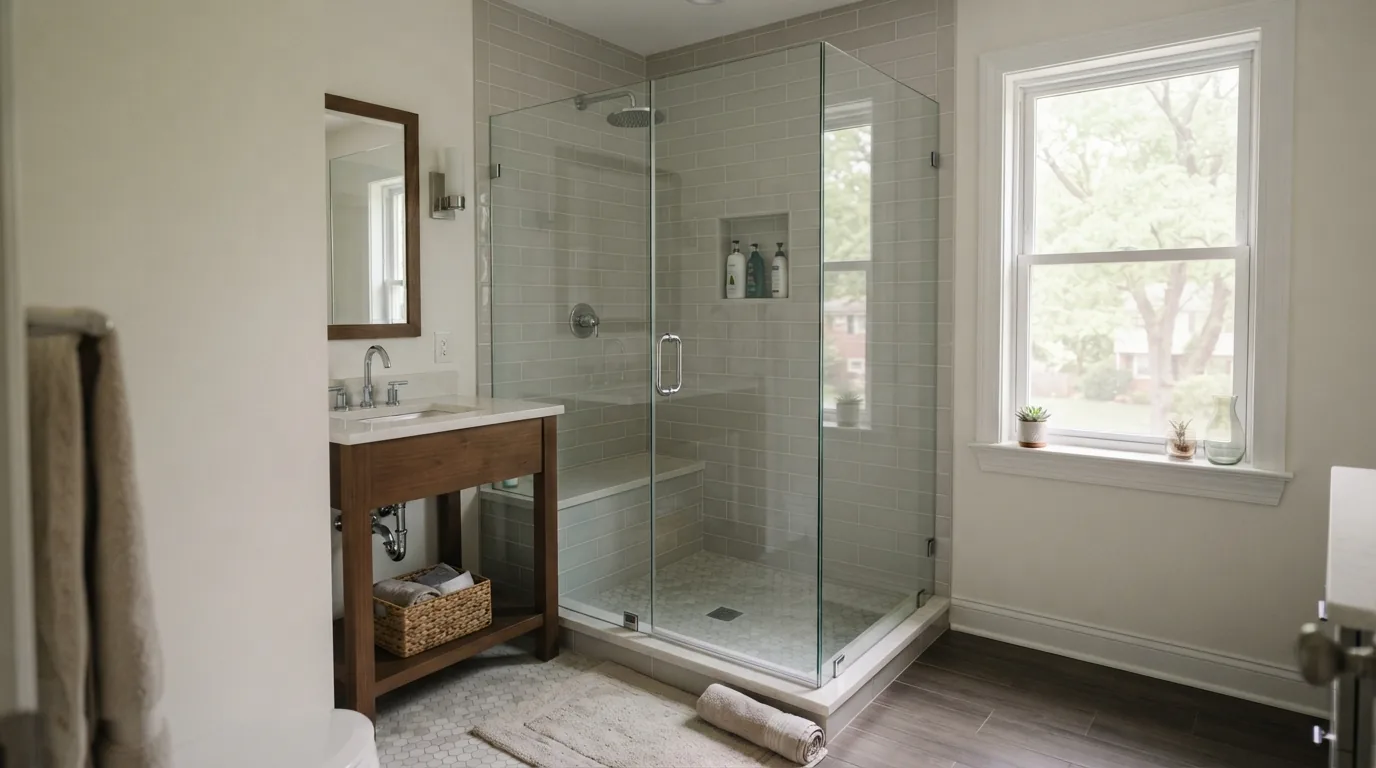
Two bathrooms, same size, same house, same finishes. One costs a fraction of the other. The difference is almost never the tile.
People plan a bathroom by choosing things — vanity, tile, fixtures. But bathroom remodeling in Silver Spring is priced mostly by what you’re moving, not by what you’re installing. Here’s what actually sets the number.
1. Whether the plumbing stays where it is
This is the big one, and it dwarfs everything else.
If the toilet, sink and shower stay in their existing positions, you’re doing a very manageable job — the supply and waste connections are already right, and the work is removal, prep, and installing new in the same footprint.
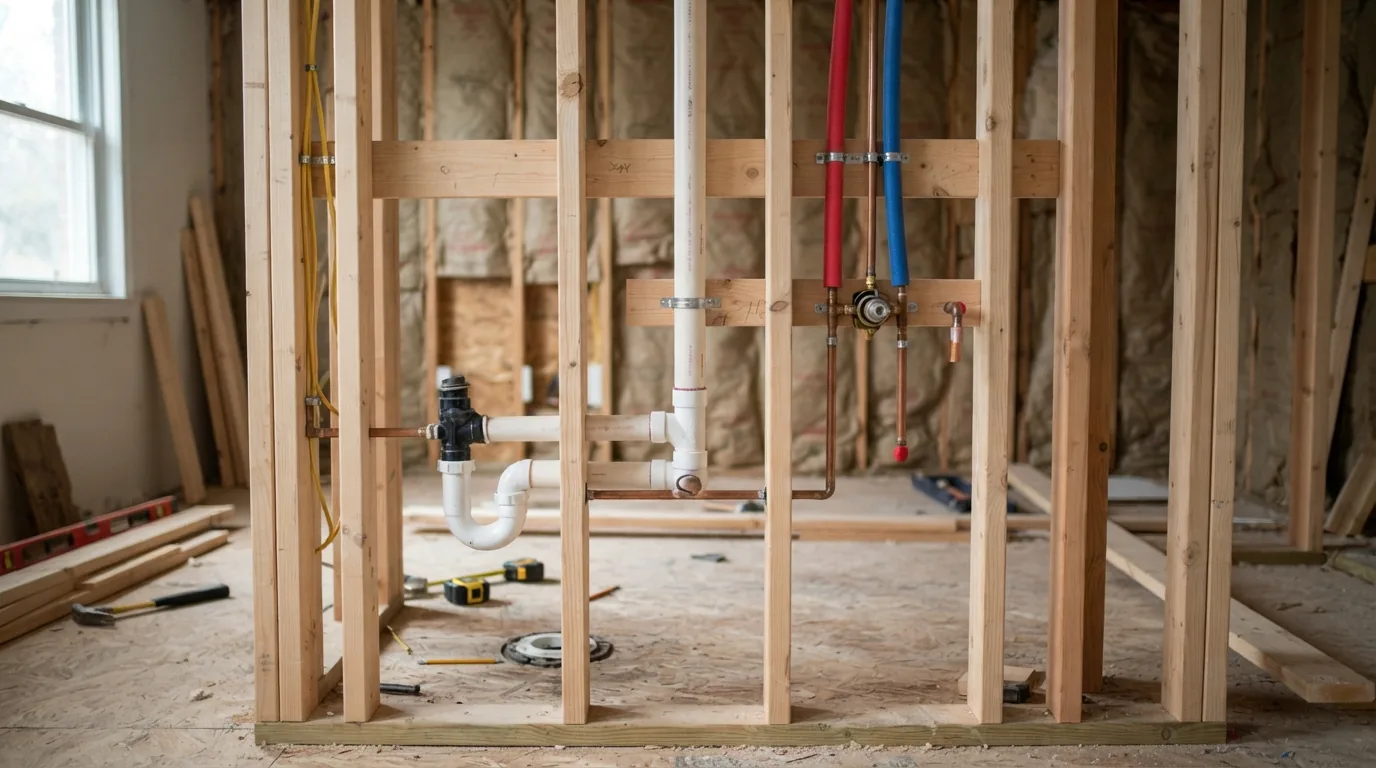
Move the toilet three feet and you’re into the floor. Waste pipe needs a specific fall to drain properly, so it isn’t a matter of extending it sideways — the run has to be rebuilt at the correct slope, which means opening the floor and working between joists you’re not allowed to cut wherever you like.
In an older Silver Spring house, that’s where surprises live. Homes from the 1920s to the 1950s often have cast iron waste and galvanized supply, and opening a floor sometimes reveals pipe that shouldn’t be reconnected to. That’s not a contractor finding extra work — galvanized supply corrodes internally and chokes down over decades, and nobody sensible connects a new bathroom to it.
2. What’s behind the tile
A shower’s real enemy is water getting past the surface. Tile isn’t waterproof; the layer behind it is.
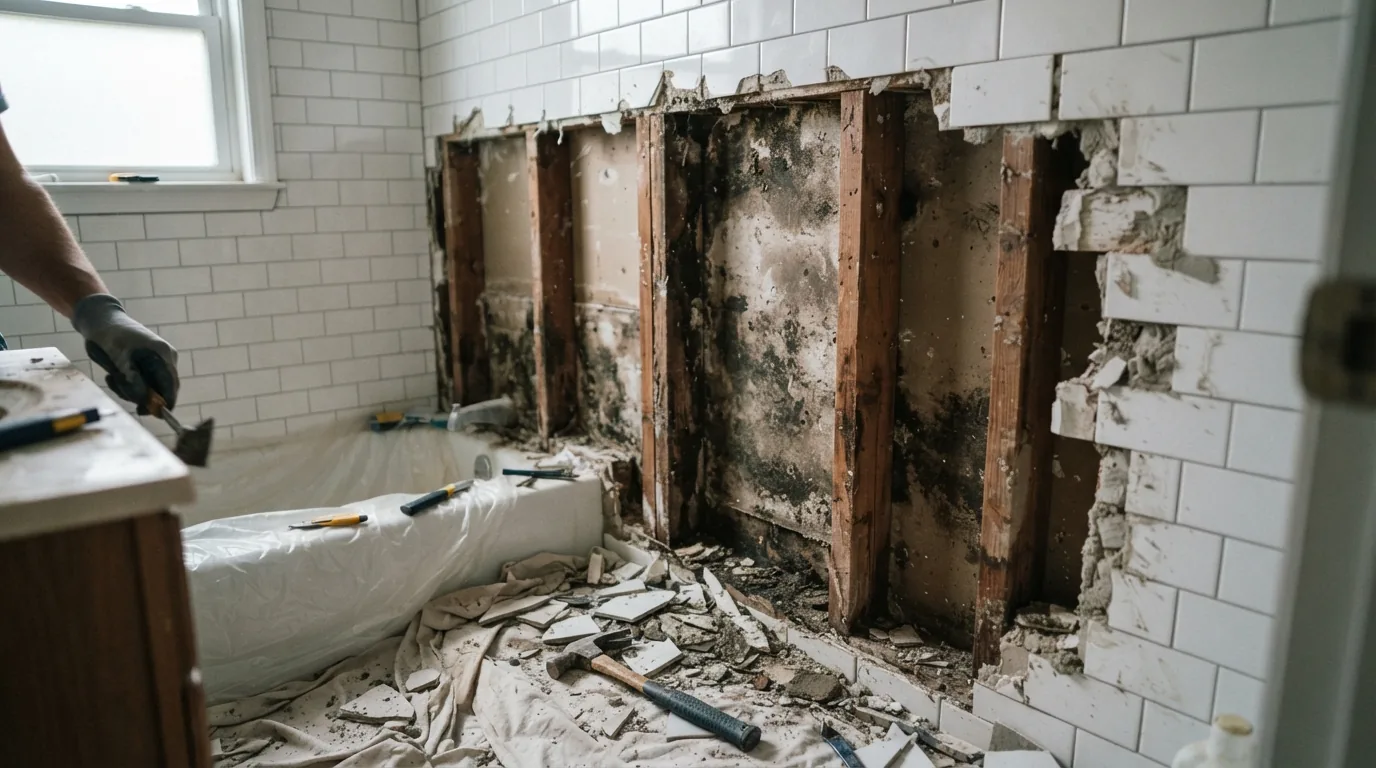
In houses of a certain age the shower was tiled onto drywall or, worse, onto plaster with no waterproofing at all. It works until it doesn’t, and then it fails quietly for years before anything shows. Pull the tile off and you find soft board, sometimes rotten framing.
You can’t know until it’s opened. Which is why an honest estimate for an older bathroom includes a line about what happens if the substrate is gone — and why an estimate with no such line makes me nervous on your behalf.
3. Ventilation, which is not optional
A bathroom with no extraction, or one venting into an attic rather than outside, will grow mold whatever you spend on finishes. It’s the single most common defect I find in older bathrooms here, and our summers are humid enough to make it inevitable rather than possible.
Adding a properly ducted fan that discharges outdoors is a modest line on an estimate and the highest-return item on it.
4. Whether the layout changes at all
Not moving anything: straightforward.
Swapping a tub for a shower in the same space: moderate, mostly drain work.
Reconfiguring the room: this is where budgets double, because it triggers plumbing moves, possible electrical changes, and often permits.
The permit question
Cosmetic replacement in the same footprint generally doesn’t need a permit. Moving plumbing or altering electrical usually does. In unincorporated Silver Spring that’s Montgomery County Department of Permitting Services, and it’s one authority rather than two — unlike Rockville or Takoma Park, where a city process sits on top of the county’s.
It’s genuinely simpler here than in most of our service area. Worth knowing, because people assume permits are a nightmare and then find this one isn’t.
Where the money doesn’t go
Two honest notes on the choosing part, since that’s where people expect the cost to be.
Tile price matters far less than people think on a small bathroom. The difference between mid-range and expensive tile across a typical Silver Spring bathroom is often a couple of hundred dollars, because the area is small. Labor to install it is the same either way. Buy the tile you actually want.
Fixture brand matters more for how long it lasts than for what it costs to fit. A cheap shower valve and a good one take the same time to install, and only one of them is still working in eight years — and replacing a valve means opening the wall again.
Ballpark, honestly labeled
I won’t quote a number without seeing the room. National cost guides put full bathroom remodels across a wide range, with the spread driven by size and by whether plumbing moves. Treat published figures as market ranges, not as our price.
What I’d say instead: get the estimate itemized. A single number tells you nothing, and it makes comparing two quotes impossible.
The short version on bathroom remodeling in Silver Spring
Bathroom remodeling in Silver Spring is priced by what moves, not by what you choose. Keeping fixtures in place keeps costs sensible; relocating them means opening the floor and rebuilding waste runs at the right fall. Older homes here carry two specific risks: aged galvanized supply pipe, and showers tiled with no waterproofing behind them. Ventilation is the cheapest high-value item on the list, and permits go through the county alone rather than a city as well.
If you want an itemized look before committing to anything, that’s what our bathroom work starts with, and we cover Silver Spring and the surrounding neighborhoods. Free estimates, no obligation.
Frequently asked questions
Q: Does moving the toilet really cost that much?
A: It’s the most expensive small decision in a bathroom. Waste pipe needs a consistent fall, so relocating it means opening the floor and rebuilding the run — not simply extending it.
Q: How do I know if my shower has waterproofing behind the tile?
A: Usually you can’t without opening it. Warning signs are loose or hollow-sounding tiles, grout that keeps failing in the same place, and a musty smell that doesn’t clear. In pre-1970s bathrooms, assume it’s a real possibility.
Q: Do I need a permit for a bathroom remodel in Silver Spring?
A: For like-for-like replacement, generally not. For moving plumbing or altering electrical, generally yes, through Montgomery County DPS. Unincorporated Silver Spring means one authority, not two.
Q: Is it worth remodeling a small bathroom?
A: Often more worth it than a large one, proportionally. Small rooms need less material, so the finish level you can afford per square foot is higher — and bathrooms carry disproportionate weight with buyers.
