

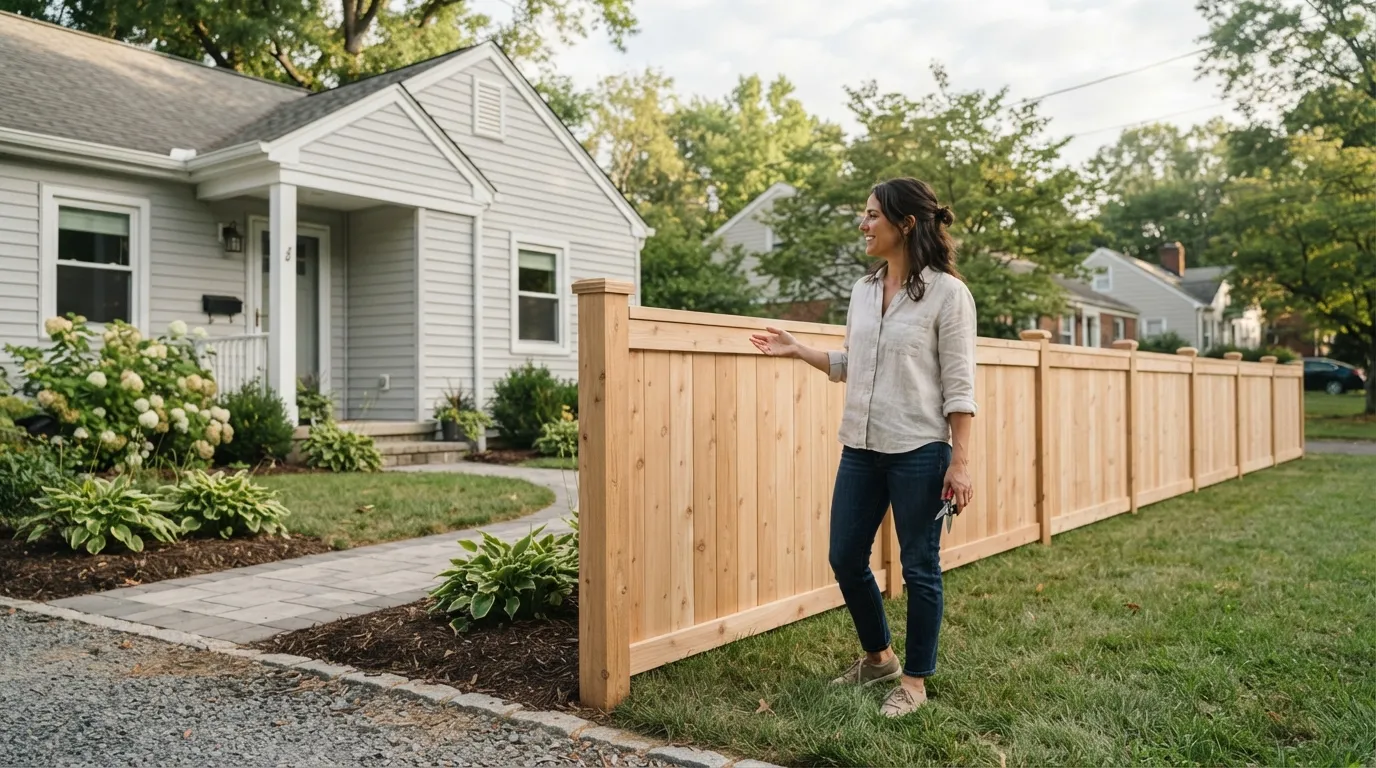
Start with the job the fence must do
To improve curb appeal with a fence, decide what the fence must do before choosing a color, pattern, or finish. A fence that looks polished from the street still needs to support the way you use the property. Start with the main purpose, then make appearance serve that purpose rather than working against it.
Ask yourself which of these matters most:
- A cleaner, more finished view from the street
- More privacy around the yard
- A stronger sense of security
- Easier access through the property
- A combination of appearance and daily function
The answer affects almost every later choice. A fence intended mainly to improve the view may need only a targeted visual update. A fence intended to provide privacy needs a pattern and spacing that support that goal. A fence connected to security or regular access needs to remain practical at the places you enter and leave.
Look at the fence from the street, from inside the yard, and from the approach to the gate. A design that looks balanced from one position can feel heavy from another. Pay attention to how much of the home remains visible and whether the fence helps the frontage feel organized or makes it feel closed off.
You can make this assessment yourself before deciding on any work. Walk the boundary slowly and separate appearance problems from function problems. Peeling or uneven finish is a different issue from a fence that no longer supports privacy or security. A change in color may address one concern, while a different pattern or a larger project may be needed for another.
Do not begin by choosing the most decorative option. Begin by naming the job the fence must perform, then decide how much visual change is appropriate.
Small details shape the frontage
A fence does not need an elaborate design to look deliberate. Small visible details can change the way the whole frontage reads. A top cap, a stain, or a feature gate can give an existing fence more definition without automatically requiring a completely different material. The right choice depends on the fence’s purpose and the character you want the property to show.
Color is one of the easiest details to notice. A finish can make the fence blend more quietly into the property or give it a stronger presence from the street. Look at the home, the yard, and the fence together rather than selecting a finish in isolation. A color that seems attractive on its own may compete with the home or draw attention away from the entry.
Height changes the visual weight of the frontage. A taller fence can feel more enclosing, while a lower fence can leave more of the yard and home in view. Neither approach is automatically right. Consider how much privacy and security you need, then check whether the chosen height supports the way you want the property to appear.
Spacing has a similar effect. Closely placed boards create a more solid visual field. More open spacing can make the boundary feel lighter, but it may not suit the privacy you want. A fence should not be judged only from the sidewalk. Look through it from the yard as well, because the same spacing affects both the street view and your experience inside the property.
The upper edge deserves attention. A top cap can give the fence a clearer line and make the work look more finished. A lattice-top design can add a different character while keeping the fence connected to a familiar pattern. Board-on-board and shadowbox designs offer other ways to create a more intentional appearance using standard lumber and standard labor.
A feature gate can become the visual focus of the frontage. That does not mean the gate should be unrelated to the rest of the fence. Let its finish, pattern, and overall character relate to the surrounding sections so the entry feels planned rather than added later.
Patterns matter because the eye follows repetition. If one section has a different treatment, use it for a reason, such as marking the entrance or creating a focal point. Too many changes can make a small frontage feel busy. A simpler arrangement often looks more settled.
Finish quality also affects the result. Uneven color, inconsistent spacing, or a mismatched gate can make a sound fence look unfinished. Before choosing decorative work, decide which details should repeat across the frontage and which detail, if any, should stand apart.
The most useful test is simple: view the fence from the street, then check whether the same choices still support privacy, security, and daily use. Appearance is part of the job, not the whole job.
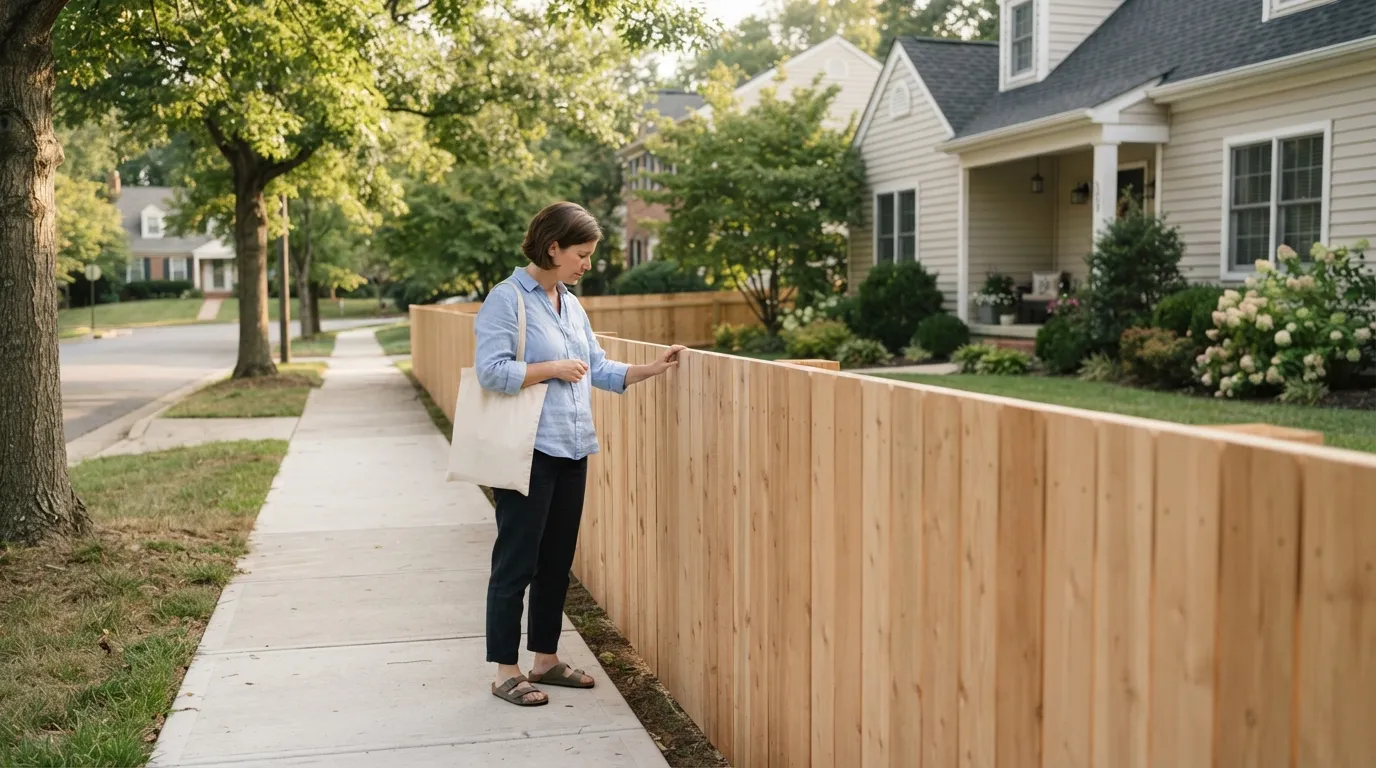
Improve the fence you already have
Replacing a fence is not the only way to improve its appearance; see our guide to fence repair and installation. Start by separating surface concerns from problems that affect the fence’s purpose. A tired finish, an unclear upper edge, or an ordinary entrance may respond to a focused upgrade. A fence that no longer supports privacy, security, or daily use needs a more careful decision.
Stand back first. Look at the full frontage rather than judging one board at a time. From a distance, note whether the fence appears uneven, visually heavy, unfinished, or disconnected from the home. Then move closer and look for the specific source of that impression. The goal is to avoid paying for a large change when a targeted improvement addresses the visible issue.
Use this decision path:
- Decide whether the main problem is appearance, function, or both.
- Identify the sections that create the poor street view.
- Check whether a finish, top cap, feature gate, or pattern change addresses the problem.
- Reconsider replacement only if the existing fence cannot support the result you need.
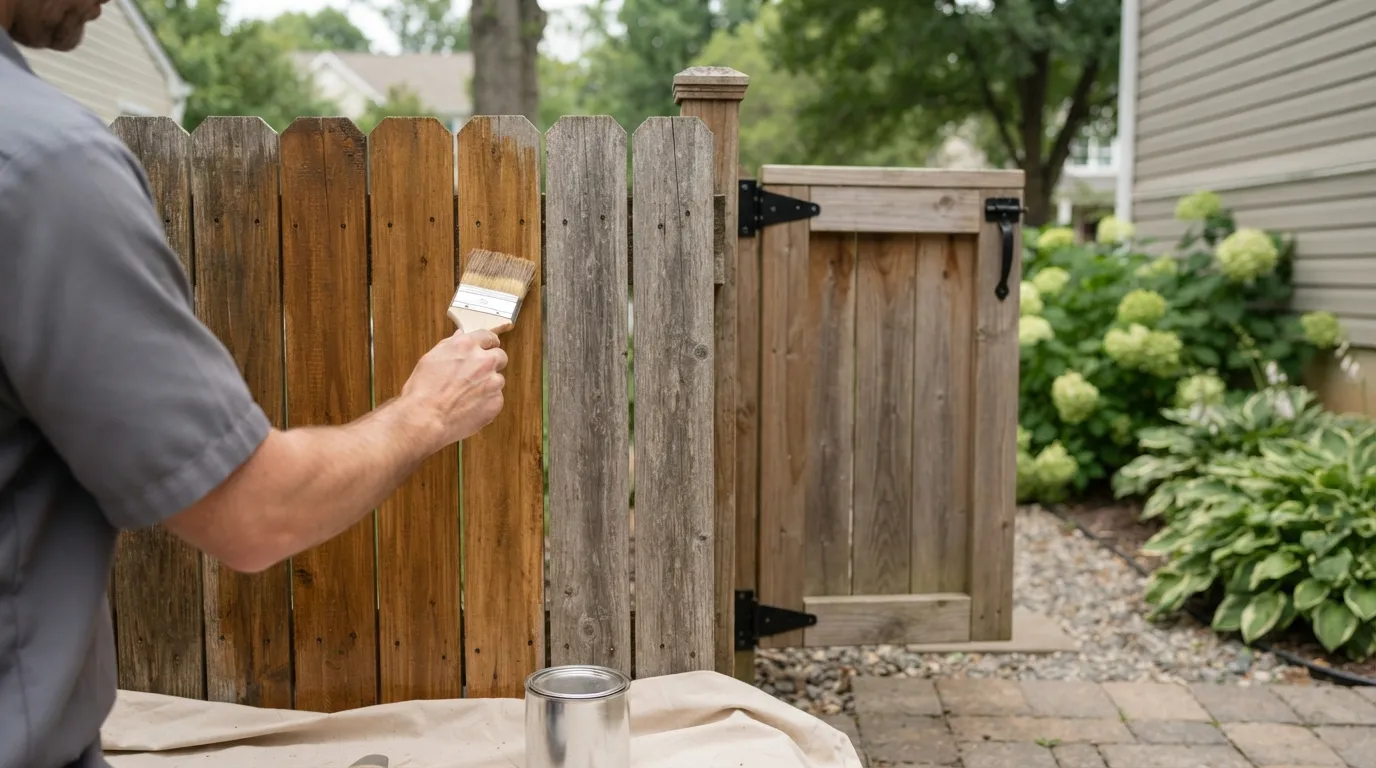
A finish can change the appearance of an existing fence, but preparation still matters. A new color will not make an inconsistent surface look uniform if the underlying condition remains distracting. Look for a clear difference between a fence that needs a better finish and one that needs its role reconsidered.
A feature gate can create a more deliberate entry without changing every section. These choices let you focus attention where it matters most.
Pattern changes can also make an existing frontage feel more considered. Board-on-board, shadowbox, and lattice-top designs are options described with standard lumber and standard labor. They may offer a way to change the visual character without treating every improvement as an exotic material decision.
Do not hide a function problem beneath decorative work. If the fence no longer provides the privacy, security, or daily use you expect, a stain or top detail will not solve the underlying mismatch. Cosmetic work makes sense when the basic role remains suitable. A larger project deserves consideration when the basic role no longer fits.
The first-timer’s common mistake is choosing a finish before deciding what the finished fence must accomplish. That reverses the process. Define the result, inspect the existing fence honestly, and then choose the smallest change that can deliver it.
Keep curb appeal useful every day
An attractive fence still has to work during ordinary use. The best-looking frontage can become frustrating if it makes entry awkward, blocks useful sightlines, or provides less privacy and security than you expected. Judge the design by what happens on a normal day, not only by how it looks in a single street view.
Start with access. Identify the places where you enter, leave, or move between the street and the yard. A feature gate can improve the frontage, but it should remain consistent with the way you use the property. A gate that looks like a focal point but does not support convenient daily access is a design problem, not simply a decorative choice.
Sightlines deserve the same attention. A solid, tall appearance may support privacy, yet it can also make the frontage feel more enclosed. More open spacing can create a lighter view, but it may not provide the level of privacy or security you want. Compare the street view with the view from inside the yard before settling on a pattern.
Security should be part of the design conversation from the beginning. A decorative treatment does not automatically provide the security you need. Consider whether the chosen height, spacing, and entry arrangement match the purpose you identified at the start. If appearance and security point in different directions, choose the function that matters most and adjust the visual details around it.
Daily use also includes how the fence relates to the home and yard. A fence that dominates the frontage may make the home feel less open. A fence that disappears visually may fail to create the boundary you want. The goal is not to make every section equally noticeable. The goal is to make the whole property feel intentional while preserving useful access and sightlines.
Use the street view as a test, not as the only measure. Check the fence from inside the yard, near the entry, and along the approach to the property. Ask whether the finish, height, spacing, and gate arrangement still make sense from each position.
If the fence looks better but works worse, the project has missed its purpose. Make function the standard that the decorative choices must meet.
Build a clear plan before work begins
A clear plan starts with the fence you have, not the design you happen to like. Record the current appearance from the street and from inside the yard. Note which sections look worn, which details affect privacy or security, and which areas need to remain easy to use. This gives you something specific to discuss before any work begins.
Next, describe the finish you want in plain terms. You might want a cleaner color, a clearer upper edge, a feature gate, or a change in pattern. You might instead want a modest improvement that keeps the existing character. A useful description explains the result without assuming that replacement is the only answer.
Check local project requirements before work starts. Requirements can affect what you are allowed to change and how the work should be planned. Confirm the project scope before materials or labor are arranged, especially if the work changes the fence’s form, location, or relationship to neighboring property.
Prepare questions that keep the discussion focused:
- Which parts of the existing fence can remain?
- Is the main recommendation a finish, a targeted upgrade, or replacement?
- How will the proposed height, spacing, and pattern affect privacy and security?
- What will change at the gate and other access points?
- Which details are included in the written scope?
A clear scope should describe the sections involved, the visual changes proposed, and the function the fence is expected to preserve. It should also make clear what is not included. This prevents a small curb-appeal project from becoming an open-ended change once work begins.
Ask for the reasoning behind the recommendation. If a professional suggests a top cap, stain, feature gate, board-on-board design, shadowbox pattern, or lattice top, you should understand which problem that choice addresses. The best discussion connects each visible detail to the result you want.
The same approach helps you compare improving the existing fence with starting over. An existing fence may be a good base when its role still fits and the main concern is appearance. A larger project may make more sense when the fence cannot deliver the privacy, security, access, or daily use you need. The decision should follow the condition and purpose of the fence, not the excitement of a new design.
Call a professional when the project involves requirements you cannot confirm, a repeated failure, or work beyond the simple visual changes you can assess yourself. A professional visit can separate a cosmetic upgrade from a broader fence project and turn your preferred appearance into a defined scope.
Frequently asked questions
Can I improve a fence without replacing the whole thing?
Yes, an existing fence may need only a targeted visual upgrade when its basic role still fits the property. A finish, top cap, feature gate, or pattern treatment can change its appearance, but cosmetic work will not solve a fence that no longer supports privacy, security, or daily use.
Which fence details affect curb appeal the most?
Color, height, spacing, finish, the upper edge, and the gate all affect how a fence looks from the street. Choose these details together so the frontage feels deliberate while still supporting the privacy, security, and access you need.
How do I choose between a repair and replacement?
Separate appearance concerns from function concerns before choosing the scope. If the fence still performs its basic role, a finish or targeted upgrade may address the visible problem; if it no longer supports the role you need, consider a broader project.
What should I discuss before requesting fence work?
Describe the current condition, the finish you want, and the function the fence must preserve. Ask which sections can remain, how the proposed height and spacing affect privacy and security, what changes at the gate, and what the written scope includes.
