

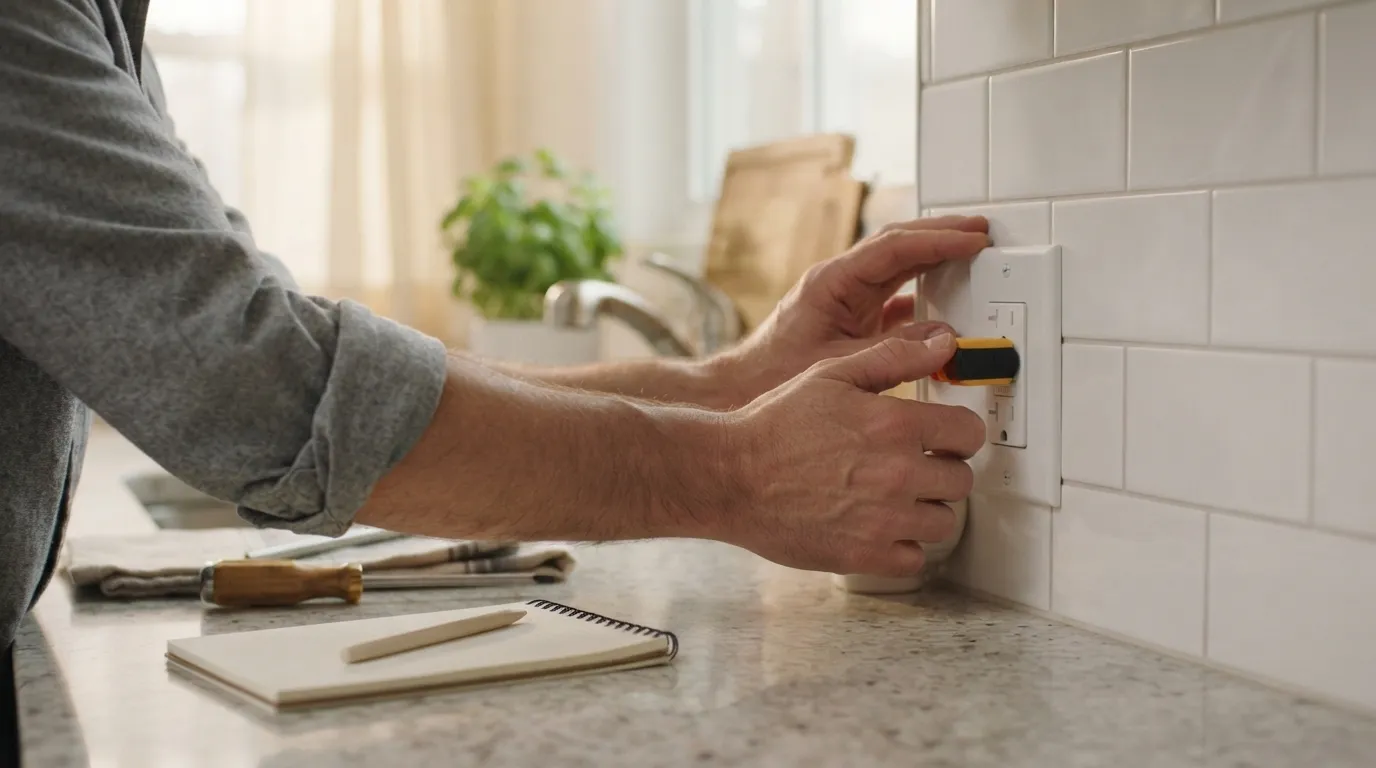
You should check outlets, switches, power strips, GFCIs, smoke and CO alarms, and the main panel every 6 months. Look for scorching, burning smells, heat, flickering lights, overloaded outlets, failed tests, and tripped breakers. Stop using affected circuits, switch off the breaker if needed, and call a licensed electrician for serious problems.
Do a short basic home electrical safety checklist now to spot the most dangerous problems. Use it to test outlets and detectors safely. Decide what to stop using and when to call a professional. This page is written for homeowners in Silver Spring and Montgomery County and points to the checks professionals use and the actions to take.
What quick safety check can you do now?
Start with a quick visual and touch check that takes only a few minutes. Look for scorch marks or dark staining around outlets and switches. Notice any persistent smell like burning. Also watch for lights that flicker when a particular appliance turns on. Check for multiple plugs or power strips feeding a single outlet, which guidance highlights as an overload risk. Open the door to the main panel and note if any breakers are visibly tripped. Also note if there is rust, moisture, or a strong metallic smell near the panel.
If an outlet or switch feels hot to the touch, stop using the circuit and unplug anything attached. Make a short note of the room and the exact outlet or switch so you can describe it when you call for help. These quick signs are the priorities professionals look for when they begin an inspection.
What to look for, room by room
Kitchens and bathrooms are where wet conditions and high-draw appliances meet, so they need careful attention; see our kitchen renovation checklist. In these rooms, look for outlets near sinks that do not have a test/reset device or that are not labeled. Check behind ranges, microwaves and dishwashers for melted insulation or scorch marks on cords. Make sure large appliances are not running through extension cords that run under rugs or through doorways.
Bedrooms and living spaces need attention for overloaded lamp and media clusters. Where multiple chargers, lamps, and entertainment devices run into a single strip or outlet, stop that practice. Move plugs so heavy-load appliances have a dedicated outlet. Avoid daisy-chaining power strips. In garages and basements look for extension cords used as permanent wiring, outlets that are mounted loosely, and wiring rubbed where it passes through framing.
Every room, briefly:
- Check outlets and switches for discoloration, cracking, or loose trim that lets wiring move. These visible signs point to heat or wear.
- Look for too many devices plugged into one outlet or one power strip, the common overload hazard shown in industry guidance.
- Smell for burning, and watch for lights that dim or flicker when something else switches on.
Make a short list of any outlet or device that fails these checks and keep it next to the panel. You will use those notes if you call a technician.
How to test outlets, GFCIs, and smoke and CO alarms
Testing is about being safe and being able to describe what failed. For outlets, a quick functional test is to plug in a simple lamp or phone charger you know works. See whether it powers and whether the plug fits snugly. If the plug sparks, feels loose, or the lamp flickers, stop using that outlet and record its location.
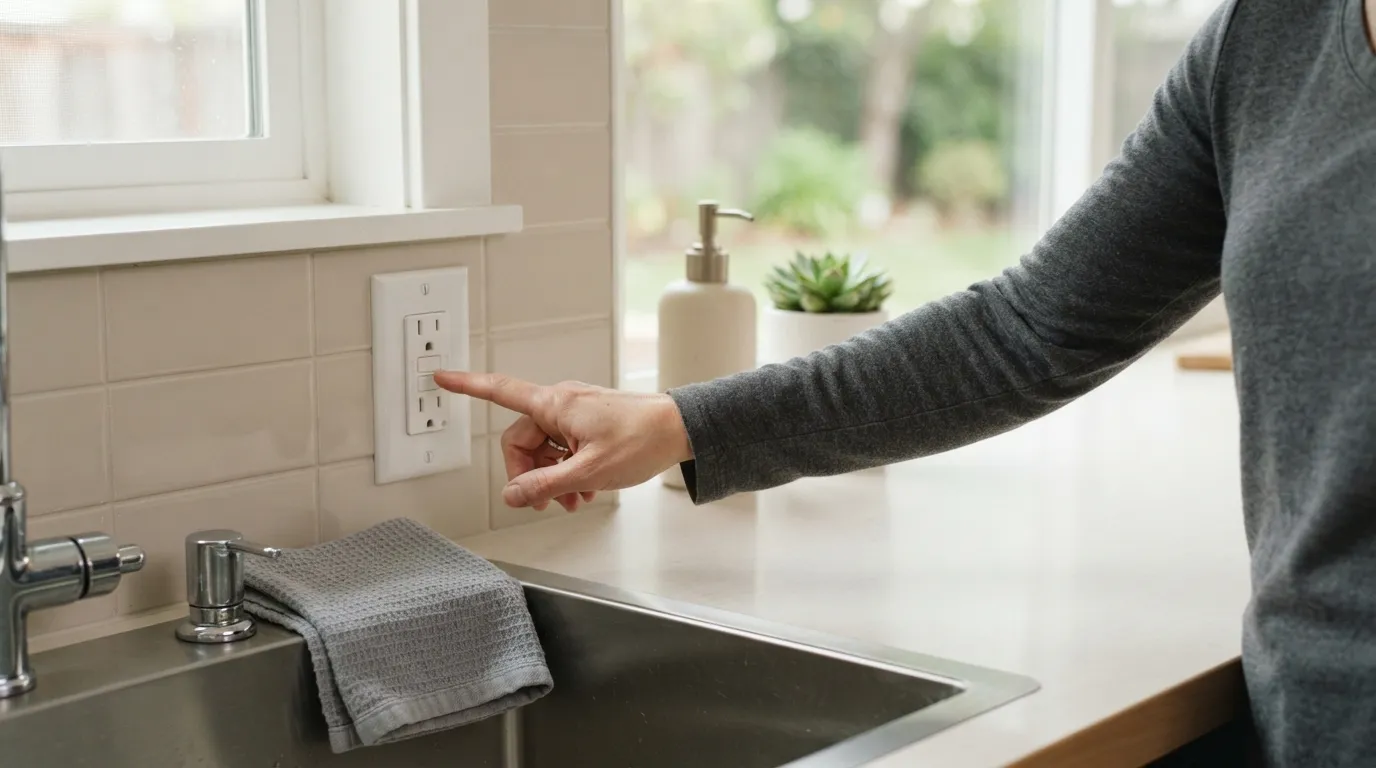
GFCI devices protect outlets near water and usually have test and reset buttons marked TEST and RESET. To test a GFCI: press the TEST button and check that the outlet loses power, then press RESET to restore power. If the outlet does not lose power when you press TEST, the device has failed the test. If it will not reset, have the device repaired or replaced. Note the exact location of any failed GFCI for an electrician to inspect.
Smoke and CO alarms need to be tested regularly. Use the alarm’s TEST button, press until the alarm sounds, and listen for the loud, obvious tone. If an alarm does not sound, replace the battery if it uses one and test again. If it still does not sound, replace the alarm following the manufacturer instructions. Arrange for a professional replacement when required. An alarm that chirps or otherwise signals a fault after a test also needs replacement or inspection.
What a failed test looks like:
- An outlet that never powers a known-good device, sparks when a device is plugged in, or makes the device lose power intermittently.
- A GFCI that does not cut power when its TEST button is pressed or that will not reset.
- A smoke or CO alarm that does not sound during a TEST, or that gives a consistent fault chirp after fresh batteries.
When you test, keep notes of which room and which outlet or device failed, and whether the failure was repeatable. That makes the visit from a professional faster to diagnose.
Main panel and service: what an inspection covers
A professional inspection separates the service entrance from the main panel. The service entrance is where the utility connection reaches your property. The main panel distributes circuits through your home. A professional inspection form records basic client and job details like client name, address, and date of inspection. It also records technician name and inspector license number and the reason for inspection. Reasons include routine maintenance, a new installation, a property sale, or a fault investigation.
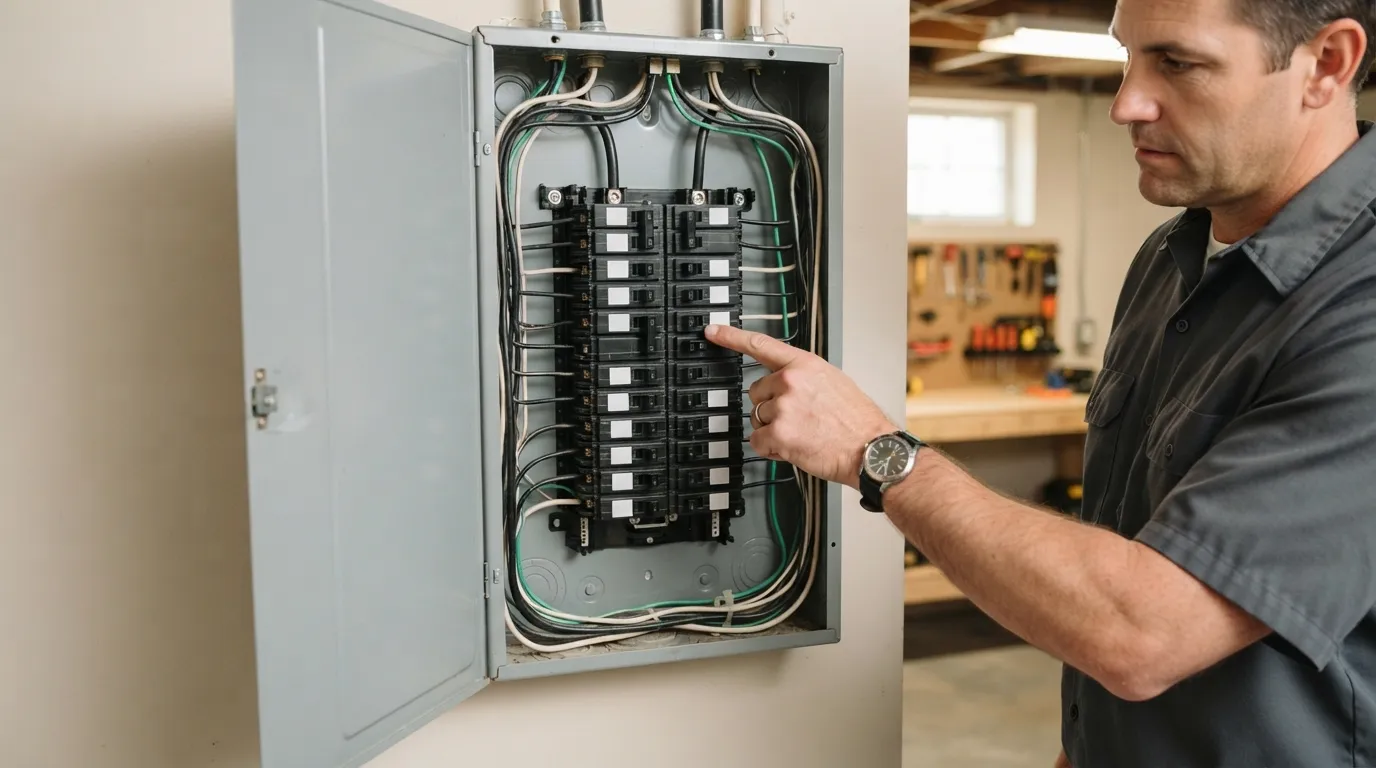
At the panel, a technician checks for tripped or damaged breakers. They look for signs of overheating such as dark staining on the enclosure or melted insulation. The technician also checks whether the panel is full or has open spaces that make future work harder. They also look at grounding and bonding equipment to confirm there is a visible ground conductor and that bonding connections are not loose or corroded. The inspection will note whether wiring methods appear appropriate for the circuits served and whether any obvious DIY wiring is present.
The service entrance inspection focuses on where the utility’s wires connect to your home and the meter. Inspectors look for worn or frayed conductors, evidence of water intrusion at the weatherhead or meter, and clearances that make the service safer to maintain. The report groups findings under headings that match these areas. That lets you see at a glance whether the issue is the service entrance or the main panel. The headings also show individual branch circuits when applicable.
If work is required, the inspection form will list the items. It will usually group them by priority so you and the contractor can decide what to address first. Knowing these inspection headings helps you understand a report and ask the technician the right questions when they explain what they found.
If you find a problem: safe next steps and when to call a pro
If you discover scorch marks, a burning smell, or an outlet that is hot, stop using that circuit immediately. If a GFCI will not reset, stop using that circuit. If breakers trip repeatedly on the same circuit, unplug appliances from that circuit and stop using it immediately. For an outlet that is loose or sparks, avoid plugging anything else into that outlet until it has been inspected.
Safe interim steps you can take include switching off the breaker for the affected circuit at the main panel. Label it so it is not used. Do not try to remove the outlet cover or touch wiring. Do not run major appliances through extension cords as a long-term fix. These temporary actions reduce immediate risk while preserving evidence for the technician to inspect.
Call a licensed electrician when you notice any of the following. Call if you smell persistent burning or see visible heat damage at an outlet or panel. Call if a GFCI will not reset, an outlet sparks or is hot, or breakers trip repeatedly on same circuit. Also call a professional if a smoke or CO alarm does not respond to a proper TEST procedure after fresh batteries are installed. When you call, be ready to describe the room and the outlet or device location. Also describe what you saw or smelled and whether the issue happened once or repeatedly.
If the problem involves the service entrance, water near the meter, or visible exterior wiring damage, schedule the inspection soon. These issues affect the safety of anyone working on the property and may require coordination with the utility.
A landlord and property manager checklist and schedule
Landlords and property managers should use a short, repeatable checklist to keep units safe and to document inspections. Professionals recommend grouping inspections by reason on the form, routine maintenance, new installation, property turnover or fault investigation, so each visit has a clear scope and record. For rentals, focus on door-locking alarms and GFCIs in kitchens and bathrooms. Make sure smoke and CO alarms are in every unit. Look for visible signs of overloaded circuits where tenants may run multiple high-draw devices.
Keep a simple log with the address and date of inspection when work is done. Also record the technician name and license number so you can show records to tenants or inspectors. Make a standard tenant handout that tells renters how to test GFCIs and alarms and where to report problems. This reduces small calls and helps you catch issues before they worsen.
CPSC guidance suggests you run the checklist on a regular cadence to keep hazards visible. Use the same regular cadence for rental inspections and record the results. That lets you prioritize repairs between occupancies.
Printable checklist and how often to repeat it
A printable checklist for homeowners follows the CPSC room-by-room approach. Look for discoloration or scorching at outlets and switches, and test GFCIs and smoke and CO alarms. Check for overloaded outlets and power strips and inspect the main panel for tripped breakers or visible damage. Keep the checklist with your emergency contact details and the panel notes you made earlier.
The CPSC recommends performing the home electrical safety checklist every 6 months, and using a written record helps you track recurring issues and prioritize repairs. If an inspection or test fails, make an appointment with a professional. Bring your checklist and notes showing where each failed item is located. That makes the visit more efficient and helps the technician find the root cause faster.
Frequently asked questions
How do I test a GFCI outlet safely at home?
Press the GFCI’s TEST button and check that the outlet loses power, then press RESET to restore power. If the outlet does not cut power on TEST or will not reset, note its exact location. Have it inspected or replaced by a professional.
How often should I run a home electrical safety checklist?
Follow the CPSC recommendation to perform the home electrical safety checklist every 6 months and keep a written record of each check. Regular checks help you spot recurring faults and prioritize repairs before they become hazards.
What does an electrical inspector check at the main panel?
An inspection will separate the service entrance from the main panel and note tripped or damaged breakers, signs of overheating, and grounding and bonding connections. The inspection form will record client and job details so you have a clear list of items and priorities after the visit.
When should I stop using a circuit and call an electrician?
Stop using a circuit if you find scorch marks, a burning smell, or an outlet that is hot or sparking. Also stop if a GFCI will not reset or a breaker trips repeatedly. These conditions indicate issues that need a licensed electrician to diagnose and repair.
