
Match the floor to the bathroom’s use and priorities
Choosing between flooring options for bathrooms starts with three simple questions. Consider how wet the room gets, who uses it, and how much time you want to spend on upkeep. Answer those and the choices narrow quickly. A powder room sees quick visits and light humidity. It need not meet the same standards as a main bathroom with a shower. A shower floor has a different checklist than the rest of the room.
Think in these priorities rather than brands. Waterproofing, slip safety, and low upkeep are distinct goals. A material that wins on waterproofing may need different underlayment and edge details to keep grout lines and panels behaving over time. Conversely, a surface that looks like wood may need a tighter cleaning routine to avoid moisture staining and edge failure.
Match the room type to the priority you cannot compromise on. For a small half bath, appearance and ease of cleaning are most important. Look for a finish that is easy to wipe and resists moisture at the edges. For a main bath with a shower, prioritize materials and installation details that tolerate humidity and occasional splashes. For the shower floor itself you must start with slip resistance and proper slope. That narrows the viable materials more than any color or pattern choice does.
If you are planning a renovation, keep a short list for each bathroom type. Test the look and feel in the room under the same light. Bring samples or large swatches into the space so you can see them against the walls and fixtures.
Real material trade-offs to weigh
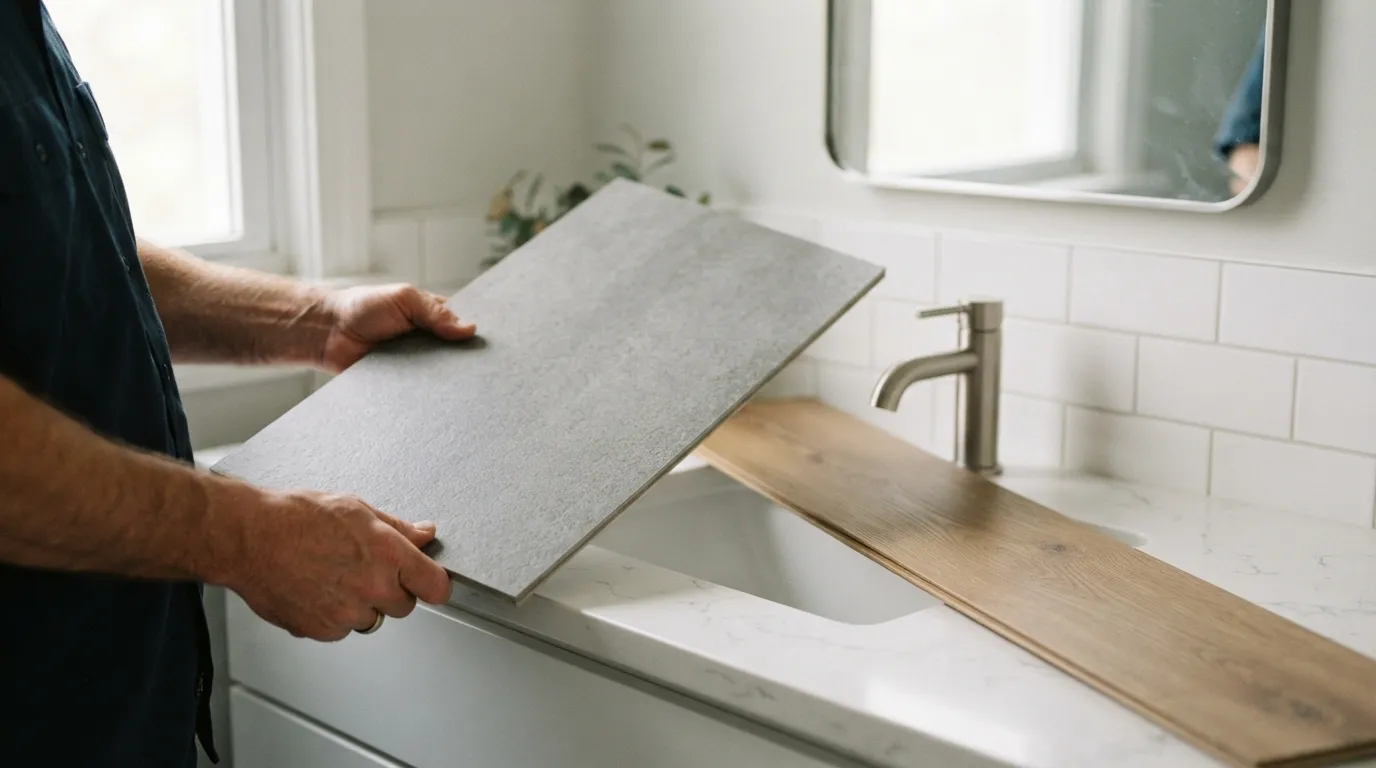
Across current guides the materials you will see listed first are porcelain, ceramic and vinyl in its many formats. Each group has real trade-offs in appearance, wet-room performance and routine care. Know what you are sacrificing when you pick the look you prefer.
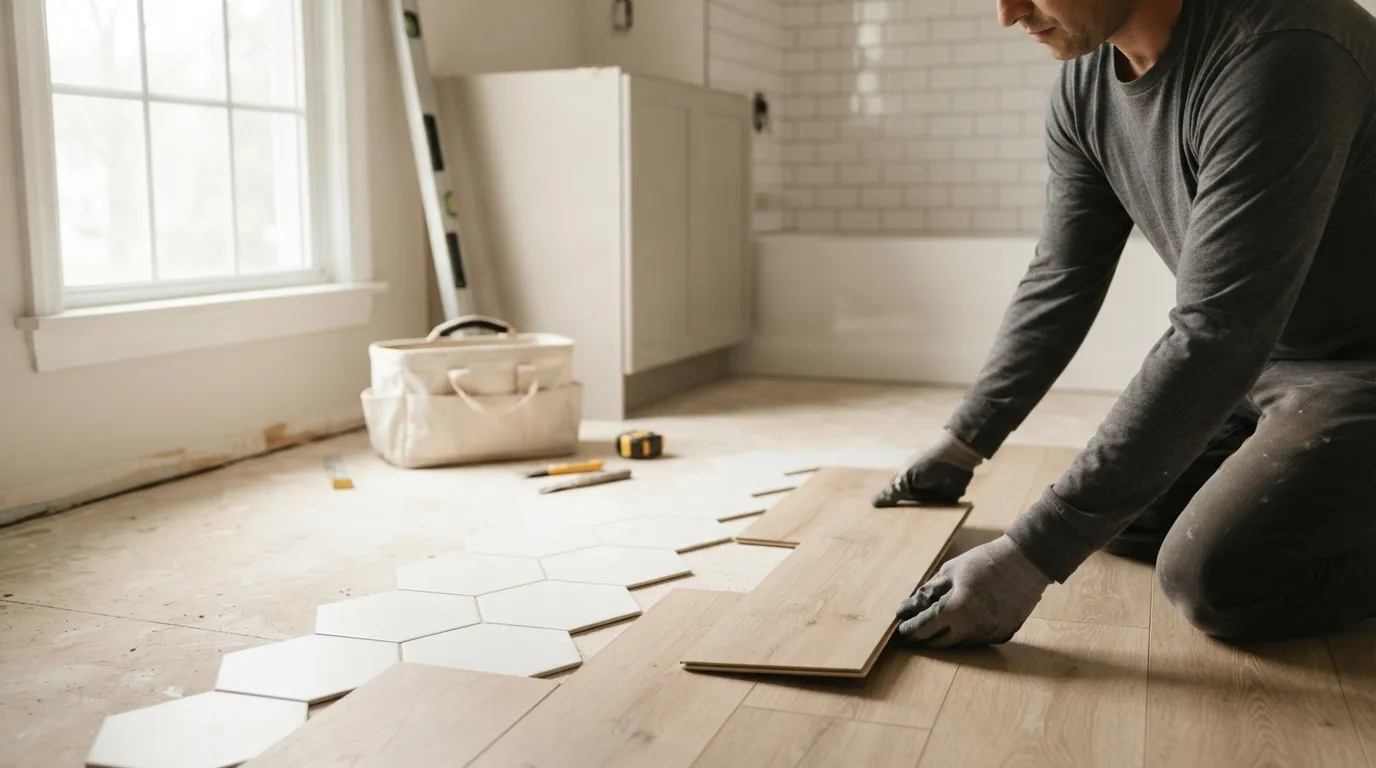
Porcelain tile offers a dense surface and tolerates moisture and heavy foot traffic. It still depends on grout and edge detailing to keep water from reaching the substrate. Ceramic tile is related and shares many of the same advantages, while usually being lighter in weight and sometimes less dense. Both tile types give you a very wide range of looks, from small mosaics for shower floors to large-format planks for the main room.
Sheet vinyl and luxury vinyl tile (LVT) come in formats that range from flexible rolls to rigid, multi-layer boards. These products are popular because they give you a wood-look or stone-look appearance. They can be highly water resistant when installed with proper seams and edge treatments. In rooms where spills and humidity are frequent, vinyl removes several performance worries tied to grout and tile joints.
Laminate is often chosen for convincing wood visuals without the cost of solid wood, but not all laminate types are suited to a wet room. Some visual styles are strong, yet the long-term resistance to standing water and seams depends on the product family and the details of the installation. If you value the wood look, compare how each product family handles moisture and how seams are finished.
Real wood floors and true engineered wood give a warmth that alternatives do not, but they need careful detailing to live in a high-humidity space. Wood may be right where the bathroom is more of a dry, ensuite-style space. Accept that tightening tolerances, strong sealing, and prompt spill cleanup will be part of upkeep.
When you compare samples, put them under the light they will see every day. Think about joints, threshold transitions, and how skirting or vanity toe-kicks meet the floor. A finish that looks right in a showroom can become a maintenance headache if the edges are not planned for a humid environment.
Subfloor, slope and why waterproofing matters
What sits under the finish usually decides what finishes will perform. Subfloor condition, floor slope and the need for a waterproof layer change both the choice of material and whether you should hire a pro. A stable, level, and dry substrate lets tile or vinyl behave as intended. A soft, rotted, or uneven substrate will cause cracks, hollow spots, joint failure no matter how good the surface looks.
Where a shower or tub has leaked in the past you should assume repairs are needed beneath the finish. Waterproofing is not only about a top-layer membrane. It is about the whole assembly that keeps water moving to the drain and not into the structure. That assembly includes the slope to the drain on a shower floor. It also includes the underlayment used under tile or rigid vinyl and the way seams and penetrations are sealed.
“Can I lay the new floor over the old one?” is a common question in many bathrooms. The answer depends on what the old floor is and how flat and secure it is. Laying new tile or vinyl over a wavy or unstable substrate only delays the problem. A solid inspection will tell you whether the existing layer is a reliable base or whether removal and repair are the safer choice.
A pitched floor is essential in the shower. If the slope is missing or incorrect, water pools instead of going to the drain and that defeats whatever surface you choose. Fixing slope usually requires dismantling the finishes and working on the substrate. That disruption shifts a project from simple replacement into a structural repair a specialist should handle.
If you are weighing a wood-look product in a room with frequent showers, ask about edge sealing. Also ask how the installer handles transitions to wet zones and what underlayment systems they expect. Those installation details often matter more for longevity than the surface pattern you liked in the showroom.
Cleaning, slip resistance and long-term care
Routine cleaning and the way grout or joints are detailed determine how well a bathroom floor will age. A surface that is easy to mop but has deep grout lines or exposed seams will still trap soil and need occasional scrubbing. Choose finishes that balance texture for safety with a profile you can reasonably keep clean.
Slip resistance is a function of texture, finish and size of the tiles or planks. Smaller tiles with more grout lines can increase traction underfoot, but they also increase the total area of grout that needs cleaning and resealing. Many tile and vinyl finishes come in textured options designed to reduce slips. In areas used by older adults, prioritize a finish with measurable texture rather than a high-gloss smooth surface.
As humidity cycles through the year, materials expand and contract. That movement is where seams, transitions and perimeter joints fail first. Keep an eye on grout that is crumbling or caulk that has cracked; those are early signs the assembly needs attention. A proper final sealing of grout or a recommended seam treatment for vinyl reduces the chance of moisture reaching the subfloor.
Avoid cleaning routines that call for harsh solvents on surfaces that can be weakened by acids or petroleum-based cleaners. Manufacturer guidelines typically tell you what to use; when in doubt, use a pH-neutral cleaner and a soft mop. Good daily habits prevent escalation into grout repair or full rework later on.
What a bathroom flooring project actually takes
A clear sequence keeps a bathroom flooring project moving and helps you spot the points where delays occur. The flow usually runs inspection, material selection, removal, substrate prep, installation, and final sealing. Each step has its own checks and common hold-ups.
Start with an inspection that looks for previous leaks, unevenness, and the condition of any existing finish. Bring this information to the retailer or installer when you select materials so they can recommend appropriate underlayments and edge details. Choosing the right product family at the start prevents surprises at the demo stage.
Removal can reveal hidden problems. Tiles lift and you find soft spots, or an old vinyl layer peels up and shows adhesive that must be removed. Those discoveries add time because the substrate then needs patching, leveling, or replacement before new flooring goes down.
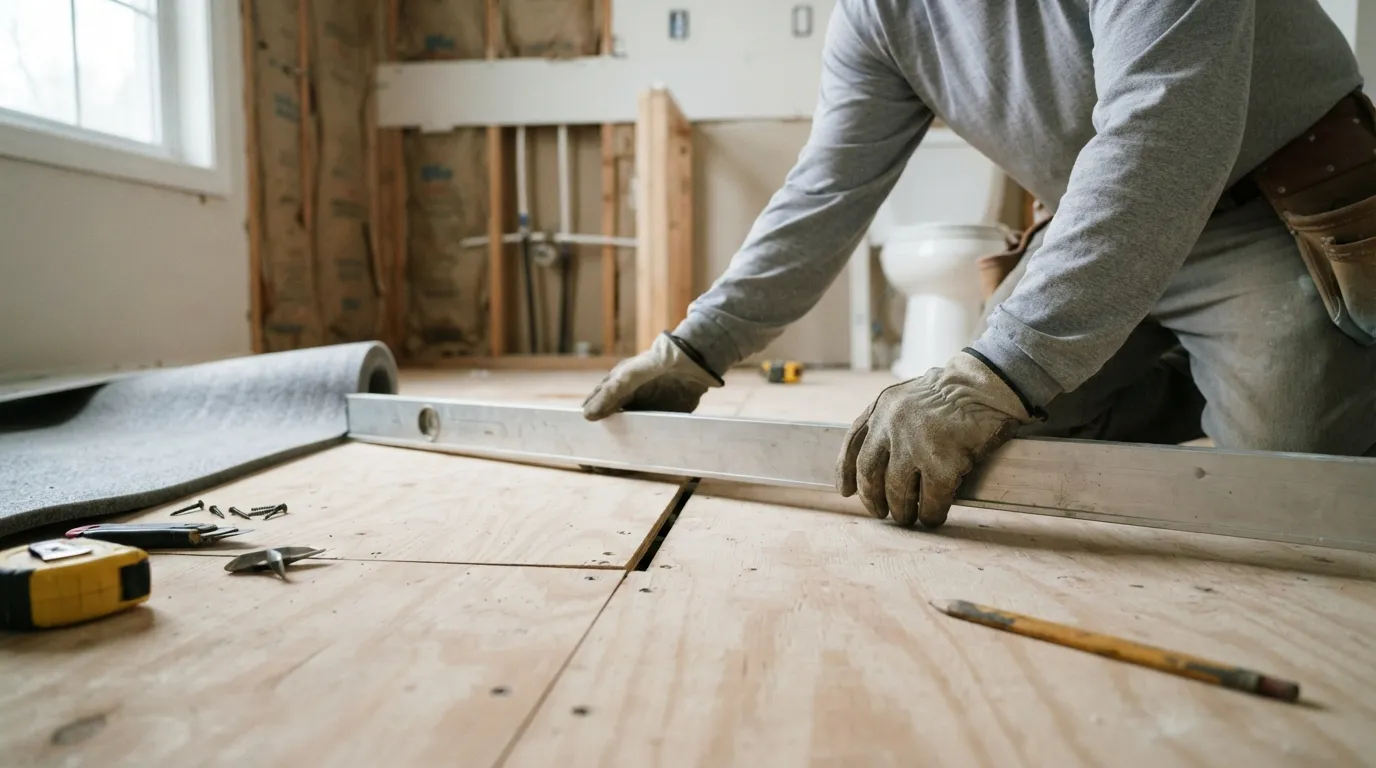
Typical steps you should expect are:
- a careful inspection and written scope of work that lists substrate issues
- removal of the old finish and a check for damage under it
- any repairs to the subfloor, including leveling or adding a proper underlayment
- the installation of the chosen surface, with waterproofing or seams handled as required
- final sealing and the trimming of thresholds and transitions
Delays most often come from substrate repairs, waiting on specialized underlayments or back-ordered materials, and cure times for adhesives or sealants. Plan the work so new vanities or fixtures are not installed until the floor assembly is complete. Allow the technician time to verify that slopes and drains are correct before you accept the final finish.
When to DIY and when to hire help
Some bathroom flooring jobs are approachable for a capable DIYer. Replacing a flexible sheet vinyl in a small powder room can be straightforward. Snapping together a floating plank product over a stable subfloor can also be straightforward. The dividing line is usually the substrate and any work that affects waterproofing or drain slope.
If the job requires fixing rotten subfloor, installing a shower pan, or reworking the drain slope, hire a pro. Applying a full waterproofing assembly is also a pro-level project. Those tasks need experience with the sequence of materials and with forming watertight transitions. They are common reasons a re-do is needed after a short time.
Vet a local contractor by asking for examples of recent bathroom floors they installed. Ask for clear descriptions of how they handle subfloor repairs. Get a written scope that lists the waterproofing and seam treatments to be used. A good quote will explain why each preparation step is required rather than hiding it in a lump-sum line. Compare materials and ask how they will protect surrounding finishes during removal and how they will handle delays that come from hidden damage.
When you decide to DIY, collect the manufacturer installation instructions for the product you buy, read them in full, and follow them closely. For work that affects plumbing or that alters drainage, arrange for a pro to check your plan before you commit to the materials.
Local points that change the choice in Silver Spring
Homes across Montgomery County include a wide mix of building ages and substrate types. That variety changes what professionals see when they lift an old floor. In older houses it is common to find subfloors that need planing, additional blocking, or targeted repairs. These repairs are needed before any tile or rigid plank product is installed. That reality makes the inspection step more important for local projects than for an installation in a new build.
Landlords and property managers in the area often put durability and quick turnover first. For them, resilient vinyl formats and tile options that resist staining can reduce downtime between tenants and simplify cleaning. The choice of finish should allow for straightforward transitions at thresholds. It should also have a replacement plan if a single unit needs rapid repair.
When you visit local stores or showrooms, take a sample and the room’s measurements with you. Ask to see installation advice for bathrooms specifically and to test how seams and transitions will be handled in tight spaces around vanities and toilets. Seeing a long plank or a tile sample in your home’s light is the fastest way to tell. It shows whether the look you like will fit the room once installed.
If you need a next step, start with a careful inspection to identify any substrate work. Then get recommendations for finishes that match how the room is used. That sequence keeps surprises small and gives you a clear conversation to have with the person who will do the work.
Frequently asked questions
What is the best material to use for a bathroom floor?
No single material is universally best; porcelain, ceramic and vinyl are the principal categories most guides list. Your choice should be driven by the room’s wetness, the need for slip resistance, and how much routine care you are willing to do.
Are vinyl floors a reliable waterproofing option for bathrooms?
Vinyl in its sheet or board formats can offer strong water resistance when seams and edges are correctly treated. That resistance depends on installation details as much as product choice, so ask how seams and thresholds will be sealed.
Can I install new tile or vinyl over my existing floor, or will the subfloor need repair?
Whether you can lay new flooring over the old layer depends on how flat and secure the existing surface is. It also depends on whether there are signs of past leaks. A careful inspection will reveal if the substrate needs leveling or repair before a new finish goes down.
Which flooring is safest for older adults and slippery conditions?
Safety comes from texture and joint detailing as much as material. Choose a finish with a tactile, slip-resistant surface and consider smaller tiles or textured vinyl options that increase underfoot traction while allowing for straightforward cleaning.
