

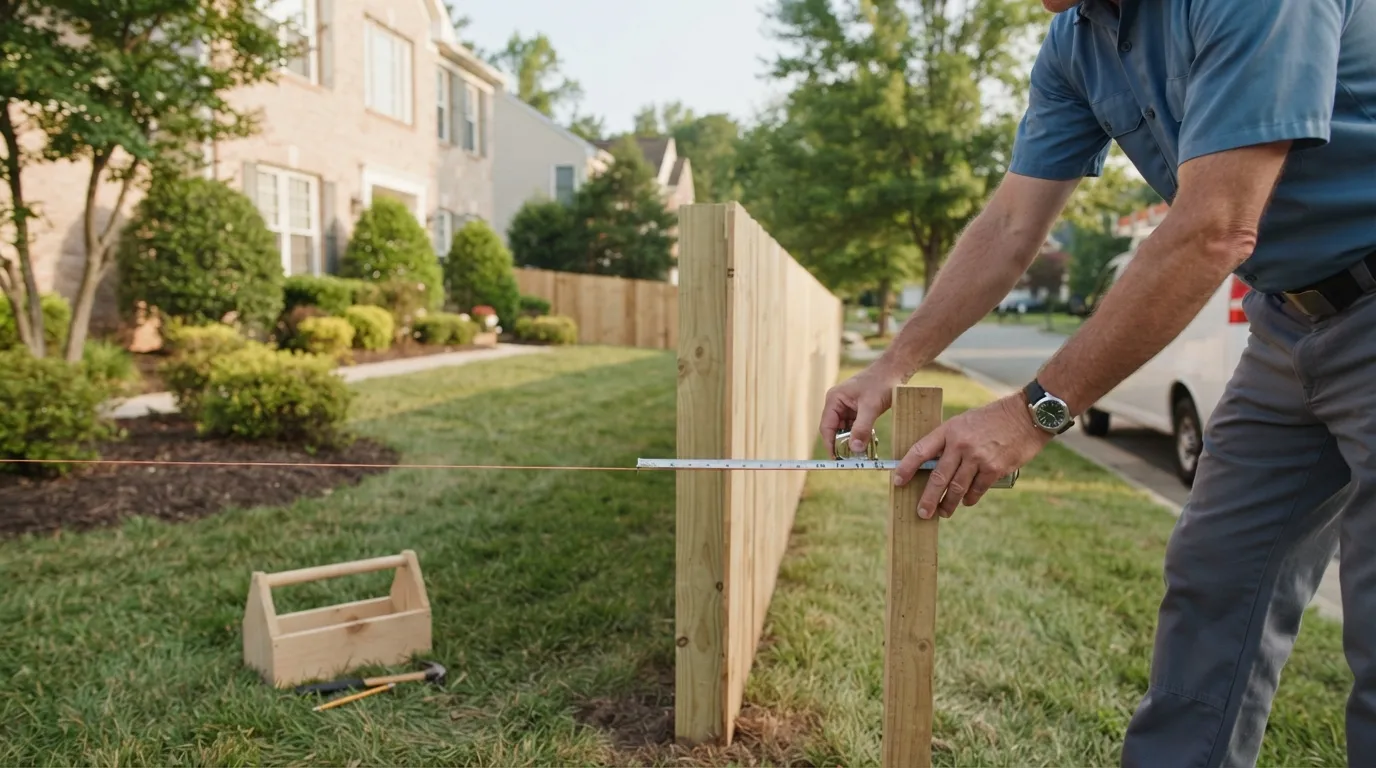
Does a privacy fence actually solve your problem?
If you searched for residential privacy fence installation silver spring, you probably want screening, noise reduction, or a clearer lot line. A full privacy fence is a solid or tightly close-boarded barrier that maximizes screening but changes the light on the yard and the house’s street-facing look. Partial screening — staggered slats, lattice, or a shorter solid run combined with planting — keeps more light and can cost less to install and maintain.
Before you decide, think about sightlines, how much daylight you want on the patio, and whether the street or neighbor-facing side should be the most finished. Those trade-offs tell you what material and height are appropriate and whether a full run is the right move or a screened section will do the job.
Which materials give the best privacy and easiest upkeep
Common materials for a privacy fence are wood, vinyl, composite, and metal; each balances privacy, upkeep and curb appeal differently. Choose the one that matches how you want the fence to look and how much time you will spend on upkeep.
Wood gives the familiar, warm look that homeowners expect for a private yard. It blocks sight lines well and can be built with closely fitted boards or overlapping styles for full screening. Wood needs regular upkeep to keep rot and weathering down; left unsealed it will require repair work over time and panels or posts may need replacement where rot sets in.
Vinyl is presented as a low-upkeep alternative and is one of the materials listed on local service pages. It maintains a uniform appearance with little seasonal upkeep, and it resists rot where wood fails. Repairing a damaged vinyl section typically means replacing panels rather than spot-patching like you might with wood.
Composite offers the look of wood with reduced routine upkeep because composite boards resist moisture and decay better than untreated timber. It keeps its finish longer than many woods, which reduces surface work, but repairs can be more like vinyl in that sections are swapped out rather than filled.
Metal privacy systems that rely on slats in a metal frame or specially made panels give a modern look and require different upkeep: coatings can be re-applied, and post or frame repairs replace metalwork rather than wooden boards. Metal can achieve screening when used with tight slats or when combined with slatted inserts.
Think about curb appeal as an ongoing choice: a material that looks right on day one may need regular attention to keep that image. If you prefer minimal seasonal work, favor materials advertised as low-upkeep and plan the fence detailing — cap rails, post trim, picket tops — with how you want it to read from the street.
Why quotes for the same yard can look very different
If you have several bids, the differences usually come from a small set of real cost drivers rather than a single hidden fee. Knowing these drivers is how you tell a cheap quote from one that leaves you with unexpected work later.
Materials and their grade set the baseline. The same layout built in treated wood, composite or vinyl will feel very different on paper because the boards or panels themselves are the first line item installers price. Closely fitted boards or custom profiles cost more than standard panels because they use more material and take longer to fit.
Linear length and the number of openings matter because they change how many posts and how much end and gate hardware you need. A run with several gates or lots of short section changes adds labor and materials compared with a long, continuous run. If your site has a lot of corners or staggered lot lines, that also raises the labor involved.
Site preparation is commonly overlooked. If there is an existing fence to remove, that removal is a separate task: old materials, footings and posts have to be taken out and hauled away. Likewise, sloped or uneven terrain needs more careful layout and sometimes stepped or racked panels, which takes time and skill to fit neatly. A flat, clear yard is the easiest case for installers; anything that adds digging, grading, or shaping becomes visible in the total.
Post setting and the depth and method used for footings make a difference to long-term performance. Posts set carefully and to a depth suited to the soil and local conditions last longer and reduce future repairs. Quotes that skimp on post work to save time usually cost more in repairs; comparing written bids for how posts are set is one of the clearest ways to spot a low-ball price.
Hardware, gates and fittings are often a separate line on a bill but change the user experience of the fence. Heavy-duty hinges and latches, level gates and proper reinforcement all add to the initial price while saving time later on repairs and adjustments.
Access and logistics change labor time. If the installer can work from a driveway and move materials directly to the line, a job will go faster than when equipment or materials must be carried over a long distance or parked on a narrow street. Where parking, staging and access force extra handling, expect the labor portion to rise.
Permits and the time a county office takes to process applications are practical additions many homeowners forget to budget for. If a permit is needed or an HOA requires review, that adds a filing step and sometimes a delay. Whether the installer includes permit handling or leaves it to you will show up in the bid.
Lead time and scheduling also affect the price. Work booked well ahead or in a contractor’s busy season can push up prices; conversely, a gap in their schedule may make a lower bid available. A bid that includes start and end windows and a clear approach to delays is easier to compare than one that lists only a single day of work.
Finally, look at what the bid covers for cleanup, disposal and follow-up. Removal of old materials, hauling to a dump and site restoration are all explicit items a good quote will show. If one bidder lists them and another does not, that is rarely the same as a cheaper complete job — it is a partial quote.
These factors are what separate “cheap” from “value” in a proposal: cheap bids often cut corners on post setting, hardware, access time or leave out removal and permit work. A clear written quote that lists materials, methods for post setting, permit handling and what happens to old fence material is the comparison tool you need.
Permits, HOA rules, and who usually files them
Before you sign anything, check county rules and your HOA covenants because both can affect what you can build and where. Montgomery County and an HOA each have their own checks and often require different pieces of information, so asking both early avoids surprises.
Call your county building office or check their website for fence rules relevant to lot lines, visibility at driveways, and any filing forms they require. At the same time, send your HOA the sketch or photos they ask for so their review begins early. HOA reviews often control style, height and finish, and the approval process can add time to the project.
Decide who will handle filings before you accept a bid. Some installers state in their proposals whether they will submit permit applications and follow up; others leave the application to the homeowner. Having the responsibility clear in writing keeps the schedule and the cost transparent.
If approvals or permits are needed, add that step into the expected timeline and the comparisons between bids. A quote that includes handling of permits and HOA documentation differs in scope from one that does not, and you should compare them as different offers, not equivalent ones.
How an install day (and the days around it) actually go
A typical installation begins with measurement and layout. The installer will mark property lines and the fence line so you can see how the fence sits in relation to trees, gates and lot corners. Confirm those marks before digging starts so small errors are caught early.
Next comes locating utilities. Call before any digging; the locating step prevents accidental strikes and is a standard part of the opening work. If you have landscaping features you want to save, point them out at this stage.
Post holes are dug and set. The method and depth used for posts affect how the fence performs over time. Once posts are set and given their initial cure time they are squared and braced so panels or boards fit plumb and level. How long the post step takes depends on soil and how many posts a run requires.
Panel or board installation follows. For panel systems the crews stand panels on the set posts and secure them; for board-on-board or individual board builds, carpenters fix rails and then attach boards to create the finished face. Gates and hardware are installed early enough in the run that their alignment can be adjusted as the line is completed.
Finish and cleanup are the last visible steps. Crews tidy the site, remove waste and leave the line ready for any final finish you plan, such as staining or paint. The final check is to walk the run with you and point out gate operation, latch function and any adjustments you might expect in the short term.
Things that extend the timeline are access limits, removals of an old fence, permit delays, bad weather and the need for special post work where the ground is rocky or saturated. When those appear in a bid, they should be listed and priced so you can see how they were accounted for.
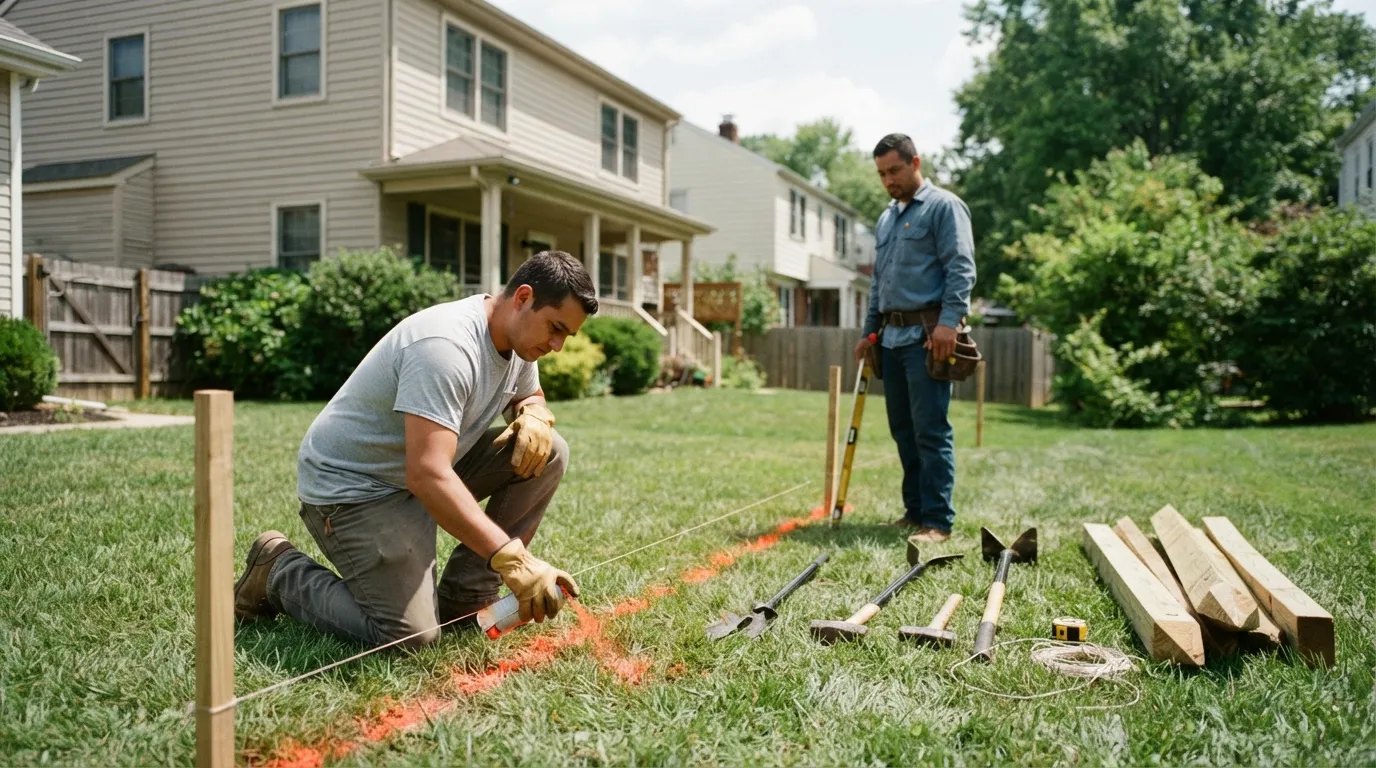
How to get a clear, comparable quote and what to ask for
A comparable quote is a written one that lists the same line items for every bidder. Ask each bidder to show the following in the proposal so you can compare apples with apples.
- The exact material specification and profile to be used for boards or panels.
- How posts will be set and what depth or concrete method will be used.
- Whether removal and disposal of an existing fence are included, and where debris will be taken.
- Who will handle permit applications and HOA documentation, if needed.
- Gate count, gate size and the grade of hinges and latches supplied.
- A start window and an expected completion window, plus how delays will be handled.
Ask whether a bid assumes a flat, clear site or whether extra grading, step panels or custom post work is included. If a contractor lists a “site prep” line, ask for details of what that covers. For low bids that look attractive, specifically cross-check the post-setting method and whether waste removal is included; these are the areas that most affect how a low price plays out in practice.
If you have a preferred finish — paint or stain — either ask bidders to include it or specify it as an optional line item so bids remain comparable. Likewise, gate hardware grades and lock types should be written out rather than described as “standard” so you know what you’re getting.
Get a brief schedule in writing: a start window of days and a projected number of workdays or milestone checks. That makes it easier to compare bids and spot unrealistically fast turnarounds that may cut corners.
Finally, ask bidders for references or recent photos of finished runs that match your chosen material and style. Seeing work done in a similar setting will help you judge whether the quoted approach will give the curb appeal and privacy you expect.
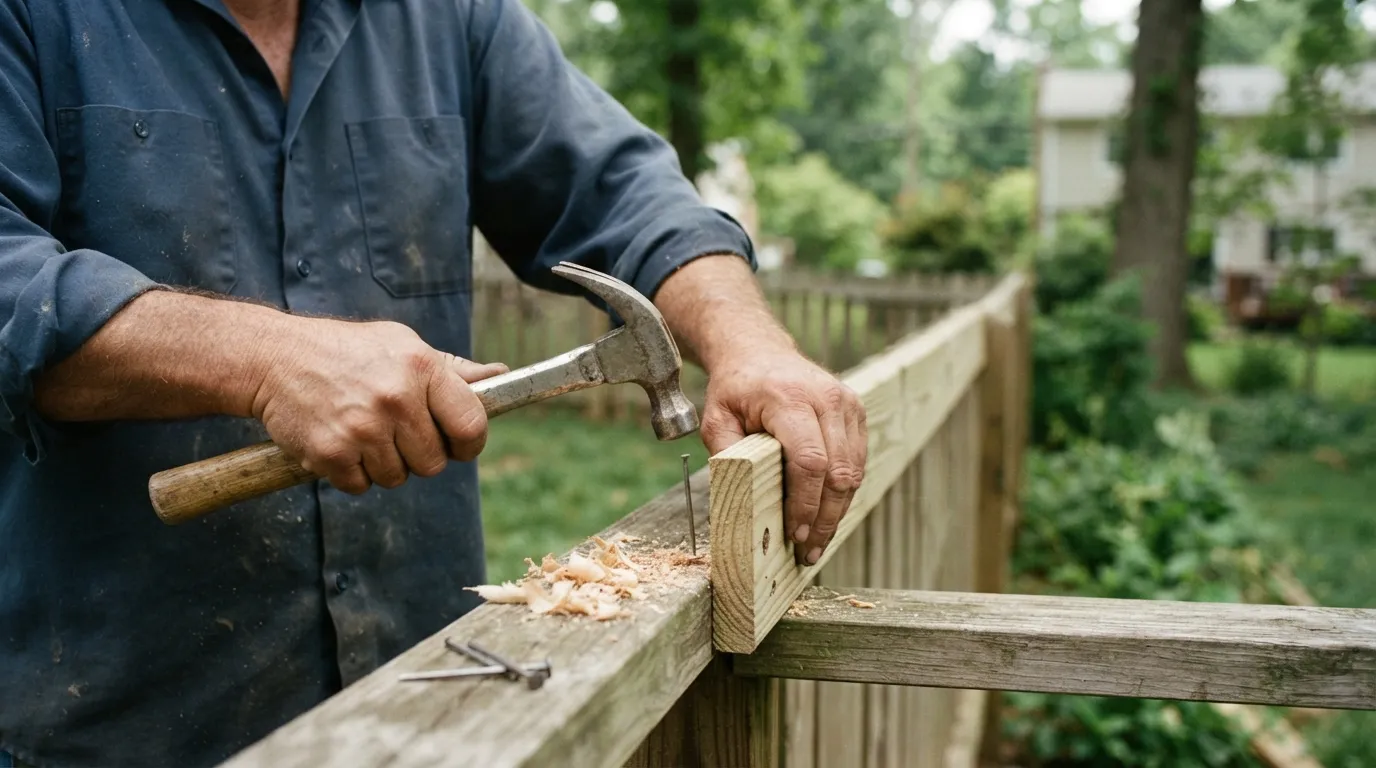
Routine upkeep, common failures, and when to call a pro
Routine checks keep a privacy fence doing its job. Inspect posts for wobble, gates for smooth swing, and boards for rot or splits after heavy seasons. Address small problems early; tightening hinges or replacing a single bad board is quicker than rebuilding a sagging section.
Common failures include rotted boards or posts where wood meets the ground, loose fasteners and sagging between posts. Those failures often start small and get worse because the load and weather both exploit any weakness in the line.
Call a professional when posts are loose, when large sections are sagging, or when multiple panels need replacing. Professional repair replaces or reinforces the failed structural parts rather than attempting a temporary patch that may fail again.
Keep a short punch list to compare contractors on repair estimates: whether they replace posts or attempt to splice them, whether they match existing boards or suggest a phased replacement, and whether removal of failed material is included. That list helps you decide whether a repair or a partial replacement is the right next step.
Where to look next and how to prepare to hire
If you want a closer look at local options, see the fence installation page for more detail on what installers typically offer. Read a services overview for common repair and installation projects so you recognize the scope described in a written bid. When you are ready to get proposals, review the questions to ask an independent handyman so your conversations are focused and you get comparable written offers.
Collect photos of the line you want fenced, note gate locations and any work you are not willing to have done (tree removals, major grading), and have a copy of your lot survey handy if tight lot lines or easements are a concern. With those in hand you can ask for written bids that address the same scope and let you choose a bidder on value, not just the lowest number.
Frequently asked questions
How much will a privacy fence cost me?
A clear price depends on material, the length of the run, site preparation and whether an old fence must be removed. The best way to get an answer is a written quote that lists materials, post-setting method, permit handling and disposal so you can compare bids fairly.
Do I need a county permit or HOA approval?
You should check both. Montgomery County and many HOAs have rules about height, placement and style, so ask the county building office and submit whatever the HOA requires before work begins to avoid delays.
Which material gives the most privacy with the least upkeep?
Vinyl and composite are commonly chosen where low seasonal upkeep is a priority, while wood gives a traditional look but needs more routine care. Match the material choice to how much upkeep you are willing to do and the look you want from the street.
Can a handyman install a privacy fence or should I hire a specialist?
A local installer can perform many residential privacy installs, but ask any bidder for details on post-setting, site prep and gate hardware in their written quote so you can compare the scope and craftsmanship between offers.
