
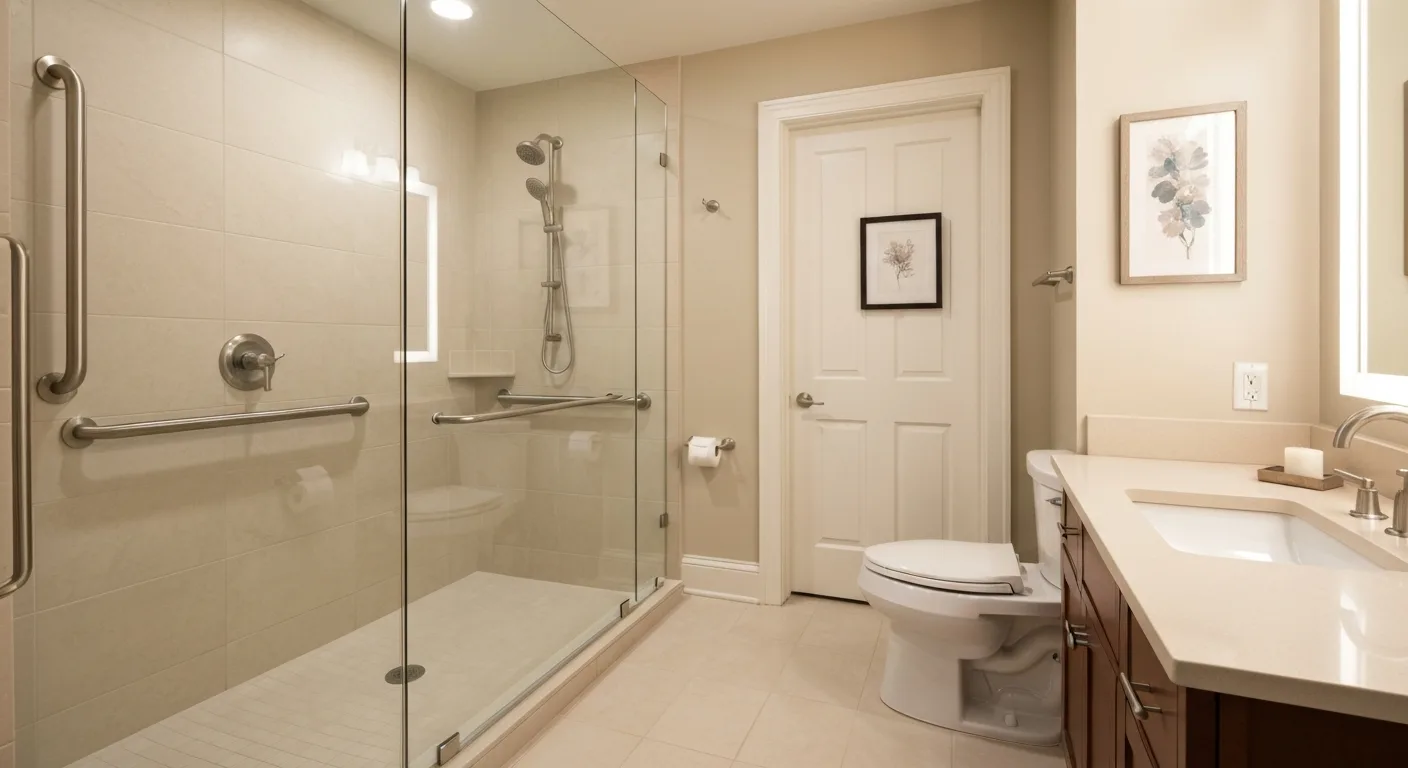
An accessible bathroom remodel in Silver Spring is mostly about blocking, clearances and a level entry — decisions made before the tile goes on.
Introduction: The Accessible Bathroom Challenge for Silver Spring Homeowners
Here in Silver Spring, we’ve got a fantastic mix of people, from young families just starting out to multi-generational households that have called this place home for decades. And let’s be honest, many of our homes, especially those classic beauties in neighborhoods like Woodside or Northwood Park, weren’t exactly built with “aging in place” in mind. They’re charming, yes, but often come with tubs that feel like climbing Mount Everest after a long day, and doorways that seem to shrink when you’re trying to navigate with a mobility aid.
I’m Avishay, and my team at Avishay Handyman LLC has seen it all across Montgomery County. We’ve helped countless homeowners, from Bethesda to Takoma Park, make their homes work better for them. The bathroom, in particular, is often the first place folks realize they need a change. It’s not about giving up independence; it’s about protecting it. It’s about ensuring you can continue to live comfortably and safely in the home you love, without constantly worrying about slips, falls, or simply getting stuck.
We’ve all been there, Googling “how hard can it be to install a grab bar” at 10 PM on a Saturday, only to realize that “hard” can sometimes mean “impossible without proper tools and know-how,” and more importantly, “potentially dangerous if done wrong.” This isn’t just about aesthetics; it’s about safety, dignity, and practicality. So, let’s talk about how to future-proof your bathroom, making it accessible, functional, and still looking great – because nobody wants their bathroom to look like a hospital room unless they’re actually in a hospital.
Beyond the Clinical Look: Smart Grab Bars & Support
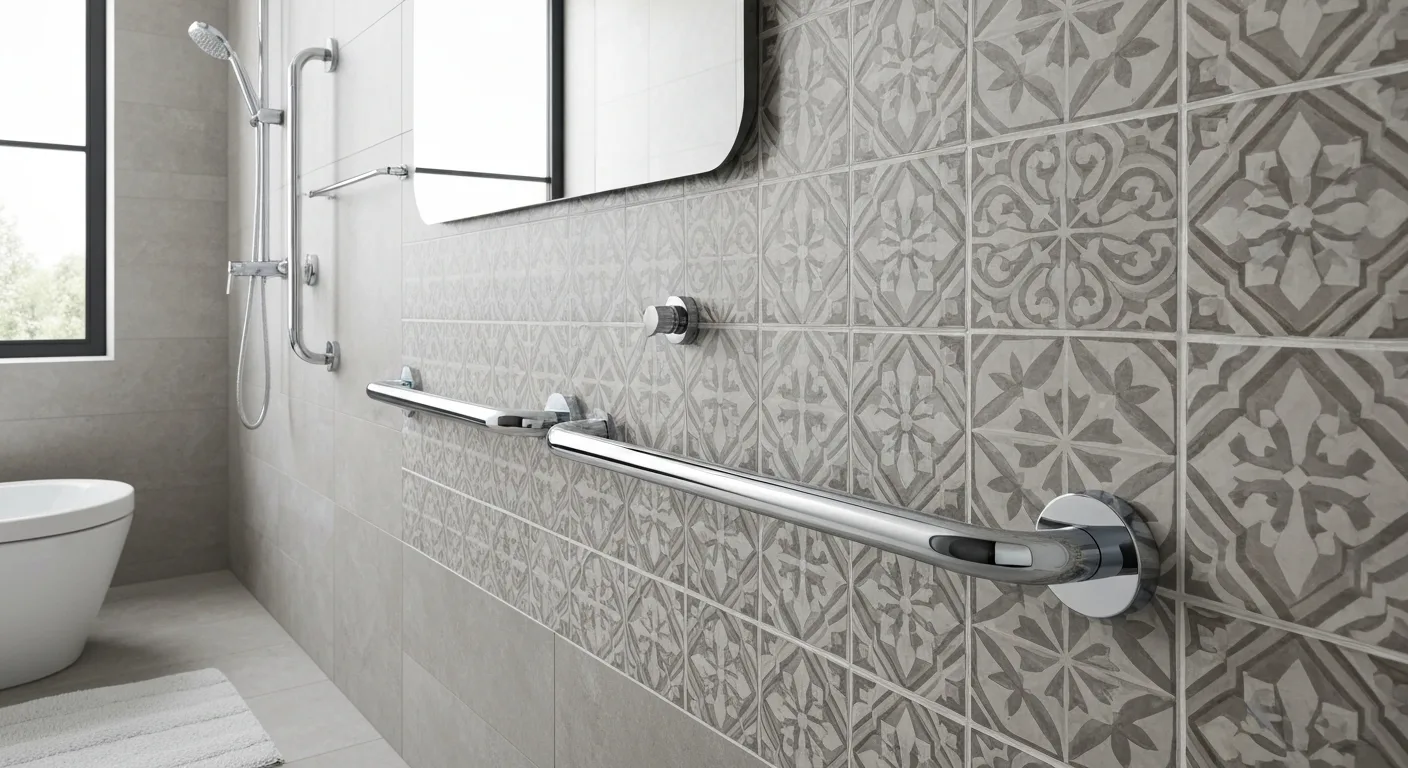
When you hear “grab bar,” what’s the first image that pops into your head? For many, it’s that cold, sterile, institutional chrome bar. And if that’s what you’re picturing, I get why you might be hesitant. But let me tell you, the world of grab bars has evolved leaps and bounds. Think of them not as a sign of giving up, but as smart, proactive safety features, much like a good smoke detector or a sturdy handrail on your stairs.
Why Grab Bars Aren’t Just for Hospitals Anymore
Modern grab bars come in a dizzying array of styles, finishes, and even functionalities. We’re talking sleek matte black, brushed nickel, oil-rubbed bronze – finishes that match your existing fixtures perfectly. Some even come with built-in shelves for toiletries, acting as a dual-purpose item. Others are designed to look like towel bars, blending seamlessly into your bathroom’s design. The key is to choose something that complements your aesthetic while providing robust support. It’s about making your bathroom safer without screaming “I’m an accessible bathroom!” to every guest.
Strategic Placement: Where They Actually Help
Just sticking a grab bar anywhere isn’t going to cut it. Placement is critical for maximum safety and usability. From what I’ve seen in Silver Spring homes, the most common areas where people need a little extra help are:
- In the Shower/Tub: A horizontal bar on the back wall for balance, and a vertical bar at the entry point to assist with stepping in and out.
- Near the Toilet: A vertical or angled bar beside the toilet can make a huge difference for sitting down and standing up, especially as knees start to complain a bit more.
- By the Vanity: Sometimes, just a little support to steady yourself while reaching for something or brushing your teeth can prevent a wobble that turns into a fall.
We always recommend a site visit to assess your specific needs and body mechanics. What works for one person might not be ideal for another.
Cost Considerations & DIY Pitfalls
The cost for grab bars themselves can range from $30 for a basic chrome bar to $200+ for a designer, multi-functional piece. Installation is where you really want to bring in a professional. Why? Because a grab bar is only as good as what it’s attached to. If it’s not securely fastened into wall studs or reinforced blocking, it’s not just useless – it’s a dangerous false sense of security. I’ve seen too many DIY attempts where a grab bar pulls right out of the drywall when someone puts their full weight on it. Don’t trust drywall anchors with your safety. Professional installation for 2-3 grab bars typically runs a few hundred dollars, but that’s a small price to pay for peace of mind.
Shower vs. Tub: Making the Right Choice for Your Future
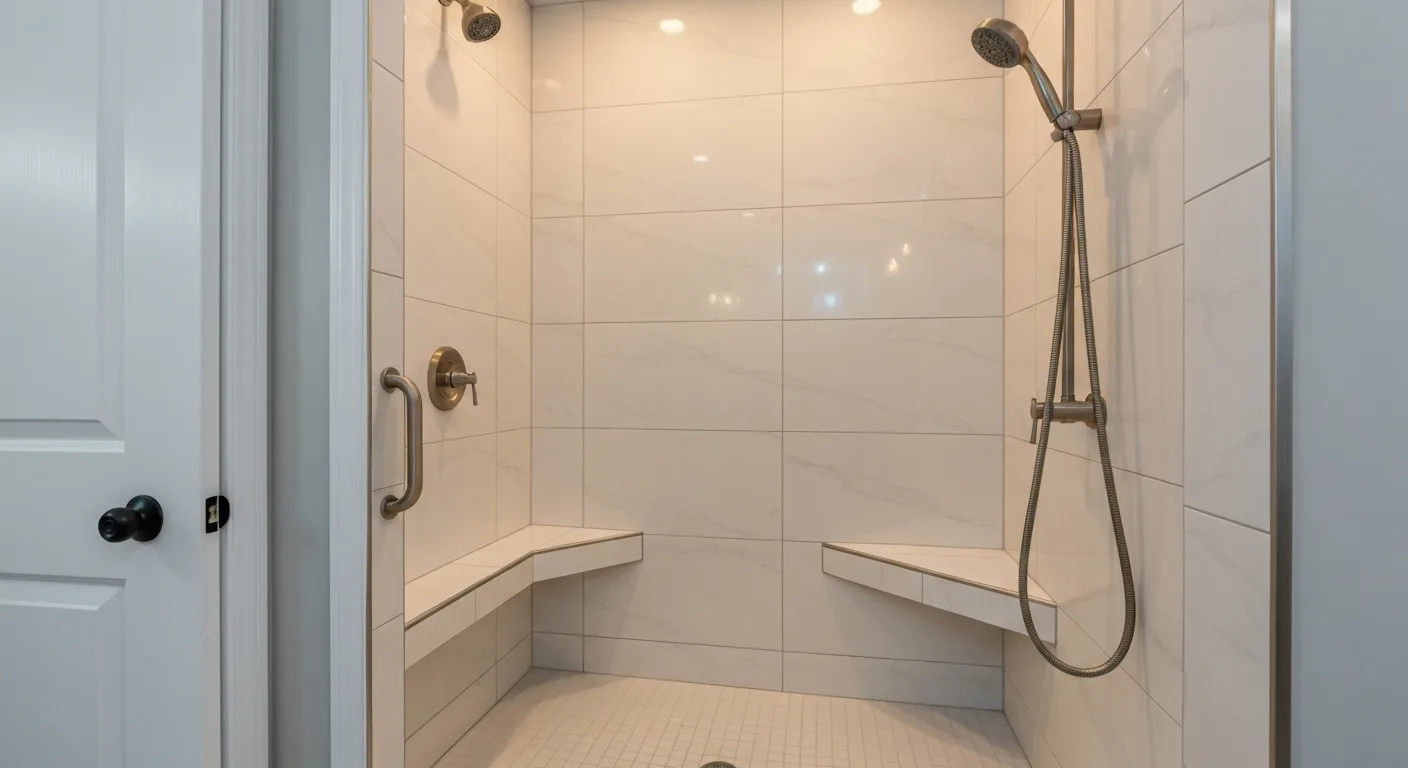
This is often the biggest decision point for homeowners considering an accessible bathroom remodel. The classic tub, once a symbol of relaxation, can quickly become a formidable barrier. For many, transitioning from a tub to a shower is the single most impactful change you can make for bathroom accessibility.
The Walk-In Shower Revolution: Safety Meets Style
Walk-in showers have gone from functional to fabulous. They offer a host of accessibility benefits without sacrificing an ounce of style. The main advantage is the low or no threshold entry, eliminating the high step-over that makes traditional tubs so dangerous. But it’s not just about getting in; it’s about what’s inside:
- Built-in Benches: A sturdy, integrated bench provides a safe place to sit, rest, or even shave your legs without losing balance.
- Handheld Showerheads: These are incredibly versatile, allowing you to direct water exactly where you need it, whether standing, sitting, or assisting another person.
- Thoughtful Storage: Recessed niches for shampoo and soap keep everything within easy reach, reducing the need to bend or stretch.
The design possibilities are endless – from sleek frameless glass enclosures that make the bathroom feel larger, to beautiful tile work that turns your shower into a spa-like retreat.
Roll-In Showers & Low-Threshold Options for Maximum Accessibility
For those needing even greater accessibility, perhaps for a wheelchair or rolling shower chair, a true roll-in shower is the gold standard. These showers feature a completely flush entry, allowing easy passage without any lip or barrier. This usually requires careful planning for proper drainage and subfloor modifications, which is why working with an experienced professional is crucial. A slightly less involved option is a low-threshold shower, which has a very minimal curb (1-2 inches) that’s still easy to step over but offers a bit more water containment than a full roll-in design.
Converting Your Old Tub: What to Expect & Budget
Converting an existing tub into a walk-in or roll-in shower is one of our most requested accessible bathroom remodels in Silver Spring and places like Rockville and Takoma Park. It’s often more complex than people realize, as it usually involves:
- Demolition: Ripping out the old tub, surround, and often some wall material.
- Plumbing Adjustments: Relocating drains, shower valves, and installing new showerheads.
- Waterproofing: This is absolutely critical. Proper waterproofing behind the new tile or shower panels prevents leaks and costly future damage.
- Flooring & Tiling: Installing new flooring and wall tiles, often with a slope towards the drain for walk-in showers.
Trying to DIY a walk-in shower conversion often ends with more water on the floor than in the drain, and not in a good way. The cost for a tub-to-shower conversion can vary widely based on materials, size, and complexity, but generally ranges from $8,000 to $20,000+. This usually includes basic tile, fixtures, and labor. High-end materials or extensive plumbing relocation can push that higher.
The Unsung Heroes: Flooring, Toilets & Doorways
While grab bars and walk-in showers get a lot of attention, some of the most overlooked accessibility features are the silent workhorses that contribute immensely to safety and comfort. These are the details that often make the biggest difference in day-to-day living, especially in our older Montgomery County homes.
Non-Slip Flooring: More Than Just a Pretty Tile
The phrase “slippery as ice” isn’t just for our Maryland winters. Wet bathroom floors are a major hazard year-round. Choosing the right flooring is paramount. Here’s what we recommend:
- Matte Finish Tiles: Ceramic or porcelain tiles with a matte or textured finish offer much better traction than highly polished, glossy tiles. Look for tiles with a higher Coefficient of Friction (COF) rating.
- Smaller Tiles with More Grout Lines: More grout lines mean more grip. While larger format tiles are popular, smaller tiles can be a safer bet in a wet environment.
- Luxury Vinyl Plank (LVP) or Sheet Vinyl: These are excellent choices for bathrooms. They are inherently water-resistant, often have a slightly textured surface, and can be warmer underfoot than tile. Plus, they come in incredibly realistic wood or stone looks.
Avoid anything that’s too smooth or prone to becoming slick when wet. It’s not worth the risk.
Comfort-Height Toilets: Small Change, Big Impact
This is one of those “why didn’t I do this sooner?” upgrades. A comfort-height toilet stands about 17-19 inches tall (from floor to rim), compared to a standard toilet’s 14-15 inches. That seemingly small difference makes a world of difference for anyone with knee pain, back issues, or just general mobility challenges. It’s like sitting down and standing up from a chair rather than squatting down low. They’re also ADA compliant. The cost is only slightly more than a standard toilet, and installation is essentially the same. This is a no-brainer upgrade for any accessible bathroom remodel in Silver Spring.
Wider Doorways: Thinking Ahead for Mobility Aids
Many older homes in Silver Spring, Rockville, or Kensington have doorways that are a tight 24-28 inches wide. While fine for most people, this becomes an immediate roadblock for wheelchairs, walkers, or even just someone using a cane with a wider gait. Ideally, bathroom doorways should be at least 32-36 inches wide. This can be a more involved project, sometimes requiring structural modifications, but it’s essential for true future-proofing. We handle the framing, door replacement, and finish work so the result looks intentional, not retrofitted.
FAQs: Your Silver Spring Accessible Bathroom Remodeling Questions Answered
Q: How much does an accessible bathroom remodel cost in Silver Spring MD?
A: A basic accessible remodel — grab bars, non-slip flooring, comfort-height toilet — can run $2,500–$6,000. A full conversion with a walk-in shower, widened doorway, and new fixtures typically ranges $10,000–$25,000 depending on the scope and existing layout.
Q: Do grab bars have to look clinical or institutional?
A: Absolutely not — and this is one of our favorite things to show clients. Modern grab bars come in brushed nickel, matte black, chrome, and even decorative styles that blend seamlessly with your bathroom aesthetic. Nobody walking in needs to know they’re functional safety features.
Q: Do I need a permit for a bathroom remodel in Montgomery County?
A: For grab bar installation and flooring — no permit needed. If you’re converting a tub to a walk-in shower, moving plumbing, or widening doorways, permits are required. We handle the permitting process for any work that needs it.
Q: What’s the most important accessible upgrade for aging in place?
A: A curbless (zero-threshold) walk-in shower. It eliminates the biggest fall risk in the bathroom — stepping over a tub or shower curb — and can be designed to look completely modern and stylish. Paired with a grab bar and a fold-down bench, it’s the single most impactful upgrade for long-term safety.
Ready to Get Started? Contact Avishay Handyman LLC Today!
Your home should work for you at every stage of life. We help Silver Spring, Bethesda, Rockville, Takoma Park, and Kensington homeowners create bathrooms that are safe, beautiful, and built to last. Free estimates, no pressure, just honest advice from a team that cares.
Call us at (240) 377-0777 or visit our contact page to get in touch.
Accessible Bathroom Remodel in Silver Spring: The Short Version
An accessible bathroom remodel in Silver Spring is mostly about blocking, clearances and a level entry. Put solid backing in the walls now even if grab bars come later, because adding it afterwards means opening finished tile.
